
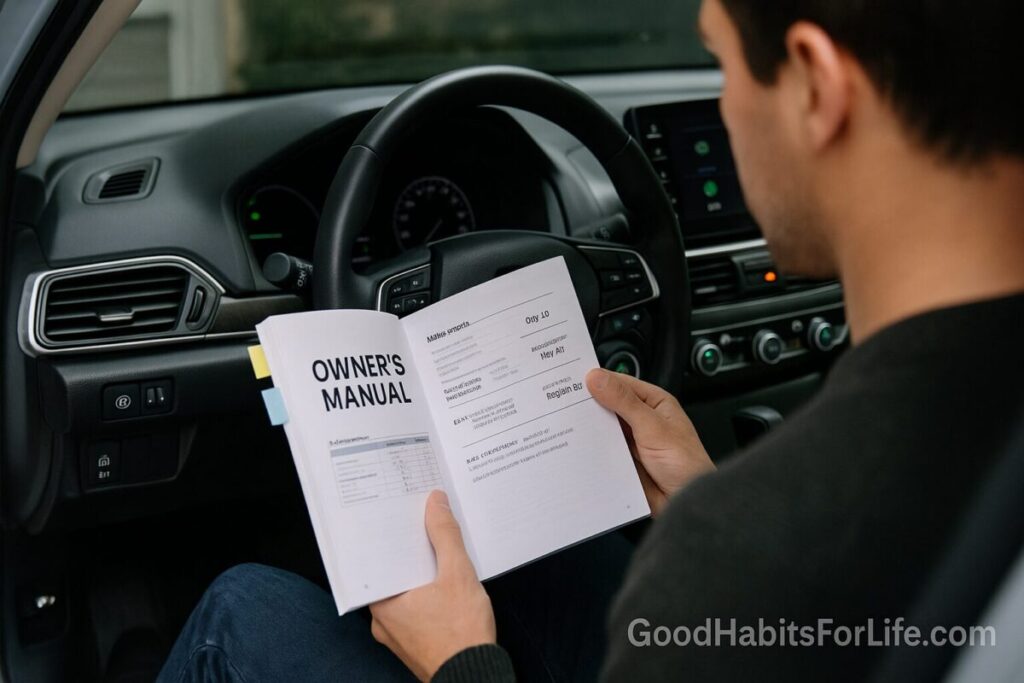
Owners Manual Power: Save Money with One Read
Owners Manual Power: Save Money with One Read
Table of Contents
🧭 What the Owner’s Manual Really Is (and Why It Saves You Money)
Your owner’s manual is the definitive guide to how your specific vehicle should be operated and maintained. It isn’t fluff; it contains the exact service schedule, fluid grades, tire pressures, load limits, and feature instructions designed to prevent premature wear and optimize fuel use.
A few money-makers hidden inside almost every manual:
-
Correct tire pressure values (front/rear, loaded/unloaded). Under-inflation increases wear and fuel use; proper inflation improves fuel economy and safety.
-
Oil grade and specifications (e.g., 0W-20 with an API/ACEA spec). Using the recommended grade can improve economy and engine longevity.
-
Fuel octane requirement (regular vs premium). If your engine is designed for regular, buying premium adds cost with no benefit.
-
Built-in economy features (eco mode, cruise control guidelines, speed warnings).
-
Service intervals (what to do and what not to do), which helps you avoid unnecessary add-ons.
Evidence snapshot
-
Correct tire pressure and basic maintenance can improve fuel economy and reduce wear.
-
Using the manufacturer’s recommended oil grade can improve mileage compared with thicker grades.
-
Octane: If your vehicle recommends regular, using higher octane doesn’t add performance or longevity.
(See References for government and safety-agency sources.)
✅ Quick Start: 20-Minute Read, Real Savings Today
Time needed: 20 minutes + a pen.
-
Locate the manual (or download the PDF). Search your make/model/year + “owner’s manual PDF” on the manufacturer site.
-
Jump directly to these sections:
-
Tire & loading (tire pressures, spare, TPMS).
-
Fuel & fluids (oil grade/spec, coolant, brake fluid, transmission, windshield washer fluid).
-
Maintenance schedule (service at time/odometer).
-
Driving tips/economy modes (eco, cruise, start-stop, speed alerts).
-
Warranties & service record (what to keep).
-
-
Create a 1-page baseline sheet (template below).
-
Set reminders in your phone/calendar for the next two maintenance checkpoints (by km and date).
-
Check & adjust tire pressures to the manual’s values (when tires are cold).
-
Confirm the fuel octane requirement and stick to it.
-
Turn on “eco”/efficiency features you learned about (or set speed reminders to avoid costly tickets).
🧠 The One-Page Baseline Sheet (copy this)
Use this quick template to stop guesswork and prevent expensive mistakes.
| Field | Your Car’s Value (from manual) |
|---|---|
| Make / Model / Year / Engine | |
| VIN (last 6 optional) | |
| Recommended Fuel Octane | |
| Tire Pressure – Front (cold) | |
| Tire Pressure – Rear (cold) | |
| Spare Tire Pressure | |
| Oil Grade & Spec (e.g., 0W-20, API SP) | |
| Coolant Type / Spec | |
| Brake Fluid Spec (e.g., DOT 4) | |
| Transmission Fluid Spec | |
| Service Intervals (km / months) | |
| Timing Belt/Chain Note | |
| Battery Type / Warranty | |
| Economy Features to Use (eco, cruise, start-stop, shift hints) | |
| Next Two Services (km/date) | |
| Notes (recalls, TSBs, quirks) |
Print it, keep it in the glove box, and store a copy in your phone.
🛠️ 7-Day Starter Plan (small actions, big payoff)
Goal: Build a maintenance rhythm that protects your wallet.
-
Day 1 – Find & Skim: Download/locate manual; read fuel, fluids, tires, and maintenance schedule sections. Fill the baseline sheet.
-
Day 2 – Tire & Fuel: Set correct tire pressures; confirm octane requirement; enable eco mode or speed alerts.
-
Day 3 – Fluids Check: Verify oil level/grade used in last service; top up washer fluid; note coolant/brake fluid specs for next service.
-
Day 4 – Schedule It: Add calendar reminders at the next two interval checkpoints (km or months) with a photo of your odometer.
-
Day 5 – Feature Mastery: Practice manual-advised techniques (cruise on steady highways, start-stop usage, ABS braking method).
-
Day 6 – Paper Trail: Create a simple service log (date, km, work done, parts used, shop). Snap/attach receipts.
-
Day 7 – Quick Audit: Re-read the “Do not do” cautions (overloading, jack points, towing). Update your baseline sheet.
📚 Techniques & Frameworks from the Manual that Cut Costs
1) Fuel & Fluids: the inexpensive insurance
-
Use the specified oil grade and standard. Thicker or off-spec oil can reduce efficiency and protection. Many manuals warn against additives.
-
Octane clarity: If your engine is designed for regular fuel, premium won’t help and costs more. Only use premium if required or if you hear knock and your manual permits higher octane in special conditions.
-
Coolant, ATF, brake fluid: Mixing wrong types can damage components; manuals list exact specs.
2) Tires: grip, wear, and fuel economy
-
Set pressures “cold.” Expect seasonal adjustments as temperatures change.
-
Rotation & alignment: Follow the manual interval, not generic upsells. Correct rotation pattern is often illustrated in your manual.
-
Load limits: Overloading raises tire temps and braking distances—your manual lists maximums.
3) Driving features that save fuel and fines
-
Eco mode & shift prompts: Follow the manual’s guidance; these moderate throttle/shift points for economy.
-
Cruise control: Use on steady highways to reduce speed variation.
-
Speed warnings & limiters: Many cars allow setting an alert—great for unfamiliar roads or variable speed zones.
-
Start-stop systems: The manual explains when it’s effective and when to disable (e.g., crawling traffic on extreme heat days).
4) Maintenance schedule: the myth filter
-
Intervals are tailored to your engine and climate. The manual separates normal vs severe service; choose honestly.
-
Document everything. A basic log + receipts protects warranty and resale value.
5) Safety procedures that prevent costly mistakes
-
ABS braking: In an emergency, press and hold the brake; expect vibration/pulsing (normal). Don’t pump ABS brakes.
-
Jack points & tow hooks: Manuals show the exact points—using the wrong spot bends metal and voids coverage.
-
Battery disconnect cautions: Radios, windows, and ADAS may need reset procedures—check the manual first.
👥 Variations: Students, Parents, Professionals, Seniors, Teens
-
Students / First-time owners: Create the baseline sheet with a roommate or parent. Set monthly odometer photos in your notes app to keep intervals honest.
-
Parents (family haulers): Learn child-seat sections; set speed alerts and rear-seat reminder if equipped. Keep a trunk kit (gauge, gloves, flashlight, compact compressor).
-
Busy professionals: Batch tasks—pressure check while fueling; mobile mechanic for routine services per manual.
-
Seniors: Ask your shop to print the maintenance schedule page. Enable automatic headlamps and driver-assist alerts per the manual.
-
Teens / New drivers: Read the driving safety chapters together (ABS, traction control, wet braking). Practice manual-recommended techniques in an empty lot.
⚠️ Mistakes & Myths to Avoid
-
“Premium is always better.” False unless the manual requires it.
-
“Dealer service or warranty is void.” By law (in many regions), keeping records and using correct parts/specs preserves warranty—manual + receipts matter.
-
“Any oil will do.” Wrong grade/spec can hurt efficiency and longevity.
-
“TPMS light means pressures are fine until it’s on.” Don’t wait—TPMS is a warning, not a daily gauge. Check monthly.
-
“Universal fluids are fine.” Always confirm exact specs in the manual.
-
“Rotate every X km no matter what.” Follow the vehicle-specific interval and pattern.
💬 Real-Life Examples & Scripts
Example 1 — Fuel economy bump in a week
A driver switches from an off-spec 5W-30 to the manual-specified 0W-20 at the next oil change and corrects tire pressures. Result: fewer cold-start revs, steadier idle, and a modest, steady improvement in range between fills.
Example 2 — Warranty win
Owner declines a “throttle body cleaning” upsell at 20,000 km after checking the manual (no such service listed). Keeps schedule items only. Later warranty claim sails through with clean records.
Phone script for service desk (copy/paste):
“Hi! I own a [Year Make Model, engine]. My owner’s manual lists [service items] at [km/months]. Please quote only those items using the specified oil and fluids: [specs from your sheet]. I’ll need the items itemized on the invoice and the part numbers. Thanks!”
At-the-pump tire routine:
-
Glance at the door-jamb sticker to recall pressures.
-
Use a gauge on cold tires (or before long drives).
-
Adjust with a small compressor; re-cap valves; log reading in your notes app.
🧰 Tools, Apps & Resources
-
Digital tire gauge & compact inflator: Low cost; pays back quickly via tire life and fuel economy.
-
Maintenance log apps: Fuelly, Drivvo, or a simple Notes template. Export as PDF for resale.
-
Manufacturer PDF manual: Keep in Files/Drive with your baseline sheet.
-
Calendar reminders: Set mileage-based reminders (e.g., every 5,000–10,000 km) and a Monthly Tire Check.
Pros/Cons quick view
-
Apps: Easy logging & reminders / Some show ads or need manual entry.
-
Paper log: Simple & tangible / Easy to lose—snap photos to back up.
-
DIY gauge: Immediate savings / Requires remembering monthly checks.
🔑 Key Takeaways
-
Read once, save for years: A single pass through your owner’s manual exposes the correct fluids, tire pressures, and maintenance schedule that prevent waste.
-
Baseline beats guesswork: Your 1-page sheet turns a 300-page manual into an actionable checklist.
-
Follow the schedule, not myths: Stick to what the manual says; log and keep receipts.
-
Use built-in features: Eco mode, cruise control, speed alerts, and TPMS are free tools that reduce costs and risk.
-
Repeat monthly: Pressure check + quick scan of upcoming intervals = lower spend, higher reliability.
❓ FAQs
1) Do I need the dealership for services to keep my warranty?
No. In many jurisdictions, you may service anywhere as long as the correct parts/fluids are used and you keep records. Your manual and receipts are key. (See FTC reference.)
2) Is premium fuel better for every car?
No. Use the octane specified in your manual. If it recommends regular, premium offers no advantage and simply costs more.
3) How often should I rotate tires?
Follow the interval and pattern in your owner’s manual; it varies by vehicle and tire type.
4) My TPMS light is off—do I still need to check pressures?
Yes. TPMS warns of significant deviations; monthly manual checks maintain optimal wear and fuel economy.
5) Can I mix coolants or brake fluids?
Avoid mixing unless the manual permits it. Use the exact type/spec; mixing can damage components.
6) The shop suggested extra services not in the manual. Should I do them?
Politely ask, “Where does my manual require this?” If it’s not listed, it may be optional. Prioritize manual-scheduled items.
7) How do ABS brakes change my emergency braking?
In an emergency, press and hold the brake firmly; expect pulsing. Do not pump the pedal on ABS-equipped cars.
8) Are oil additives helpful?
Most manuals advise against additives. Use the specified oil grade and standard instead.
9) What if I lost my paper manual?
Download the PDF from your manufacturer’s website (search make/model/year + “owner’s manual PDF”). Save it to your phone.
10) How can I quickly track services?
Keep a simple log (date, km, work, parts) and snap invoices. Export a PDF for resale—buyers love proof.
📚 References
-
U.S. Department of Energy — FuelEconomy.gov: Keeping Your Car in Shape (maintenance, oil grade, tire pressure & mpg). https://www.fueleconomy.gov/feg/maintain.jsp
-
U.S. Department of Energy — FuelEconomy.gov: Driving More Efficiently. https://www.fueleconomy.gov/feg/driveHabits.jsp
-
U.S. Department of Energy — FuelEconomy.gov: Selecting the Right Octane Fuel. https://www.fueleconomy.gov/feg/octane.shtml
-
National Highway Traffic Safety Administration (NHTSA): Tire Safety & TPMS. https://www.nhtsa.gov/tires
-
NHTSA: Anti-lock Braking System (ABS) Basics. https://www.nhtsa.gov/road-safety/antilock-braking-system-abs
-
Federal Trade Commission (FTC): Auto Warranties & Routine Maintenance. https://consumer.ftc.gov/articles/auto-warranties-routine-maintenance
-
Transport Canada: Tire Safety — Everything Rides on It. https://tc.canada.ca/en/road-transportation/motor-vehicle-safety/tire-safety
-
Car Care Council (nonprofit): Car Care Resources & Checklists. https://www.carcare.org/