
Oil, Coolant, Brake Fluid: Check & TopUp Basics
Oil, Coolant & Brake Fluid — Check & Top-Up Basics
Table of Contents
🧭 What & Why
Fluids are your car’s lifeblood. Engine oil lubricates and protects moving parts. Coolant regulates engine temperature and prevents freezing/boiling. Brake fluid transmits pedal force to the brakes. Keeping each at the right level and specification:
-
Prevents overheating, wear, and brake failure.
-
Improves reliability and safety on every trip.
-
Saves money by catching small issues before they escalate.
Think of this habit as personal hygiene for your car: quick, routine, and protective.
✅ Quick Start: 10-Minute Driveway Routine
Before you begin: Park on level ground, apply the parking brake, switch off the engine, and let it rest. For oil checks, follow your owner’s manual (some recommend checking warm after a few minutes’ rest; others prefer cold). For coolant, engine must be cold.
-
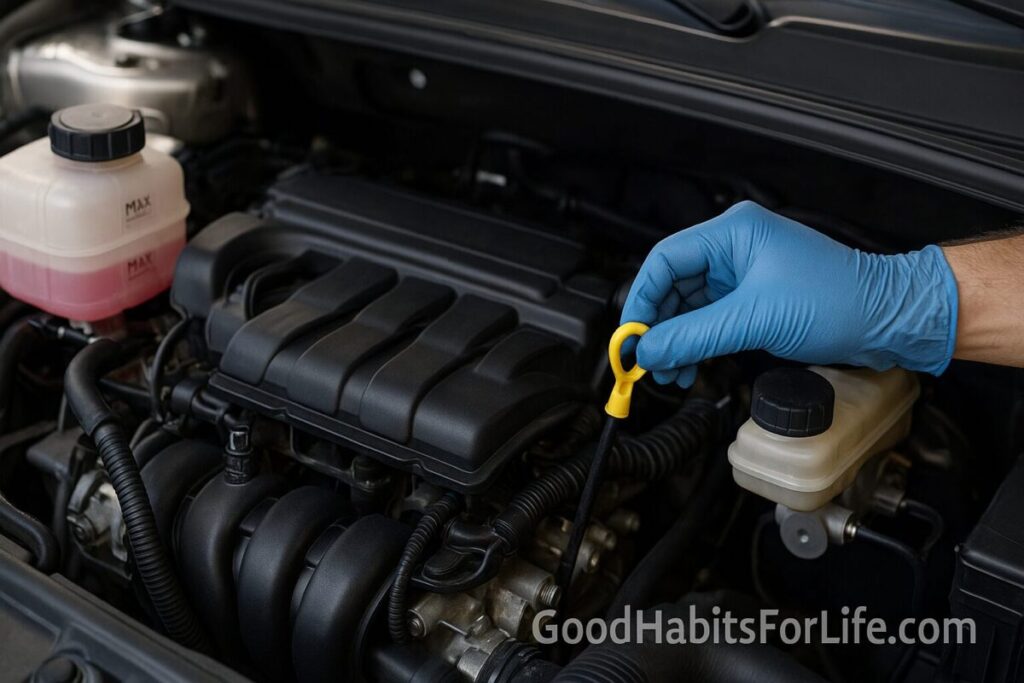
Open the bonnet/hood and locate: oil dipstick & filler cap, translucent coolant reservoir (with MIN/MAX), and brake fluid reservoir (with MIN/MAX).
-
Oil: Pull dipstick → wipe → reinsert → read. Top up if at/below MIN.
-
Coolant: Check level on reservoir. Do not open radiator cap when hot. Top up only when cold and only with the same-type coolant.
-
Brake fluid: Check level. A small drop over time can reflect pad wear; a rapid drop or below MIN = urgent inspection.
-
Wipe spills, close caps firmly, and log what/when you added.
Time: ~10 minutes. Frequency: monthly or before long trips; weekly for older/high-mileage cars.
🛠️ How to Check & Top Up Each Fluid
Engine Oil
You’ll need: Paper towel/rag, small funnel, correct engine oil (e.g., 5W-30 meeting your car’s spec), torch/flashlight (optional).
Steps
-
Prepare: Car on level ground. Follow your manual on warm vs cold reading.
-
Dipstick check:
-
Pull dipstick, wipe clean, reinsert fully, and pull again.
-
The oil film should be between MIN and MAX marks.
-
-
Assess oil condition:
-
Normal: clear to amber/brown.
-
Warning signs: metallic particles, foamy/milky (may indicate coolant ingress—professional diagnosis needed), strong fuel smell (possible dilution).
-
-
Top up (if needed):
-
Add small amounts (100–200 ml) through the oil filler cap, then recheck.
-
Avoid overfilling; being slightly under MAX is fine.
-
-
After topping up: Start the engine for ~30 sec, shut off, wait 2 min, recheck level.
Tips
-
Many engines have ~1 L between MIN and MAX (varies—check manual).
-
Always match the viscosity grade and manufacturer specification (e.g., ACEA/API rating).
-
If your car has an electronic oil monitor (no dipstick), use the dash menu and follow the manual.
Engine Coolant / Antifreeze
You’ll need: Premixed coolant of the same type already in your system (e.g., OAT/HOAT; colour is not a guarantee of type), gloves, funnel.
Steps
-
Only when engine is cold: Hot systems are pressurised; opening caps can cause burns.
-
Find the translucent reservoir: Look for MIN/MAX marks.
-
Top up:
-
If below MIN, add the correct premixed coolant to just below MAX.
-
Use a funnel; wipe spills immediately (ethylene glycol is toxic to pets).
-
-
If topping up frequently: That suggests a leak (hose, water pump, radiator, or head gasket). Book an inspection.
Tips
-
Don’t rely on colour—match type, not hue.
-
In an emergency, clean water can get you to a garage, but restore proper coolant mix ASAP to maintain corrosion and boil/freeze protection.
-
Replace coolant at the interval in your manual (often 4–5 years, but varies widely).
Brake Fluid
You’ll need: Correct DOT-rated fluid (DOT 3, DOT 4, or DOT 5.1 are glycol-based and usually interchangeable only as specified; DOT 5 silicone is different and not compatible), gloves, paper towel. Keep fluid off paint—it can damage finishes.
Steps
-
Locate reservoir: Typically on/near the master cylinder (driver side firewall).
-
Check the level: The fluid should sit between MIN and MAX.
-
Top up carefully:
-
Add small amounts to reach near MAX.
-
Keep the bottle tightly capped; brake fluid absorbs moisture (hygroscopic) and degrades when exposed to air.
-
-
Red flags—do not drive:
-
Fluid below MIN with a soft/spongy pedal.
-
Visible leaks.
-
Amber fluid turned very dark/contaminated.
-
Brake warning light on. Call for professional help.
-
Tips
-
Low level can be due to brake pad wear (normal), but rapid drops point to leaks.
-
Many manufacturers recommend fluid replacement every 2–3 years (follow your manual).
📅 Habit Plan: 30-60-90 Maintenance Roadmap
Day 0 (Setup—30 minutes)
-
Build a glove-box kit: microfiber cloth, nitrile gloves, small funnel, torch, paper towel, note card with fluid specs, and QR to your owner’s manual.
-
Note the exact specs: oil viscosity & spec, coolant type, and brake fluid DOT.
0–30 Days
-
Do the 10-minute monthly check once this month (set a calendar reminder).
-
Learn reservoir locations blindfold-fast (figuratively!): pop hood, point to each, name it.
31–60 Days
-
Repeat the monthly check.
-
Start a maintenance log (app or notebook): date, odometer, fluid levels, what you added.
61–90 Days
-
Review your log. Any abnormal top-ups? Plan a service visit.
-
Schedule the next annual service and ask the shop to test coolant concentration and brake fluid moisture.
Thereafter:
-
Monthly 10-minute checks; pre-trip checks before long drives.
-
Annually: full inspection; per manual: change intervals for oil/coolant/brake fluid.
🧠 Techniques & Frameworks
The S.A.F.E.R. Fluid Method
-
Specs first: confirm oil grade, coolant type, DOT rating.
-
Arrange tools: cloth, gloves, funnel, correct fluids.
-
Flat surface: level car for accurate readings.
-
Evaluate: read levels/condition; look for leaks.
-
Record: log additions; set next reminder.
Look–Measure–Add–Log (LMAL)
-
Look for reservoir marks/dipstick range and any leaks.
-
Measure against MIN/MAX with clean readings.
-
Add small increments of the right fluid only.
-
Log date/odo/specs; patterns reveal problems early.
👥 Audience Variations
-
Students / New Drivers: Make it a roommate challenge—first Sunday of the month, 10 minutes, then coffee. Keep your specs on a sticky note in the glove box.
-
Parents / Family Car: Pair the check with refuelling day. Teach teens to identify “never do” items (opening hot coolant, mixing brake fluids).
-
Professionals / High-Mileage Commuters: Move to bi-weekly checks. Carry 1 L of the correct oil and a 500 ml premix coolant bottle.
-
Seniors: Use a grabber tool for caps; ask service to mark reservoirs with high-contrast labels. Consider a maintenance app with large fonts and voice reminders.
⚠️ Mistakes & Myths to Avoid
-
“Coolant colour = type.” ❌ Not reliable. Match by spec, not hue.
-
Opening a hot coolant cap. ❌ Can cause scalding. Only open when cold.
-
Mixing brake fluids. ❌ DOT 5 (silicone) is not compatible with DOT 3/4/5.1.
-
Overfilling oil. ❌ Can foam, stress seals, and trigger smoke/catalyst damage.
-
Ignoring frequent top-ups. ❌ Recurrent loss suggests leaks—get it checked.
-
Using tap water long-term. ❌ Minerals corrode systems; use distilled water only for emergency dilution, then restore correct coolant mix.
🗣️ Real-Life Examples & Scripts
Calling a workshop about brake fluid:
“Hi, my brake fluid is just below MIN and the pedal feels slightly soft. Car is a 2018 [Model]. I haven’t topped it up yet. Can you check for leaks and test moisture content?”
Messaging a service advisor about coolant:
“Coolant level dropped from MAX to just above MIN in two weeks; engine temp normal, no visible puddles. Please pressure-test the system and check for hose/water-pump seepage.”
Oil top-up log entry:
2025-09-06 | 52,180 km | Added 200 ml 5W-30 (ACEA C3). Dipstick now just under MAX. No leaks seen.
🧰 Tools, Apps & Resources
-
OBD-II Bluetooth reader (pairs with apps like Car Scanner): spot some engine-temp or sensor issues. Pros: inexpensive insight. Cons: doesn’t replace a mechanic.
-
Maintenance apps:
-
Fuelly / aCar / Drivvo / Simply Auto — track services, reminders, and costs. Pros: history at a glance. Cons: manual data entry.
-
-
Basic kit: Funnel, nitrile gloves, microfiber cloth, paper towels, small torch, labeled bottles of your exact fluids.
📌 Key Takeaways
-
Build a monthly 10-minute routine to check oil, coolant, and brake fluid.
-
Top up only with the right spec fluids—and in small increments.
-
Coolant: cold only. Brake fluid: correct DOT, watch for leaks.
-
Log everything; patterns point to problems before they become expensive.
❓FAQs
1) How often should I check these fluids?
Monthly is a solid baseline. Check before long trips and more often for older/high-mileage cars.
2) Can I mix different coolant colours?
Don’t rely on colour. Use the same type/spec already in the car (e.g., OAT/HOAT) or flush and refill with the correct coolant.
3) What if I overfill the engine oil?
If slightly above MAX, you may be okay; but if significantly overfilled, have a shop drain to spec to avoid foaming or seal/catalyst issues.
4) My brake fluid keeps dropping—can I just top it up?
No. A rapid drop may signal a leak. Don’t drive; get a professional inspection.
5) Is plain water okay for coolant?
Only as an emergency, short-term top-up. Restore proper premixed coolant ASAP to maintain corrosion and temperature protection.
6) Does brake fluid expire?
Opened bottles absorb moisture and degrade; discard any that’s been open for months. Many shops replace fluid every 2–3 years—follow your manual.
7) The oil looks milky—what does that mean?
Milky/foamy oil can indicate coolant contamination (e.g., head-gasket issue). Stop driving and get a diagnosis.
8) Which brake fluid should I buy?
Check the reservoir cap and manual. Most modern cars use DOT 4; some specify DOT 3 or DOT 5.1. Never substitute DOT 5 (silicone) unless explicitly specified.
9) Why does oil level drop between services?
Engines consume some oil. Track usage; if consumption is high or rising, have the engine checked for leaks or burning.
10) Can I switch oil viscosity in hot/cold climates?
Only if your manual allows alternate viscosities by temperature range. When in doubt, stick to the listed spec.
📚 References
-
AAA. How to Check Your Car’s Fluids. https://www.aaa.com/autorepair/articles/how-to-check-your-cars-fluids
-
FuelEconomy.gov (U.S. Dept. of Energy). Keeping Your Car in Shape. https://www.fueleconomy.gov/feg/maintain.jsp
-
eCFR. 49 CFR §571.116 — Motor vehicle brake fluids (DOT). https://www.ecfr.gov/current/title-49/subtitle-B/chapter-V/part-571/section-571.116
-
RAC (UK). Car Engine Coolant Explained. https://www.rac.co.uk/drive/advice/know-how/coolant-in-a-car/
-
RAC (UK). Brake Fluid: What It Is and How It Works. https://www.rac.co.uk/drive/advice/know-how/brake-fluid/
-
Edmunds. How to Check Your Car’s Oil. https://www.edmunds.com/car-maintenance/stop-worrying-how-to-check-your-oil.html
-
ASPCA. Ethylene Glycol (Antifreeze) Poisoning. https://www.aspca.org/pet-care/animal-poison-control/poison-control-ethylene-glycol
-
Transport Canada. Road Safety—Vehicle Maintenance Tips. https://tc.canada.ca/en/road-transportation/road-safety/vehicle-safety/vehicle-maintenance