
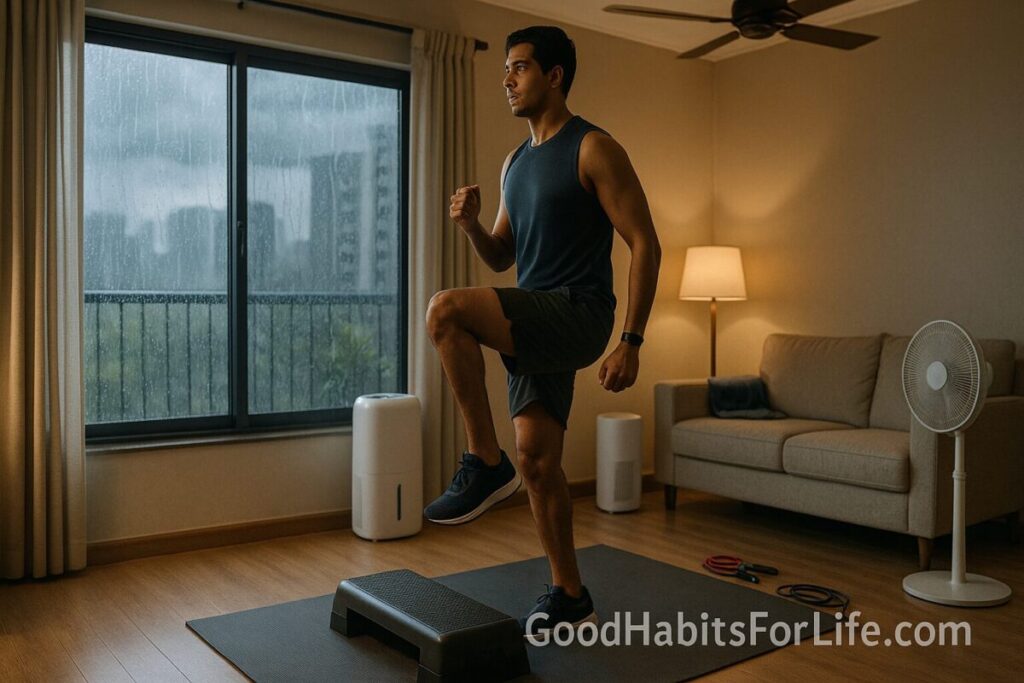
MonsoonProof Home Cardio in 2025: Trends Tactics
MonsoonProof Home Cardio in 2025: Trends Tactics
Table of Contents
🧭 What “Monsoon-Proof Home Cardio” Means & Why It Matters
Monsoon-proof home cardio is a training approach designed to keep your aerobic fitness, mental energy, and daily movement consistent when rain, humidity, and safety risks limit outdoor sessions. It favors short, efficient, low-setup workouts you can perform in small spaces without disturbing neighbors—while managing indoor air quality and floor safety.
Benefits (evidence-aligned):
-
Meets global activity guidance (e.g., 150–300 minutes moderate or 75–150 minutes vigorous weekly) without relying on outdoor availability.
-
Improves heart-lung fitness, insulin sensitivity, and blood-pressure control; short HIIT intervals can boost VO₂max efficiently.
-
Supports mood and stress regulation during gloomy, low-sunlight weeks.
-
Reduces slip, lightning, and flood risks by moving the “venue” indoors and focusing on environment control (ventilation, humidity, shoes).
What “good” looks like: 3–5 cardio sessions/week mixing Zone 2 (steady, you can speak in sentences) with brief HIIT bursts; add two strength or mobility blocks on alternate days.
✅ Quick Start: Do-This-Today 20-Minute Plan
No equipment. Small space. Quiet-friendly.
-
Warm-up (3 min): March in place → arm circles → ankle rolls → hip hinges.
-
Main set (14 min EMOM – Every Minute on the Minute):
-
Min 1: Step-touch + knee drives (45 sec work / 15 sec easy)
-
Min 2: Body-weight good mornings → fast marches
-
Min 3: Shadow boxing (light on feet, guard up)
-
Min 4: Sit-to-stand (chair) + calf raises
-
Repeat the 4-minute block 3 more times.
-
-
Finisher (2 min): 20-sec brisk high-knee march, 10-sec easy × 4.
-
Cool-down (1 min): Nose breathing, long exhales.
Intensity guide: Aim for RPE 6–7/10 in work phases; talk test = short sentences. New to exercise? Keep it RPE 4–5.
🛠️ Setup Checklist: Space, Floor & Air
-
Non-slip base: Grippy shoes + textured mat; wipe any condensation immediately.
-
Air management: Cross-ventilate; aim to keep indoor relative humidity <60% (ideally 30–50%) with a fan or dehumidifier.
-
Clear zone: 2×2 m (6.5×6.5 ft) is plenty; move fragile items; keep towels nearby.
-
Noise: Prioritize soft-landing moves (marches, step-touches, shadow boxing); avoid heavy stomps.
-
Power cuts: Keep a phone timer/stopwatch; pick low-light, fan-optional sessions.
-
Post-session: Dry mats/shoes; store bands elevated; open windows for 10–15 minutes.
📅 7-Day Starter Plan (Rain-Ready)
Goal: Blend Zone 2, technique work, and brief intervals. Adjust RPE up/down 1–2 points to fit your level.
| Day | Session | Duration | Focus |
|---|---|---|---|
| Mon | Zone-2 Step Flow (marches, step-touch, side steps) | 25 min | Steady breathing, conversational pace |
| Tue | Quiet HIIT (Tabata: 20s work/10s easy × 8) using shadow boxing + fast marches | 18–20 min | Short, crisp intervals |
| Wed | Mobility + Cardio Core (cat-camel, hip openers, plank taps) | 20 min | Movement quality |
| Thu | Ladder Intervals (30-45-60-45-30s work / equal easy) with step-ups or chair squats | 22–24 min | Rhythm & recovery |
| Fri | Dance/Flow Cardio (pick 3 songs; keep RPE 6) | 15–20 min | Joy + endurance |
| Sat | Low-Impact EMOM (sit-to-stand, wall push-offs, marching) × 16 min + stretch | 25 min | Joint-friendly |
| Sun | Active Recovery Walk (covered corridor/atrium) or indoor gentle cycle | 20–30 min | Easy pace |
Options: If you own a treadmill/stepper/rower, swap the main block but keep the durations and intensity cues.
🧠 Techniques & Frameworks That Work
Zone 2 (steady base): 60–70% max HR or RPE 5–6. Builds aerobic engine and recovery capacity.
Tabata (very short HIIT): 20s hard / 10s easy × 8 (4 minutes). Use low-impact moves indoors: fast marches, shadow boxing, step-ups, rope-less jumps.
EMOM: Pick 2–4 movements; work 40–45s each minute, rest the remainder. Predictable, time-boxed.
Ladders: 30-45-60-45-30s work with equal recovery—great for pacing in humidity.
Rope-less jump rope: Same rhythm without impact/noise; keep elbows tucked, flick wrists.
Ruck simulation (indoor): Light backpack (3–8 kg / 7–18 lb), steady step-ups on a low, stable platform for Zone-2 conditioning.
Safety in humidity: Longer cool-downs, hydration, and airflow. If you train outdoors under cover, avoid slick tiles and metal surfaces.
👥 Audience Variations
Students (hostels/flats):
-
15–20 min EMOM between study blocks; use backpack for light resistance.
-
Noise-light alternatives: wall marches, heel-toe rocks, isometric punches.
Parents:
-
“Follow-the-leader” 10-minute mini-circuits kids can join (animal walks, freeze dance, balloon taps).
-
Schedule during nap/quiet time; keep a towel “landing zone.”
Professionals:
-
Two 12-minute desk-break blocks: 6-min brisk stair climbs + 6-min shadow boxing.
-
Under-desk treadmill Zone-2 walks for meetings (2.5–4.5 km/h).
Seniors (or joint concerns):
-
Chair-assisted cardio: seated marches, side steps to chair, wall push-press.
-
Keep RPE 4–6; add balance drills (tandem stance) with support. Seek medical clearance if you have chronic conditions.
⚠️ Mistakes & Myths to Avoid
-
“More sweat = more fat loss.” Sweat is fluid/heat regulation, not fat oxidation. Focus on heart rate/RPE and consistency.
-
Daily all-out HIIT. Use 1–3 short HIIT doses/week; base most time in Zone 2.
-
Ignoring indoor air. High humidity invites mold and slippy floors; ventilate and dehumidify.
-
Slick footwear. Use grippy, dry soles; avoid worn tread on tiles.
-
Outdoor bravado. Thunder/flood risk > fitness heroics. If you hear thunder, move indoors.
-
Skipping warm-up/cool-down. Especially important when the air is heavy.
🧩 Real-Life Workouts & Copy-Paste Scripts
A) Tiny-Apartment Quiet Cardio (18 minutes)
-
Timer: EMOM × 18.
-
Minute 1: Step-touch + reach (45s).
-
Minute 2: Sit-to-stand (chair) + calf raise (45s).
-
Minute 3: Shadow boxing (45s).
-
Repeat 6 rounds. RPE 6–7.
-
Script: “Light feet, soft knees, long exhale—relax shoulders.”
B) Power-Cut Friendly “No-Fan” Ladder (16–20 minutes)
-
Warm-up 3 min.
-
Work sets: 30-45-60-45-30s brisk marches with arm swings; equal easy walk.
-
Repeat the ladder twice.
-
Script: “Nose in, sigh out; keep talk-test alive.”
C) Knee-Friendly Low-Impact (20 minutes)
-
Circuit × 4 rounds (45s work/15s easy):
-
Wall push-press
-
Seated fast marches
-
Hip hinge → mini-good morning
-
Side steps with mini-band (or towel tension)
-
-
Script: “Move in pain-free ranges; quality beats speed.”
D) Step-Up VO₂ Spark (14 minutes)
-
3 rounds of: 90s steady step-ups (RPE 6) + 30s faster pace (RPE 8), 60s easy march.
-
Finish with 2 minutes of relaxed breathing.
🧰 Tools, Apps & Resources (Pros & Cons)
Timers/Coaching Apps:
-
Interval Timer, Seconds, HeavySet/Strong (for EMOM/Tabata).
-
Pros: Simple, programmable beeps; minimal setup.
-
Cons: Ads/paywalls on some free versions.
-
Heart-Rate & Tracking:
-
Chest strap or watch (Polar/Garmin/Apple Watch/Coros).
-
Pros: Objective intensity for Zone 2/HIIT; logs progress.
-
Cons: Cost; watch-only HR can lag on intervals.
-
Budget Gear That Multiplies Options:
-
Mat + grippy shoes: Safety and noise control.
-
Mini step/box or stairs: Zone-2, ladders, step circuits.
-
Bands/jump rope (or rope-less handles): Quiet strength-cardio blends.
-
Dehumidifier/fan: Comfort, slippage, and mold control.
-
Under-desk treadmill/mini-stepper (optional): Easy daily steps in storms.
🔑 Key Takeaways
-
Consistency beats perfect conditions; blend Zone-2 base with brief HIIT sprinkles.
-
Control the environment (grip, airflow, humidity) and the process (timers, RPE).
-
Keep sessions short, specific, and repeatable—15–30 minutes is enough to maintain/advance fitness.
-
Select low-impact, quiet moves; scale for your space and joints.
-
In storm conditions, prioritize safety—if thunder or flooding threatens, train indoors only.
❓ FAQs
1) What cardio is safest indoors during heavy rain?
Marching, step-touch flows, shadow boxing, and chair-assisted circuits—low impact, high control, minimal slip risk.
2) Is jumping rope okay inside?
Yes, if ceilings are high enough and floors are non-slip. Rope-less handles simulate rhythm without noise/impact.
3) How do I manage humidity during workouts?
Cross-ventilate, run a fan/dehumidifier, and dry gear after sessions. Aim to keep RH under 60% (ideally 30–50%).
4) How often should I do HIIT in monsoon season?
1–3 brief sessions/week. Keep most time in Zone 2 so you recover well and can train frequently.
5) What if I only have 10–12 minutes?
Use Tabata (4 minutes) plus a 6–8 minute Zone-2 march. Short + steady still compounds.
6) Is it safe to run outdoors in light rain?
Often yes—if there’s no thunder, flooding, or slick surfaces. Choose covered routes and grippy shoes; avoid metal/painted tiles.
7) How do I know my Zone 2 without a heart-rate monitor?
Talk test: you can speak in full sentences. On a 1–10 effort scale, it feels like 5–6.
8) I’m a beginner—where do I start?
Three 15–20 minute Zone-2 sessions/week. Add one short interval finisher once you feel comfortable.
9) Do fans “reduce” workout quality?
Fans improve comfort and safety in humidity; they don’t reduce training effect if intensity is matched.
10) Can seniors or people with health conditions follow this?
Yes—with medical clearance and low-impact options (chair cardio, wall exercises), staying at RPE 4–6.
📚 References
-
World Health Organization. Guidelines on physical activity and sedentary behaviour. https://www.who.int/publications/i/item/9789240015128
-
CDC. Physical Activity Basics for Adults. https://www.cdc.gov/physicalactivity/basics/adults/index.htm
-
American Heart Association. Target Heart Rates. https://www.heart.org/en/healthy-living/fitness/fitness-basics/target-heart-rates
-
American College of Sports Medicine. High-Intensity Interval Training overview. https://www.acsm.org/education-resources/trending-topics-resources/hiit
-
British Journal of Sports Medicine. HIIT vs. moderate continuous training—systematic reviews/meta-analyses (landing). https://bjsm.bmj.com/
-
EPA. Mold and Moisture—Control Humidity. https://www.epa.gov/mold/brief-guide-mold-moisture-and-your-home
-
NOAA. Lightning Safety—When Thunder Roars, Go Indoors! https://www.weather.gov/safety/lightning
-
NIOSH/CDC. Heat Stress—Work/Exercise in Hot Environments. https://www.cdc.gov/niosh/topics/heatstress/
-
CSEP. Get Active Questionnaire (PAR-Q+). https://csep.ca/2021/05/13/getactivequestionnaire/
-
WHO. Heat and health (heat, humidity, and risk). https://www.who.int/news-room/fact-sheets/detail/climate-change-heat-and-health
Disclaimer
This article offers general fitness education and is not a substitute for personalized medical advice; consult a healthcare professional before starting or modifying exercise if you have health concerns.