
MicroWorkouts: 65 Minutes a Day: AI workflows (2025)
MicroWorkouts: 65 Minutes a Day (2025 AI Workflows)
Table of Contents
🧭 What Are MicroWorkouts & Why 65 Minutes?
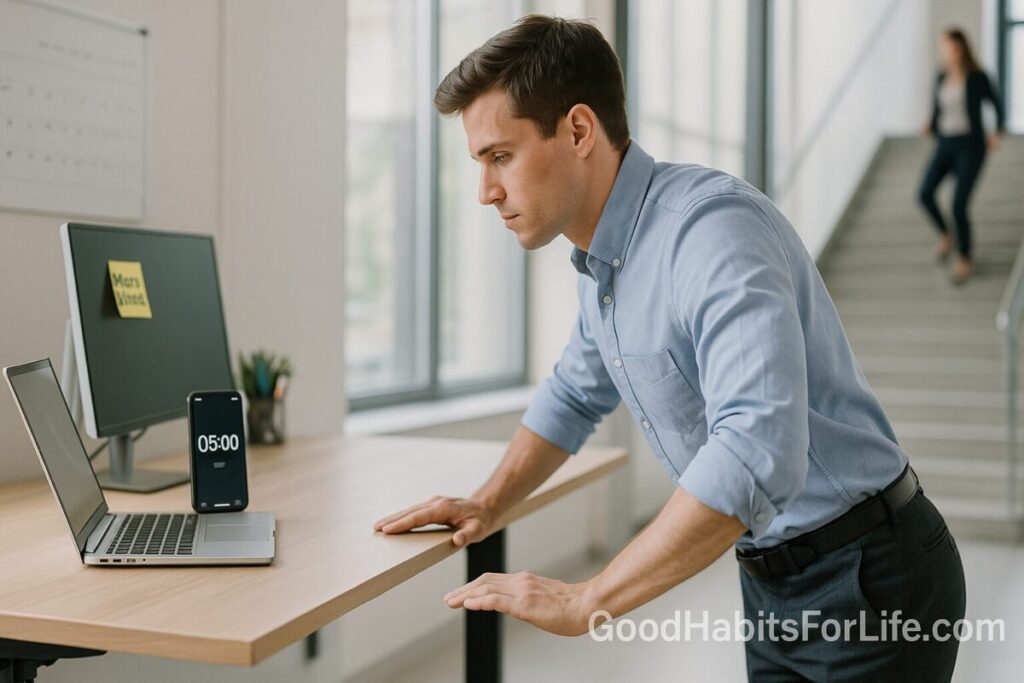
MicroWorkouts (aka “exercise snacks”) are short, focused bouts of movement—often 1–10 minutes—sprinkled throughout the day. They can be strength, mobility, cardio, or posture micro-sessions you can do beside your desk, in a stairwell, or on a brief break.
Why 65 minutes?
-
Most adults benefit from ≥150 minutes/week of moderate aerobic activity plus muscle-strengthening 2+ days/week. Any duration now counts toward these totals, including <10-minute bouts. Spreading ~65 minutes/day gives you an easy surplus (≈455 min/week) to offset sitting, while keeping each bout tiny and workplace-friendly.
-
It’s also a simple rhythm: 13 × 5-minute blocks (or 6–10 micro-blocks mixing 3–10 min each) that fit around meetings and life.
Evidence snapshot (plain English):
-
Short, vigorous “snacks” (e.g., stair bursts) can lift cardiorespiratory fitness.
-
Breaking up long sitting with light or moderate movement improves glucose and insulin responses after meals and reduces discomfort/fatigue.
-
Strength work can be effective with brief sets (e.g., 1–3 sets of multi-joint moves) when performed consistently.
Translation: you don’t need long gym sessions to make progress; tiny, frequent bouts add up.
✅ Quick Start: Do This Today
-
Pick three micro-slots you can always keep (e.g., 10:30, 14:30, 17:30).
-
Set one cue per slot (calendar ping, watch alarm, Slack DM from yourself).
-
Choose a micro-menu (1–5 minutes each):
-
Mobility: neck/shoulder rolls, thoracic openers, couch stretch.
-
Strength: 1–2 sets of 8–12 squats, wall push-ups, split squats, band rows.
-
Cardio: brisk stairs, shadow boxing, marching in place, jumping jacks (low-impact option: step jacks).
-
-
Log it in your task app or a one-tap checklist.
-
Finish with posture reset: 3 deep breaths, tall stance, screens at eye level.
If you do nothing else: 3×5 minutes today. That’s 15 minutes in the bank.
🧠 7-Day Starter Plan
Each day: aim for 3–6 micro-blocks (3–10 minutes each). Use a timer. Alternate areas.
| Day | Focus | Micro-Blocks (examples) |
|---|---|---|
| Mon | Mobility + Lower body | 5′ hip openers • 5′ squats (2×10) • 3′ calf raises |
| Tue | Cardio + Core | 5′ brisk stairs • 5′ dead bug/planks • 3′ walk calls |
| Wed | Upper body strength | 5′ wall/desk push-ups • 5′ band/row • 3′ shoulder CARs |
| Thu | Mobility + Posture | 5′ thoracic openers • 5′ neck/pec stretch • 5′ posture reset |
| Fri | Cardio Intervals | 5′ step-ups • 5′ shadow boxing • 3′ march-in-place |
| Sat | Strength Mix | 5′ goblet or backpack squats • 5′ split squats • 5′ glute bridge |
| Sun | Recovery | 10′ easy walk • 5′ breathwork • 5′ gentle stretch |
Rule of thumb: If a meeting cancels a slot, swap later—no guilt, just reschedule.
🛠️ 30-60-90 Roadmap (Progressive build)
Goal: Make 65 minutes/day a normal part of your work+home rhythm, with measurable fitness gains.
Days 1–30 (Foundation)
-
Frequency: 3–6 micro-blocks/day (≈25–40 min).
-
Strength: Bodyweight basics (squats, push-ups, split squats, hip hinges); aim 2–3 total sets/area/day spread out.
-
Cardio: 2–3 blocks/day of brisk stairs or marching.
-
Mobility: 1 daily block (hips/shoulders/T-spine).
-
Tracking: 1-tap checklist; weekly review of what actually happened.
Days 31–60 (Volume + Intensity)
-
Frequency: 8–12 blocks/day (≈45–65 min).
-
Progression: Add load (backpack, dumbbells, bands), slightly more speed on cardio.
-
Mini-tests: Weekly 2-minute AMRAP (as many quality reps) for squats/push-ups; 6-minute walk distance.
Days 61–90 (Performance + Personalization)
-
Frequency: Settle at 65 minutes average/day.
-
Strength split: Alternate lower/upper/core emphasis.
-
Cardio: 1–2 HIIT-style micro-snacks/day (e.g., 30s fast stairs + 60s easy × 4).
-
Mobility: Target your “sticky” joints.
-
Outcome metrics: Resting heart rate trend, step count, weekly strength reps, perceived energy/focus.
🧩 Techniques & Frameworks that Work
-
Exercise Snacks: 1–2 minutes of brisk effort sprinkled across the day.
-
NEAT Boosting: Non-exercise activity (standing, walk calls, pacing while brainstorming).
-
Set Triggers: After coffee ➜ 2 minutes of squats; after meetings ➜ 20 shoulder rolls.
-
The “Rule of 3×5”: Three 5-minute blocks anchor your day. Anything extra is gravy.
-
Stairs First: If there are stairs, take them. 60–90 seconds is a perfect cardio snack.
-
Posture Sandwich: Every session starts and ends with a posture reset (tall, rib cage down, chin tucked).
🤖 AI Workflows: Plan, Cue, Track, and Adapt
1) Daily Auto-Plan (morning generation)
-
Trigger: 08:00 calendar event.
-
Workflow:
-
Pull your day’s meetings.
-
Auto-insert 5-minute micro-blocks into gaps (e.g., :25 or :55 past the hour).
-
Generate a balanced mix (mobility/strength/cardio) based on yesterday’s log.
-
-
Tools: Google Calendar + a scheduling assistant; or a shortcut that writes a note/checklist.
2) Frictionless Cues (during work)
-
Slack/Teams DM to self: “2-min stairs + 1-min hip openers—go!”
-
Phone notification with big button: “Done” (auto-logs time + type).
3) Adaptive Coach (afternoon check-in)
-
If you’ve missed two slots, AI suggests one 7-minute combo: 3′ brisk stairs + 2′ squats + 2′ mobility.
-
If energy is low, swap to gentle mobility and an outdoor 5-minute daylight walk.
4) Auto-Logging & Review
-
One-tap logging writes to a spreadsheet or habit app.
-
Weekly review produces a micro-report: completion rate, favorite slots, “most missed” hour, and next-week tweaks.
5) Micro-Libraries
-
Keep a rotating 10-move library (with GIFs): 3 mobility, 4 strength, 3 cardio. AI randomizes to reduce boredom.
👥 Audience Variations
Students: “Pomodoro movement” after every study block; dorm-friendly bands and stair bursts.
Professionals: Calendar-synced 5-minute blocks between meetings; walking 1:1s; headset step-ups.
Parents/Caregivers: Include kids: hallway relays, squat-and-read, stroller pushes.
Seniors (or deconditioned): Longer warm-ups, chair stands, wall push-ups, short walk snacks; emphasize balance (tandem stands, heel-toe).
Teens: Gamify with streaks; music-timed 2-minute dance breaks; school stair challenges.
⚠️ Mistakes & Myths to Avoid
-
Myth: “Short bouts don’t count.” ➜ They do—every minute adds up.
-
Mistake: Only cardio. ➜ Include strength and mobility; they protect joints and posture.
-
Mistake: Going all-out daily. ➜ Rotate intensities; keep form pristine.
-
Myth: You need equipment. ➜ Bodyweight + stairs + a cheap band go a long way.
-
Mistake: No plan for bad days. ➜ Always keep a 2-minute fallback.
🗣️ Real-Life Scripts & Examples
Email signature line: “I take 2-minute movement breaks—meet me on the stairs?”
Slack status: “Next break: 14:25 stair snack 🚶”
Phone shortcut names: “2-Min Spine Saver,” “Desk Push-Ups 10,” “ Hip Reset 90s.”
Walking call opener: “Mind if we walk while we talk? I’ve found I focus better.”
Manager nudge (script):
“I’m experimenting with 2–5 minute movement breaks between meetings. It helps my energy and attention. I’ll keep response times the same—just a heads-up.”
🧰 Tools, Apps & Resources (pros/cons)
-
Calendar (Google/Outlook): Best for pre-scheduled micro-blocks; notifications everywhere. Con: Can get noisy—batch edits weekly.
-
Habit apps (TickTick, Todoist, Streaks, Loop): 1-tap logging, streaks. Con: Avoid over-tracking.
-
Shortcuts/Automations (iOS Shortcuts, Android Routines, IFTTT, Zapier): Chain cues ➜ log ➜ journal. Con: Needs a one-time setup.
-
Wearables (Garmin, Apple Watch, Fitbit): Stand/move reminders, heart-rate feedback. Con: Tune alerts or you’ll ignore them.
-
Bands & Mini-gear: Resistance band, mini-loop, a stable step, door anchor. Con: Keep them visible to actually use.
📚 Key Takeaways
-
Any minute counts. Micro-workouts are science-backed and desk-friendly.
-
65 minutes/day (tiny blocks) handily beats guideline minimums while reducing sitting.
-
Automate with AI to cue, adapt, and log—so the habit runs even on busy days.
-
Balance the mix: cardio + strength + mobility + posture resets.
-
Make it social and visible—stairs, walking calls, friendly nudges.
❓ FAQs
1) Do micro-workouts really improve fitness?
Yes. Brief, vigorous “snacks” (e.g., stair bursts) can improve cardiorespiratory fitness, and breaking up sitting improves glucose control and comfort.
2) How short can a workout be and still count?
Even 1–2 minutes count toward daily totals. The key is consistency and accumulating minutes across the day.
3) Is 65 minutes/day too much?
Not when spread gently. Use light/mobility blocks and rotate intensities. Adjust for your level and recover if sore or unusually fatigued.
4) Can I build strength with micro-workouts?
Yes. Use multi-joint moves (squats, push-ups, rows, hinges). Add load over time (backpack, dumbbells, bands). Aim for quality reps across the day.
5) What if my workplace is strict about breaks?
Use posture/mobility snacks at your desk (90–180 seconds) and walking calls. Schedule blocks at natural transitions.
6) I sit for long stretches—what’s the minimum break?
Every 30–60 minutes, take 1–3 minutes to stand, walk, or perform light movements.
7) Which is better—10×6 minutes or 6×10 minutes?
Both work. Choose what fits your schedule. Variety beats perfection.
8) How do I avoid injury?
Warm joints with easy range-of-motion, keep form strict, progress gradually, and alternate muscle groups. Stop if pain (not normal effort) appears.
9) Can I do micro-workouts while fasting or between meetings?
Yes. Keep intensity moderate if energy is low; hydrate and include a protein-rich meal later to support recovery.
10) Do I still need longer workouts?
Optional. Many people keep one longer session for skills or social reasons. Micro-workouts alone can deliver meaningful health benefits.
📚 References
-
World Health Organization. Guidelines on physical activity and sedentary behaviour (2020). https://www.who.int/publications/i/item/9789240015128
-
U.S. Department of Health and Human Services. Physical Activity Guidelines for Americans, 2nd ed. (2018/2019). https://health.gov/our-work/physical-activity
-
Centers for Disease Control and Prevention. Benefits of Physical Activity. https://www.cdc.gov/physicalactivity/basics/pa-health/index.htm
-
American College of Sports Medicine (ACSM). ACSM Position Stands & Guidelines. https://www.acsm.org/education-resources/trending-topics-resources/position-stands
-
Jenkins EM et al. Brief stair climbing to improve cardiorespiratory fitness (McMaster University press release & study, 2019). https://brighterworld.mcmaster.ca/articles/short-stair-climbing-workouts/
-
Francois ME et al. Breaking up prolonged sitting improves postprandial glucose and insulin (Diabetes Care). https://diabetesjournals.org/care
-
Edwardson CL et al. Breaking up sedentary time to improve metabolic health: systematic review (Prev Med, 2017). https://www.sciencedirect.com/science/article/pii/S0091743517302412
-
Piercy KL et al. Any bout duration counts (Med Sci Sports Exerc commentary aligned to PAG). https://journals.lww.com/acsm-msse
Disclaimer
This guide offers general fitness education and is not a substitute for individualized medical advice. Consult your healthcare provider before starting or changing an exercise routine, especially if you have health conditions or concerns.