
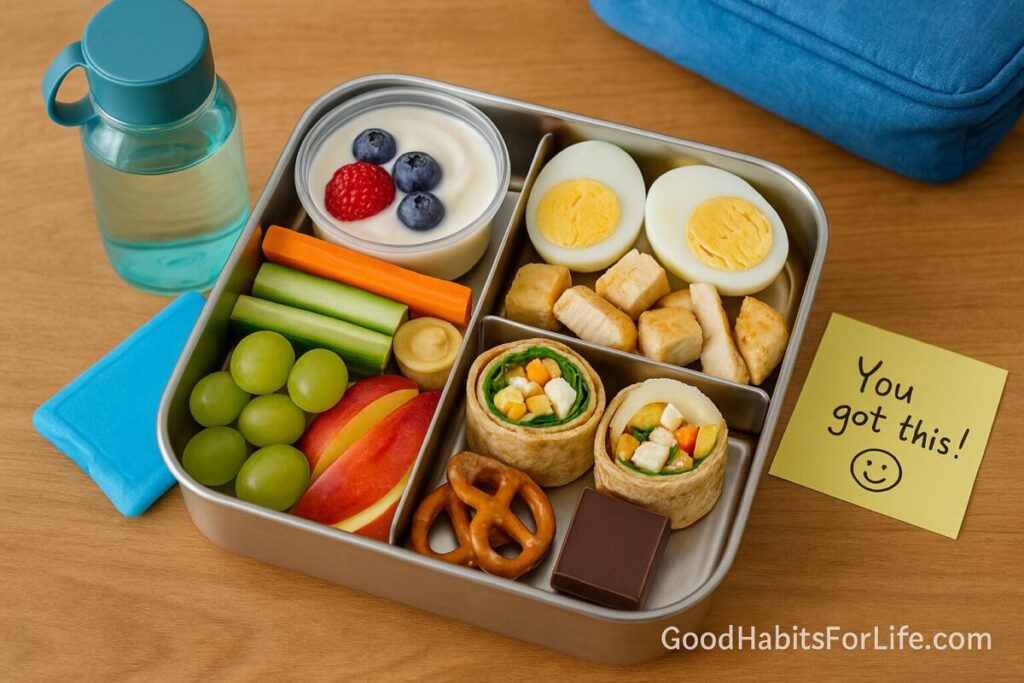
Lunchbox Templates Kids Love (and Eat): Protein-Forward Plan (2025)
Protein-Forward Lunchbox Templates Kids Love (2025)
Table of Contents
🧭 What & Why: The Protein-Forward Lunchbox
A protein-forward lunch anchors the box with a recognizable protein (egg, yogurt, tofu/paneer, beans, fish, chicken, turkey, cheese) and then rounds it out with:
-
Whole grain (wrap, pita, brown rice, quinoa, roti, pasta)
-
Vegetable (sticks, mini salad, roasted veg, hidden veg sauces)
-
Fruit
-
Hydration or dairy/alt (water, milk, fortified alternatives)
-
Optional “fun” bite (small sweet or crunchy add-on)
Why protein? Protein supports growth, muscle repair, and satiety—helping kids stay focused through afternoon classes. Typical daily protein needs (dietary reference intakes) are about 13 g (1–3 yrs), 19 g (4–8), 34 g (9–13), ~46–52 g (14–18, girls/boys). Kids can meet these with familiar foods across meals and snacks. See References for source details.
Approximate protein per kid-sized lunch portion (helpful ballparks; brands vary):
| Food (portion) | ~Protein |
|---|---|
| Egg (1 large) | ~6 g |
| Greek yogurt (170 g / ¾ cup) | ~15–17 g |
| Cottage cheese/paneer (½ cup / 100 g) | ~12–16 g |
| Cheese (30 g slice/stick) | ~6–7 g |
| Chicken/turkey (85 g cooked) | ~20–25 g |
| Tuna/salmon (85 g canned) | ~18–22 g |
| Tofu (100 g) | ~8–10 g |
| Chickpeas/beans (½ cup) | ~7–9 g |
| Peanut/almond/seed butter (2 Tbsp) | ~6–8 g |
| Edamame (½ cup) | ~8–9 g |
| Milk or fortified alt (240 ml) | ~7–8 g (varies) |
Safety first: Use ice packs for cold items; keep hot foods hot in a thermos; follow school allergy rules.
⚡ Quick Start: Do This Today
-
Pick 2 proteins for the week (e.g., eggs + chickpeas).
-
Batch-prep: boil 6 eggs; roast a tray of chickpeas; wash/portion veg + fruit.
-
Choose 2 templates below and rotate (Mon/Wed/Fri vs Tue/Thu).
-
Add dips (hummus, yogurt ranch) to boost veg acceptance.
-
Pack safely: pre-chill cold items; add 2 ice packs; preheat thermos with boiling water for hot packed meals.
-
Involve your child: offer two choices within the template (wrap or mini pitas? carrots or cucumbers?).
Five reusable lunchbox templates (protein-first):
-
#1 Wrap-&-Roll: Protein + whole-grain wrap + veg sticks + fruit + dip.
-
#2 Bento 1-2-3: Protein (palm) + grain (½ cup) + colorful veg (1 cup) + fruit + mini treat.
-
#3 Thermos-Hero: Hot protein + grain + veg in a thermos + fruit + yogurt.
-
#4 Snacky-Plate: 2–3 small proteins (e.g., cheese + edamame) + crackers + veg + fruit.
-
#5 Leftover Remix: Dinner protein + grain into a salad, quesadilla, fried rice, or pasta salad.
🗓️ 7-Day Starter Plan
Use any nut-free swaps as needed.
-
Mon – Wrap-&-Roll: Turkey or paneer wrap + spinach + cheese; sides: cucumber, apple, yogurt.
-
Tue – Snacky-Plate: Boiled egg + edamame + whole-grain crackers; sides: carrot sticks, grapes (halved/quartered), hummus.
-
Wed – Thermos-Hero: Lentil pasta with marinara + chicken/tofu cubes + peas; sides: orange wedges.
-
Thu – Bento 1-2-3: Tuna-sweetcorn mini pitas (or chickpea mash) + cherry tomatoes + berries + cheese stick.
-
Fri – Leftover Remix: Rice + black beans + corn salsa + shredded chicken/paneer; sides: pineapple, yogurt.
-
Sat (at home or trip): Mini frittata muffins + roti or toast + veg sticks + fruit.
-
Sun (prep day): Make a tray of roasted veg, boil eggs, cook a pot of beans; portion fruit; freeze yogurt tubes.
Budget swaps: beans > deli meats; eggs > pricey cheeses; frozen veg/fruit > fresh out-of-season; store-brand yogurt; canned fish in water.
🛠️ Techniques & Frameworks
1) “Protein Anchor” Method
Start with 1 protein your child typically eats, then build the rest:
-
Egg wrap • Greek yogurt parfait • Cottage cheese + fruit • Paneer/tofu tikka cubes • Tuna salad mini pitas • Chicken rice bowl.
2) The 1-1-1-1-Fun Formula
-
1 protein + 1 grain + 1 veg + 1 fruit + 1 fun bite (e.g., 2–3 small cookies, or a couple of dark chocolate squares). Keeps balance without moralizing food.
3) Color-Count Veg Rule
Aim for 2 colors of produce in each lunch (carrot + cucumber; tomato + mango). Kids eat with their eyes first.
4) Dip-and-Crunch Pairing
Add a familiar dip (hummus, yogurt ranch, salsa) and a crunchy vehicle (pita chips, carrots, cucumber). This improves veg intake.
5) Shape & Size for Acceptance
Cut sandwiches into small shapes, slice grapes lengthwise, matchstick raw carrots for younger kids, and offer “build-your-own” components to increase autonomy.
6) Safe-Pack Protocol (Cold & Hot)
-
Cold: Keep perishable foods under 4 °C (40 °F) with two ice packs in an insulated bag.
-
Hot: Preheat thermos with boiling water for 5 minutes; fill with steaming-hot food; close tightly.
-
Timing: Eat within 2 hours if no chilling/heating; discard leftovers that sat in the “danger zone.”
7) Allergy-Aware Template
-
Confirm classroom rules (nut-free? egg restrictions?).
-
Use seed butters (sunflower, pumpkin), bean dips, or dairy/soy alternatives in nut-free spaces.
-
Always label homemade items if asked; avoid cross-contact during prep.
👪 Audience Variations
Toddlers (2–3): Soft textures; small bites; avoid whole nuts, popcorn, hard chunks; cut grapes lengthwise/quarter. Include familiar foods + 1 tiny “learning food.”
Primary (4–8): Finger foods, bento boxes, dips; 2–3 protein options across school day (lunch + snack).
Tweens/Teens (9–18): Larger portions, add a second protein or yogurt; include whole-grain volume (wrap + side grain salad).
Vegetarian: Eggs, dairy, beans, lentils, tofu/tempeh, edamame; pair plant proteins with grains to increase variety.
Gluten-free: Corn tortillas, rice cakes, GF pasta; check labels for shared equipment.
Sport days: Add an extra carb (banana, granola bar) and hydration; include salty items if sweating.
⚠️ Mistakes & Myths to Avoid
-
Myth: “Kids won’t eat protein unless it’s meat.”
Reality: Dairy/alt, eggs, tofu/paneer, beans, edamame, and fish also work. -
Mistake: Packing perishable foods without chilling or a thermos.
-
Mistake: Over-packing. Too much variety can overwhelm; use the template to keep it simple.
-
Myth: “Sugar is the only energy problem.”
Reality: Low protein at lunch can cause mid-afternoon dips; balance matters. -
Mistake: Ignoring school allergy rules or choking-hazard guidance.
💬 Real-Life Examples & Scripts
10 quick protein-forward combos (mix-match):
-
Egg salad mini pitas + cucumber sticks + strawberries.
-
Greek yogurt + granola + mango + cheese stick.
-
Chicken-rice bowl with peas + orange wedges.
-
Paneer tikka skewers + roti triangles + carrot sticks + yogurt dip.
-
Tuna-sweetcorn wrap + cherry tomatoes + apple slices.
-
Hummus + falafel bites + pita + peppers + grapes (halved).
-
Edamame + cheese + crackers + melon.
-
Tofu fried-rice (thermos) + pineapple.
-
Black bean quesadilla + salsa + cucumbers.
-
Cottage cheese + berries + pretzels + mini dark chocolate.
Kid-collab scripts:
-
“Pick one: wrap or rice bowl.”
-
“Which dip today—hummus or yogurt ranch?”
-
“Want apple slices or orange wedges?”
-
“Should we cut the sandwich into triangles or hearts?”
🧰 Tools, Apps & Resources
-
Insulated lunch bag + 2 ice packs: Keeps items cold; choose wide-mouth thermos for hot meals.
-
Silicone cups & leakproof containers: Separate wet/dry foods to preserve texture.
-
Mini sauce containers: For dips and dressings.
-
Printable checklist on the fridge: Protein • Grain • Veg • Fruit • Fun.
-
Apps/sites:
-
MyPlate (meal ideas & portions).
-
HealthyChildren.org (AAP guidance on feeding & safety).
-
CDC/USDA Food Safety (packing temps & timelines).
-
Allergy orgs for school policy templates and cross-contact tips.
-
Pros/cons of a thermos
-
Pros: Expands menu (soups, fried rice, pasta), keeps variety high.
-
Cons: Needs preheating; some kids prefer finger foods; clean daily.
📌 Key Takeaways
-
Lead with a protein anchor, then fill in grain + veg + fruit + fun.
-
Reuse 4–5 templates to speed mornings and reduce stress.
-
Prep once (eggs, beans, chopped veg) and build mix-match boxes.
-
Follow food-safety rules; respect allergy policies.
-
Keep portions age-appropriate; offer choices to improve buy-in.
❓ FAQs
1) How much protein should my child get at lunch?
It depends on age and total daily intake. Use lunch to provide ~⅓–½ of the day’s protein (e.g., 7–12 g for younger kids, 15–20+ g for teens). Focus on balanced meals across the day.
2) Are plant proteins enough?
Yes. Beans, lentils, tofu/tempeh, edamame, dairy/alt, and grains can meet needs. Variety across the day matters more than any single lunch.
3) My school is nut-free—what can I pack?
Try seed butters (sunflower/pumpkin), hummus + beans, tofu/edamame, eggs, dairy/alt, fish (if allowed). Always check classroom rules.
4) How do I keep food safe until lunch?
Use two ice packs with perishable items in an insulated bag. For hot food, use a preheated thermos. Discard items left without temperature control beyond recommended times.
5) What about choking hazards?
For younger children, avoid hard/round foods (whole grapes, popcorn, whole nuts). Slice grapes lengthwise/quarter; cut foods into small, soft pieces.
6) My child is picky—any tips?
Use the “2 safe + 1 learning” approach: pack two familiar items and one tiny exposure. Offer choices on format (wrap vs pita, triangles vs squares), and include dips.
7) Is deli meat okay?
Occasionally is fine for many families; balance with less-processed proteins (eggs, beans, yogurt, tofu, home-cooked chicken, fish).
8) How can I keep lunches affordable?
Rely on beans, eggs, yogurt, canned fish, frozen produce, and leftovers. Buy family-size tubs of yogurt and portion at home.
9) Can I pack fish?
If school allows, canned tuna/salmon are good protein options. Keep cold; consider low-odor recipes (croquettes, mixed salads).
10) What drinks are best?
Water is the default. Milk or fortified alternatives can add protein; limit sugary drinks.
📚 References
-
U.S. Department of Agriculture & HHS. Dietary Guidelines for Americans, 2020–2025. https://www.dietaryguidelines.gov
-
MyPlate.gov — Preschoolers & Kids: Food groups, portions, lunch ideas. https://www.myplate.gov
-
American Academy of Pediatrics (HealthyChildren.org). Protein and Your Child. https://www.healthychildren.org
-
American Academy of Pediatrics (HealthyChildren.org). Choking Prevention. https://www.healthychildren.org/english/health-issues/injuries-emergencies/Pages/Choking-Prevention.aspx
-
USDA Food Safety & Inspection Service. Back to School: Lunches and Food Safety. https://www.fsis.usda.gov
-
Centers for Disease Control and Prevention. Food Safety at School. https://www.cdc.gov/foodsafety/
-
National Academies of Sciences, Engineering, and Medicine. Dietary Reference Intakes for Protein and Amino Acids. https://nap.nationalacademies.org
-
NHS (UK). Protein in your diet (children & teens guidance). https://www.nhs.uk/live-well/eat-well/food-types/protein/
Disclaimer: This article offers general nutrition guidance and is not a substitute for personalized medical or dietary advice for your child.