
LowSpeed Maneuvering: Clutch, Creep, Control
Low-Speed Maneuvering: Clutch, Creep & Control
Table of Contents
🧭 What & Why
Low-speed maneuvering = precise car control below ~10 km/h (≤6 mph) for parking, tight turns, stop-go traffic, and edging at junctions. The foundation is clutch control—holding the “biting point” while balancing gentle throttle so the car moves millimetre-by-millimetre. safedrivingforlife.info
Safety frameworks back this up: before moving off, use mirrors, check blind spots, signal if needed, and only go when it’s safe (the classic MSM routine). GOV.UK In reverse, choose a safe place, check all around (especially for children and cyclists), reverse slowly while looking mainly through the rear window, and do not reverse further than necessary. GOV.UK
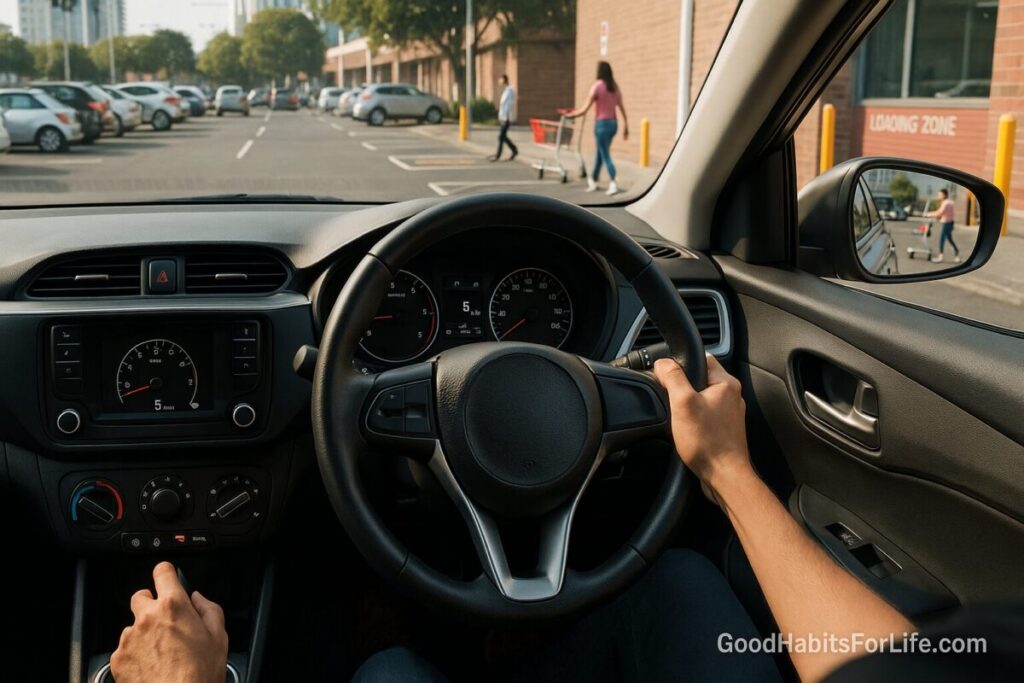
Pedestrians are at highest risk during back-and-fill maneuvers in car parks and driveways—drivers should slow, scan, and yield. NHTSA
Benefits
-
Smoother city driving with fewer stalls and less clutch wear
-
Accurate parking with fewer correction swings
-
Lower stress in queues and tight spaces
-
Better courtesy to pedestrians and cyclists
✅ Quick Start: 10-Minute Drill (Do This Today)
Environment: empty car park or a quiet, flat side street.
-
Find the bite (2 min). Engine on, first gear, gentle gas (≈1–1.5k rpm), lift the clutch slowly until you feel the nose rise/engine note change—hold it. safedrivingforlife.info
-
Creep straight (2 min). Handbrake off, keep feet steady, let the car roll at walking pace; clutch micro-adjustments control speed.
-
Creep-stop-creep (2 min). Ease clutch down a few millimetres to slow/stop; ease up to move again.
-
Tight turns (2 min). Add slow steering while holding bite; pause the clutch briefly at full lock to avoid lurching.
-
Reverse scan (2 min). 360° check; select reverse; look mainly through rear window; creep 5–10 m and stop. GOV.UK
🛠️ 7-Day “Bite & Creep” Habit Plan
Daily dose: 10–15 minutes.
-
Day 1 – Bite mastery. Static bite finding + creep 20 m, stop, repeat x6.
-
Day 2 – Straight-line control. Creep-stop-creep ladder (5 m, 10 m, 15 m).
-
Day 3 – Steering at creep. Slaloms around cones/bottles at walking pace.
-
Day 4 – Reverse basics. 360° checks; reverse 10–15 m, pause, straighten. GOV.UK
-
Day 5 – Parking bay in/out. Two entries, two exits, engine off between reps to reflect. (Use marked references; go slowly).
-
Day 6 – Parallel park scaffold. Use a government handbook sequence (align ▸ reverse ▸ pivot ▸ straighten). dmv.ca.gov
-
Day 7 – Micro-assessment. 10-minute loop: three secure stops, one reverse, one bay park; self-score smoothness (0–5), observations (0–5).
🧠 Techniques & Frameworks (Clutch, Creep, Control)
The 3C Model
-
Clutch — Set light gas, hold the biting point; speed changes come from tiny clutch movements (not throttle bursts). safedrivingforlife.info
-
Creep — Aim for walking pace; use clutch down a few millimetres to slow/stop without braking.
-
Control — Layer in steering and observation: MSM before every move-off; frequent mirror checks while creeping. GOV.UK
Moving Off (Manual)
-
Press clutch → select 1st → set light gas → find bite → mirrors + blind spot → signal if necessary → release handbrake → creep. Guidance aligns with national driver syllabi. nzta.govt.nz
Reversing Safely
-
Place: choose a quiet, safe spot—avoid busy roads.
-
Look: mirrors, over-shoulder checks; watch for kids/cyclists.
-
Go: reverse slowly, look mainly through the rear window; front end swings—mind the nose.
-
Limit: reverse only as far as needed. GOV.UK
Parallel Parking (Reference Sequence)
-
Find a space ≈ one metre longer than your car; signal; align; reverse to pivot; steer in; straighten; centre in the bay. dmv.ca.gov
Automatics vs Manuals
Automatics have no clutch pedal; slow control comes from gentle brake/throttle modulation and careful creep in “D.” safedrivingforlife.info
👥 Audience Variations
-
Learners/Students: prioritise bite + creep on quiet roads before mixing with traffic.
-
Parents teaching teens: rehearse a spoken checklist (“Mirrors, blind spots, pedestrians, then move”).
-
Professionals/Commuters: practise queue discipline—hold gaps, no lurching, anticipate crossings.
-
Seniors: add extra head-checks and longer pauses before reversing to account for neck mobility; consider parking aids (camera/sensors).
⚠️ Mistakes & Myths to Avoid
-
Myth: “Use more throttle to fix stalls.” → Usually it’s clutch timing; add slightly more gas only after mastering bite. safedrivingforlife.info
-
Mistake: Looking only in mirrors when reversing. → You must also look over your shoulder and mainly through the rear window. GOV.UK
-
Mistake: Fast steering at speed. → Keep walking pace when at or near full lock.
-
Myth: “Reversing out onto a main road is fine.” → It’s discouraged; choose safer places and reverse into driveways instead. GOV.UK
💬 Real-Life Examples & Scripts
Script: Move-Off (Manual)
-
“Mirror–mirror–blind spot… clear. Signal on. Light gas… bite… handbrake down… hold the creep… wheels straight.”
Script: Reverse Out of a Bay
-
“360° check—pedestrians? trolleys? bikes?—select R—look over right shoulder—creep—pause for cross-traffic—stop if line of sight is blocked—continue.”
Script: Parallel Park
-
“Align… reverse till rear wheel at bumper… steer in one turn… check kerb + rear… straighten… centre in the space.” dmv.ca.gov
🧰 Tools, Apps & Resources
-
Reverse camera & parking sensors — Improve rear visibility; still require full checks.
-
Dash cam — Useful review of low-speed technique.
-
Official theory/handbook apps — DVSA, DMV, Waka Kotahi modules on observation and maneuvers reinforce MSM and reversing rules. GOV.UKdmv.ca.govnzta.govt.nz
-
Foldable cones — Create slaloms and reference points for home practice.
Pros/Cons
-
Aids increase awareness and confidence (+), but never replace slow speed, proper checks, and legal compliance (–).
📌 Key Takeaways
-
Clutch bite + tiny adjustments = smooth creep. safedrivingforlife.info
-
MSM before every move-off; frequent mirror checks while creeping. GOV.UK
-
Reverse only where safe; go slow; look mainly through the rear window; stop early. GOV.UK
-
Practise 10–15 minutes daily for a week; layer complexity gradually.
-
Prioritise pedestrians and cyclists in car parks and near crossings. NHTSA
❓ FAQs
1) What exactly is the “biting point”?
It’s the clutch position where engine and gearbox begin to engage so the car wants to move; you feel a slight nose lift/engine note change. Practise finding it on each car. safedrivingforlife.info
2) Should I use the handbrake for very slow creep in traffic?
On level ground, you can hold with the clutch at bite + light gas in a manual; use the handbrake on hills or if you’ll be stationary more than a couple of seconds. Guidance varies—follow your instructor and local rules.
3) Where should I look when reversing?
Check all around, but look mainly through the rear window while reversing; mirrors complement the view. GOV.UK
4) How slow is “walking pace”?
Roughly 3–5 km/h (2–3 mph). The goal is control, not speed—if you need to turn the wheel a lot, slow down more.
5) Is creeping across a pedestrian crossing okay if traffic is queued?
No—keep crossings clear and yield; pedestrians have priority when they’ve started to cross. GOV.UK
6) Any official sequences for parallel parking I can follow?
Yes—state/national handbooks outline step-by-step sequences for parallel parking; practise them in an empty area first. dmv.ca.gov
7) Do these tips change for automatics?
Automatics use gentle brake/throttle to manage creep (no clutch). Principles of observation and ultra-slow speed remain the same. safedrivingforlife.info
8) What’s the safest way to turn a car around on a busy road?
Avoid it if possible; choose a safer place (quiet side road) or drive round the block rather than reversing in traffic. GOV.UK
📚 References
-
GOV.UK — The Highway Code: Using the road (Rules 159–203) (moving off, reversing). GOV.UK
-
DVSA — Moving off safely and smoothly (biting point & clutch control). safedrivingforlife.info
-
California DMV — Handbook: Parallel Parking (official sequence). dmv.ca.gov
-
NHTSA — Pedestrian Safety (driver tips to protect pedestrians). NHTSA
-
Waka Kotahi NZTA — Driving Skills Syllabus: Moving off & stopping (manual clutch steps). nzta.govt.nz
-
DVSA — Driving an automatic vehicle (no clutch; creep via brake/throttle). safedrivingforlife.info