
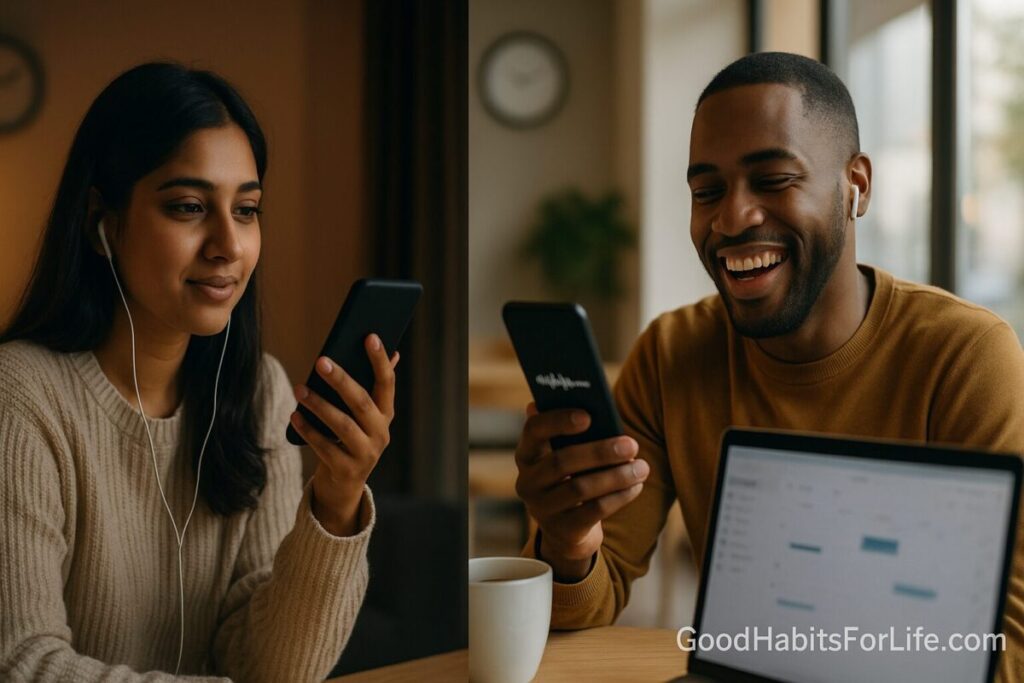
LongDistance Friendships in 2025: Async that Feels Close
Long-Distance Friendships (2025): Async that Feels Close
Table of Contents
🧭 What Counts as a “Close” Long-Distance Friendship—and Why It Matters
A close long-distance friendship is one where you both feel emotionally known, supported, and “caught up,” even if you rarely share the same place or time. In 2025, that usually means an async-first rhythm (messages, photos, voice notes) plus regular high-fidelity moments (voice/video) layered in. Research shows hearing a friend’s voice fosters stronger feelings of connection than text alone, so combine quick texts with periodic voice/video to stay emotionally close. ScienceDailyGreater Good
This isn’t just “nice to have.” Strong social ties are linked to better health and longer life, while loneliness affects about 1 in 6 people globally and carries real health risks. Intentionally maintaining friendships—near or far—supports wellbeing in measurable ways. World Health Organization+1
Finally, using multiple channels (text + voice + video + shared spaces) maps to what communication scholars call media multiplexity: close ties typically use more than one medium and interact more frequently. You don’t need every app—just a small stack you both like. Oxford Academic
✅ Quick Start: Do This Today
-
Pick your “home thread.” Choose one chat (DM, WhatsApp, iMessage, Signal, etc.) and pin it.
-
Share a 3-2-1 update (takes <5 minutes):
-
3 highlights from the week
-
2 small struggles
-
1 thing you’re looking forward to
-
-
Send a 60-second voice note. Hearing tone conveys warmth and reduces misunderstandings. ScienceDaily
-
Book a 25-minute call (this week or next). Keep it short and easy to say yes to.
-
Add one async ritual (see below) to keep the thread lively between calls.
-
Time zone trick: propose two windows (yours and theirs) in the same message and rotate monthly. Async keeps you connected when live overlap is scarce. Harvard Business School LibraryActiveCollab
Async rituals you can start now
-
Monday Photo Drop: a picture of something ordinary (desk, walk, dinner).
-
Wednesday Wins: one tiny progress update.
-
Friday Song Swap: share a track or playlist.
-
Monthly “Mini-Mail”: 5-bullet catch-up (work, health, family, fun, plan).
🛠️ 30-60-90 Day Habit Plan
Day 0–30: Build the Base
-
Agree on home thread + weekly voice note (≤90 seconds).
-
One 25-minute call this month.
-
Start one ritual (e.g., Friday Song Swap).
-
Checkpoint: both can name the other’s current priority and stressor.
Day 31–60: Deepen & Diversify
-
Add monthly co-experience: watch-together, online game, or read the same short article and discuss.
-
Exchange “User Manuals” (your best ways to give/receive support, preferred response times).
-
Checkpoint: both report fewer “We haven’t talked in ages” feelings.
Day 61–90: Sustain & Stretch
-
Introduce a quarterly plan (Q1–Q4): one deeper call or meet-in-the-middle visit (if feasible).
-
Create a shared space (album/notes list) for memories and future plans.
-
Checkpoint: you have an autopilot rhythm—touches happen even during busy weeks.
🧠 Techniques & Frameworks That Work
1) The Async Bonding Stack
-
Ambient channel: the pinned thread for low-friction daily/weekly touches.
-
High-fidelity moments: voice notes and calls to transmit warmth and nuance. ScienceDaily
-
Co-experiences: periodic shared activities (co-watch, co-play, co-read) to refresh shared context.
-
Memory keepers: a shared album or note that grows over time.
2) 5 Prompts for Instant Depth (copy-paste)
-
“What’s something tiny that made this week 1% better?”
-
“What are you worried about that future-you might laugh at?”
-
“Which song is your current mood?”
-
“What’s one decision you’re putting off?”
-
“Where do you want to be ‘unreasonable’ in the next month?”
3) Multiplex, but don’t overwhelm
Two to four channels are plenty. The goal is reliable rhythm, not maximal app count. (This aligns with research that stronger ties often use multiple media—but more media doesn’t automatically equal more closeness.) Oxford Academic
4) Async for time zones; schedule “overlap” for intimacy
Async reduces scheduling pain; then protect a small, repeatable overlap window for calls. This combo keeps momentum without burnout. Harvard Business School LibraryActiveCollab
5) Prefer voice when something matters
Deliver appreciations, repairs, or vulnerable updates via voice/video for tone and emotional safety. ScienceDaily
🧩 Variations: Students, Professionals, Parents, Seniors, Teens
-
Students: build a study-buddy ritual (10-minute planning voice note on Sundays). Share spaced-repetition decks or summaries.
-
Professionals: use a biweekly walk-and-talk; keep a shared “career radar” note (roles, intros, wins).
-
Parents: try photo-story batches (one drop per week instead of constant updates) and a “vent or fix?” label on tricky topics.
-
Seniors: prioritize simple, large-text apps and scheduled calls; maintain a shared album to review together for mood and memory benefits.
-
Teens: set expectations about reply times; combine group chats with 1:1 voice notes for real connection. (Synchronous chats, video, and social gaming have been linked to lower loneliness for adolescents.) PMC
⚠️ Mistakes & Myths to Avoid
-
Myth: “Text is enough.” Text maintains contact; voice/video strengthens bond. Use both. ScienceDailyGreater Good
-
Myth: “If we need structure, it isn’t real.” Rhythms protect what matters amid adult schedules.
-
Streak pressure: a broken streak doesn’t mean failure—restart small (a single emoji check-in).
-
Calendar drift: without a recurring slot, calls become “someday.” Put it on repeat.
-
App sprawl: too many channels = missed messages. Consolidate and pin.
💬 Real-Life Examples & Copy-Paste Scripts
Invite a ritual
“We keep missing each other—want to try a Friday Song Swap and a 25-minute call every second Sunday?”
Suggest voice notes
“Can I send a 60-sec voice note? Easier to say this with tone—and no need to reply right away.”
Set expectations
“My reply window is odd this month (late nights). If it’s urgent, add ‘⚡’ and I’ll jump in sooner.”
Repair a wobble
“I noticed we’ve gone quiet. I value us and want to reset—could we put 20 minutes on the calendar next week?”
Navigate time zones
“Two windows that work for me: Tue 07:30–08:00 and Sat 18:00–18:30 (your time). Want to rotate monthly?”
📚 Tools, Apps & Resources (Pros/Cons)
(Choose the few you’ll actually use together.)
-
Messaging (WhatsApp, iMessage, Signal, Telegram):
Pros: ubiquitous, voice notes, reactions, easy media; Cons: noise, multiple threads. -
Video (FaceTime, Google Meet, Zoom, Discord):
Pros: richest cues, group options; Cons: scheduling overhead. -
Co-watch/Co-play (Teleparty, YouTube co-watch, Discord screenshare, casual co-op games):
Pros: shared experiences; Cons: setup and time. -
Shared memories (Google Photos/Apple Photos albums):
Pros: one place for trips, kids, pets; Cons: storage/permissions. -
Shared notes/lists (Google Keep, Apple Notes, Notion):
Pros: trip ideas, book lists, inside jokes; Cons: can sprawl. -
Scheduling helpers (calendar invites, rotating slots):
Pros: removes decision fatigue; Cons: requires a bit of setup.
🧾 Key Takeaways
-
Use an async-first rhythm (texts, photos, voice notes) plus regular high-fidelity moments. ScienceDaily
-
Protect a recurring overlap window; async covers the rest. Harvard Business School Library
-
Keep the stack small (one home thread + a couple of add-ons). Oxford Academic
-
Invest in rituals you can do even on busy weeks (3-2-1 updates, weekly voice note).
-
Strong ties are good for your health—friendship is a health habit. World Health OrganizationPMC
❓ FAQs
1) What’s the best frequency for long-distance contact?
Aim for weekly micro-touches (text/photo/voice note) and a monthly call; adjust to your season of life.
2) Is text bad for relationships?
No—text is great for ongoing connection. For closeness, layer in voice/video periodically. ScienceDaily
3) We’re 8–10 hours apart. How do we keep momentum?
Use async rituals and protect one rotating overlap window monthly for a 20–30 minute call. Harvard Business School Library
4) Do more apps make us closer?
Not necessarily. Close ties often use multiple media, but what matters is consistent, meaningful contact, not app count. Oxford Academic
5) Are social platforms helpful or harmful for friendship?
They’re tools; benefits depend on how you use them (private 1:1 threads, small groups, scheduled breaks). Most adults use at least one platform regularly, so meet friends where they are—then deepen in private channels. Pew Research Center
6) My friend hates calls. What else works?
Try voice notes (async but warm) and text/photo rituals; renegotiate occasionally to find a fit both like. ScienceDaily
7) How do we avoid “We should catch up soon” forever?
Propose two concrete windows and send a calendar invite right away.
8) What if we drift?
Name it, value it, and restart small: “Miss you. 60-sec voice note swap today?”
📚 References
-
World Health Organization — Report of the WHO Commission on Social Connection (2025). https://www.who.int/groups/commission-on-social-connection/report World Health Organization
-
WHO News Release — Social connection linked to improved health and reduced risk of early death (June 30, 2025). https://www.who.int/news/item/30-06-2025-social-connection-linked-to-improved-heath-and-reduced-risk-of-early-death World Health Organization
-
Holt-Lunstad J., et al. Social Relationships and Mortality Risk: A Meta-analytic Review. PLOS Medicine (2010). https://journals.plos.org/plosmedicine/article?id=10.1371/journal.pmed.1000316 PLOS
-
University of Texas at Austin — Phone calls create stronger bonds than text-based communications (2020). https://www.sciencedaily.com/releases/2020/09/200911141713.htm ScienceDaily
-
Pew Research Center — Americans’ Social Media Use (Jan 31, 2024). https://www.pewresearch.org/internet/2024/01/31/americans-social-media-use/ Pew Research Center
-
Haythornthwaite & colleagues — Revisiting Media Multiplexity. Journal of Communication (2019). https://academic.oup.com/joc/article/68/6/1104/5160091 Oxford Academic
-
Harvard Business School Working Knowledge — Why Time Zones Matter in Remote Work (Sep 19, 2024). https://www.library.hbs.edu/working-knowledge/global-talent-local-obstacles-why-time-zones-matter-in-remote-work Harvard Business School Library
-
ActiveCollab — Asynchronous communication and collaboration (May 29, 2025). https://activecollab.com/blog/collaboration/asynchronous-communication-and-collaboration ActiveCollab
-
APA — It’s complicated: Our relationship with texting (Aug 9, 2018). https://www.apa.org/news/press/releases/2018/08/relationship-texting APA
-
Spiekerman, A.M., et al. Adolescents’ Online Connections with Friends during COVID-19. J Med Internet Res. (2023). https://pmc.ncbi.nlm.nih.gov/articles/PMC10453441/ PMC
Disclaimer: This article is educational and not a substitute for professional mental-health advice.