
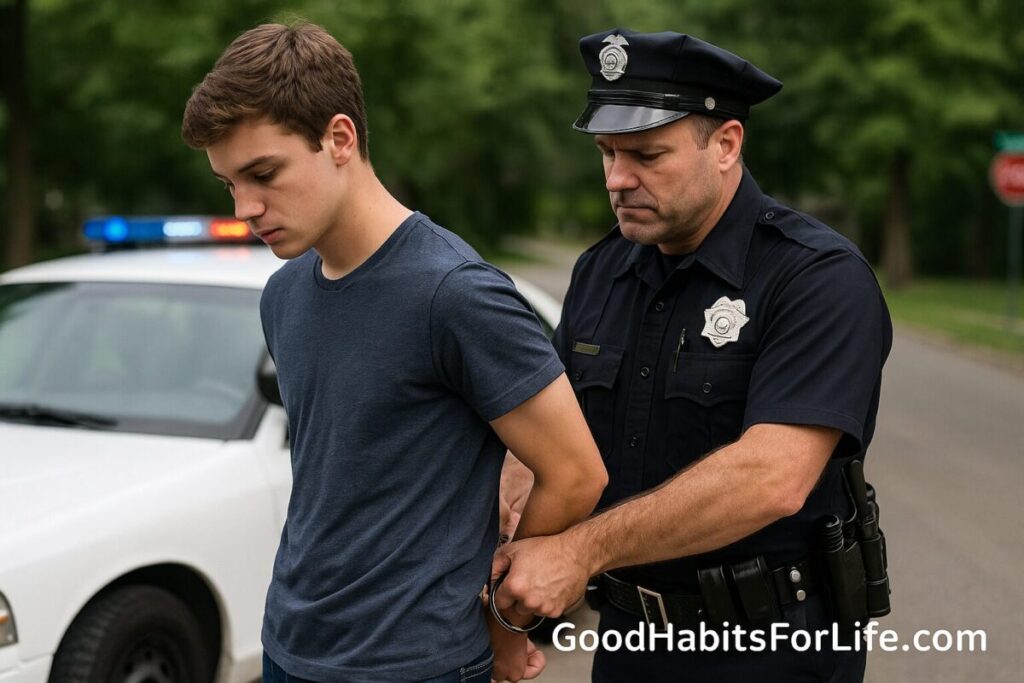
Legal Consequences 101: What Teens Should Know
Legal Consequences 101: What Teens Should Know
Table of Contents
🧭 What This Covers & Why It Matters
Underage drinking isn’t only about health—there are real legal consequences. Depending on where you live, penalties can include fines, community service, license suspension, probation, criminal or civil records, school discipline, and impacts on scholarships or future applications. Research links early alcohol use with increased risk of injuries, violence, and road crashes; laws are designed to reduce these harms, especially for new drivers and adolescents. See the references from public-health authorities for the evidence base.
Quick definitions
-
Underage/Minor in Possession (MIP): Laws prohibiting anyone under the legal drinking age from buying, possessing, or sometimes even consuming alcohol.
-
Zero-tolerance DUI/DWI: For drivers under the legal drinking age, any measurable blood alcohol concentration (often 0.01–0.02%) can trigger penalties.
-
Fake ID offenses: Creating, using, or lending false identification is a separate crime.
-
Social host laws: Adults or older teens who supply alcohol to minors (or host parties) can face fines or criminal charges, even if they don’t drink.
✅ Key Laws Teens Should Know (Global Overview)
Laws vary by country/state. Always check your local rules, but these patterns are common:
-
Minimum Legal Drinking Age (MLDA): Many countries set 18; some set 21. Buying/possessing underage is typically illegal.
-
Public possession/use: Being caught with alcohol in public can lead to citations, fines, and mandated education.
-
Driving after drinking (underage): Zero-tolerance thresholds are common. Penalties may include license suspension, ignition-interlock, mandatory education, fines, higher insurance, and court costs.
-
Fake IDs: Offenses range from misdemeanors to more serious charges; outcomes can include fines, probation, community service, and record entries that matter for travel or background checks.
-
Supplying alcohol to minors / social hosting: Parents, older siblings, or party hosts can be liable; civil lawsuits may follow if someone is harmed.
-
School, team, and scholarship codes: Separate from government laws—violations can mean suspensions, loss of team placement, or rescinded offers.
Tip: If you’re unsure of local law, search your country/state “underage drinking law + official” and confirm on government or police sites.
🛠️ Fast Start: Safety & Compliance Today
-
Know your number: Learn the local legal drinking age and “zero-tolerance” BAC threshold for underage drivers.
-
Lock your plan: Decide in advance how you’ll decline alcohol and leave risky situations (see scripts).
-
Set a ride rule: If anyone has been drinking, don’t drive. Use a ride-share, call a parent/guardian, or a designated sober driver.
-
Ditch the fake ID: Destroy it. The short-term “convenience” is not worth record risk.
-
Protect your record: Never post party evidence online; it can be used by schools, employers, or investigators.
-
In a police stop: Be polite. Provide name/ID if required. You can say, “I choose to remain silent and would like to speak with a lawyer/parent.”
🗓️ 30-60-90 Day Habit Plan for Safer Choices
Goal: Zero legal incidents; clear decision habits; reliable exit/ride plan.
Days 1–30 (Foundations)
-
Read your local laws (10–15 minutes with a parent).
-
Create a Family Safety Contract: no driving after any alcohol; always call for pickup—no questions asked that night.
-
Add a Ride Shortcut: pin ride-share, local taxi numbers, and a trusted adult to favorites.
-
Practice two refusal scripts aloud.
-
If you drive: commit to 0-BAC driving and schedule reminder labels (car dashboard note: “Sober Wheels Only”).
Checkpoint: You can explain local underage + DUI rules in 60 seconds; you have a ride plan and scripts saved.
Days 31–60 (Skills)
-
Rehearse the B.R.A.I.N. pause (below) weekly.
-
Add one sober social option each weekend (movies, sport, gaming night, volunteering).
-
Parents: run a “pick-up drill”—teen texts a code word; parent arrives calmly.
Checkpoint: You used your exit plan at least once, even in a low-risk setting.
Days 61–90 (Resilience)
-
Review and update the family contract.
-
Teens who drive: investigate insurance discounts for safe-driver programs or telematics.
-
If you had a near-miss, debrief it (what triggered it, what worked, next time plan).
Checkpoint: Automatic habit: you default to the sober ride and use scripts without hesitation.
🧠 Techniques & Frameworks
The B.R.A.I.N. Decision Pause (10 seconds)
-
Benefits now? (fun, fitting in)
-
Risks later? (fines, license, injuries, team suspension)
-
Alternatives? (mocktails, games, leave with friends)
-
Intuition? (Does this feel wrong?)
-
Next best step? (Decline + ride plan)
Family Safety Contract (1 page)
-
No-driving-after-any-alcohol rule
-
No-judgment pickup (text a code word; parent arrives, debrief next day)
-
Party info sharing (location, host contact)
-
Device etiquette (don’t film others; don’t post incriminating content)
-
Consequences (clear, proportional, restorative)
Risk Radar for Parties
-
Unknown addresses, no adult supervision, open invites, pressure to drink, unlabelled punch bowls, keys in a “take a sip” bowl = leave.
Documentation Discipline
-
If cited or questioned, don’t argue. Ask for a parent/guardian and a lawyer. Keep copies of any paperwork; log what was said/time/location.
👥 Variations: Teens, Parents, Coaches/Schools
Teens
-
Keep cash or a ride voucher; phones die.
-
If driving peers, set the rule: no alcohol in your car.
-
Never hold someone else’s drink (possession laws can be strict).
Parents/Guardians
-
Lock alcohol storage at home.
-
Offer an unconditional ride home. De-brief with curiosity (“What happened? What did you learn?”) rather than anger.
-
Model behavior: don’t joke about “needing” alcohol to cope.
Coaches/Schools
-
Publish clear codes of conduct; include amnesty for calling for help in medical emergencies.
-
Offer seasonal education sessions for teams and clubs.
-
Coordinate with parents on transport plans after late events.
⚠️ Common Mistakes & Myths
-
“I only had one—so I can drive.” Underage drivers often face zero-tolerance limits; “one drink” can still be illegal.
-
“It’s legal at home with parents, so parties are fine.” Private exceptions (where they exist) rarely extend to public spaces or driving.
-
“Fake IDs are no big deal.” They are separate crimes with real penalties.
-
“If police ask, I must answer everything.” You must follow lawful orders and provide ID, but you can remain silent and request a lawyer/parent.
-
“Social media disappears.” Screenshots and archives live on.
💬 Real-Life Scripts (Copy-Paste)
-
Declining: “I’m driving / on meds tonight—gonna stick to soda. Thanks though.”
-
Exiting a risky scene: “My ride’s here—I’m heading out. Catch you tomorrow.”
-
Calling a parent/guardian: “Code Red. At Lara’s. Need pickup. Safe spot: front porch.”
-
With police (calm voice): “Hello, officer. I’m willing to show ID. I choose to remain silent and would like a parent and a lawyer present.”
-
To a friend who’s been drinking: “Let’s order a ride. I’ll go with you to make sure you get home.”
📚 Tools, Apps & Resources (brief)
-
Ride-share / local taxi apps: Fast exit; surge pricing at peak times.
-
Campus safety apps: One-tap help, friend walk-along features.
-
Hotlines: Substance help lines for confidential support.
-
Breath-tester devices (where legal): Not a license to drive—use as an educational tool only.
-
School/club contracts: Put rules in writing; reduces ambiguity.
✅ Key Takeaways
-
Underage alcohol laws are strict; zero-tolerance driving rules are common.
-
Fake IDs and supplying minors are separate offenses.
-
Schools and teams can add sanctions beyond the law.
-
Prepare refusal scripts, a ride plan, and a family contract.
-
In legal trouble: stay calm, ask for a trusted adult/lawyer, and don’t self-incriminate.
❓ FAQs
1) What is the usual legal drinking age?
Most countries set 18; some set 21. Buying/possessing under that age is typically illegal.
2) Can I get arrested for “just holding” a drink?
In some places, yes—“possession” or public consumption can be enough. Know your local rules.
3) What counts as underage DUI?
Underage drivers often face zero-tolerance limits—any measurable alcohol can trigger penalties.
4) Are fake IDs worth the risk?
No. They create separate crimes that can affect records, travel, and school discipline.
5) What if I’m at a party and police arrive?
Stay calm, follow lawful instructions, provide ID if required, and request a parent/guardian and a lawyer before answering questions.
6) Can I get in trouble if my friends drink in my car?
Yes. Open-container or possession rules may apply; you could also face aiding/allowing violations.
7) Will a minor alcohol citation go on my “permanent record”?
Outcomes vary by jurisdiction (warnings, civil fines, juvenile records, or criminal records). Ask a qualified local lawyer.
8) Do schools/teams really check social media?
Yes. Posts can lead to school or team discipline—and sometimes legal evidence.
9) What if I drank and feel unsafe or sick?
Call emergency services, a parent/guardian, or a sober adult immediately. Many places have medical amnesty policies for seeking help.
10) How do I learn my exact local law?
Search official government, police, or transportation sites for “underage drinking law” and “zero-tolerance DUI.”
References
-
World Health Organization. Alcohol and young people—harm and policy. https://www.who.int
-
U.S. Centers for Disease Control and Prevention (CDC). Underage Drinking. https://www.cdc.gov/alcohol/fact-sheets/underage-drinking.htm
-
National Institute on Alcohol Abuse and Alcoholism (NIAAA). College & Teen Drinking. https://www.niaaa.nih.gov
-
Substance Abuse and Mental Health Services Administration (SAMHSA). Underage Drinking Prevention. https://www.samhsa.gov/underage-drinking
-
National Highway Traffic Safety Administration (NHTSA). Zero Tolerance Laws & Teen Drivers. https://www.nhtsa.gov
-
NHS (UK). Alcohol advice for teens and parents. https://www.nhs.uk/live-well/alcohol-advice/
-
Australian Government—Department of Health. Alcohol and young people. https://www.health.gov.au
-
UNICEF. Adolescent health and risk behaviours. https://www.unicef.org
-
European Monitoring Centre for Drugs and Drug Addiction (EMCDDA). Alcohol—Policies and Laws. https://www.emcdda.europa.eu
-
Canadian Centre on Substance Use and Addiction (CCSA). Youth and Alcohol. https://www.ccsa.ca
Disclaimer: This article is for general education only and is not legal or medical advice—check your local laws and consult qualified professionals when needed.