
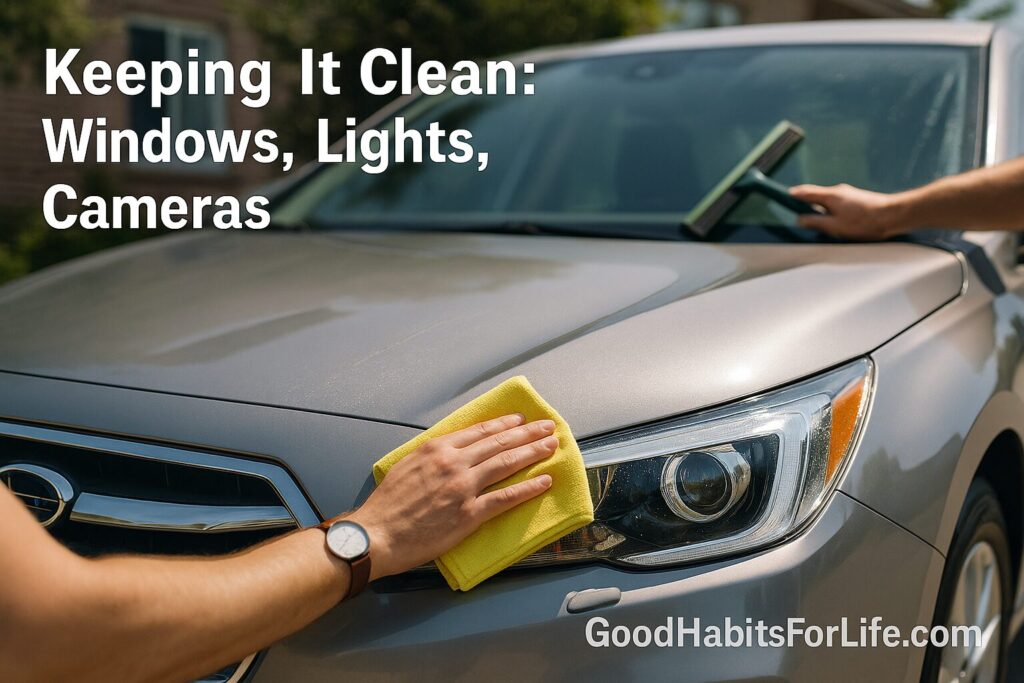
Keeping It Clean: Windows, Lights, Cameras
Keeping It Clean: Windows, Lights, Cameras
Table of Contents
🧭 What This Covers & Why Visibility Matters
Clear sightlines are one of the simplest, highest-impact safety upgrades you can make. A clean windshield and mirrors help you spot pedestrians, cyclists, and brake lights sooner. Clear headlamp lenses and working bulbs extend nighttime visibility and help others see you. Clean backup and surround-view cameras reduce blind spots and make parking safer. Advanced driver assistance systems (ADAS) rely on unobstructed cameras and radar; dirt or fog can degrade performance or trigger warnings.
Benefits at a glance
-
Earlier detection of hazards at night and in bad weather.
-
Better lane positioning and following distance judgment.
-
More reliable parking, reversing, and cross-traffic alerts.
-
Fewer glare and ghosting artifacts that hide obstacles.
✅ Quick Start: Your 60-Second Pre-Drive Sweep
Do this before any trip longer than a few minutes:
-
Windshield & Windows (10–15 s): If you see streaks, fogging, or film, give the driver’s eye path a quick wipe with a dry microfiber.
-
Mirrors (5 s): Wipe off water spots on both side mirrors and the interior rear-view.
-
Rear Camera (10 s): Tap the lens with a microfiber corner; remove mud, dust, or water beads.
-
Headlights & Taillights (15 s): Quick wipe of lenses; confirm no cracked lenses or heavy haze.
-
Wipers & Washer (10–15 s): If it’s dusty or buggy, top up washer fluid and run a swipe to confirm a streak-free pass.
-
Sensors glance (5 s): Check the badge/grille (radar), windshield top/center (camera). Ensure nothing’s blocked by stickers, mud, or ice.
That’s it—one minute for a safer drive.
🛠️ Gear You Actually Need (and what to skip)
Essentials
-
2–3 plush microfiber towels (edgeless, 300–400 GSM). One for glass, one for lights/cameras, one spare.
-
Automotive glass cleaner (ammonia-free, safe for tint).
-
Plastic-safe lens cleaner or mild car-wash shampoo for headlamp lenses.
-
Washer fluid rated for your climate (winter formula if needed).
-
Soft detailing brush or camera swab for tight edges and badges.
-
Non-abrasive clay bar (optional) for stubborn windshield film.
Skip
-
Paper towels/newspaper (can scratch or shed lint).
-
Household ammonia glass cleaners (can harm tint and some interior plastics).
-
Abrasive pads/compounds on plastic headlamp lenses unless you’re doing a controlled restoration kit.
🪟 Windows & Mirrors: Streak-Free Method
A fast method you can repeat weekly:
Prep
-
Park in shade; hot glass flashes cleaner and causes streaks.
-
Use two towels: one slightly damp with cleaner, one dry for buffing.
Outside glass
-
Spray cleaner onto the towel (not the glass) to avoid overspray on paint.
-
Wipe in overlapping passes horizontally.
-
Buff dry with the second towel vertically.
-
Feel for rough spots (bug film, tree sap). If present, use a clay bar with lubricant, then re-clean.
Inside windshield
-
Spray towel lightly; wipe bottom-to-top.
-
Final pass with a dedicated “interior glass” towel to avoid silicone transfer from dash wipes.
Defog & anti-glare tips
-
Clean the inside of glass more often than you think—plasticizers from interior materials create haze.
-
Replace cabin air filter per your manual; a clogged filter increases fogging.
-
Aim vents toward side windows for defogging; use A/C with heat to dehumidify quickly.
Mirrors
-
Same two-towel method. For hydrophobic performance, apply a mirror-safe water repellent and reapply monthly.
💡 Lights: Lenses, Bulbs & Aim—Basics You Should Know
Why it matters: Cloudy lenses and weak or mis-aimed headlights shrink your visible distance and increase glare to others.
Weekly/biweekly quick care
-
Wipe lenses with a damp microfiber and mild shampoo solution.
-
Remove bug residue quickly; acids can etch plastic over time.
If lenses are cloudy (yellow/opaque)
-
Use a headlight restoration kit that includes sanding discs, polish, and a UV-curing sealant. Follow instructions closely.
-
Restoration is cosmetic and functional—improved light output depends on removing oxidation and resealing to prevent re-yellowing.
Bulbs & aim
-
Replace bulbs in pairs to maintain even brightness and color.
-
If you suspect mis-aim (frequent flashes from oncoming drivers, dark road ahead), get an alignment check by a qualified shop.
-
Verify all exterior lights: low/high beams, DRLs, turn signals, brake, reverse, fogs, and side markers.
Legal note: Use bulbs that meet your market’s standards (e.g., DOT/ECE compliant). Over-bright or blue-tinted aftermarket bulbs can increase glare and may be illegal.
📷 Cameras & ADAS Sensors: Do’s, Don’ts & Care
Modern vehicles may have:
-
Rearview camera (usually by the trunk latch).
-
Front and side surround-view cameras (mirrors, grille).
-
Windshield camera (lane keeping, traffic sign recognition).
-
Radar behind the grille badge or lower bumper (adaptive cruise, AEB).
-
Ultrasonic sensors in bumpers (parking).
Do
-
Clean lenses with a dry or slightly damp microfiber.
-
For oily film, use plastic-safe lens cleaner and a gentle touch.
-
Keep the windshield area ahead of the camera spotless—wiper path + upper glass.
Don’t
-
Don’t scrape lenses with ice scrapers or abrasive pads.
-
Don’t cover sensor zones with stickers, wraps, or license plate frames.
-
Don’t pressure-wash directly at close range; you can damage seals.
When warnings appear
-
If ADAS messages say sensors are blocked, clean the indicated area first.
-
After windshield replacement or front-end repairs, many systems require recalibration by trained technicians—schedule it promptly.
🌦️ Weather Playbook: Rain, Mud, Pollen, Winter
Rain & road film
-
Top up washer fluid; consider a rain-repellent on the windshield for bead-off at speed.
-
Replace wiper blades every 6–12 months or at first signs of chatter/streaks.
Dust & pollen seasons
-
Expect sticky films. Do a mid-week quick glass wipe inside and out.
-
Clean the rear camera more often—dust loves this spot.
Winter (snow/ice)
-
Clear all glass and lights completely—roof included—before driving.
-
Use winter washer fluid and a soft brush for lights; avoid chiseling lenses.
-
Warm the cabin and use A/C with heat to defog faster.
Mud/off-road
-
Rinse low-pressure first; then wash lenses and the rear camera.
-
Check that parking sensors aren’t caked over.
👥 Audience Variations
Students & new drivers
-
Put a microfiber + mini cleaner in the door pocket.
-
Add a weekly calendar reminder: “Friday—glass/lights check.”
Parents
-
Make it part of the school-run routine: quick mirror and rear camera wipe before reversing.
-
Keep windows finger-print free with a kid-safe interior glass cleaner.
Professionals/commuters
-
Monthly deep clean plus quarterly headlight inspection.
-
Log issues in a notes app to address at your next service.
Seniors
-
Prioritize headlight restoration and correct aim to maximize night vision.
-
Choose high-contrast, anti-glare interior glass wipes and schedule help for bulb changes.
⚠️ Mistakes & Myths to Avoid
-
Myth: “Newspaper is best for glass.”
Reality: It can scratch coatings and leave ink residue. -
Mistake: Using household ammonia cleaner on tinted windows.
Fix: Use ammonia-free automotive glass cleaner. -
Mistake: Power-washing sensors and camera lenses at close range.
Fix: Hand-clean gently with microfiber. -
Myth: “Blue-tinted ‘super’ bulbs always improve seeing.”
Reality: Some reduce useful light and increase glare. Use compliant bulbs. -
Mistake: Ignoring inside glass haze.
Fix: Clean interior glass monthly; it’s often the main source of glare.
🗺️ 7-Day Starter + 30-60-90 Habit Plan
7-Day Starter (10 minutes total time, spread out)
-
Day 1: Assemble your kit (microfibers, glass cleaner, lens cleaner, washer fluid).
-
Day 2: Inside windshield + front side windows.
-
Day 3: Outside windshield + mirrors.
-
Day 4: Rear glass + rear camera.
-
Day 5: Headlights/taillights wipe and function check.
-
Day 6: Replace wiper blades if due; top washer fluid.
-
Day 7: Short night drive test—confirm brightness and aim feel right; note any concerns.
30-60-90 Roadmap
-
Day 30: Repeat full clean. Inspect lenses for haze; consider a restoration kit if needed.
-
Day 60: Apply/reapply water repellents to windshield and mirrors.
-
Day 90: Seasonal reset—check bulbs in pairs, scan for chips in the windshield (schedule repair), and book ADAS calibration if glass was replaced.
Maintenance cadence
-
Daily/As needed: 60-second sweep.
-
Weekly: Exterior glass, mirrors, camera lens wipe.
-
Monthly: Interior glass deep clean; bulb check; fluid top-up.
-
6–12 months: Wiper blade replacement; headlight restoration as needed.
🧠 Real-Life Scripts & Checklists
Glovebox Checklist (print or save to Notes)
-
□ Windshield streak-free?
-
□ Mirrors clean?
-
□ Rear camera clear?
-
□ Headlights/taillights free of film?
-
□ Washer fluid OK?
Family script (before reversing)
“Camera clear, mirrors set, area checked—reversing.”
Service visit note template
“Please check headlight aim, inspect lens haze, replace cabin filter if due, verify ADAS calibration status.”
🧰 Tools, Apps & Resources
Helpful tools
-
Edgeless microfiber towels: Gentle, lint-free.
-
Ammonia-free glass cleaner: Safe for tint.
-
Plastic lens polish/restoration kit: For oxidized headlamps (with UV sealant).
-
Clay bar + lubricant: Removes stubborn windshield film.
-
Small detailing brush: Badge/grille sensor edges.
Apps & reminders
-
Calendar app: schedule weekly glass check + monthly night drive.
-
Vehicle companion apps (OEM): often flag washer fluid or bulb faults.
-
To-do apps: recurring tasks for wiper replacement and seasonal resets.
Pros/cons snapshot
-
DIY cleaning: Low cost, quick; requires consistency.
-
Professional detailing: Superior decontamination/sealants; costs more but lasts longer.
-
Headlight restoration service: Fast results; longevity depends on sealant quality.
📌 Key Takeaways
-
Visibility is a safety multiplier; invest one minute before you drive.
-
Use the right materials (microfiber, ammonia-free cleaner, plastic-safe lens care).
-
Keep cameras and sensors unobstructed; avoid harsh tools and high-pressure blasts.
-
Check bulbs and aim periodically; restore cloudy lenses and replace bulbs in pairs.
-
Lock the habit with a weekly and monthly cadence.
❓ FAQs
1) How often should I clean the rear camera?
Any time you see dirt or after rain, snow, or dust. Many drivers benefit from a quick wipe daily.
2) What’s the best way to stop windshield glare at night?
Clean the inside glass thoroughly, replace worn wipers, and ensure the cabin filter isn’t clogged. Consider a quality, non-oily glass cleaner and keep the dash free of shine products.
3) Are “ceramic” glass coatings worth it?
They can make cleaning easier and reduce stickiness of bugs and film. They do not replace regular cleaning and wiper maintenance.
4) Can I restore cloudy headlights myself?
Yes, with a reputable restoration kit that includes sanding, polish, and UV sealant. Follow directions carefully; or choose a professional service for longer-lasting results.
5) My dash shows “camera blocked.” What should I do?
Clean the windshield near the camera and the camera lens if accessible. If warnings persist—or after windshield replacement—book an ADAS calibration.
6) Is blue windshield washer fluid OK year-round?
Use a product rated for your climate. In winter, pick a low-freeze formula; in summer, a bug-removal blend can help.
7) How do I check headlight aim at home?
You can do a basic wall test on level ground, but for best results (and to comply with local regulations), ask a qualified shop to adjust aim.
8) What scratches lenses or glass?
Paper towels, gritty sponges, and dusty cloths. Stick with clean, plush microfiber and separate towels for paint vs. glass.
9) Can I use household glass cleaner inside the car?
Avoid ammonia on tinted windows and certain plastics. Choose an automotive, ammonia-free product.
10) Are aftermarket LED retrofits legal?
Legality varies. Use market-approved lighting that meets your region’s standards and fits your headlamp housing correctly to avoid glare.
References
-
National Highway Traffic Safety Administration (NHTSA). Headlights—Equipment & Safety. https://www.nhtsa.gov/equipment/headlights
-
Insurance Institute for Highway Safety (IIHS). Headlight ratings & testing methodology. https://www.iihs.org/ratings/headlights
-
U.K. Government. The Highway Code—Vehicle checks and adverse weather (Rule 229). https://www.gov.uk/guidance/the-highway-code/general-rules-techniques-and-advice-for-all-drivers-and-riders-103-to-158
-
Consumer Reports. How to Clean and Restore Car Headlights. https://www.consumerreports.org/car-repair-maintenance/how-to-clean-car-headlights-a1399334862/
-
AAA (American Automobile Association). How to Restore Cloudy Headlights. https://www.aaa.com/autorepair/articles/how-to-restore-cloudy-headlights
-
Transport Canada. Winter Driving Safety—Prepare Your Vehicle. https://tc.canada.ca/en/road-transportation/publications/winter-driving
-
NHTSA. FMVSS No. 108—Lamps, Reflective Devices, and Associated Equipment. https://www.nhtsa.gov/laws-regulations/fmvss-108-lamps-reflective-devices-and-associated-equipment
-
CAA (Canadian Automobile Association). Advanced Driver Assistance Systems (ADAS) Overview. https://www.caa.ca/automotive/advanced-driver-assistance-systems-adas/
-
National Safety Council. Driving in Bad Weather—Visibility Tips. https://www.nsc.org/community-safety/safety-topics/seasonal-safety/driving-safety
-
U.S. Department of Energy (FuelEconomy.gov). Replacing and Maintaining Vehicle Accessories (Wipers/Accessories). https://www.fueleconomy.gov/feg/maintain.jsp