
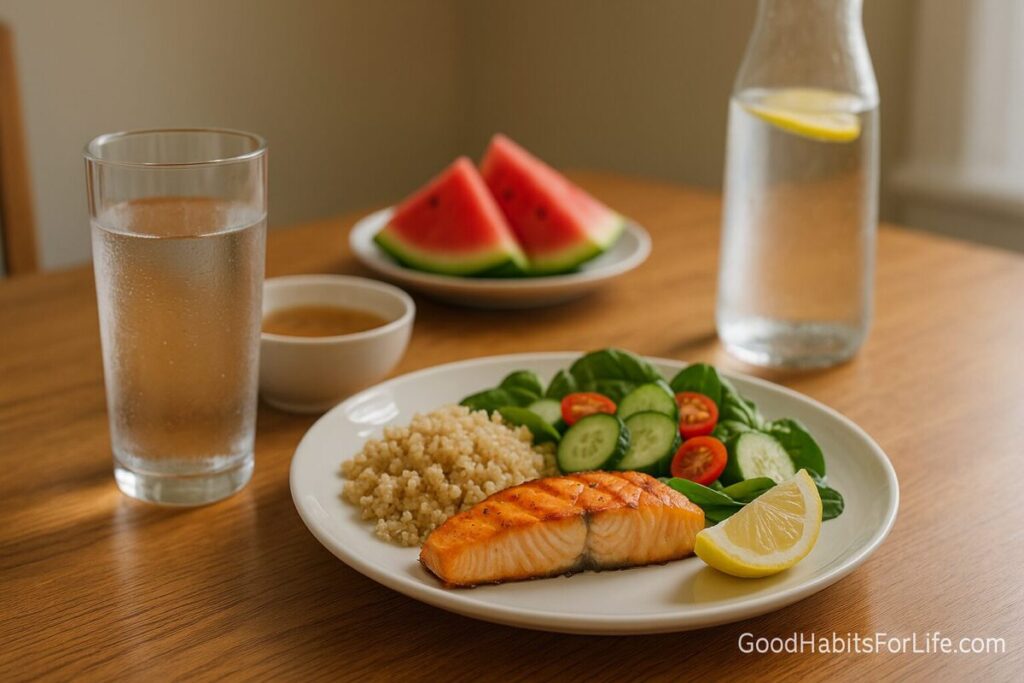
Hydration With Meals: Myths, Timing, and Comfort: Protein-Forward Plan (2025)
Hydration With Meals: Myths, Timing & Protein Plan 2025
Table of Contents
🧭 What “Hydration With Meals” Really Means
Hydration with meals is simply using beverages and water-rich foods to meet fluid needs while you eat, without discomfort (bloating, reflux, rushing to the restroom) and without undermining your nutrition goals (e.g., adequate protein). For most healthy people, drinking water with meals is safe and often helpful; your total daily fluid target still matters most. Authorities place adequate total water intake around 3.7 L/day for men and 2.7 L/day for women (from all foods and drinks). National Academies Press
Why it matters
-
Supports digestion by moistening and moving food through the GI tract. Mayo Clinic
-
Helps regulate appetite; pre-meal water can reduce energy intake in some. PubMed+1
-
Improves comfort and meal pace (sipping slows fast eaters). Oxford Academic
-
Integrates seamlessly with a protein-forward pattern that distributes 20–40 g protein per meal. PMC
✅ Myths vs. Facts (and what the research says)
Myth 1: “Water with meals dilutes stomach acid and ruins digestion.”
Fact: Your digestive system adapts to the meal’s consistency; drinking water during/after meals does not impair digestion for healthy people. Mayo Clinic
Myth 2: “You must avoid all drinks at meals; wait 30–60 minutes.”
Fact: There’s no universal need to avoid beverages at meals. Liquids generally empty faster than solids; modest sipping is fine. Choose volumes that feel comfortable. Oxford AcademicNature
Myth 3: “Tea and coffee dehydrate you.”
Fact: In habitual users, moderate coffee/tea hydrate comparably to water and count toward fluid intake. PLOSnhs.uk
Myth 4: “Only plain water counts.”
Fact: All beverages and water-rich foods contribute to total water intake. (Watch added sugars/alcohol.) National Academies Press
🛠️ Quick-Start: Your Comfortable-Meal Hydration Rules
Try this simple rhythm (adjust to body size, climate, and meal type):
-
Pre-meal (15–30 min): Drink 300–500 ml (10–17 fl oz).
-
During meal: Sip to taste (especially with drier foods or high-fiber meals).
-
Post-meal (within 30 min): 200–300 ml (7–10 fl oz), unless soup/fruit already supplied fluids.
-
Protein anchor: Aim ~0.4 g/kg protein per main meal (often 20–40 g). Distribute across the day. PMC
-
Comfort check: If you feel overfull, reduce during-meal volume and shift more pre-meal. Liquids empty faster than solids; find your personal “sip level.” Oxford Academic
🧠 Techniques & Frameworks (timing, portions, satiety)
The “3-Window” Model
-
Before: Pre-hydrate to reduce ravenous hunger and support comfortable eating pace. Pre-meal water may reduce immediate energy intake in some adults. PubMed+1
-
During: Use small sips to aid swallowing, especially with high-protein, high-fiber meals.
-
After: Top up lightly; include water-rich foods (soups, cucumbers, tomatoes, citrus, berries).
The Gastric-Emptying Lens
-
Liquids generally leave the stomach faster than solids; energy density and viscosity slow emptying. This is why chugging large volumes with heavy meals can feel sloshy, while sipping is comfortable. Oxford AcademicNature
Protein-Forward, Comfort-First
-
Target ~0.4 g/kg/meal (e.g., 30 g for a 75 kg person), spaced every 3–4 h. Quality counts (include leucine-rich sources such as dairy, eggs, soy, legumes). PMCBioMed Central
🗓️ 7-Day Protein-Forward Hydration Plan
How to use: Mix-and-match; each main meal anchors ~20–40 g protein. Adjust fluid by climate, activity, and meal water content.
Daily baseline:
-
Men: ~3.7 L/day; Women: ~2.7 L/day from all foods/drinks. Use urine color (pale-straw) as a cue. National Academies Press
Day 1 – Tempo & Timing
-
Breakfast: Greek yogurt bowl + fruit + oats (~25 g protein). Pre: 350 ml; During: sips.
-
Lunch: Lentil-quinoa salad + olive oil (~30 g). Pre: 400 ml; After: 250 ml.
-
Dinner: Grilled chicken/tofu + veggies + rice (~35 g). During: sips; After: 250 ml.
Day 2 – Hydrating Foods
-
Include soup or sambar + salad at lunch; reduce during-meal drink. Aim total ~2–3 cups pre/post combined.
Day 3 – Fiber Focus
-
High-fiber chickpea wraps (~25–30 g). Increase pre-meal water to 450–500 ml to ease GI transit.
Day 4 – Training Day
-
Post-workout meal with 25–40 g protein (eggs/paneer/soy). Hydrate to thirst before eating; sip during. PubMed
Day 5 – Dining Out
-
Heavier/fattier meal? Shift more to pre-meal water; minimal during-meal sipping to avoid overfullness.
Day 6 – Smoothie Strategy
-
Breakfast smoothie (milk/soy milk + whey/pea protein + berries + chia: ~30–35 g). Count smoothie volume toward fluids.
Day 7 – Review & Adjust
-
Check comfort, energy, bathroom frequency, and weight goals. Tweak pre/during/post split.
🧪 Evidence-Aligned Practices
-
Pre-meal preload: 500 ml water 30 min before meals has reduced energy intake and aided weight loss in studies of older adults. Apply if weight control is a goal and it feels comfortable. PubMed+1
-
Caffeine sanity: Moderate tea/coffee do count toward hydration for most; keep caffeine moderate and avoid late-evening doses that disrupt sleep. PLOSnhs.uk
-
Electrolytes: Normal meals provide sodium/potassium. Use electrolyte drinks mainly for long, sweaty sessions or heatwaves.
👥 Audience Variations
-
Students/Professionals: Keep a 500 ml bottle; finish it 15–30 min before cafeteria/office meals.
-
Parents: Offer water with family meals; water-rich sides (soups, dal, rasam, salads, fruit).
-
Seniors: Favor small, frequent sips and water-rich foods if big drinks feel heavy; consider warm beverages if cold worsens GI comfort. Oxford Academic
-
Teens: Tie hydration to sports practices; avoid sugary drinks as default (save for sport-specific needs).
-
Hot climates: Increase total fluids; use salted foods/soups with sweaty activity.
⚠️ Mistakes & Myths to Avoid
-
Chugging large volumes during heavy meals → can feel sloshy; shift hydration earlier. Oxford Academic
-
Avoiding fluids at meals entirely due to the “dilution” myth. Mayo Clinic
-
Ignoring protein distribution: Skipping protein at breakfast and overloading at dinner can hinder daily targets. PMC
-
Assuming coffee “doesn’t count.” It does—within moderation. PLOS
-
Overhydrating: Rare but risky; don’t force liters beyond thirst and needs. PMC
🗣️ Real-Life Scripts & Meal Examples
-
Before lunch meeting: “I’ll finish this 400 ml bottle now and just sip with my meal.”
-
Restaurant: “Can I have water and a side salad or soup?” (lets you sip less during a heavy entrée)
-
Post-workout dinner: “I’ll drink to thirst first, then have my 30 g protein meal.”
-
Protein-forward plates (≈ protein):
-
Breakfast: 3 eggs + dal cheela or tofu scramble + fruit (25–30 g)
-
Lunch: Paneer/soy curry + quinoa (30–35 g)
-
Dinner: Grilled fish/chicken/tofu + mixed veg + roti/rice (30–40 g)
-
Snack: Skyr/Greek yogurt, lassi, soy milk, or whey/pea shake (20–30 g)
-
🧰 Tools, Apps & Resources
-
WaterMinder / Waterllama: Simple reminders; adjustable goals.
-
Cronometer / MyFitnessPal: Track protein per meal and fluids; barcode scanning.
-
Smart bottle (optional): Measures intake; helpful if you routinely under-drink.
📚 Key Takeaways
-
For most people, drinking with meals is safe and can improve comfort and appetite regulation. Mayo Clinic
-
Use a pre-sip-post pattern and adjust to meal type and climate. Oxford Academic
-
Pair hydration with a protein-forward pattern (~0.4 g/kg/meal). PMC
-
Keep an eye on daily totals and comfort—not rigid rules. National Academies Press
❓ FAQs
1) Should I avoid water 30 minutes before/after meals?
No universal rule. Most people do fine with 300–500 ml before, sips during, and a small top-up after. Adjust to comfort. Oxford Academic
2) Can pre-meal water help with weight management?
It can—some trials show reduced immediate energy intake and greater weight loss in older adults when 500 ml is taken before meals alongside a calorie-controlled diet. PubMed+1
3) Does coffee/tea dehydrate me at meals?
Moderate intake generally does not dehydrate and contributes to daily fluid. PLOSnhs.uk
4) What if I feel bloated when I drink with meals?
Shift more to pre-meal water, sip less during, and leverage water-rich foods (soups, fruits). Liquids empty faster than solids, but large volumes with heavy meals can feel uncomfortable. Oxford Academic
5) How much should I drink per day?
A common ballpark (all foods/drinks): ~3.7 L for men, 2.7 L for women, then adjust for heat, activity, pregnancy/lactation. National Academies PressEuropean Food Safety Authority
6) Do sparkling water or flavored waters count?
Yes—watch acidity/sweeteners if they bother you. All beverages contribute to total water. National Academies Press
7) Can kids/teens follow this?
Yes, but needs vary by age/activity; teach sipping with meals and prioritize water-rich foods.
8) I have reflux or a diagnosed GI condition—what then?
Personalize with your clinician. Smaller sips and avoiding very large volumes at once may feel better for some.
9) What’s the best protein to pair with meals?
Any complete protein works (eggs, dairy, soy; or mixed plant combos). Hitting ~0.4 g/kg/meal matters more than exact timing. PMC
10) How do I know I’m hydrated?
Pale-straw urine, normal energy, and regular bathroom trips; adjust for heat/exercise.
References
-
National Academies (NASEM). Dietary Reference Intakes for Water… (Adequate Intakes). National Academies Press
-
EFSA Panel. Dietary Reference Values for Water (AIs: women 2.0 L, men 2.5 L). European Food Safety Authority
-
Mayo Clinic. “Water after meals: Does it disturb digestion?” Mayo Clinic
-
Leiper JB. “Fate of ingested fluids: factors affecting gastric emptying and absorption.” Nutrition Reviews (2015). Oxford Academic
-
Davy BM et al. “Premeal water consumption reduces energy intake…” (2008). PubMed
-
Dennis EA et al. “Water consumption increases weight loss during a hypocaloric diet” (2010). PubMed
-
Killer SC et al. “No Evidence of Dehydration with Moderate Daily Coffee Intake.” PLOS ONE (2014). PLOS
-
NHS. “Water, drinks and hydration” (tea/coffee count). nhs.uk
-
Schoenfeld BJ & Aragon AA. “How much protein can the body use in a single meal…?” (2018). PMC
-
Jäger R et al. ISSN Position Stand: Protein & Exercise (daily 1.4–2.0 g/kg for most exercisers). PubMed
Disclaimer
This article is for general education only and isn’t medical or nutrition advice; if you have a health condition (e.g., kidney, heart, GI issues) or specific hydration needs, consult a qualified clinician.