
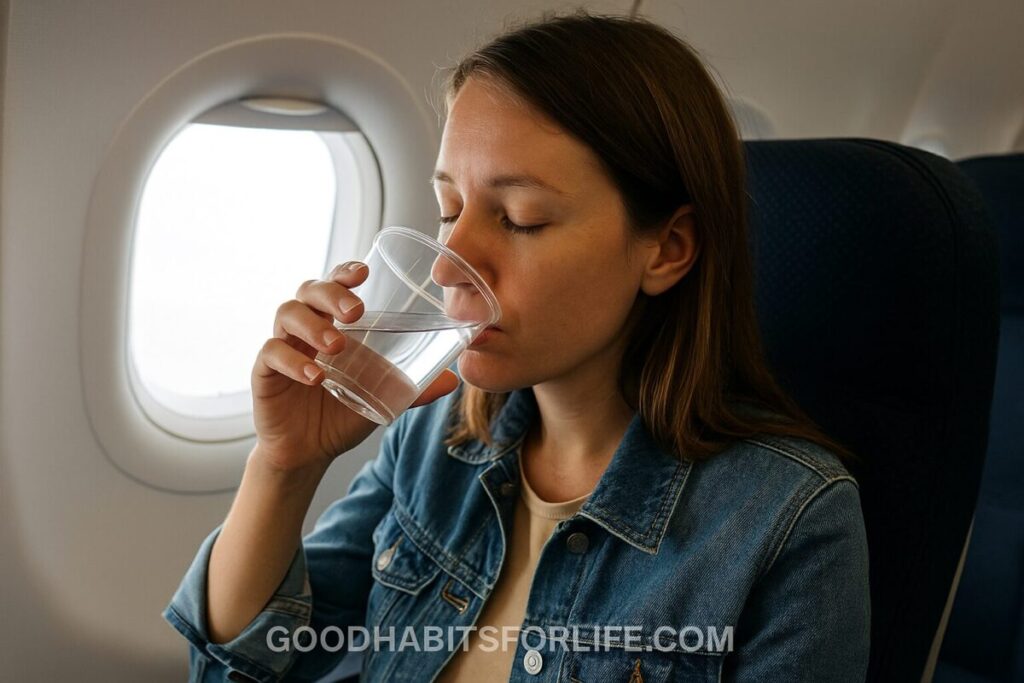
Hydration on Flights: A Simple InAir Plan
Hydration on Flights: A Simple In-Air Plan
Table of Contents
🧭 What & Why
Commercial aircraft cabins are pressurized to the equivalent of roughly 1,800–2,400 m (≈6,000–8,000 ft), and the air is unusually dry—humidity is often very low. That combo makes you lose fluid through breathing and can leave eyes, skin, and nasal passages parched. Staying hydrated maintains comfort, focus, and post-landing energy. Federal Aviation AdministrationEASA
Newer long-haul jets (e.g., Boeing 787, Airbus A350) run slightly lower cabin altitude and higher humidity than older types, which helps—but the air is still dry enough that hydration matters. boeing.comAirbus
✅ Quick Start (Do This Today)
-
Pack: Empty 600–750 ml bottle + small saline nasal spray + lip balm + moisturizer. TSAasma.org
-
Refill after security: U.S. airports allow empty bottles through screening; fill at fountains or ask at cafés. TSA
-
Sip on schedule: Aim for ~240 ml (8 oz) per flight hour. Set a phone timer for every 30–45 min. asma.org
-
Choose smart drinks: Water or lightly flavored still water; limit alcohol/strong coffee/energy drinks. asma.org
-
Track: Use urine color; keep it pale yellow (darker = drink more). MedlinePlus
🛠️ The In-Air Hydration Plan
How much should I drink? Use the Aerospace Medical Association’s simple cue: ~240 ml (8 oz) each hour aloft. Scale with body size, cabin warmth, and how much you talk/work. asma.org
Flight Duration Guide (minimum targets)
| Flight time | Water target | Simple tips |
|---|---|---|
| 1–3 h | 250–750 ml (8–24 oz) | Fill bottle airside; sip every 20–30 min. TSA |
| 3–6 h | 1.0–1.5 L (34–50 oz) | Add one herbal tea or electrolyte if you’re not eating much. |
| 6–12 h | 1.5–3.0 L (50–100 oz) | Combine steady sipping + extra glass with each meal service. |
Comfort add-ons: Hydrating nasal spray, eye drops, and moisturizer ease cabin dryness for sensitive travelers. asma.org
Before / During / After
-
Before boarding: Drink ~300–500 ml (10–17 oz) within 60 min of departure; use the restroom before the seatbelt sign.
-
In flight: Small, frequent sips; one glass with each snack/meal; stand/stretch when permitted. (Low cabin pressure can mildly reduce blood oxygen—gentle movement helps comfort.) Federal Aviation Administration
-
After landing: Another 300–500 ml in the first hour; if abroad, choose safe water sources per CDC guidance. CDC
🧠 Techniques & Frameworks
The S.I.P. Framework
-
Set a timer (every 30–45 min).
-
Inflate intake with cues (drink when the cart passes / after reading 10 pages).
-
Pair with bathroom walks for light movement.
The CLEAR Bottle Routine
-
Check it’s empty at security (TSA-OK),
-
Locate a refill station airside,
-
Electrolytes optional on very long flights,
-
Avoid heavy alcohol/caffeine,
-
Review urine color on landing. TSAasma.orgMedlinePlus
👥 Audience Variations
-
Students & Budget Travelers: Bring a sturdy reusable bottle; ask crew for water refills during service—totally normal. TSA
-
Professionals on back-to-back legs: Pre-book an aisle seat; set discrete calendar alerts to sip between emails.
-
Parents with kids: Offer small sips every 20–30 min; use a spill-proof cup. Saline can help with stuffy little noses during descent. asma.org
-
Seniors / People with medical conditions: Because cabin altitude is mildly hypoxic, check meds and hydration plans with your clinician before long-hauls. Federal Aviation Administration
⚠️ Mistakes & Myths to Avoid
-
“I’ll chug once.” Big gulps don’t hydrate as well as steady sipping; you’ll feel bloated and still dry-mouthed.
-
“Coffee doesn’t count.” Caffeinated drinks can increase fluid loss for some—limit them in the air. asma.org
-
“No bottle allowed.” Empty bottles are fine through security; refill after checkpoints. TSA
-
“Newer planes mean I don’t need water.” 787/A350 cabins are comfier but still dry—keep sipping. boeing.comAirbus
💬 Real-Life Scripts
-
At security: “Hi, this bottle is empty for screening.” (Keep the cap off if asked.) TSA
-
With crew: “When you have a moment, could I get a full bottle of water? I’m hydrating steadily.”
-
To a seatmate (aisle): “I’m hydrating, so I may need to slip out once—thanks in advance!”
🧰 Tools, Apps & Resources
-
Gear: 600–750 ml leak-proof bottle; collapsible cup; small saline spray; lip balm; hand cream. asma.org
-
Apps: Any basic reminder app (set 30–45 min alerts).
-
Knowledge: TSA liquids 3-1-1 page; TSA item lookup (“Empty Water Bottle”) for screening rules. TSA+1
📌 Key Takeaways
-
Dry cabin air + mild altitude stress = plan your water. EASAFederal Aviation Administration
-
Use the 8 oz (240 ml) per hour rule of thumb; sip, don’t chug. asma.org
-
Limit alcohol and strong caffeinated drinks; bring nasal/skin moisturizers. asma.org
-
Carry an empty bottle through security and refill airside. TSA
-
Pale-yellow urine is a simple, reliable check that you’re on track. MedlinePlus
❓ FAQs
1) How much should I drink on a plane?
A practical rule is about 240 ml (8 oz) per flight hour, adjusted for your size and activity. asma.org
2) Can I bring my bottle through security?
Yes—empty bottles are allowed in carry-on; fill after screening. In the U.S., liquids you carry through must follow the 3-1-1 rule. TSA+1
3) Do coffee and alcohol really dehydrate me?
Cabin guidance recommends limiting both because they increase fluid loss and can worsen in-flight discomfort. asma.org
4) Are electrolyte drinks necessary?
Not usually for typical flights if you’re eating normally. Consider one on ultra-long-hauls or if you’re not eating much. For total daily needs, see baseline water AIs (≈3.7 L men; 2.7 L women, all sources). National Academies Press
5) Why do my eyes/skin/nose feel so dry?
Cabin humidity is low compared with most indoor environments; saline sprays, eye drops, and moisturizer help. EASAasma.org
6) Do newer aircraft change what I should do?
787/A350 cabins have improvements (lower cabin altitude/higher humidity), but you still need steady fluids. boeing.comAirbus
7) What’s a quick way to check hydration?
Urine color: aim for pale yellow; darker means you likely need more fluid. MedlinePlus
8) Any safety notes for older travelers or those with conditions?
Cabin pressure equals a mild altitude; discuss long-haul hydration and meds with your clinician beforehand. Federal Aviation Administration
📚 References
-
Aerospace Medical Association. Health Tips for Airline Travel (patient brochure). Key advice on cabin humidity, 8 oz/hour, and limiting alcohol/caffeine. asma.org
-
EASA. Preliminary Cabin Air Quality Measurement Campaign—notes on very low humidity and reduced cabin pressure at cruise. EASA
-
TSA. Liquids, Aerosols, and Gels Rule (3-1-1)—official U.S. security limits. TSA
-
TSA. Empty Water Bottle—item lookup confirming empty bottles allowed through screening. TSA
-
National Academies (IOM). Dietary Reference Intakes—Water—baseline daily water AIs (≈3.7 L men; 2.7 L women). National Academies Press
-
MedlinePlus. Dehydration—symptoms and urine-color guidance. MedlinePlus
-
FAA. Health Effects of Aircraft Cabin Pressure in Older and Vulnerable Passengers—cabin altitude ≈8,000 ft produces mild hypoxia. Federal Aviation Administration
-
Boeing / Airbus. Cabin environment pages describing lower cabin altitude/higher humidity on 787/A350. boeing.comAirbus
Disclaimer
This article offers general wellness guidance for healthy adults and is not medical advice. If you have a medical condition or concerns, consult your clinician before flying.