
Hydration Myths vs Habits: What Actually Helps: Protein-Forward Plan (2025)
Hydration Myths vs Habits: Protein-Forward Plan (2025)
Table of Contents
🧭 What “Good Hydration” Really Means
Good hydration is less about chasing a magic number and more about meeting your body’s needs across the day. Fluids come from water, other beverages, and foods (fruits, veg, soups, yogurt). Adequate intake varies by body size, climate, activity, diet, and health. Public-health reference points suggest ~3.7 L/day for most men and ~2.7 L/day for most women (from all beverages + food), while European guidance is ~2.5 L and ~2.0 L respectively; your needs can be higher with heat, altitude, or exercise. The simplest real-time gauge is urine color (aim for pale-straw) plus how you feel (energy, focus, headaches, dizziness).
Why a Protein-Forward Approach?
-
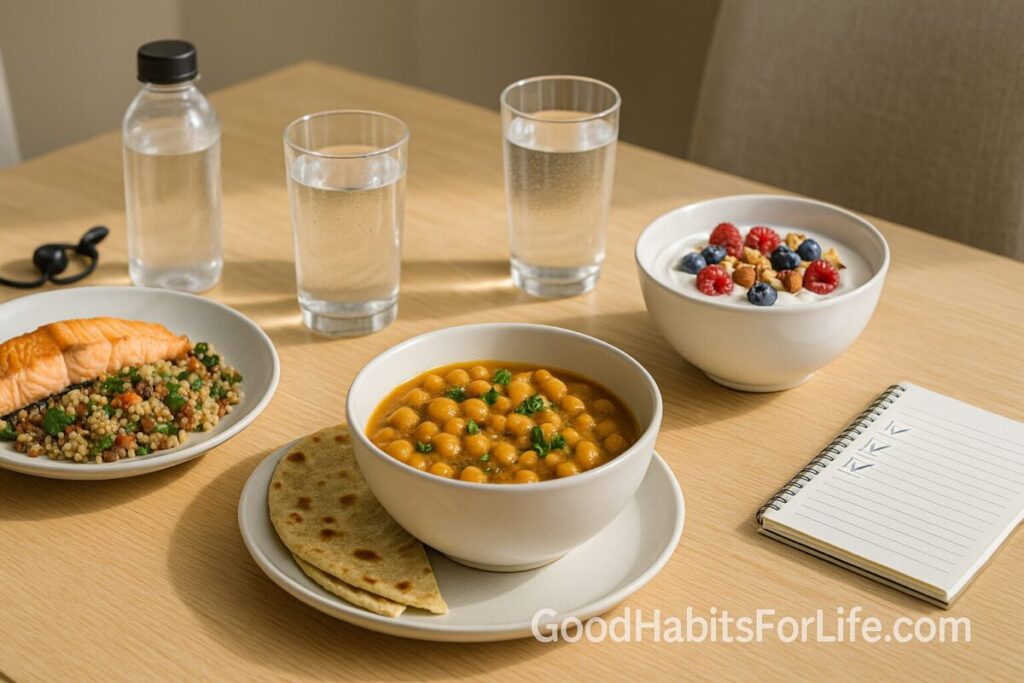
Anchor habit: Most people eat protein at breakfast, lunch, and dinner. Pairing ~300–500 mL water with each protein-rich eating occasion spreads fluids naturally across the day.
-
Satiety & performance: Protein-forward meals stabilize energy and help you avoid mistaking mild hunger for thirst (or vice versa).
-
Urea load: Higher protein intakes can slightly increase water needs; pairing fluids with those meals is a sensible, body-friendly practice.
Bottom line: You don’t need to sip all day from a giant bottle. Tie hydration to meals/snacks, then top up around workouts, heat, or long screen sessions.
🧠 Myths vs Facts
-
Myth: “8 glasses (2 L) fits everyone.”
Fact: It’s a simple heuristic, not a rule. Needs vary by size, diet, climate, and activity. -
Myth: “Urine must be totally clear.”
Fact: Constantly clear urine can mean over-drinking. Pale-straw is the everyday target. -
Myth: “Coffee/tea dehydrate you.”
Fact: For habitual consumers, moderate caffeine drinks count toward hydration. The diuretic effect is small. -
Myth: “Thirst is always too late.”
Fact: For most healthy adults in normal conditions, thirst works well. It’s less reliable for older adults, children, and during intense/long exercise or heat waves. -
Myth: “Electrolyte packets are essential daily.”
Fact: Typically not needed unless you’re sweating heavily, ill (vomiting/diarrhea), at altitude, or doing long/hot training. -
Myth: “Chugging water ‘detoxes’ you.”
Fact: Your kidneys and liver already do detox. Extreme water intake can be harmful (hyponatremia).
✅ Quick-Start: Do This Today
-
Fill-Pair-Finish: Fill a 500 mL bottle. Drink ⅔ with breakfast protein (eggs, dal/curd, tofu, Greek yogurt), finish the rest by mid-morning. Repeat at lunch and dinner.
-
Top-Up Windows: Add 200–300 mL before long meetings, study blocks, or commutes; 400–800 mL/hour (small sips) during sweaty workouts/heat, adjusted to thirst.
-
Electrolytes, When Needed: Use them only for long/hot sessions, illness, or heavy sweaters.
-
Urine-Color Check: Pale-straw = on track. Dark = drink. Clear all day = consider dialing back.
-
Evening Cut-Off: Taper after dinner to protect sleep.
🛠️ Protein-Forward Hydration Plan (7-Day Starter)
Goal: Build automatic, balanced hydration by pairing water with protein-rich meals/snacks.
Daily Targets (adjust to body size & climate):
-
Breakfast: 300–500 mL with protein (e.g., paneer bhurji, eggs + veggies, tofu, yogurt + nuts).
-
Mid-morning: 200 mL if thirsty; tea/coffee ok.
-
Lunch: 300–500 mL with protein (lentils, fish/chicken, beans).
-
Mid-afternoon: 200 mL + fruit/curd; short walk.
-
Workout/Heat: 400–800 mL per hour as needed; consider electrolytes if sweating heavily >60–90 min.
-
Dinner: 300–500 mL with protein.
-
Evening: Small sips only; taper to protect sleep.
7-Day On-Ramp
-
Day 1–2: Log only breakfast + lunch pairings. Nail consistency.
-
Day 3–4: Add dinner pairing + mid-afternoon top-up.
-
Day 5–6: Add workout/heat rule (400–800 mL/h as needed).
-
Day 7: Review: urine color, energy, focus, night waking. Adjust volumes ±200–300 mL.
📈 Techniques & Frameworks
-
Anchoring: Attach hydration to existing routines (protein meals, brushing teeth, commute start).
-
If-Then Plans: “If lunch arrives, then I drink 300–500 mL first.”
-
Environment Design: Keep a bottle in your work zone, a glass near the kitchen sink, and a travel bottle in your bag.
-
Batching: Pre-fill two 500 mL bottles each morning; your minimum dose is handled.
-
Sensible Electrolytes: Use ORS-style formulas for illness; choose ~200–500 mg sodium per serving for long/hot workouts.
-
Smart Caffeine: Coffee/tea count; set a caffeine cut-off (~6–8 hours before bed).
-
Food-Rich Fluids: Soups, fruits (watermelon, oranges), and high-water foods support total intake.
-
Checkpoints: Weekly 3-point review—urine color, sleep quality, afternoon energy.
👥 Variations by Audience
-
Students: Pair 300–400 mL with breakfast + lunch; keep a 500 mL bottle for long classes. Use app reminders between lectures.
-
Professionals: Pre-meeting sip rule (150–200 mL); bottle at desk; taper after 7 pm.
-
Parents/Caregivers: Family “drink break” before school run; offer fruit + water after play.
-
Seniors: Thirst can be blunted. Use scheduled sips at meals/med times. Monitor for dizziness, constipation, or very dark urine.
-
Endurance/Outdoor Workers: Practice drink-to-thirst within 400–800 mL/h; weigh pre/post on long sessions to learn your personal sweat rate; use electrolytes in heat.
⚠️ Mistakes to Avoid
-
Treating 8 glasses as law: Start with anchors + feedback (urine color, how you feel).
-
Over-drinking water alone during long/hot exercise: Risk of hyponatremia; include electrolytes and listen to thirst.
-
Chug-and-forget habit: Spread intake; large boluses often lead to more bathroom trips.
-
Ignoring food: Up to 20–30% of water can come from foods.
-
Late-night loading: Push most fluids earlier; taper after dinner.
💬 Real-Life Examples & Scripts
-
At restaurants: “Before we order, I’ll have a glass of water. With my protein main, please keep the water topped.”
-
During a busy workday: “Calendar alert: Drink 300 mL with lunch; quick walk.”
-
Pre-run (hot day): “It’s 35 °C. I’ll start with 300 mL, carry a 500 mL bottle, and sip to thirst. I’ve packed one electrolyte.”
-
Illness (diarrhoea/vomiting): “Use ORS solution, small frequent sips; seek care if symptoms worsen or signs of dehydration appear.”
🧰 Tools, Apps & Resources
-
Apps: Water reminder apps (simple timers), fitness trackers with hydration tiles, habit trackers for anchors.
-
Pros: Gentle nudges, trend view. Cons: Can become noise—tie reminders to meals.
-
-
Bottles: 500–750 mL with a simple lid (easy to clean).
-
Electrolytes: Choose reputable brands with transparent sodium content; skip added sugar unless fueling long exercise.
-
Kitchen Aids: Keep a jug in the fridge; pre-fill two bottles each morning.
🔑 Key Takeaways
-
Hydration is contextual—use anchors, thirst, urine color, and climate/activity to guide you.
-
Protein-forward pairing (water with protein meals/snacks) spreads fluids without effort.
-
Coffee/tea count; electrolytes are situational.
-
Avoid extremes—over-drinking and under-drinking both cause problems.
-
Review weekly and adjust by ±200–300 mL based on energy, sleep, and urine color.
❓ FAQs
1) Do coffee and tea count toward hydration?
Yes. For habitual consumers, moderate coffee/tea contribute to daily fluids. Monitor how you feel and your sleep.
2) How much water should I drink per day?
There’s no single number. Many adults do well around 2–3 L/day from all sources, adjusted for size, diet, climate, and activity. Let urine color and thirst guide you.
3) When do I actually need electrolytes?
During long/hot workouts, heavy sweating jobs, illness with fluid loss, or at altitude. Otherwise, regular meals usually cover electrolyte needs.
4) Can I over-hydrate?
Yes. Excess water without electrolytes—especially during prolonged exercise—can cause hyponatremia (dangerously low blood sodium). Drink to thirst and include sodium as conditions demand.
5) Does protein increase water needs?
Slightly, especially at higher intakes. Pairing water with protein-rich meals/snacks is a practical safeguard.
6) Is sparkling water OK?
Yes. If it helps you drink enough and doesn’t cause discomfort, it counts.
7) Are “alkaline waters” better?
There’s no strong evidence they improve hydration or health for the general population.
8) Best urine color?
Pale-straw is the everyday target. Dark = drink; crystal-clear all day may mean over-drinking.
9) What about kids/teens?
Use meal-time pairing and offer water at play breaks. In sport/heat, encourage sips to thirst; consult pediatric guidance for illness.
10) Can I hydrate with foods?
Absolutely—fruits, vegetables, yogurt, soups, and stews meaningfully contribute to intake.
📚 References
-
National Academies (IOM). Dietary Reference Intakes for Water, Potassium, Sodium, Chloride, and Sulfate. https://www.nap.edu/read/10925/chapter/1
-
EFSA Panel on Dietetic Products, Nutrition and Allergies. Dietary reference values for water. EFSA Journal. https://efsa.onlinelibrary.wiley.com/doi/10.2903/j.efsa.2010.1459
-
CDC. Water & Healthier Drinks. https://www.cdc.gov/healthyweight/healthy_eating/water-and-healthier-drinks.html
-
Harvard T.H. Chan School of Public Health. The Nutrition Source: Water. https://www.hsph.harvard.edu/nutritionsource/water/
-
American College of Sports Medicine. Position Stand: Exercise and Fluid Replacement. Med Sci Sports Exerc. https://www.acsm.org/docs/default-source/publications-files/acsm-position-stands/exercise-and-fluid-replacement.pdf
-
Wilderness Medical Society. Practice Guidelines for Prevention and Treatment of Exercise-Associated Hyponatremia. Wilderness Environ Med. https://www.wemjournal.org/article/S1080-6032(19)30069-8/fulltext
-
WHO. Oral Rehydration Salts (ORS). https://www.who.int/health-topics/diarrhoea#tab=tab_2
-
Armstrong LE et al. Caffeine intake and hydration status: a randomised trial. PLOS ONE. https://journals.plos.org/plosone/article?id=10.1371/journal.pone.0084154
-
MedlinePlus. Dehydration. https://medlineplus.gov/dehydration.html
-
NHS. Dehydration. https://www.nhs.uk/conditions/dehydration/
Disclaimer
This article provides general educational information about hydration and is not medical advice; consult your clinician for personal guidance, especially if you have kidney, heart, or endocrine conditions.