
Hydration During Fasting Windows: Whats Okay?: Protein-Forward Plan (2025)
Hydration During Fasting: What’s OK? Protein-Forward Plan
Table of Contents
🧭 What “counts” as hydration in a fasting window (and why)
Fasting windows are periods when you avoid calories to pursue goals like weight management, metabolic health, or clarity. Hydration matters because even mild dehydration can sap energy, slow thinking, cause headaches, and hamper workouts. During the fasting window, the rule of thumb is zero calories and no nutrients that meaningfully raise insulin. That still leaves several helpful, genuinely hydrating options:
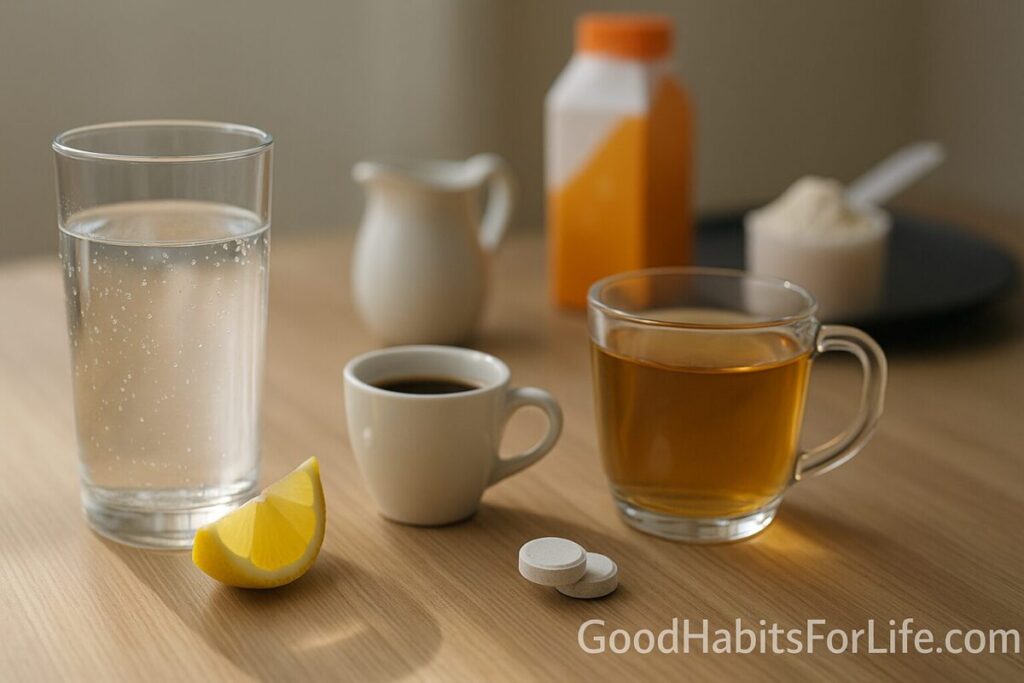
OK during a strict fast (0 kcal):
-
Plain water — still, mineral, or sparkling.
-
Black coffee — no sugar, milk, cream, or flavor syrups.
-
Unsweetened tea — green, black, herbal; no milk or sweetener.
-
Electrolytes with no calories — e.g., sodium/potassium/magnesium tablets or powders without sugar; or simply a pinch of salt in water.
Borderline/goal-dependent:
-
Non-nutritive sweeteners (sucralose, stevia, etc.): calorie-free, but some people prefer to avoid them for stricter autophagy goals or because of possible appetite/glycemic effects. Small amounts are usually fine for a weight-management-only fast; test your own response.
-
Lemon water: a wedge has ~2–3 kcal; for strict fasting avoid; for weight loss only, it’s usually negligible.
Not OK (breaks a fast):
-
Milk, cream, plant milks, broth/stock (calories, protein, carbs).
-
Juice, soda (regular or “light” with added sugar), kombucha with sugar.
-
Protein, collagen, BCAA/EAA powders (amino acids = calories, insulinogenic).
-
Alcohol (dehydrates, adds calories, and undermines recovery).
Why the fuss about electrolytes?
When you eat less (and especially when carbs are low), your body excretes more sodium and water. That can trigger headaches, dizziness, and “keto/fasting flu” feelings. A little sodium plus steady fluids often fixes it. If you’re sweating or doing long sessions, consider broader electrolytes (Na, K, Mg) — without sugar — during the fast.
✅ Quick-start: Today’s hydration rules in 5 steps
-
Start with 500–750 ml water on waking. Add a pinch of salt if you feel woozy.
-
Use coffee or tea as a tool, not a crutch: 1–3 cups plain is fine. Stop 8–10 hours before bed if you’re caffeine-sensitive.
-
Carry a 750 ml–1 L bottle; aim to finish it 2–3× during your fast, sipping (not chugging).
-
If you train fasted, add a no-cal electrolyte tab to 500–750 ml water.
-
At window open, break the fast with protein-forward food and water alongside (details below).
🛠️ 7-Day Protein-Forward Hydration Plan
A practical micro-cycle to nail fasting hydration and protect muscle/energy.
Daily anchor targets (adjust for body size, climate, activity):
-
2.0–2.5 L water/day (women often toward the lower end, men higher; more if hot or active).
-
Electrolytes: light sprinkle of salt in one glass or one no-cal electrolyte serving if needed.
-
Caffeine: keep to ≤300 mg/day unless advised otherwise; plain only while fasting.
Day 1–2 — Setup & Baseline
-
Fill a 1 L bottle; finish 1 L during the fast + 1 L across the day.
-
Try black coffee or unsweetened tea for appetite waves.
-
Break fast protein-first: eggs, Greek yogurt, tofu/tempeh, chicken/fish, or a whey/soy shake (in the eating window). Add veggies, then carbs/fats.
Day 3–4 — Electrolyte tune-up
-
If dizzy/headachy: add 1 serving no-cal electrolyte or pinch of salt mid-fast.
-
Keep sipping; avoid “guzzling then forgetting.”
-
Protein at window-open: 20–40 g + fiber-rich veg; then carbs.
Day 5 — Training day
-
Fasted workout? 500–750 ml water + no-cal electrolyte during or right after.
-
Window open: protein + carbs within ~90 min of training; hydrate 500 ml with meal.
Day 6 — Caffeine audit
-
Cap coffee at 2 cups; replace the rest with herbal tea. Notice energy/sleep.
Day 7 — Review & lock habits
-
Check urine color (pale straw = on target).
-
Note which drinks help you most; set your “standard order” (see scripts below).
-
Plan next week’s grocery list for protein-forward break-fasts.
🧠 Techniques & frameworks that work
-
“Bottle math” > vague goals: Choose a bottle size and count refills (e.g., 1 L × 2.5 refills).
-
Trigger stacking: Sip after every bathroom break and Zoom call.
-
Appetite surfing: When a hunger wave hits, drink 250–300 ml water or plain tea; wait 10 minutes.
-
Electrolyte micro-doses: When you feel heavy-headed/low energy, sip salted water or a no-cal electrolyte; reassess in 15 minutes.
-
Protein-first refeed: Start with protein (20–40 g), add color (veg), then starch/fats — curbs rebound overeating and stabilizes energy.
-
Caffeine windowing: Use caffeine in the first half of your day to avoid sleep disruption.
👥 Variations by audience
Students
-
Budget plays: water + barista iced Americano, no milk/syrup. Keep a 1 L bottle in your backpack. Break fast with eggs/beans + yogurt bowl.
Professionals
-
Desk rule: 250 ml sip per meeting. Break fast with a protein box: chicken/tofu + veg + whole grains.
Parents
-
Prep 2 L jug in the morning for the household; everyone drinks from the “hydration station.” Break fast with quick protein wraps or lentil bowls.
Seniors
-
Thirst cues can be blunted. Schedule small sips every hour. Mind medications and kidney/heart conditions; discuss electrolytes and caffeine with your clinician.
⚠️ Mistakes & myths to avoid
-
Myth: “Coffee dehydrates you.” At typical intakes, it contributes to hydration; it’s the add-ins that break the fast.
-
Over-diluting without salt: Too much plain water can worsen dizziness; tiny sodium boosts may help.
-
Energy drinks during the fast: Many “zero” options hide sweeteners and additives that spike appetite.
-
Chug-and-forget: Big boluses = more bathroom trips, not better hydration.
-
Breaking the fast with sugar: Leads to rebound hunger and energy dips; go protein-first.
💬 Real-life examples & scripts
-
Coffee shop: “Iced Americano, no milk or syrup.”
-
At home: “1 L bottle on desk; finish by lunch, refill once.”
-
Workout fasted: “500 ml water + no-cal electrolyte during session.”
-
Window open (protein-forward plate): Grilled fish or tofu (hand-size portion) + leafy salad + olive oil + small rice/potatoes.
-
Travel: “Sparkling water bottle + herbal tea bags for hotel kettle.”
🧰 Tools, apps & resources
-
Water tracking: Waterllama, Apple Health/Google Fit water logs, Any.do reminders.
-
Fasting timers: Zero, Fastic, Life — set your window and hydrate prompts.
-
Electrolytes (no-cal): Look for labels with 0 kcal and simple minerals (Na/K/Mg); avoid added sugar or amino acids during the fast.
-
Bottles: 750 ml–1 L wide-mouth bottle; choose one you’ll actually carry.
📌 Key takeaways
-
Hydrate through your fast with water, black coffee, plain tea, and no-cal electrolytes.
-
Electrolytes prevent “fasting flu” feelings, especially when training or eating fewer carbs.
-
Protein-forward when you break your fast protects energy and helps control appetite.
-
Keep it simple: bottle math + trigger stacking + caffeine windowing.
❓ FAQs
Does lemon water break a fast?
For a strict fast, yes (it contains a few calories). For weight management only, a wedge is usually negligible; test your response.
Do zero-cal sweeteners break a fast?
They’re calorie-free, so often fine for weight-loss fasting. If your goal is cellular “clean-up” (autophagy) or you notice appetite spikes, skip them during the fast.
Is sparkling water OK?
Yes — plain or naturally mineralized, with no sugar/sweeteners.
What about green tea or herbal tea?
Both are fine unsweetened. Watch caffeine timing if sleep is affected.
Can I take electrolytes while fasting?
Yes if they’re 0 kcal. If you’re on blood pressure or kidney meds, check with your clinician first.
Can I add a collagen scoop to coffee during my fast?
No. Collagen contains calories and amino acids that break a fast.
How much water do I actually need?
Start around 2.0–2.5 L/day and add more with heat, activity, or large body size. Use urine color (pale straw) to self-check.
Does coffee dehydrate me?
Not at normal daily amounts; it can count toward fluid intake. Keep it plain to stay in a true fast.
I feel light-headed when fasting. What should I do?
Pause, sip 300 ml water with a pinch of salt or a no-cal electrolyte, rest 10–15 minutes, and reassess. If symptoms persist, eat and seek medical advice.
Can I work out fasted?
Many people can. Hydrate before/during with water and no-cal electrolytes; refeed with protein plus carbs in the eating window.
📚 References
-
Centers for Disease Control and Prevention. Water & Healthy Hydration. Link
-
NHS. Water, drinks and your health. Link
-
National Academies of Sciences. Dietary Reference Intakes for Water, Potassium, Sodium, Chloride, and Sulfate. Link
-
EFSA Panel on Dietetic Products, Nutrition and Allergies. Dietary Reference Values for Water. EFSA Journal. Link
-
Armstrong LE et al. Caffeine, Hydration, and Health. PLoS ONE. 2014;9(1):e84165. Link
-
Hew-Butler T et al. Exercise-Associated Hyponatremia Consensus. Br J Sports Med. 2015. Link
-
Mattson MP et al. Intermittent Fasting and Health. N Engl J Med. 2019. Link
-
World Health Organization. Non-sugar sweeteners: guideline. 2023. Link
-
World Health Organization. Salt reduction. Link
-
WHO/UNICEF. Oral Rehydration Salts (ORS) – composition & use. Link
Disclaimer: This guide is educational and not medical advice. If you have diabetes, kidney/heart disease, are pregnant, or take medications affecting fluids/electrolytes, consult your clinician before fasting or changing hydration.