
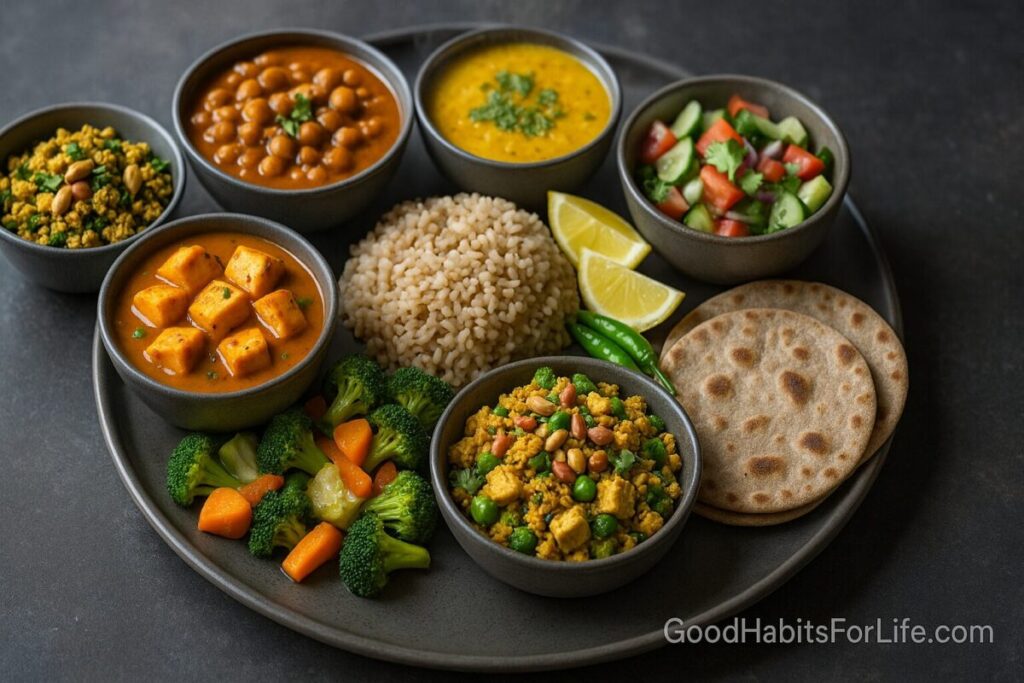
HighProtein Indian Veg Meals: Paneer, Dal & More: Protein-Forward Plan (2025)
High-Protein Indian Veg Meals (2025): Paneer, Dal & More
Table of Contents
🧭 What & Why
A “high-protein Indian veg meal” anchors every plate with a substantial vegetarian protein (dal/pulses, paneer/tofu, soy, dairy, nuts/seeds) and balances it with whole grains or millets plus vegetables. For most healthy adults, a practical target is about 0.83 g protein per kg body weight/day; India’s latest Dietary Guidelines retain this figure (EAR ≈0.66 g/kg) and note that cereal-heavy, low-quality protein diets may need closer to 1 g/kg. ICMR National Institute of NutritionICMR National Institute of Nutrition
Protein quality improves when you combine pulses with cereals (think khichdi, dal-roti, idli-sambar): complementary amino acids raise DIAAS/overall quality versus cereals alone. PMC
Handy Indian-veg protein numbers (typical cooked/ready-to-eat portions):
-
Lentils/dal — ~17.9 g per cup (198 g). My Food Data
-
Chickpeas (chana) — ~14.5 g per cup (164–180 g). My Food Data+1
-
Firm tofu — ~17.3 g per 100 g. My Food Data
-
Paneer — typically ~16–18 g per 100 g (varies by fat/moisture). PMC
(For India-specific values by ingredient, see the Indian Food Composition Tables.) ICMR National Institute of Nutrition
A balanced plate pattern—¼ protein, ¼ whole grains/millets, ½ vegetables—is a simple way to build satiating meals while keeping refined carbs in check. The Nutrition Source+1
✅ Quick Start (Do This Today)
-
Pick your protein (aim 20–30 g/meal): 1 cup dal; 100 g paneer; 100 g tofu; 1 cup chana/rajma; 250 g thick curd. My Food Data+2My Food Data+2
-
Add a whole grain or millet (1–2 rotis, 1 cup brown rice/little millet, 2 idlis, or 1 dosa).
-
Load veggies (2 cups sautéed, stir-fried, or salad; include greens).
-
Use healthy fats (1–2 tsp ghee/mustard/groundnut oil for tadka).
-
Flavor smart (ginger-garlic, whole spices, dhania/jeera, lemon).
-
Protein at breakfast: moong chilla + curd, besan cheela with paneer, tofu bhurji, or overnight chana.
-
Hydrate & move: water + 15–30 min walk.
🛠️ 7-Day Protein-Forward Indian Veg Menu
Notes: Protein values are estimates from FoodData Central/MyFoodData and typical labels; your results vary by recipe/brand. Use as a planning baseline. My Food Data+2My Food Data+2
| Day | Breakfast | Lunch | Dinner | Protein/day (≈) |
|---|---|---|---|---|
| Mon | 2 moong dal chilla + 150 g curd (~20 g) | 1 cup chana masala + 2 rotis + kachumber (~20 g) | 100 g paneer tikka + sautéed veg + ½ cup millet (~25 g) | 65 g |
| Tue | Tofu bhurji (120 g tofu) + multigrain toast (~22 g) | Dal tadka (1 cup) + brown rice + salad (~18 g) | Palak paneer (100 g paneer) + 2 rotis (~22 g) | 62 g |
| Wed | Besan cheela (2) + mint chutney + 200 ml milk (~20 g) | Rajma (1 cup) + rice + salad (~15 g) | Soy/veg stir-fry (100 g tofu) + quinoa or millet (~22 g) | 57 g |
| Thu | Overnight chana bowl (¾ cup cooked) + fruit (~12 g) | Sambar (1.5 cups) + 2 idlis + podi (~18 g) | Kadhi-pakora (curd-based; 250 g curd) + 2 rotis (~22 g) | 52 g |
| Fri | Oats + peanut dahi (~18 g) | Chole (1 cup) + bhatura/2 phulkas + salad (~14 g) | Paneer bhurji (120 g paneer) + veg + 1 roti (~24 g) | 56 g |
| Sat | Tofu/paratha wrap (100 g tofu) (~17 g) | Dal khichdi (1.5 cups; moong + rice) + ghee + salad (~18 g) | Curd rice (200 g curd) + poriyal (~14 g) | 49 g |
| Sun | Greek-style dahi (250 g) + fruit + nuts (~20 g) | Kala chana (1 cup) + jeera rice + salad (~15 g) | Matar-paneer (100 g paneer) + 2 rotis (~22 g) | 57 g |
How to scale:
-
80–90 g/day goal? Add 1 scoop roasted chana (10 g protein), +50 g paneer at dinner (+9 g), or +½ cup dal at lunch (+9 g). My Food Data+1
-
Lower appetite? Split protein into 4–5 mini meals (lassi/dahi, tofu cubes, sprouts bhel).
🧠 Techniques & Frameworks
-
Protein-First Plate: Build meals by choosing protein first (dal/chana/paneer/tofu), then grain/millet, then veggies. The ¼-¼-½ visual works across thali, bowls, wraps, and idli-sambar plates. The Nutrition Source
-
Cereal + Pulse Synergy: Pair pulses with cereals (dal-roti, chana-pulao, idli-sambar, khichdi). This raises protein quality versus cereal alone. PMC
-
Breakfast Protein Rule (20 g+): Front-load protein to curb cravings and improve satiety across the day. (Use tofu/paneer bhurji, besan/soy chilla, dahi + nuts.)
-
Batch-Cook Rhythm:
-
Sun: Soak & cook chana/rajma; pressure-cook 2 dals (e.g., masoor, moong).
-
Cube paneer/tofu; make tadka jars (fried jeera-hing, garlic-chilli); chop salad kits.
-
Freeze flat in zip bags; defrost overnight.
-
-
Millet Rotation: Bajra (pearl), jowar (sorghum), ragi (finger) for rotis/upma—adds diversity and micronutrients; keep portions similar to whole wheat.
🧩 Audience Variations
-
Students/Hostelers: Paneer/tofu bhurji wraps, tiffin-friendly chana salad jars, ready dal pouches; carry roasted chana/peanuts.
-
Busy Professionals: Two-pot method: pressure-cooker dal + sheet-pan tandoori paneer/tofu; microwaveable brown rice.
-
Parents & Kids: Smooth curd/lassi, small besan pancakes, mini idlis with sambar, paneer cubes; keep spice moderate.
-
Seniors: Softer textures (dal, curd, paneer tikka without hard sear); spread protein over 4 meals; discuss CKD/diabetes limits with clinician.
-
Weight Management: Emphasize dal/chana/tofu and veggies; limit deep-fried gravies and large portions of refined grains.
⚠️ Mistakes & Myths to Avoid
-
“Vegetarian means low protein.” Not if you center pulses, paneer/tofu, and dairy—easily 60–80 g/day. (See menu and portion data.) My Food Data+2My Food Data+2
-
Skipping pulses due to gas. Start with smaller portions, soak well, use spices (ajwain/hing), and increase gradually.
-
Only cereal-heavy plates. Cereal-only lowers protein quality; add pulses or paneer/tofu. PMC
-
Over-relying on supplements. Guidelines encourage food-first protein for most healthy adults. ICMR National Institute of Nutrition
🗣️ Real-Life Examples & Scripts
-
Quick Dhaba Order (High-Protein): “One dal tadka (no extra oil), tandoori paneer half-plate, roti (not naan), and a kachumber.”
-
Office Canteen: “Extra curd and dal, skip the fried sides, add salad; keep rice to ½–1 cup.”
-
Hostel Room Fix: “Microwave chana (ready pack) + lemon + chaat masala; add dahi and chopped onions.”
-
Family Plate Talk: “Protein first: let’s add a ladle of dal to everyone’s plate before serving rice.”
📚 Tools, Apps & Resources
-
Cronometer / MyFitnessPal / HealthifyMe: Track grams and spot low-protein meals (check Indian dishes).
-
IFCT 2017 (NIN) and USDA FoodData Central (via MyFoodData): Look up Indian ingredients and cooked dishes to estimate protein. ICMR National Institute of Nutritionfdc.nal.usda.gov
-
Pressure-cooker & freezer-safe boxes: Make pulses in bulk; freeze in 1-cup portions for instant protein.
🔑 Key Takeaways
-
Target ~0.83 g/kg/day (or up to ~1 g/kg if your diet is mostly cereal-based and low in protein quality). ICMR National Institute of NutritionICMR National Institute of Nutrition
-
Build plates with dal/chana/paneer/tofu as the star, whole grains/millets, and plenty of veg. The Nutrition Source
-
Combine cereals + pulses to upgrade protein quality. PMC
-
Use the 7-Day menu and batch-cook to consistently hit 60–80 g/day without supplements. My Food Data+1
❓ FAQs
1) How much protein do I personally need?
Most healthy adults can use ~0.83 g/kg/day as a practical target (e.g., 70-kg person ≈58 g/day). Cereal-heavy diets with lower protein quality may benefit from ~1 g/kg/day. Athletes, older adults, and those with medical conditions should individualize. ICMR National Institute of NutritionICMR National Institute of Nutrition
2) Which is better—paneer or tofu?
Both are solid: paneer typically ~16–18 g protein/100 g (higher fat, calcium), firm tofu ~17 g/100 g (lower saturated fat). Choose by taste, calories, and goals—or use both. PMCMy Food Data
3) Can Indian vegetarians hit 80–90 g/day without eggs?
Yes—use larger portions and multiple sources (dal + chana + paneer/tofu + curd). See the add-ons under the 7-Day menu. My Food Data+1
4) Are millets good for protein?
Millets add diversity and minerals; protein is moderate, so pair with pulses or paneer/tofu to raise total and quality. PMC
5) I feel bloated after beans. What helps?
Soak well, discard soaking water, pressure-cook thoroughly, start with ½ cup, and use hing/ajwain. Over time, tolerance usually improves.
6) What about seniors—should they aim higher?
Some research suggests 1.0–1.2 g/kg/day may support muscle and function in older adults; ask your clinician for a personalized target. Food and Nutrition Research
7) Can I use flavored Greek yogurt instead of plain curd?
Prefer plain; sweetened versions add sugars. Stir in fruit, nuts, or a pinch of cardamom instead.
8) Are protein powders necessary for vegetarians?
Not for most healthy adults following a well-planned Indian diet; national guidelines emphasize food-based proteins first. ICMR National Institute of Nutrition
9) How do I estimate protein in a home-cooked curry?
Weigh the main protein (paneer/tofu/pulses), look up its cooked value in IFCT or FoodData Central, divide by portions, and log. ICMR National Institute of Nutritionfdc.nal.usda.gov
10) Can kids follow this plan?
Yes, with smaller portions and less spice. Children’s protein needs vary by age/weight—ask a pediatric clinician if unsure.
📚 References
-
ICMR-NIN. Dietary Guidelines for Indians (2024) — Protein RDA & food-first guidance. ICMR National Institute of Nutrition
-
ICMR-NIN. Brief Note on Nutrient Requirements (2020) — 0.83 g/kg RDA; note on cereal-based diets. ICMR National Institute of Nutrition
-
WHO/FAO/UNU. Protein & Amino Acid Requirements in Human Nutrition (2007). IRIS
-
Han F, et al. Complementarity of cereals & pulses improves protein quality (DIAAS). Nutrients (2021). PMC
-
Indian Food Composition Tables (IFCT), 2017 — India-specific nutrient data. ICMR National Institute of Nutrition
-
MyFoodData/USDA FDC. Lentils, cooked—protein per cup. My Food Data
-
MyFoodData/USDA FDC. Chickpeas, cooked—protein per cup. My Food Data
-
MyFoodData/USDA FDC. Firm tofu—protein per 100 g. My Food Data
-
Kumar S, et al. Paneer: composition & typical protein range. J Food Sci Technol (review). PMC
-
Harvard T.H. Chan School of Public Health. Healthy Eating Plate — plate-building visuals. The Nutrition Source
Disclaimer: This content is educational and not a substitute for personalized medical or nutrition advice. Consult a qualified professional for individual guidance.