
HeatWave Hydration: Simple Rules Youll Remember: Protein-Forward Plan (2025)
Heatwave Hydration: Protein-Forward Rules You’ll Remember (2025)
Table of Contents
🧭 What “heatwave hydration” means—and why add protein
“Heatwave hydration” is a simple set of behaviors that keep body temperature and fluid-electrolyte balance in a safe range during unusually hot periods. Public-health guidance emphasizes drinking regularly (about a cup/250 ml per hour while awake) and aiming for roughly 2–3 L/day in hot conditions—more with activity and sweat losses. North American and European reference intakes for “total water” (all beverages plus moisture in food) are ~3.7 L/day for men and ~2.7 L/day for women in temperate climates; heat or exertion pushes needs upward. World Health OrganizationNational Academies Pressnationalacademies.org
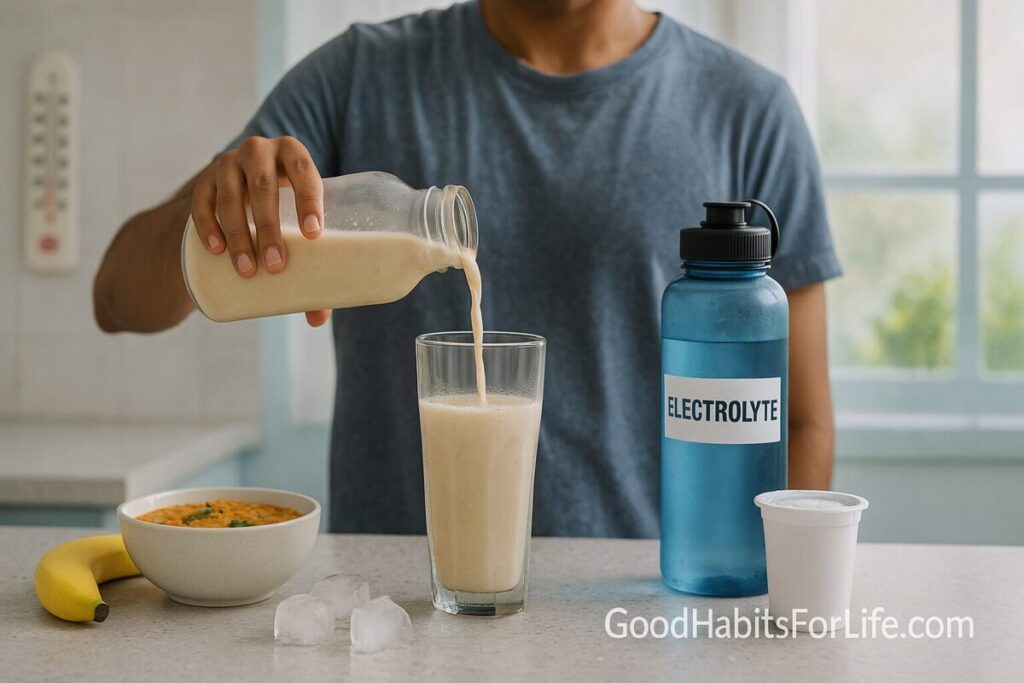
Why “protein-forward”? Protein-containing foods and drinks (e.g., milk, yogurt, lentils/dal, eggs, tofu) contribute electrolytes and nutrients that slow gastric emptying, aid fluid retention, and support muscle when appetite dips in heat. Controlled trials show milk and some protein-electrolyte beverages retain fluids better than water after sweating, and beverage-hydration research consistently finds electrolyte (especially sodium) and macronutrients improve fluid balance. Cambridge University Press & Assessment+1PubMed
✅ Quick-Start: 7 rules you’ll remember
-
250 ml per waking hour; target 2–3 L/day minimum in heat; sip, don’t chug. Increase with sweat. World Health Organization
-
Electrolytes when you sweat. If you’re outdoors >60 min or sweating heavily, use an electrolyte drink or salty foods (dal + rice + pickle, buttermilk, salted nuts). PubMed
-
Protein-forward pairing. At meals/snacks, pair fluid + protein (e.g., 300 ml milk or yogurt drink + fruit; tofu/egg roll + water). Cambridge University Press & Assessment
-
HeatRisk check. Look up your local HeatRisk (0–4) each morning; schedule strenuous tasks at lower-risk times. wpc.ncep.noaa.govCDC Eph Tracking
-
Pee-color test. Aim for pale-straw urine; darker = drink/electrolyte sooner. NHS Inform
-
Cool the body, not just the bottle. Use cool showers, wet cloths, shade/AC; check on older adults and kids. World Health OrganizationCDC
-
Know red flags. Heat exhaustion/stroke signs (confusion, fainting, no sweating) = urgent cooling and medical care. CDC
🗓️ 7-Day Heatwave Habit Plan
Daily anchor (repeat all 7 days):
-
Morning (on waking): 500 ml water; check HeatRisk; pack 1 L bottle + electrolyte sachet. CDC
-
Breakfast: Protein + fluids (e.g., 200–300 ml milk/buttermilk or soy drink + oats/fruit). Cambridge University Press & Assessment
-
Every hour: 200–250 ml water; add electrolytes if sweating. World Health OrganizationPubMed
-
Mid-day cool break: 5–10 min in shade/AC; splash face/forearms; top up 300–500 ml. CDC
-
Evening: Light, salty meal with protein (dal-khichdi + curd; egg curry + rice; tofu stir-fry); 500 ml fluids over the evening.
-
Self-check: Pee-color, energy, dizziness? Adjust fluids/electrolytes. NHS Inform
Day-by-day focus
-
Day 1: Stock up—1–2 ORS packs, electrolyte tabs, 2 L bottle, cooling cloth. Iris
-
Day 2: Prep protein-forward snacks (roasted chana, boiled eggs, paneer/tofu cubes).
-
Day 3: Map your coolest routes/rooms; add calendar alerts for hourly sips.
-
Day 4: Practice a “Sip-Salt-Sit” micro-routine after outdoor errands (250 ml, small salty bite, 5-min sit).
-
Day 5: Try a milk or yogurt drink post-sweat; track how you feel 1–2 h later. Cambridge University Press & Assessment
-
Day 6: Share the plan with a neighbor/elder; set a daily check-in. World Health Organization
-
Day 7: Review what worked; set defaults (bottle by door, ORS in bag).
🧠 Techniques & frameworks that work
-
The “Hydration Ladder”:
-
BHI-smart picks: Drinks with electrolytes and nutrients (e.g., milk) can retain fluid longer than water at rest—use strategically after sweating; otherwise water is fine. PubMed
-
Pee-color chart: Keep urine pale-straw; darker = drink sooner. NHS Inform
-
Cool-first logic: If overheated, cool body (shade/AC, cool shower) before large fluid bolus to reduce nausea. CDC
👥 Variations by audience
-
Kids & teens: Offer fluids every hour; use cold diluted juice/milkshakes or ORS when sick; never leave in parked cars; teach pee-color check. CDC
-
Students & office workers: Place a 1 L bottle on desk; stand-up+sip each hour; avoid peak-heat commutes if HeatRisk ≥3. wpc.ncep.noaa.gov
-
Outdoor workers/professionals: Pre-hydrate 300–500 ml; schedule 15-min cool breaks; 0.4–0.8 L/h with electrolytes depending on sweat. PubMed
-
Seniors: Thirst can be blunted; set timed sips and include salty/protein foods; check meds with clinician. CDC
-
Athletes: Follow sport hydration guidance; weigh before/after to estimate sweat loss; replace ~150% of lost mass over 2–4 h with electrolytes/protein. PubMed
-
Fasting (religious/medical): Front-load fluids/electrolytes and cooling before fasts; seek tailored advice if you have chronic conditions. GOV.UK
⚠️ Mistakes & myths to avoid
-
Myth: “Only water.” → Reality: During heavy sweat, include sodium/electrolytes to prevent low sodium; plain water alone in excess can dilute blood sodium (hyponatremia). PubMedNCBI
-
Myth: “Chugging a liter at once is best.” → Reality: Steady sipping improves comfort and absorption. World Health Organization
-
Mistake: Skipping protein in heat because appetite is low. Fix: Small, protein-rich, salty snacks with fluids aid retention and recovery. Cambridge University Press & Assessment
-
Mistake: Ignoring HeatRisk alerts. Fix: Check daily; move tasks to cooler hours when risk is 3–4. wpc.ncep.noaa.gov
💬 Real-life examples & scripts
-
Family script: “It’s HeatRisk 3 today—water break every hour. After we get home: sip, salty snack, 5-minute cool-down.” wpc.ncep.noaa.gov
-
Work script (outdoors): “Top up 300 ml and take a shade break—check your pee color before we restart.” PubMedNHS Inform
-
After-exercise routine: “We’ll do 500 ml milk or yogurt drink plus water over the next hour to rehydrate.” Cambridge University Press & Assessment
🧰 Tools, apps & resources
-
CDC/NWS HeatRisk Dashboard (7-day, color-coded local heat risk). CDC Eph Tracking
-
NWS HeatRisk Overview (what each level means). wpc.ncep.noaa.gov
-
CDC Heat & Health (symptoms, prevention, who’s at risk). CDC
-
WHO Heat & Health (global tips to keep cool and hydrated). World Health Organization
-
ACSM Exercise & Fluid Replacement (sport hydration basics). PubMed
📌 Key takeaways
-
Hydration needs rise in heat; start with ~250 ml per hour while awake and adjust to sweat and urine color. World Health Organization
-
Electrolytes matter during prolonged sweating; balance water with sodium-containing drinks/foods. PubMed
-
A protein-forward plate (milk/yogurt/lentils/eggs/tofu) paired with fluids can improve retention and recovery. Cambridge University Press & AssessmentPubMed
-
Plan your day by HeatRisk level; schedule cool breaks and check on vulnerable people. wpc.ncep.noaa.gov
❓ FAQs
1) How much should I drink in a heatwave?
Begin with ~250 ml per waking hour; aim 2–3 L/day minimum and more with sweat, activity, or dry air. Monitor urine color and symptoms. World Health Organization
2) Do I always need sports drinks?
No. Water is fine at rest and for short exposures. Use electrolytes when sweating heavily or for >60 min activity. PubMed
3) Why include protein?
Protein-containing beverages (notably milk) and meals slow gastric emptying, provide electrolytes, and can improve fluid retention after sweating. Cambridge University Press & AssessmentPubMed
4) Is “too much water” dangerous?
Yes. Excessive water without electrolytes can cause hyponatremia (low blood sodium). Use electrolytes with heavy sweat and don’t force-drink beyond thirst plus planned sips. NCBIMedlinePlus
5) What about caffeine and alcohol?
In a heatwave, emphasize water and electrolyte fluids. Avoid alcohol and keep caffeine moderate, especially if you notice increased urination or jitters. (General public-health guidance.) World Health Organization
6) Are ORS packets useful if I’m not sick?
WHO-formulated ORS is designed for dehydration (especially with GI illness). In extreme heat or heavy sweat, a commercial ORS can be appropriate—follow label directions. Iris
7) How do I plan my day around heat?
Check the HeatRisk map each morning; move strenuous tasks to cooler windows and schedule shade/AC breaks. CDC Eph Trackingwpc.ncep.noaa.gov
8) What if I fast?
Front-load fluids/electrolytes and cooling before fasting; speak with your clinician if you have chronic conditions. GOV.UK
9) What are the baseline (non-heatwave) daily water targets?
Total water intake (all beverages + food moisture) averages ~3.7 L/day for men and ~2.7 L/day for women; individual needs vary. National Academies Pressnationalacademies.org
10) What’s a simple check for kids and elders?
Offer fluids hourly, look for pale-straw pee, and watch for behavior changes; never leave children or pets in cars. CDC
📚 References
-
World Health Organization. Heat and health (factsheet). 2024. World Health Organization
-
CDC. About Heat and Your Health (prevention & symptoms). 2025. CDC
-
National Academies (NASEM). Dietary Reference Intakes—Water (AI values). National Academies Pressnationalacademies.org
-
EFSA. Scientific Opinion on Dietary Reference Values for Water. 2010. European Food Safety Authority
-
American College of Sports Medicine. Exercise and Fluid Replacement (Position Stand). 2007. PubMed
-
Maughan RJ et al. Development of a beverage hydration index. Am J Clin Nutr. 2016. PubMed
-
Shirreffs SM et al. Milk as an effective post-exercise rehydration drink. Br J Nutr. 2007. Cambridge University Press & Assessment
-
CDC/NOAA. HeatRisk (NWS/CDC) dashboards & overview. 2024. wpc.ncep.noaa.govCDC Eph Tracking
-
NIOSH. Heat Stress: Hydration (guidance for workers). 2017. CDC
-
NLM/StatPearls. Hyponatremia. 2023. NCBI
-
MedlinePlus. Low blood sodium. 2023. MedlinePlus
-
WHO. Heatwaves: How to stay cool (Q&A). 2024. World Health Organization
Disclaimer: This article is educational and not a substitute for personal medical advice—seek care promptly for heat-related symptoms or if you have medical conditions.