
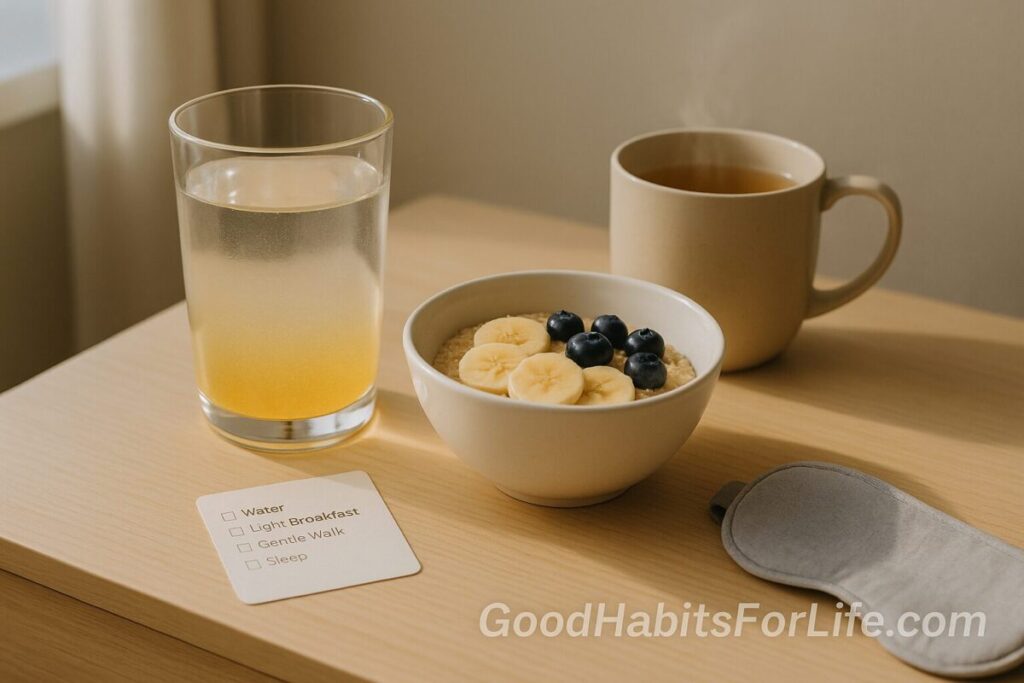
Hangovers: Prevention Basics & Gentle Morning Habits
Hangover Prevention: Basics & Gentle Morning Habits
Table of Contents
🧭 What Is a Hangover & Why It Happens
A hangover is the cluster of symptoms after drinking—headache, fatigue, thirst, nausea, light/sound sensitivity, poor concentration, and mood changes. It’s driven by several mechanisms:
-
Acetaldehyde & inflammation: Alcohol is metabolized to acetaldehyde, which is toxic and promotes inflammatory responses.
-
Diuresis (you pee more): Alcohol suppresses antidiuretic hormone, increasing fluid loss → dehydration and electrolyte shifts.
-
Sleep disruption: You may fall asleep faster but get less REM, more awakenings, and earlier waking.
-
Low blood sugar: Alcohol can affect glucose regulation, contributing to shakiness and fatigue.
-
Congeners: Darker spirits (e.g., bourbon, red wine) tend to contain more congeners that can worsen hangovers for many people.
Bottom line: You can’t “hack” physiology, but you can reduce risk and severity with smart choices before, during, and after drinking.
✅ Prevention Fundamentals (Before, During, After)
Before you drink
-
Eat a balanced meal 30–60 minutes prior: complex carbs + protein + fat (e.g., rice + dal + paneer; or whole-grain wrap with chicken/beans). Slows absorption and steadies blood sugar.
-
Pre-hydrate: 300–500 ml water.
-
Decide your limits: e.g., “Max 2–3 standard drinks over 3 hours.”
-
Plan your ride & bedtime: Finish at least 3–4 hours before sleep to improve rest quality.
During
-
Pace: ~1 standard drink/hour (or slower).
-
Alternate 1:1 with water: After each alcoholic drink, have at least 250–300 ml water.
-
Choose lower-congener options: Lighter beers, white wine, clear spirits (gin/vodka) in modest amounts; skip mixed shots and sugary “energy” cocktails.
-
Avoid rounds/“pour pressure”: Buy your own drinks; decline refills until you’re ready.
-
Skip smoking: Tobacco + alcohol increases next-day symptoms and health risk.
After (same night)
-
Water + electrolytes: 300–500 ml before bed; consider a low-sugar oral rehydration solution if you sweat a lot or danced.
-
Gentle wind-down: Light snack (toast + egg/yogurt), lukewarm shower, dark cool room, no screens 30 minutes before sleep.
🛠️ Quick Start: Tonight & Morning-After Checklist
If you’re going out tonight
-
Eat first (carb + protein + fat).
-
Set a cap (e.g., 2–3 drinks) and duration.
-
Track standard drinks (see “Techniques”).
-
1:1 water rule—decide your water order before each alcoholic drink.
-
Stop early so you’re home with time to unwind.
Morning-after, do this
-
Hydrate on waking: 400–600 ml water; then sip another 500–700 ml over the morning.
-
Breakfast that’s kind to your stomach:
-
Option A: banana + toast + peanut butter/yogurt.
-
Option B: poha/upma with extra veggies + curd.
-
Option C: oatmeal with milk/yogurt + fruit + nuts.
-
-
Gentle movement: 10–20 minutes easy walk or mobility; avoid intense workouts if dizzy or nauseated.
-
Fresh air + daylight: 10–15 minutes to nudge your circadian rhythm.
-
Caffeine (optional): One tea/coffee may help a headache but don’t overdo; extra caffeine can worsen dehydration or jitteriness.
-
Analgesics (caution): If you choose an over-the-counter pain reliever, avoid acetaminophen/paracetamol after heavy drinking (liver risk). Some people use ibuprofen with food, but NSAIDs can irritate the stomach—consider risks and your medical history, or ask a clinician.
-
Nap if needed but keep it short (20–30 minutes) to protect upcoming nighttime sleep.
Red flags—seek urgent help: confusion, seizures, repeated vomiting, slow/irregular breathing, bluish or pale skin, hypothermia, or unconsciousness after heavy drinking.
🧠 Techniques & Frameworks That Work
The Standard Drink Reality Check
Know what counts as one standard drink (≈14 g pure alcohol):
-
350 ml regular beer (~5% ABV)
-
150 ml wine (~12% ABV)
-
45 ml spirits (~40% ABV)
Rule of thumb: Keep it around ≤1 drink/hour and within low-risk weekly limits (e.g., many public health bodies suggest staying well below heavy drinking thresholds).
The 1:1 Hydration Rule
For every alcoholic drink, order one non-alcoholic drink (water, soda water, diet tonic). Put it on the table first so it’s easy to follow through.
The “3-3-1” Wind-Down
-
3 hours before bed: last alcoholic drink.
-
3 glasses water by bedtime (spread out).
-
1 calming routine (shower, stretch, breathe 4-7-8, put phone away).
Color & Congeners
If you’re sensitive, prefer lighter-colored drinks and avoid mixed shots. Some people experience worse hangovers with bourbon/red wine vs. vodka/white wine due to congeners.
Social Scripts (micro-commitments)
-
Tell a friend: “I’m maxing at two tonight.”
-
Order by default: “Sparkling water with lime between drinks.”
-
Leave early rule: “If it’s past 11 pm, I’m out.”
📅 7-Day Starter Plan
Goal: Stress-test your hangover-prevention system and lock a gentle morning habit.
Day 1 (Prep):
-
Set personal weekly limit (e.g., ≤4–6 drinks total, spread out).
-
Stock: water bottle with hourly marks, electrolyte tabs, bananas/oats, easy breakfast items.
-
Add an app to track drinks (see Tools).
Day 2 (Education):
-
Learn your favorite drink’s ABV and typical serving size; translate to standard drinks.
-
Draft your exit time and ride plan.
Day 3 (Dry day):
-
Practice the evening wind-down routine without alcohol (shower, stretch, screen-off, sleep).
Day 4 (Social test night):
-
Execute: meal → 1:1 water → pace ≤1/hour → finish 3 hrs pre-bed → wind-down.
-
Record in app: number of drinks and how you felt (1–10).
Day 5 (Morning-after routine):
-
Hydrate + gentle breakfast + 15-minute walk + sunlight + short nap if needed.
-
Rate symptoms (0–10) by noon; note what helped.
Day 6 (Adjust):
-
If symptoms >3/10, reduce future cap by 1 drink and stop earlier.
-
Try a different beverage type (e.g., switch from dark spirits to beer/wine).
Day 7 (Review):
-
Summarize: average drinks/hour, best breakfast, best bedtime, any triggers.
-
Set your personal playbook for the next month.
👥 Variations by Audience
-
Students/young adults: Learn standard drinks early; avoid mixed shots and high-sugar mixers; set a buddy system and an exit time.
-
Professionals: Weeknight limit 0–1; protect sleep and next-day cognition. Choose lower-ABV options at work events and leave on schedule.
-
Parents/caregivers: Plan child care coverage before events; hydrate and eat early; prioritize a consistent wind-down so mornings are predictable.
-
Seniors/medications: Alcohol interacts with many drugs; check for interactions (especially sedatives, diabetes meds, antihypertensives). Lower tolerance is common—consider abstaining or very low limits.
⚠️ Common Myths & Mistakes
-
“Hair of the dog” helps. It delays withdrawal but worsens overall recovery and risks harmful use.
-
Coffee cures hangovers. It may boost alertness but doesn’t correct dehydration or inflammation.
-
Energy drinks + alcohol = safer. They can mask intoxication and increase risk-taking.
-
Greasy food after drinking. Better to eat before and choose light, balanced foods the next morning.
-
All painkillers are fine. Avoid acetaminophen/paracetamol after heavy drinking (liver toxicity risk); NSAIDs need caution with a sensitive stomach—ask a clinician.
💬 Real-Life Scripts You Can Copy
-
At the bar: “Sparkling water with lime for now—still deciding.”
-
To friends: “I’m pacing at one an hour and heading out by 11.”
-
Declining a round: “I’m on my water—catch me next round.”
-
To the host: “Everything’s delicious! I’m good for now; early start tomorrow.”
-
If pushed: “I set a limit tonight—I feel better sticking to it.”
🧰 Tools, Apps & Resources
-
Drink-tracking apps: Reframe, Sunnyside/Cutback, Less—help with pacing, logs, and goals.
-
Pros: awareness, reminders, pacing aids. Cons: subscriptions; input effort.
-
-
Hydration helpers: 1 L reusable bottle with marks; low-sugar electrolyte tabs.
-
Breathalyzers (personal): Can build awareness but never use them to decide whether to drive; legal limits and impairment vary.
-
Sleep & morning tools: Eye mask, earplugs, sunrise lamp, light walk playlist.
📌 Key Takeaways
-
Best hangover strategy is prevention: pace, eat, hydrate, lighter drinks, and stop early.
-
Morning-after, think gentle: water/electrolytes, light balanced food, easy movement, daylight, rest.
-
Avoid risky “cures”: hair of the dog, over-caffeination, or acetaminophen after heavy drinking.
-
Personalize: learn your response to different drinks, contexts, and sleep patterns, then set limits that fit your life.
❓ FAQs
1) What actually causes a hangover?
A mix of dehydration, inflammatory by-products of alcohol metabolism, sleep disruption, and low blood sugar. Congeners in some beverages can aggravate symptoms.
2) Do electrolytes help?
They can help restore fluid and minerals, especially if you sweated or urinated frequently. They don’t “cure” a hangover but may reduce headache/fatigue from dehydration.
3) Is beer before liquor really a thing?
Sequence matters less than total alcohol and pace. Shots and rapid drinking increase risk.
4) Are dark liquors worse?
Often, yes—for many people. Beverages high in congeners (e.g., bourbon, red wine) are linked to more severe hangovers compared with clear spirits like vodka.
5) Does a big greasy breakfast help?
It may feel comforting but can irritate your stomach. Aim for light carbs + protein (e.g., oats + yogurt, toast + eggs, fruit).
6) When should I worry and seek help?
If someone is unresponsive, vomiting repeatedly, breathing slowly/irregularly, or shows blue/pale skin, call emergency services immediately.
7) Which painkiller is safest?
All medicines have risks. After heavy drinking, avoid acetaminophen/paracetamol due to liver toxicity risk. NSAIDs can irritate the stomach—ask a clinician.
8) How many drinks are “safe”?
There’s no completely safe level for everyone. Many public health bodies advise staying well below heavy-drinking thresholds and keeping no more than ~1 drink/hour with several alcohol-free days each week.
9) Does caffeine fix a hangover?
It may reduce sleepiness but doesn’t address the causes; overuse can worsen dehydration and jitters.
10) Can supplements prevent hangovers?
Evidence for most supplements is limited or inconsistent. Focus on the fundamentals: limits, pacing, hydration, food, and sleep.
📚 References
-
Centers for Disease Control and Prevention (CDC). Alcohol and Public Health—Moderate Drinking. https://www.cdc.gov/alcohol/fact-sheets/moderate-drinking.htm
-
National Health Service (NHS). Hangover. https://www.nhs.uk/conditions/hangover/
-
World Health Organization (WHO). Alcohol. https://www.who.int/news-room/fact-sheets/detail/alcohol
-
National Institute on Alcohol Abuse and Alcoholism (NIAAA). Alcohol’s Effects on the Body. https://www.niaaa.nih.gov/alcohols-effects-health/alcohols-effects-body
-
Rohsenow DJ, Howland J, Arnedt JT, et al. Intoxication with bourbon versus vodka: effects on hangover, sleep, and alertness. Alcohol Clin Exp Res. 2010;34(3):509-518. https://pubmed.ncbi.nlm.nih.gov/21121275/
-
Wiese JG, Shlipak MG, Browner WS. The alcohol hangover. Ann Intern Med. 2000;132(11):897-902. https://pubmed.ncbi.nlm.nih.gov/10836921/
-
Pittler MH, Verster JC, Ernst E. Interventions for preventing or treating alcohol hangover: systematic review of randomised trials. BMJ. 2005;331:1515. https://www.bmj.com/content/331/7531/1515
-
National Institute on Alcohol Abuse and Alcoholism (NIAAA). Rethinking Drinking—Alcohol and Your Health. https://www.rethinkingdrinking.niaaa.nih.gov/
Disclaimer: This article is educational and not a substitute for medical advice; consult a qualified clinician for personal guidance, especially if you have health conditions or take medications.