
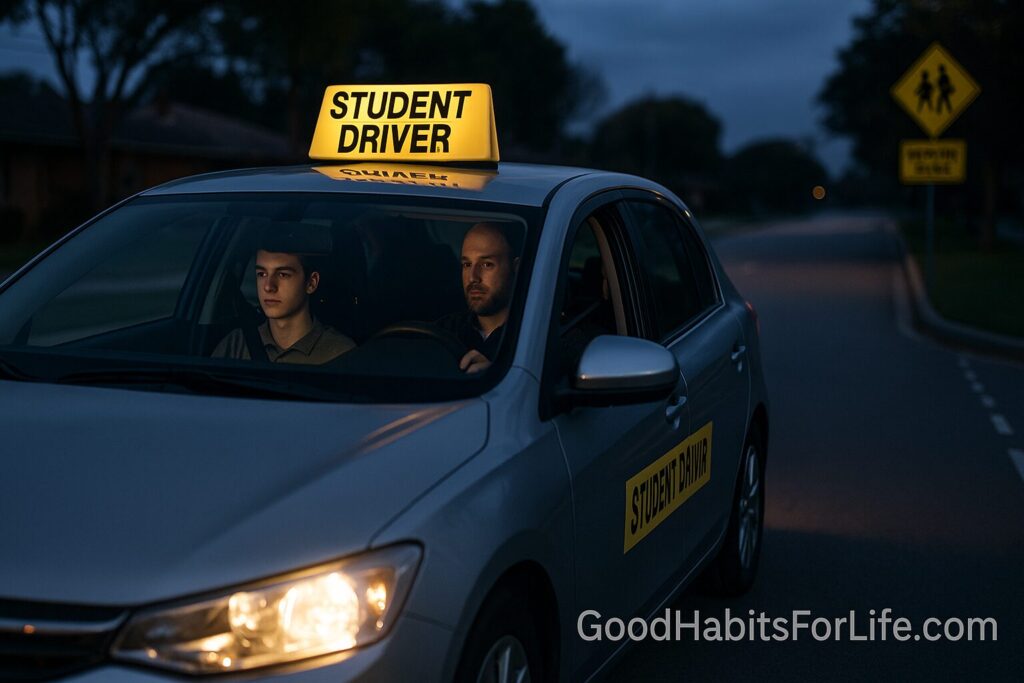
Graduated Licensing Explained: Stages, Rules, Curfews
Graduated Licensing Explained: Stages, Rules, Curfews
Table of Contents
🧭 What Is Graduated Licensing (GDL)?
Graduated Driver Licensing is a system that introduces driving privileges in steps. Instead of granting full privileges on day one, GDL helps new drivers—usually teens—practice basic maneuvers under supervision, then drive alone with limits, and finally progress to full licensure when crash risk drops.
GDL is used widely (e.g., U.S., Canada, Australia, New Zealand, parts of Europe). The exact rules vary by jurisdiction, but the purpose is the same: let new drivers build real-world skill under lower-risk conditions.
📚 Why GDL Works (and the Evidence)
Crash risk for novice drivers is highest in the first months of independent driving. GDL addresses the riskiest situations—night driving, peer passengers, distraction, and alcohol—while encouraging supervised practice.
Large evaluations by safety bodies consistently show:
-
Substantial reductions (often 20–40% or more) in crashes and fatalities among the youngest licensed drivers after GDL adoption.
-
Night-driving and passenger limits are especially helpful because crashes spike after dark and with peer passengers.
-
Zero-tolerance alcohol provisions protect against the compounded risk of impairment plus inexperience.
(See References for major reviews by CDC, NHTSA, IIHS, WHO, AAA Foundation, and OECD/ITF.)
🧱 How GDL Usually Works (Stages & Rules)
The names differ (Learner/Provisional/Probationary/Intermediate), but the structure is similar:
| Stage | Typical Eligibility | Core Privileges | Common Restrictions |
|---|---|---|---|
| Learner (Permit) | Minimum age set locally; pass a knowledge/vision test; adult supervisor in front seat | Drive only with a qualified adult | No phone use; zero-tolerance BAC; no solo driving; must log practice hours |
| Intermediate (Provisional) | Hold permit for set months; document supervised hours; pass road test | Solo driving allowed | Night curfew (e.g., 22:00–05:00 or 23:00–05:00); passenger limits (often 0 or 1 peer unless adult present); zero-tolerance BAC; stronger penalties for violations |
| Full License | Complete intermediate period without violations; sometimes minimum age | All standard privileges | Standard rules apply; GDL-specific limits end |
Notes: Hours, ages, and curfews vary. Some places require 12 months violation-free or set a later full-license age. Always check your local licensing authority.
Common Curfews & Limits (Examples)
-
Night driving: No solo driving between ~23:00 and 05:00 (ranges: 21:00–06:00 to 01:00–05:00).
-
Passengers: Often no peer passengers for the first months, or a limit of one unless a qualified adult is present.
-
Mobile phones: Handheld and often hands-free are banned; some regions prohibit any phone use for novice drivers.
-
Zero BAC: Strict 0.00% for underage/novice drivers.
-
Seat belts: Mandatory for every occupant; driver responsible for minors.
✅ Quick Start: Today, This Week, This Month
Today
-
Download your region’s official driver handbook and GDL summary.
-
Create a Parent-Teen Driving Agreement (see Script below).
-
Install a practice log app or spreadsheet; decide who signs off each drive.
This Week
-
Schedule 3–4 short sessions (20–30 minutes) in empty lots and quiet streets.
-
Practice a single focus per session: smooth braking, lane discipline, or mirrors-signal-manoeuvre (MSM) routine.
-
Set a consistent post-drive debrief (2 minutes): “What went well? What improves next time?”
This Month
-
Aim for 15–20 hours of daylight supervised practice across dry, wet, and dusk conditions.
-
Add a night-practice plan with an adult: low-speed routes before any solo night driving (where allowed).
-
Learn the curfew and passenger rules by heart. Post them on the fridge.
🗺️ 30-60-90 Habit Plan for Families
Goal: Build skill in increasing complexity while staying inside GDL rules.
Days 1–30 (Foundation)
-
Environment: Parking lots → quiet neighborhoods.
-
Skills: Vehicle controls, smooth starts/stops, turns, scanning, gap selection at low speed.
-
Targets: 15–20 supervised hours; 3 night hours with an adult; log every trip; zero phone exposure.
Days 31–60 (Traffic & Variety)
-
Environment: Busier arterials, multilane roads, roundabouts.
-
Skills: Lane changes, merges, defensive spacing, anticipating others, light rain.
-
Targets: +20–30 hours (cumulative ~40–50); structured night outings with adult; introduce rural/urban variety.
Days 61–90 (Complex Conditions)
-
Environment: High-speed roads, light highway segments, hills, moderate rain; avoid severe weather until later.
-
Skills: Speed control, freeway merges, exit planning, hazard perception, decision-making under time pressure.
-
Targets: +20–40 hours (total 60–90+); 6–10 night hours with adult; one “long-form” practice (60–90 min) weekly.
Many safety agencies recommend 50–100+ hours before solo privileges. More structured practice = safer independence.
🧠 Techniques & Frameworks That Build Safe Skill
-
SEE (Search-Evaluate-Execute): Constantly scan 360°, evaluate threats (speed, space, distraction), execute smooth actions.
-
MSM/SMOG: Mirrors → Signal → Maneuver / Signal → Mirror → Over-shoulder → Go. Make it a reflex.
-
3-Second Rule: Maintain at least a 3-second following gap (4+ in rain/night).
-
Commentary Driving: Say hazards aloud (“pedestrian near curb,” “closing gap on left”). Trains attention.
-
Spaced Practice: Short, frequent drives beat long, infrequent marathons.
-
After-Action Notes: One strength + one improvement per drive in the log.
-
Progressive Exposure: Add only one new challenge per session (e.g., first roundabout, then first multilane).
👥 Variations: Teens, Parents, Rural vs. Urban, Professionals
-
Teens/Novices: Keep sessions short, rotate coaches if possible, and use routes with known waypoints to lower cognitive load.
-
Parents/Guardians: Model calm behavior; avoid last-second instructions; pull over to discuss complex feedback.
-
Rural Areas: Emphasize speed discipline, wildlife scanning, and long-distance fatigue planning.
-
Urban Areas: Focus on cyclists, buses, pedestrians, door-zone awareness, and frequent lane positioning changes.
-
Working Students/Apprentices: Plan commutes within curfew; arrange carpools with a qualified adult until limits lift.
⚠️ Mistakes & Myths to Avoid
-
Myth: “Once you pass the road test, you’re fully ready.”
Reality: The highest crash risk is in the first months of solo driving—stick to limits even if they feel restrictive. -
Mistake: Treating the curfew as optional.
Fix: The night-risk jump is real; plan early evening trips and rides home with adults. -
Mistake: Driving peers on day one.
Fix: Delay peer passengers until allowed—and then only with strict focus rules (phones off, quiet cabin). -
Myth: “Hands-free phones are safe for new drivers.”
Reality: Cognitive distraction still harms hazard detection; many regions ban any phone use for novices. -
Mistake: Not logging practice.
Fix: Logs increase total hours and variety—two of the strongest predictors of safer outcomes.
🗣️ Scripts & Real-Life Examples
Parent-Teen Driving Agreement (copy/paste)
-
We will obey GDL rules: curfew ___ to ___, passengers ___, phone off, zero BAC.
-
The car only moves when everyone buckles up.
-
We plan ___ practice hours/week and debrief every drive.
-
If a rule is broken, we pause solo privileges for ___ days and add ___ supervised hours.
-
We’ll revisit rules on [date] when milestones are met.
“Curfew Conversation” Script
-
Teen: “Friends asked for a late ride.”
-
Parent: “Our license limits solo night driving. Let’s set a pickup before curfew or I’ll drive.”
-
Teen: “Okay—22:15 drop-off; I’ll text when we leave.”
First-Month Solo Rules (fridge note)
-
Solo only to school/work/errands on known routes.
-
No passengers unless an adult qualifies under local rules.
-
Rain = call: If weather worsens, pull over and phone a parent/guardian.
🛠️ Tools, Apps & Resources
-
Practice Log Apps: RoadReady, Aceable, Hum by Verizon, or a simple Google Sheet.
-
Pros: Automatic hour tracking; reminders.
-
Cons: Phone temptation—keep device docked and untouched by the driver.
-
-
DMV Prep: Official handbooks + practice tests from your licensing authority; AAA and AAMVA resources.
-
Pros: Align with local rules; realistic questions.
-
Cons: Quality varies by region.
-
-
Safety Add-ons: Basic OBD-II monitors, tire-pressure checkers, dashcams for feedback.
-
Pros: Reinforces maintenance and hazard awareness.
-
Cons: Don’t let gadgets replace coaching.
-
✅ Key Takeaways
-
GDL phases privilege to match skill growth—safer, not slower.
-
Night curfews, passenger limits, phone bans, and zero BAC target the highest-risk conditions.
-
Families that plan and log 50–100+ hours across varied conditions see the safest outcomes.
-
A simple agreement + debrief ritual turns rules into lasting habits.
-
Always confirm local rules; then build a 30-60-90 practice plan and stick to it.
❓ FAQs
1) What age can I start GDL?
It depends on your jurisdiction. Many regions allow a learner’s permit in the mid-teens with an adult supervisor, then an intermediate license months later.
2) How strict are curfews?
They are legally enforceable. Times vary (often around 23:00–05:00). Some areas allow exceptions (work, school events) with documentation.
3) Can I carry friends?
Passenger limits are common (e.g., none or one peer) during the intermediate stage—unless a qualified adult rides in front.
4) Are hands-free calls allowed for novices?
Often no—many regions ban any phone use for novice drivers. Even hands-free adds dangerous cognitive load.
5) How many hours should I practice before solo?
Many safety organizations recommend 50–100+ hours in varied conditions, including several at night with an adult.
6) What happens if I break a GDL rule?
Penalties can include fines, points, extended restrictions, or a reset of the intermediate period. Violations may delay full licensure.
7) Do GDL rules apply if I’m over 18?
Some regions apply GDL to all new drivers regardless of age; others only to under-18s. Check your local authority.
8) How do I prove my supervised hours?
Use your jurisdiction’s log form or an approved app. Keep dates, times, conditions, route types, and supervising adult signatures.
9) Can I drive for work under GDL?
Sometimes, but passenger and curfew rules may still apply. Employers may require additional insurance or training.
10) When do the restrictions end?
After the required time violation-free (e.g., 6–12 months) and reaching the minimum age specified, you can obtain a full license.
📚 References
-
Centers for Disease Control and Prevention (CDC). Teen Drivers: Get the Facts. https://www.cdc.gov/transportationsafety/teen_drivers/index.html
-
National Highway Traffic Safety Administration (NHTSA). Teen Driving & GDL. https://www.nhtsa.gov/road-safety/teen-driving
-
Insurance Institute for Highway Safety (IIHS). Graduated Driver Licensing. https://www.iihs.org/topics/teenagers/graduated-licensing
-
AAA Foundation for Traffic Safety. Teen Driver Safety Research. https://aaafoundation.org/
-
World Health Organization (WHO). Road Traffic Injuries – Fact Sheet. https://www.who.int/news-room/fact-sheets/detail/road-traffic-injuries
-
OECD/International Transport Forum (ITF). Road Safety Annual Report (latest edition). https://www.itf-oecd.org/road-safety-annual-report
-
California DMV. Minor Drivers (Provisional License Rules). https://www.dmv.ca.gov/portal/handbook/california-driver-handbook/minors/
-
AAMVA (American Association of Motor Vehicle Administrators). Novice Driver Safety & GDL Resources. https://www.aamva.org/
⚖️ Disclaimer
This guide is for general information and habit-building only; licensing laws and penalties vary—always check your local authority for current, official rules.