
Glycemic Index vs Load: Simple, Practical Use: Protein-Forward Plan (2025)
Glycemic Index vs Load: Simple, Protein-Forward Plan (2025)
Table of Contents
🧭 What “Glycemic Index” and “Glycemic Load” Actually Mean
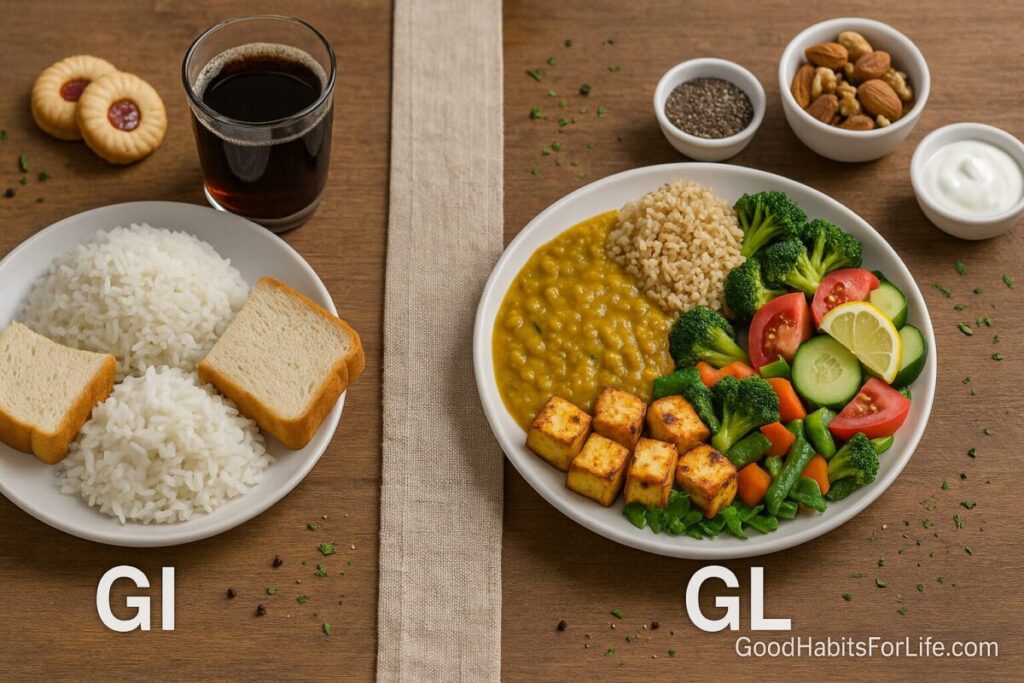
Glycemic Index (GI) ranks carb-containing foods on a 0–100 scale by how quickly they raise blood glucose compared with pure glucose (GI = 100). It’s measured in isolation, using a fixed amount of available carbohydrate (typically 50 g).
Glycemic Load (GL) reflects GI × the actual carb grams you eat ÷ 100, so it captures portion size.
-
Low GI: ≤55; Medium: 56–69; High: ≥70.
-
Low GL per serving: ≤10; Medium: 11–19; High: ≥20.
Why GL is more practical: Real meals vary in portion sizes and are mixed with protein, fat, and fiber—all of which can lower the glucose impact. GL helps you choose what and how much.
Rule of thumb: Pick low-GI carbs and keep GL per meal low-to-moderate by controlling portions and pairing with protein and fiber.
✅ Why This Matters for Energy, Hunger, and Metabolic Health
-
Steadier energy: Lower GL meals reduce rapid spikes and dips that lead to mid-day slumps.
-
Fullness & cravings: Meals higher in protein (20–40 g) and fiber (≥8–10 g) improve satiety and help prevent overeating.
-
Cardiometabolic health: Diets emphasizing low-GI/GL patterns are associated with improved post-meal glucose responses and may support healthy A1c and lipid profiles over time when combined with overall balanced eating and activity.
-
Performance & focus: More stable glucose often means better concentration for study or work.
You don’t need “no carbs.” You need smart carbs in the right amounts with protein and fiber.
🛠️ Quick Start: Do These 7 Things Today
-
Swap your staple carb once.
-
White rice → parboiled/basmati/brown rice
-
White bread → 100% whole-grain/rye
-
Instant oats → rolled/steel-cut oats
-
-
Pre-load with protein (10–15 min before). A boiled egg, 150 g yogurt, or a whey water shake can blunt spikes.
-
Use the ½-¼-¼ plate. ½ non-starchy veg, ¼ protein, ¼ smart carbs; add a thumb of healthy fat.
-
Count carb portions, not just “low-GI.” Aim 30–45 g carbs for most meals (adjust for body size/activity).
-
Add fiber on purpose. Include legumes, veggies, chia/ground flax; target 25–35 g/day.
-
Drink water or unsweetened tea with meals. Skip sugary drinks.
-
Move 10 minutes after eating. A light walk improves post-meal glucose.
🍗 The Protein-Forward Plate: Practical Templates
Target per meal:
-
Protein: 20–40 g (≈ 90–180 g chicken/fish/tofu; 3–5 eggs; 250–400 g Greek yogurt; 1–1.5 scoops whey)
-
Smart carbs: 30–45 g (lower-GI/GL choices)
-
Veggies: ≥2 cups non-starchy
-
Fats: 1–2 thumb-sized portions (olive oil, nuts, avocado)
Breakfast ideas (25–40 g protein):
-
Greek yogurt (250 g) + berries + 2 tbsp chia; 1 slice whole-grain toast.
-
3-egg omelette + spinach & mushrooms; small boiled potato.
-
Protein oats: rolled oats (40 g) cooked in milk + whey stirred in + cinnamon.
Lunch ideas:
-
Lentil-quinoa bowl: 1 cup cooked lentils + ½ cup cooked quinoa + roasted veg + tahini-lemon.
-
Grilled chicken (120–150 g) + basmati rice (¾ cup cooked) + big salad + olive oil.
-
Chickpea salad with feta, tomatoes, cucumbers; small whole-grain pita.
Dinner ideas:
-
Salmon (150 g) + sweet potato (150 g) + greens.
-
Tofu stir-fry (200 g) + mixed veg + ¾ cup cooked brown rice.
-
Lean paneer (120–150 g) + dal (½ cup) + 1 small roti + salad.
Snack ideas (10–20 g protein):
-
Cottage cheese/Greek yogurt; edamame; beef biltong; roasted chana; whey shake.
Lower-GI/GL carb swaps:
| Instead of | Try | Why it helps |
|---|---|---|
| White bread | 100% whole-grain/rye | More fiber, lower GI |
| Instant oats | Rolled/steel-cut | Less processed, slower digestion |
| Short-grain white rice | Basmati/parboiled rice | Lower GI |
| Mashed potato | New potatoes/sweet potato | Lower GI and more fiber |
| Sugary cereals | Muesli/bran-rich whole-grain | Lower GI, more fiber |
🗺️ 7-Day Starter Habit Plan
Goal: Build one simple, repeatable pattern—not perfection.
Day 1 – Plate setup: Use ½-¼-¼ plate at your biggest meal.
Day 2 – Protein anchor: Get 20–40 g protein at breakfast.
Day 3 – Carb portioning: Keep carbs to 30–45 g at lunch; add a big salad.
Day 4 – Fiber boost: Add legumes (½–1 cup) to any meal.
Day 5 – Swap one staple: Choose lower-GI rice/bread/oats.
Day 6 – Post-meal walk: 10–15 min after lunch or dinner.
Day 7 – Review & adjust: Note energy 2–3 h after meals; if hungry, increase protein or veggies; if sluggish, trim carb portion.
Weekly checkpoint: Waist trend, energy ratings (0–10), and how many meals hit the protein target.
🧠 Techniques & Frameworks That Work
-
Protein pre-load: 10–20 g protein before a high-carb meal can attenuate glucose rise.
-
Vinegar with meals: 1–2 tsp vinegar in a salad dressing may modestly lower post-prandial glucose for some people; skip if it bothers you.
-
Order of eating: Veggies → protein → carbs often produces a smaller spike than carbs first.
-
Cook & cool starches: Cooling rice/potatoes increases resistant starch slightly; reheat and still keep portions moderate.
-
Legume blend-ins: Mix ⅓ lentils or beans into rice or pasta to cut GL and add fiber/protein.
-
Label rule: Choose bread with ≥3 g fiber and ≥4 g protein per slice; cereals with ≥6 g fiber and ≤8 g sugar per 50 g.
👥 Variations for Students, Parents, Professionals, Seniors & Teens
Students: Overnight oats with whey + berries; campus bowl: grilled protein + brown rice (½ cup) + double veg.
Busy parents: Batch-cook chicken/lentils; keep frozen mixed veg; use parboiled rice for quick, lower-GI meals.
Desk professionals: Protein-rich lunches (Greek yogurt + nuts + fruit; tuna-bean salad); walk after meals or use a “walking meeting.”
Seniors: Prioritize easily chewable proteins (eggs, yogurt, fish, tofu); ensure adequate hydration; check meds with a clinician.
Teens/athletes: Higher total carbs around training; still anchor with protein and fiber; fruit + yogurt + granola works well pre- or post-workout.
⚠️ Mistakes & Myths to Avoid
-
Myth: “Low GI = healthy unlimited.”
Reality: Large portions can push GL high. Portion still matters. -
Myth: “Bananas/potatoes are ‘bad’.”
Reality: Pair with protein/fiber and manage portion. -
Mistake: Ignoring total meal—GI tested foods alone don’t reflect mixed meals.
-
Mistake: Swapping to ultra-processed “low-GI” snacks with added sugars/fats.
-
Myth: “No carbs = best for everyone.”
Reality: Many thrive on balanced, moderate-carb, protein-forward plates.
💬 Real-Life Examples & Scripts
Breakfast script: “Protein first.” Make a 3-egg veggie omelette; add a small fruit or 1 slice whole-grain toast.
Lunch script: “Half salad, quarter protein, quarter carb.” Bowl with 150 g chicken, big salad, ½ cup basmati rice.
Dinner script: “Legume boost.” Dal + paneer + small roti + cucumber-tomato salad.
Eating out:
-
“Swap fries for salad.”
-
“Rice on the side—half portion, please.”
-
“Can you add extra grilled chicken/beans?”
Grocery list (core): Eggs, Greek yogurt, paneer/tofu, legumes, fish/chicken, rolled oats, basmati/parboiled rice, whole-grain bread, olive oil, leafy greens, cruciferous veg, berries, apples, tomatoes, cucumbers, nuts, seeds.
🧰 Tools, Apps & Resources
-
Glycemic index databases: University of Sydney’s GI database.
-
Tracking (optional): Cronometer, MyFitnessPal—log protein and carb grams; watch fiber.
-
Glucose awareness (optional): Periodic A1c via clinician; consumer CGMs are not essential for most people without diabetes.
-
Meal-prep helpers: Rice cooker with “brown/parboiled” mode; pressure cooker for beans/lentils.
📌 Key Takeaways
-
GL beats GI for everyday choices—because portions matter.
-
Protein-forward plates (20–40 g per meal) + fiber keep you full and steady.
-
Smart swaps + small walks deliver big improvements with minimal effort.
-
Build habits weekly, not perfectly in one day.
❓ FAQs
1) What’s better to track—GI or GL?
Use GL for real-world eating; GI is useful to compare foods but doesn’t include portion size.
2) Do I need to avoid rice or potatoes?
No. Choose lower-GI versions (basmati/new potatoes), limit portions, and add protein/veg.
3) How much protein should most adults aim for?
A practical range is 1.2–1.6 g/kg/day, split across meals (e.g., 20–40 g per meal). Adjust for individual needs and medical advice.
4) Can vinegar or meal order really help?
Effects are modest but real for some people. Try a salad with vinegar and eating veggies/protein before carbs.
5) Are “low-GI” packaged snacks a good idea?
Not always. Some are ultra-processed. Whole foods with fiber and protein are a better default.
6) Is fruit high GI/GL?
Most whole fruits are low to medium GI and deliver fiber and micronutrients. Watch portion of dried fruit/juices.
7) Should people with diabetes rely only on GI/GL?
No. Work with a clinician or dietitian; GI/GL is one tool within a broader medical nutrition plan.
8) Does cooling rice/potatoes make a difference?
Cooling can increase resistant starch slightly; still practice portion control.
9) Will a high-protein diet harm kidneys?
For healthy individuals with normal kidney function, higher protein within reasonable ranges is typically safe. People with kidney disease should follow clinical guidance.
10) How soon will I feel a difference?
Many notice steadier energy within 1–2 weeks of protein-forward, lower-GL meals and short post-meal walks.
References
-
Harvard T.H. Chan School of Public Health — The Nutrition Source: Glycemic Index & Glycemic Load. https://www.hsph.harvard.edu/nutritionsource/carbohydrates/glycemic-index-and-glycemic-load/
-
American Diabetes Association — Glycemic Index and Diabetes. https://diabetes.org/health-wellness/food-nutrition/understanding-carbs/glycemic-index-and-diabetes
-
University of Sydney — Glycemic Index Database & GI Basics. https://glycemicindex.com/
-
Jenkins DJA et al. Glycemic index: overview of implications in health and disease. Am J Clin Nutr.
-
Reynolds A et al. Carbohydrate quality and human health. Lancet.
-
WHO — Healthy diet factsheet (carbohydrate quality, fiber). https://www.who.int/news-room/fact-sheets/detail/healthy-diet
-
NIDDK (NIH) — Carbohydrates and Blood Sugar. https://www.niddk.nih.gov/health-information/diabetes/overview/managing-diabetes/carbohydrates-sugars
-
Slavin JL. Dietary fiber and body weight. Nutrition.
-
Silva Ton et al. Preload protein and postprandial glycemia. (reviewed mechanisms in mixed meals).
-
ADA Standards of Care (Medical Nutrition Therapy) — latest edition. https://diabetesjournals.org/care
Disclaimer: This article is educational and not a substitute for personalized medical or nutrition advice; consult a qualified professional for your individual needs.