
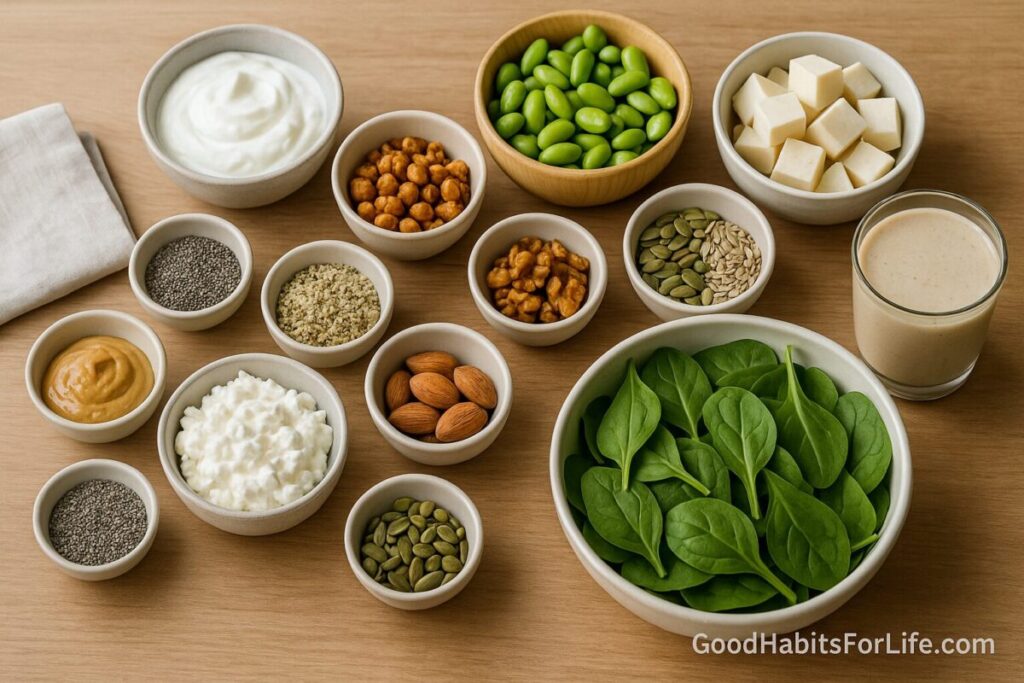
Gentle Nutrition: AddIns that Upgrade Any Meal: Protein-Forward Plan (2025)
Gentle Nutrition Add-Ins: Protein-Forward Plan (2025)
Table of Contents
🧭 What Is Gentle Nutrition? Why Go Protein-Forward
Gentle nutrition is the “health” principle of intuitive eating: making food choices that care for your body and your relationship with food—without rigid rules or guilt. It respects hunger, satisfaction, culture, budget, and life constraints while nudging your plate toward balanced nutrients.
Why emphasize protein?
-
Satiety & appetite regulation: Protein helps you feel full and reduces later overeating compared with lower-protein meals.
-
Performance & recovery: Adequate protein supports muscle maintenance and daily function, especially with aging.
-
Even energy: Paired with fiber and healthy fats, protein blunts rapid blood sugar swings.
-
Practicality: Small protein add-ins are a low-friction way to improve any meal—no overhaul required.
How much?
For most healthy adults, a practical target is 20–35 g protein per main meal with ~1.0–1.6 g/kg/day depending on age, activity and goals. Older adults may benefit from the higher end to preserve muscle. Spread intake across the day for best effect.
Gentle nutrition ≠ “perfect nutrition.” It’s a compassionate nudge: add helpful elements before you think about removing anything.
✅ Quick Start: Upgrade Today’s Meals in 10 Minutes
-
Pick one meal you’re already eating today.
-
Do the P-F-F check:
-
Protein: add 1–2 quick sources (see list below).
-
Fiber: add veg/legumes/whole grains/fruit.
-
Fat: add a small portion of nuts, seeds, olive oil, avocado, or dairy.
-
-
Hit 20–35 g protein with the add-in that fits your meal and culture (e.g., dal + paneer; pasta + lentils + tuna; rice bowl + eggs + edamame).
-
Mindful bite: pause halfway, ask “Still hungry? Still enjoying?” Adjust portions without guilt.
-
Note one win (e.g., “added Greek yogurt to oats”)—that’s your habit anchor for tomorrow.
🛠️ 7-Day Starter Plan (Repeatable)
Goal: Build the “add-ins” reflex without calorie counting.
-
Day 1 — Breakfast bump: Add 200 g Greek yogurt/skyr or 3 egg whites + 1 whole egg to your usual breakfast.
-
Day 2 — Lunch lift: Add 120–150 g grilled tofu/tempeh or 1 small can (~95–120 g) tuna/salmon/sardines to your lunch.
-
Day 3 — Snack swap: Choose a protein snack (e.g., 30 g roasted chickpeas, 200 ml kefir, 30 g cheese, or a protein milk).
-
Day 4 — Fiber focus: Add 1 cup (150–200 g) beans/lentils to any meal + a fist of veg.
-
Day 5 — Dinner double-check: If dinner is carb-heavy, add 150 g cottage cheese/paneer, 2 eggs, or edamame (1 cup).
-
Day 6 — Flavor upgrade: Add herbs, citrus zest, kimchi, or salsa to make protein add-ins crave-worthy.
-
Day 7 — Review & repeat: Which add-ins felt easiest? Lock 2–3 into your weekly default rotation.
Checkpoint each day (1 minute):
-
What did I add?
-
Did it keep me satisfied 3–4 hours?
-
Any tweaks for taste/texture next time?
🧠 Techniques & Frameworks That Make It Stick
1) P-F-F Plate Method
-
Half plate: vegetables/fruit/legumes (fiber)
-
Quarter: protein (aim 20–35 g)
-
Quarter: starches/whole grains
-
Plus: 1–2 teaspoons of fats (or naturally occurring)
2) 3A Habit Loop: Add → Adjust → Anchor
-
Add a small upgrade (e.g., chia into oats).
-
Adjust for taste (sweet/savory, texture).
-
Anchor it to an existing routine (e.g., “while kettle boils, stir in powdered milk.”)
3) Protein Distribution Rule
-
Spread protein over 3–4 eating occasions to support muscle protein synthesis and satiety.
4) Mindful Micro-Check-Ins
-
Before: “What would feel good and help me last till my next task?”
-
During: “Am I still hungry? Do I want more of protein, carbs, or veg?”
-
After: “How’s my energy 2–3 hours later?”
5) Budget & Time Savers
-
Keep shelf-stable proteins: canned fish/beans, UHT milk, powdered milk, peanut butter.
-
Batch-cook lentils/beans; freeze in 1-cup portions.
-
Pre-boil eggs; keep roasted chickpeas for crunchy add-ins.
🛠️ Protein Add-Ins: 30+ Fast Options by Meal Type
Breakfast
-
Greek yogurt or skyr (200 g)
-
Cottage cheese/paneer (150 g)
-
Eggs (2 whole + 2 whites)
-
Tofu scramble (150 g)
-
Protein milk or kefir (200–250 ml)
-
Chia/hemp hearts (2–3 tbsp)
-
Powdered milk (2–4 tbsp into oats/tea/coffee)
-
Nut/seed butters (1–2 tbsp)
Lunch/Dinner
-
Tinned tuna/salmon/sardines/mackerel (1 small can)
-
Grilled tofu/tempeh (150–200 g)
-
Paneer/cottage cheese (150 g)
-
Edamame (1 cup/150 g)
-
Lentils/chickpeas/beans (1–1.5 cups cooked)
-
Chicken breast/thigh (120–150 g cooked)
-
Eggs on rice/noodles/salads (2)
-
Dal + egg or paneer; rajma/chana with extra paneer
-
Greek yogurt raita/tsatziki on the side (150 g)
Soups/Salads/Bowls
-
Add legumes, edamame, tinned fish, boiled eggs, cottage cheese crumbles, smoked tofu, seitan, tempeh bacon.
-
Sprinkle hemp hearts, pumpkin seeds, parmesan, toasted peanuts.
Smoothies
-
Greek yogurt (200 g) + milk
-
Silken tofu (150 g)
-
Peanut butter (1–2 tbsp) + oats
-
Optional: protein powder (whey/casein/soy/pea) if it helps convenience or budget
Pair add-ins with fiber (veg, fruit, grains, beans) and a little fat for long-lasting energy.
👥 Audience Variations
Students:
-
Keep tinned fish, eggs, peanut butter, powdered milk in dorms; add to instant noodles, toasties, or quick rice bowls.
-
10-minute meal: microwave rice + tuna + frozen veg + soy sauce + sesame seeds.
Busy Professionals:
-
Default lunch: “Protein + 2 sides” from cafeterias (e.g., tofu/chicken + salad + beans).
-
Desk snacks: kefir, cheese sticks, roasted chana/chickpeas.
Parents & Families:
-
Build-your-own bowls/tacos; offer 2 protein choices (beans + eggs) so kids can choose.
-
Blend cottage cheese into pasta sauces for creamy protein.
Seniors:
-
Prioritize soft, easy proteins (yogurt, eggs, tofu, fish) and even distribution across meals.
-
Add milk powder to porridge, soups, and tea for a painless boost.
Teens & Young Athletes:
-
Target the higher range (~1.2–1.6 g/kg/day, guided by coaches/clinicians).
-
Recovery snack: milk + banana + peanut butter or yogurt + granola.
⚠️ Mistakes & Myths to Avoid
-
Myth: “Protein shakes are only for bodybuilders.” They’re just a convenient option—totally optional if you prefer real-food add-ins.
-
Myth: “High protein is bad for healthy kidneys.” In healthy people, typical higher-protein diets show no harm; people with kidney disease need individualized guidance.
-
Mistake: Only fixing dinner. Distribute protein across breakfast and lunch too.
-
Mistake: Ignoring satisfaction. If your add-ins make meals dull, you won’t keep the habit—boost flavor with spices, sauces, and textures.
-
Mistake: Turning gentle nutrition into rigid rules. Flexibility keeps it sustainable.
🗣️ Real-Life Examples & Copy-Paste Scripts
If you eat… try adding:
-
Oats/porridge → Greek yogurt + chia + berries (sweet) or cottage cheese + peanut butter (savory sweet).
-
Paratha/roti & veg → Paneer bhurji, dahi/raita, or egg curry.
-
Pasta → Add 1 cup cooked lentils + tuna/salmon + spinach; top with parmesan.
-
Salad → Add edamame, chickpeas, eggs, tofu, or cottage cheese.
-
Instant noodles → Crack in 2 eggs, stir edamame, finish with sesame & scallions.
-
Rice bowl → 2 eggs + 150 g tofu + veg; drizzle peanut-lime sauce.
-
Dal-chawal → Stir in shredded chicken or paneer cubes; add a side of curd.
Conversation scripts (gentle self-talk):
-
“What could I add to help this meal last me 3–4 hours?”
-
“Which protein add-in would taste amazing with this?”
-
“I can always have more later if I’m still hungry.”
📚 Tools, Apps & Resources
-
Cronometer — micronutrient-aware logging for occasional audits; helpful to learn protein amounts.
-
YAZIO / MyFitnessPal — quick macro checks if you like numbers (use lightly with intuitive eating).
-
Mealime / Paprika — plan and grocery-list recipes featuring beans, eggs, tofu, fish.
-
Local/Store brands — value tinned fish, UHT milk, powdered milk, dried lentils/beans for budget.
Pros/Cons:
-
Apps increase awareness and highlight low-protein meals; over-tracking can undermine intuition. Use short sprints (e.g., 3 days) to calibrate, then return to mindful check-ins.
✨ Key Takeaways
-
Gentle nutrition is addition-first—protein add-ins are a small change with big benefits.
-
Aim 20–35 g protein at meals, spread across the day.
-
Use the P-F-F check and the 3A loop to make upgrades automatic.
-
Keep budget-friendly staples on hand; flavor is non-negotiable.
-
Progress beats perfection—any add-in that you enjoy is a win.
❓ FAQs
1) Do I need protein powder to hit my targets?
No. Powder is optional convenience. Greek yogurt, eggs, tofu, legumes, fish, paneer/cottage cheese, and milk can easily get you to 20–35 g per meal.
2) What if I’m vegetarian or vegan?
Totally doable. Combine legumes, tofu/tempeh, seitan, soy/pea protein milks, nuts/seeds. Distribute across meals for complete daily intake.
3) Is higher protein safe for healthy adults?
Generally yes within typical ranges; if you have kidney disease, are pregnant, or have a medical condition, get individual advice.
4) Will adding protein help with weight management?
Protein supports satiety and may reduce later overeating for some people. Gentle nutrition focuses on how you feel and function, not strict weight goals.
5) I’m rarely hungry in the morning. Should I still force a high-protein breakfast?
No forcing. Start small (e.g., a yogurt or milk coffee with powdered milk) and build to a satisfying breakfast that fits your rhythms.
6) How do I estimate 20–35 g without tracking?
Quick cues:
-
200 g Greek yogurt ≈ 18–22 g
-
2 eggs + 2 whites ≈ 24–26 g
-
150 g tofu ≈ 18–20 g
-
1 small tuna can ≈ 20–25 g
-
1 cup cooked lentils ≈ 16–18 g
Add two of these and you’re there.
7) What’s the best protein for heart health?
A varied mix emphasizing legumes, fish, and plant-forward patterns aligns with cardiometabolic guidelines.
8) Can teens or older adults use this?
Yes—with adjustments. Teens and older adults often benefit from higher per-meal protein and consistent distribution; tailor to appetite and guidance from healthcare providers.
9) Will more protein build muscle without exercise?
Protein helps maintain muscle, but resistance activity (body-weight, bands, weights) is key for growth and strength.
10) Is gentle nutrition compatible with cultural foods?
Absolutely. Add-ins fold into any cuisine—dal with paneer, tortillas with beans and eggs, sushi bowls with edamame, pasta with lentils and tuna.
📚 References
-
World Health Organization. Healthy diet (guidance on balanced eating patterns). https://www.who.int/news-room/fact-sheets/detail/healthy-diet
-
NIH Office of Dietary Supplements. Protein Fact Sheet for Health Professionals. https://ods.od.nih.gov/factsheets/Protein-Consumer/
-
Harvard T.H. Chan School of Public Health. The Healthy Eating Plate & protein guidance. https://www.hsph.harvard.edu/nutritionsource/healthy-eating-plate/
-
Phillips SM & colleagues. Protein “leverage” & satiety; protein needs across lifespan. (Overview articles) https://www.ncbi.nlm.nih.gov/pmc/articles/PMC7230460/
-
PROT-AGE Study Group. Protein intake and exercise for healthy aging. https://www.ncbi.nlm.nih.gov/pmc/articles/PMC4109411/
-
Leidy HJ et al. The role of protein in weight management and satiety. Nutr Today. 2015. https://www.ncbi.nlm.nih.gov/pmc/articles/PMC4258944/
-
Reynolds A et al. Carbohydrate quality & cardiometabolic health (fiber benefits). Lancet. 2019. https://www.ncbi.nlm.nih.gov/pubmed/30638909
-
Medawar E et al. Intuitive eating: A systematic review of health outcomes. Appetite. 2019. https://www.sciencedirect.com/science/article/pii/S0195666319304473
-
Deutz NEP et al. Protein intake and distribution for muscle protein synthesis. J Gerontol A. 2014. https://academic.oup.com/biomedgerontology/article/69/6/695/2955330
-
American Heart Association. Fish and omega-3 for heart health. https://www.heart.org/en/healthy-living/healthy-eating/eat-smart/fats/fish-and-omega-3-fatty-acids
-
Academy of Nutrition and Dietetics. Kidney disease & protein—medical nutrition therapy. https://www.eatright.org/health/diseases-and-conditions/kidney-disease
-
FAO/WHO. Protein quality and dietary patterns (background). https://www.fao.org/3/i3124e/i3124e00.htm
⚖️ Disclaimer
This article is for general education only and is not a substitute for personalized medical or nutrition advice; consult a qualified professional for individual recommendations.