
Foot Strength: Barefoot Prep & Toe Spacers: Zone 2 + NEAT (2025)
Foot Strength: Barefoot Prep, Toe Spacers, Zone 2 & NEAT
Table of Contents
🧭 What & Why
Foot strength means training the intrinsic “foot core” muscles that stabilize the arches and control the toes, plus the extrinsic muscles (calf/tibia) that steer the ankle. Strong, well-coordinated feet improve balance, reduce over-pronation, and may lower injury risk in walking, running, and everyday life. Systematic reviews and frameworks (e.g., the Foot Core System) support targeted intrinsic-muscle training for better function and balance. PMCPubMed
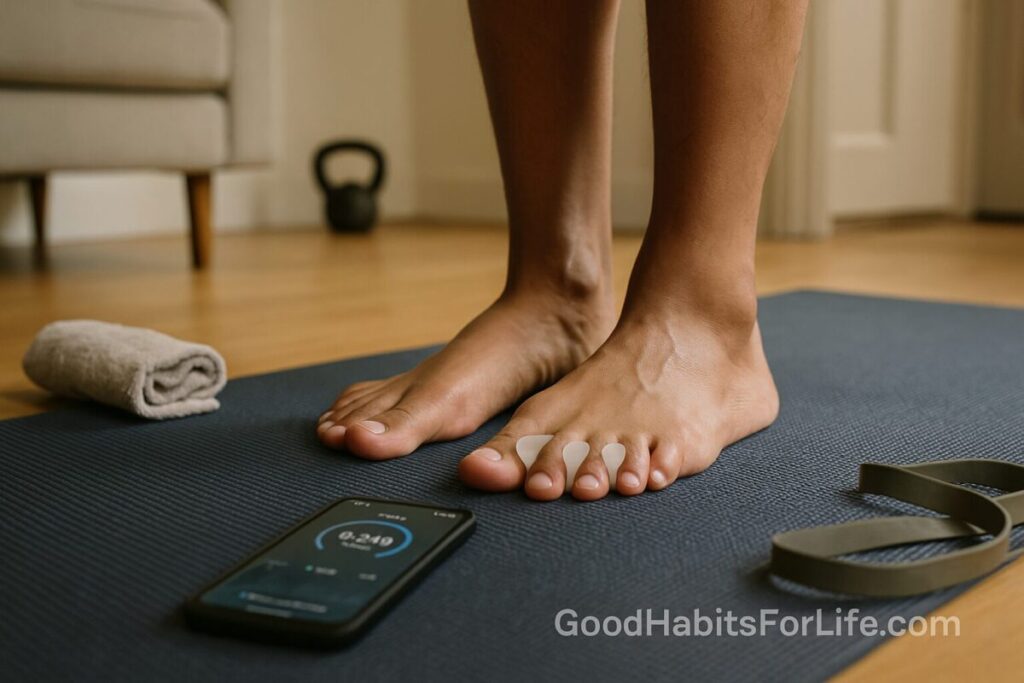
Toe spacers (separators) can reduce pain and slightly decrease the hallux valgus angle in bunion cases when used consistently, especially custom silicone designs; they’re an adjunct, not a stand-alone fix. PubMedPMC
Zone 2-style aerobic work (moderate intensity—you can talk but not sing) supports circulation, aerobic base, and recovery around the foot/ankle while building overall endurance. Public-health guidelines recommend ≥150 min/week of moderate activity; the talk test is a simple gauge. CDC+1
NEAT (Non-Exercise Activity Thermogenesis)—the calories you burn in everyday movement—adds a big, sustainable dose of low-strain loading for feet (standing, walking, fidgeting). Elevating NEAT meaningfully changes daily energy expenditure. PubMed+1
✅ Quick Start (Today)
-
Shoe off, 5 minutes:
-
Short-Foot (foot doming): 3×10 slow holds (5–8 s each) per foot.
-
Toe Yoga: lift big toe while keeping others down, then reverse, 2×10 each.
-
-
Calf complex:
-
Bent-knee calf raises (soleus bias): 2×12; straight-knee: 2×12.
-
-
Balance snack: Single-leg stand near a counter, 2×30–45 s/side.
-
Toe spacer trial: Wear for 20–40 min while relaxing or doing chores.
-
Zone 2 walk (20–30 min): Comfortable pace; you can talk in full sentences.
-
NEAT bump: Add 1,000–2,000 steps today (≈0.8–1.6 km / 0.5–1.0 mi). Use stairs, stand for calls.
🛠️ 30-60-90 Habit Plan
Goal: resilient arches, better balance, painless daily movement.
Days 1–30 (Foundation)
-
Strength (3×/week): Short-Foot 3×10; Toe Yoga 2×10; Bent- & straight-knee calf raises 3×12; Single-leg balance eyes open 3×30 s.
-
Mobility (daily): Calf wall stretch 2×30 s each; plantar fascia roll (ball) 1–2 min/foot.
-
Toe spacers: 20–40 min/day, increase to 60 min if comfortable.
-
Zone 2: 20–30 min, 4–5×/week (talk-test).
-
NEAT: Baseline + 2,000 steps/day (aim 7–10k).
Checkpoints: No sharp/lasting heel or arch pain; soreness ≤3/10 and gone in 24–48 h.
Days 31–60 (Progress)
-
Strength (3×/week):
-
Short-Foot with mini squat: 3×8.
-
Single-leg calf raises: 3×10 each.
-
Tiptoe holds on one leg: 3×20–30 s.
-
Balance: eyes closed 3×20 s, add head turns.
-
-
Toe spacers: 60–90 min/day or during easy walks at home (if safe).
-
Zone 2: 30–40 min, 4–5×/week; 1 session can be light cycling.
-
NEAT: +500–1,000 steps more (parking farther, brief stand/walk breaks).
Days 61–90 (Performance)
-
Strength (3×/week):
-
Short-Foot + split squat (front foot barefoot) 3×8/side.
-
Eccentric calf raises (3 s down) 3×10.
-
Hops in socks (if pain-free): 3×10 small pogo hops.
-
-
Toe spacers: as comfortable; taper if irritation.
-
Zone 2: 40–50 min, 4×/week; add 1 higher-intensity day if trained.
-
NEAT: 9–12k steps/day average.
When to modify or pause: persistent morning heel pain, numbness, swelling, or bunion irritation—consult a clinician and scale back. Follow foot pain CPG guidance on progressive loading and symptom-limited activity. JOSPT
🧠 Techniques & Progressions (Evidence-Aligned)
-
Foot Core System: start with isolation (Short-Foot), then integrate into tasks (squats, step-downs) and finally into dynamic drills (hops, change of direction). PubMed
-
Short-Foot cues: “Zip your arch up without curling toes.” Hold 5–8 s; breathe normally. Improvements are linked with better balance and reduced navicular drop. PMC
-
Soleus bias for walking/running economy: bent-knee calf raises improve mid-stance support.
-
Toe spacers: most useful for comfort/spacing in bunion or cramped footwear. Evidence shows pain and angle reductions with custom silicone in some studies; combine with strengthening, footwear fit, and load management. PubMedPMC
-
Zone 2 guide: use talk test or ~60–70% HRmax; stay conversational. It’s not magic but is an efficient, sustainable base—higher intensities also matter for fitness depending on goals. CDC
-
NEAT stacking: place frequently used items farther away; set a 30–60 min “move alarm”; 3–5 min of tidying or stairs = meaningful NEAT. PubMedAHA Journals
👥 Audience Variations
-
Students/Desk-workers: every 45 min: 60–120 s stand + 20 calf raises + toe yoga; walk loops between classes/calls. World Health Organization
-
Parents/Caregivers: stroller walks at talk-test pace; home balance drills while supervising play.
-
Professionals on feet: emphasize eccentric calf work and recovery (calf stretch, gentle roll) after shifts.
-
Seniors: start with supported balance and seated towel scrunches; progress to standing Short-Foot as tolerated. Evidence supports intrinsic-muscle programs for older adults’ balance. BioMed Central
-
Runners: keep Zone 2 easy days truly easy; integrate Short-Foot into warm-ups; add hops only when pain-free.
⚠️ Mistakes & Myths to Avoid
-
Myth: “Toe spacers fix bunions.” → They can reduce pain/angle in some cases, but they don’t remodel bone; treat them as a comfort/support tool within a program. PubMed
-
Mistake: Jumping straight to barefoot running. → Start with barefoot drills indoors, then short grass strides, then progress volume; watch for plantar fascia irritation. Follow gradual loading. JOSPT
-
Myth: “Zone 2 is the only cardio that builds mitochondria.” → It’s useful, but higher intensities also improve cardiometabolic health; blend based on goals. PubMed
-
Mistake: Ignoring NEAT. → Daily movement accumulates and protects health even outside workouts. PubMed
💬 Real-Life Examples & Scripts
-
Desk micro-routine (2 min): “Timer went off—stand, 20 calf raises, 10 toe yoga, 30-s single-leg balance holding desk.”
-
Shoe store script: “I’m building foot strength. Can we try wider toe-box options and minimal heel-to-toe drop?”
-
Walk partner cue: “Let’s keep a pace where we can chat but not sing—talk-test Zone 2.” CDC
-
Evening TV habit: “Toe spacers in for episode 1; out for episode 2; finish with ball roll 1–2 min/foot.”
🧰 Tools, Apps & Resources
-
Toe spacers: pick medical-grade silicone; start with 20–30 min; avoid skin irritation. Evidence favors custom silicone in bunion pain reduction; prefabricated comfort varies. PubMedPMC
-
Foot roller/ball: lacrosse or massage ball for 1–2 min/foot (symptom-guided).
-
Step/NEAT tracker: any pedometer or smartphone app; set 7–10k steps/day as a baseline (adjust for ability). CDC
-
HR or RPE: heart-rate watch (optional) or talk test (free). CDC
-
Surface choice: start barefoot on safe, clean, flat indoor surfaces; progress to grass/turf before pavement.
📌 Key Takeaways
-
Train your foot core 3×/week and pair with calf strength and balance. PMC
-
Use toe spacers for comfort/alignment support—combine with strength and good footwear. PubMed
-
Accumulate 150+ min/week of moderate (talk-test) cardio and keep moving all day via NEAT. CDCPubMed
-
Progress slowly over 30-60-90 days; back off with persistent pain and get assessed if symptoms linger. JOSPT
❓ FAQs
1) How long until I notice stronger arches?
4–8 weeks for balance and control, with consistent Short-Foot and calf work. Reviews show functional gains within weeks. PMC
2) Can I wear toe spacers all day?
Start with 20–40 min; increase as comfortable. If irritation or numbness occurs, reduce time. Evidence supports benefit in some bunion cases, especially custom silicone. PubMedPMC
3) What’s the best measure for Zone 2 if I don’t have a watch?
Use the talk test: you can hold a conversation but not sing. CDC
4) How many steps should I aim for?
Most adults benefit from 7–10k/day as a practical NEAT target; tailor to your baseline and health status. Public guidelines emphasize more movement and less sitting. World Health Organization
5) I have plantar fasciitis—can I do this program?
Yes, with modifications and symptom-guided progression. Follow heel-pain CPGs: calf stretching, progressive loading, and temporary activity adjustments. Seek care if pain persists. JOSPT
6) Are minimalist shoes required?
No. Use roomy toe-box footwear; transition gradually if you choose more minimal options to avoid overload.
7) Is Zone 2 superior to all other intensities?
It’s effective and sustainable, but not uniquely superior for every goal. A mix across intensities can be ideal. PubMed
📚 References
-
Wei Z, et al. Effects of intrinsic foot muscle training on foot function and dynamic postural balance. 2022. PMC. PMC
-
McKeon PO, et al. The Foot Core System: a new paradigm for understanding intrinsic foot muscle function. 2015. PubMed. PubMed
-
Jaffri AH, et al. Evidence for Intrinsic Foot Muscle Training in Improving Skeletal Alignment, Foot Function, and Balance. 2023. PMC. PMC
-
Chadchavalpanichaya N, et al. Custom-mold silicone toe separator decreases hallux valgus angle and pain. 2018. PubMed. PubMed
-
Krześniak H, et al. Toe Separators as a Therapeutic Tool in Physiotherapy—A Review. 2024. PMC. PMC
-
CDC. Measuring Physical Activity Intensity: Talk Test. 2023. CDC
-
CDC. Adult Activity: An Overview. 2023. CDC
-
WHO. Guidelines on Physical Activity and Sedentary Behaviour. 2020. WHO Apps
-
Levine JA. Non-exercise Activity Thermogenesis (NEAT). 2002/2004. PubMed. PubMed+1
-
Koc TA Jr, et al. Heel Pain–Plantar Fasciitis: CPG Revision 2023. JOSPT. JOSPT
-
Storoschuk KL. Much Ado About Zone 2: A Narrative Review. 2025. PubMed. PubMed
⚖️ Disclaimer
This article provides general fitness education and is not a substitute for personalized medical advice. If you have foot pain, recent injury, diabetes-related neuropathy, or circulatory issues, consult a qualified clinician before starting or progressing the program.