
Food & Mood: A Tiny Journal Youll Actually Use: Protein-Forward Plan (2025)
Food & Mood: Tiny Protein Journal (2025)
Table of Contents
🧭 What & Why
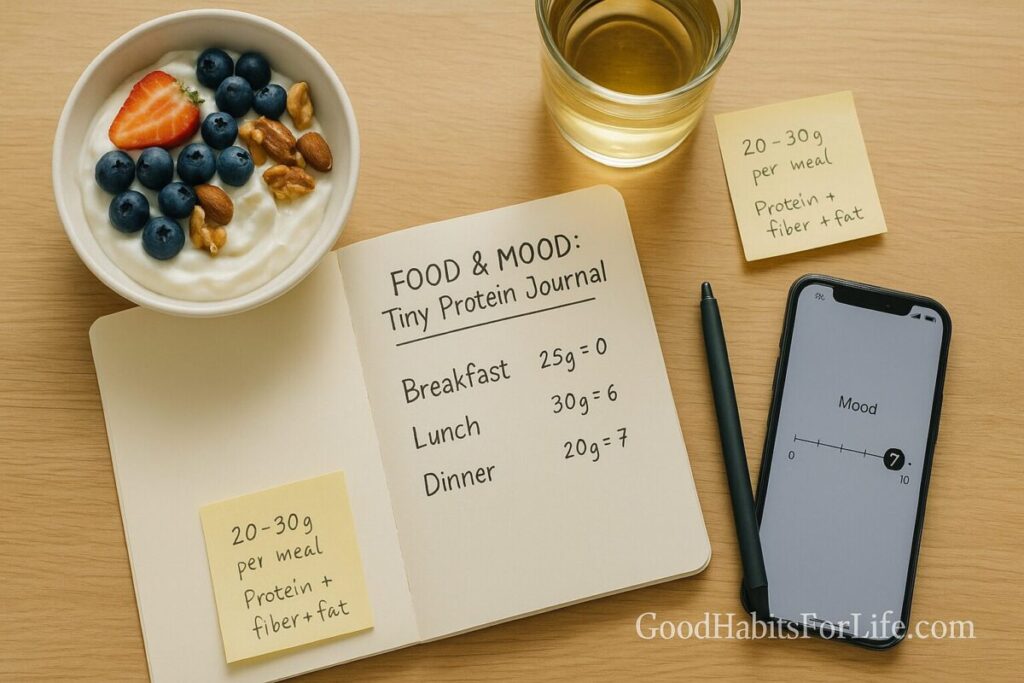
What this is: A minimalist food-and-mood journal (3 short lines/day) paired with a protein-forward plan: include a quality protein at every meal and snack. No calorie spreadsheets—just grams of protein and a 0–10 mood score.
Why protein for mood?
-
Protein slows digestion and stabilizes post-meal blood glucose, which helps prevent energy and mood swings.
-
Amino acids from protein (e.g., tryptophan, tyrosine) are building blocks for neurotransmitters involved in mood and focus.
-
Higher-protein meals increase satiety, reduce cravings, and support steady energy—practical wins for daily wellbeing.
-
Diet quality improvements have been linked with reduced depressive symptoms in trials and meta-analyses.
(See References.)
How much? A practical target is 0.8–1.2 g protein per kg body weight/day (e.g., 56–84 g/day for a 70 kg person; 1 g/kg ≈ 0.45 g/lb). Many people feel steady aiming for 20–30 g per meal plus 10–20 g snacks.
✅ Quick Start (Today)
-
Pick your daily target: 0.8–1.2 g/kg (e.g., 70 kg → 56–84 g/day).
-
Choose 5 “go-to” proteins (mix animal/plant): eggs, Greek yogurt, tofu, lentils, chickpeas, paneer, fish, chicken, whey/plant protein, edamame.
-
Create a single page in Notes/Keep/Notion with the template below—pin it to your phone home screen.
-
Shop or prep 2 protein bases for the next 3 days (e.g., boiled eggs + cooked lentils).
-
Log tonight: Protein grams eaten (rough estimate), mood 0–10, one sentence: “What helped my mood today?”
🛠️ The Tiny Journal Template
Daily Check-In (copy/paste):
-
Mood (0–10): ____ | Sleep (hrs): ____
-
Protein grams: Breakfast ____ Lunch ____ Dinner ____ Snacks ____ Total: ____
-
Note (1 line): What helped or hurt my mood today?
Quick Protein Estimator (no scale):
-
2 eggs ≈ 12 g
-
200 g Greek yogurt ≈ 20 g
-
100 g paneer/cottage cheese ≈ 18–22 g
-
100 g chicken/fish ≈ 22–25 g
-
1 scoop whey/plant protein ≈ 20–25 g
-
1 cup cooked lentils/chickpeas ≈ 14–18 g
-
100 g tofu ≈ 8–12 g
🗓️ 7-Day Starter Plan
Day 1 — Set & Log: Pick your daily protein target; add the template to your phone; log dinner and mood.
Day 2 — Protein Breakfast: Hit 20–30 g by 10:00 (e.g., eggs + yogurt; tofu bhurji + roti; dal + peanuts). Log mood at lunch and bedtime.
Day 3 — Two-Meal Streak: Hit 20–30 g at breakfast and lunch. Add one 10–20 g snack.
Day 4 — Three-Meal Win: 20–30 g at all three meals. Note energy/mood changes.
Day 5 — Fiber + Protein: Add vegetables/whole grains to two meals to further steady blood sugar.
Day 6 — Social/Out-of-Home Plan: Pre-decide a protein pick for restaurants or travel.
Day 7 — Review & Adjust: Average mood score; total protein/day; choose 2 tweaks for Week 2.
Checkpoint metrics (optional):
-
Average mood ↑ by ≥1 point vs. Day 1 baseline.
-
Protein target met on ≥5 of 7 days.
-
Afternoon energy dips reduced ≥50% (self-report).
🧠 Techniques & Frameworks
-
Implementation intentions (If-Then): “If it’s 08:00, then I’ll eat 20–30 g protein first.”
-
Habit stacking: “After I brush my teeth at night, I log mood + protein total.”
-
Minimum Viable Log: 3 lines, <2 minutes—never more.
-
Protein-First Rule: Start each meal by choosing the protein, then add vegetables and smart carbs.
-
Plate Pattern: ½ veg, ¼ protein (20–30 g), ¼ grains/starch, + healthy fat.
-
Friction hacks: Pre-boil eggs; cook a pot of dal; stock Greek yogurt or tofu; keep a travel scoop of protein powder.
-
Review rhythm: Weekly 10-minute look-back to spot which meals reliably hit targets.
👥 Audience Variations
-
Students: Low-cost picks—eggs, milk, curd/yogurt, roasted chana, peanut butter, soy/pea protein, canned chickpeas/beans.
-
Busy professionals: Ready-to-eat yogurt cups, pre-cooked chicken/tofu, cottage cheese/paneer tubs, shelf-stable tuna, protein shakes.
-
Parents: Family-style proteins—dal + rice, egg bhurji, bean tacos, chicken curry, tofu stir-fry; log your plate only.
-
Seniors: Aim 1.0–1.2 g/kg/day to protect muscle; softer options—yogurt, paneer, eggs, well-cooked dals, fish.
-
Vegetarian/Vegan: Combine legumes + grains; soy/tempeh/tofu; seitan; pea/soy protein powders for easy 20–25 g adds.
⚠️ Mistakes & Myths to Avoid
-
Myth: “More carbs at breakfast gives steadier energy.”
Reality: A protein-rich breakfast often reduces cravings and mid-morning crashes. -
Mistake: Logging 20 data points. Keep it to 3 lines or you’ll quit.
-
Myth: “High protein harms healthy kidneys.”
Reality: For healthy adults, recommended ranges are safe; discuss with your clinician if you have kidney disease. -
Mistake: Ignoring fiber and fluids—both help energy and mood alongside protein.
💬 Real-Life Examples & Scripts
Sample Day Entry
-
Mood: 6/10 | Sleep: 7 h
-
Protein: B 23 g (eggs + yogurt) | L 28 g (tofu bowl) | D 30 g (dal + paneer) | S 12 g
-
Note: Walking + protein lunch = steady afternoon.
Restaurant script:
“Could I add grilled paneer/chicken/tofu to that salad/bowl?”
“Can you swap fries for beans or extra veg?”
Busy morning script (office):
“Meeting at 9? I’m grabbing Greek yogurt + nuts first.”
🧰 Tools, Apps & Resources
-
Notes/Keep/Apple Notes/Notion: Fast, ubiquitous, searchable.
-
Cronometer / MyFitnessPal / Yazio: Quick protein lookup; save frequent meals.
-
Timer/Reminders: Ping at 08:00 & 21:30 to eat protein first and log day.
-
Kitchen basics: Electric cooker for dal, egg boiler, insulated lunch box.
-
Protein staples list (rotate weekly): Eggs, yogurt/curd, paneer, tofu/tempeh, chicken/fish, dal/lentils/chickpeas/rajma, edamame, soy/pea protein powder, nuts/seeds.
Pros/cons snapshot
-
Notes apps: ✔ zero learning; ✖ no nutrient database.
-
Tracking apps: ✔ food database; ✖ can be fiddly—use only for grams lookup.
📌 Key Takeaways
-
A tiny journal beats a perfect one you won’t use.
-
Protein-forward meals (20–30 g) steady energy and support mood.
-
Track only mood, sleep, protein—three lines, every day.
-
Review weekly; adjust targets and go-to proteins.
-
Make it social: share streaks with a buddy for accountability.
❓ FAQs
1) How much protein do I actually need?
Most adults do well at 0.8–1.2 g/kg/day; older adults or active people may benefit from the higher end (athletes: often 1.2–2.0 g/kg/day).
2) Will a high-protein diet harm my kidneys?
In healthy adults, intakes in recommended ranges are considered safe. If you have kidney disease or risk factors, consult your clinician.
3) I’m vegetarian—can I hit 20–30 g per meal?
Yes: tofu/tempeh, seitan, soy or pea protein powder, paneer/cottage cheese, lentils + grains, Greek yogurt/curd.
4) Do I need to track calories or macros?
No. This method tracks only protein grams and mood. Use a tracker briefly to learn typical protein amounts, then eyeball.
5) My mood hasn’t improved yet—how long should I try?
Give it 2–4 weeks. If mood remains low, speak with a healthcare professional; nutrition is one piece of mental wellbeing.
6) What if I can’t weigh food?
Use the Quick Protein Estimator above; consistency beats precision.
7) Is whey or plant protein okay?
Convenient, especially for breakfast or post-workout. Choose reputable brands; plant proteins work well for dairy-free diets.
8) How do I journal when traveling or eating out?
Pre-decide a default (e.g., “omelet or dal + roti” for breakfast/lunch). Log approximate grams and one mood score—done.
9) Should I worry about fat or carbs here?
Keep them supportive: lots of vegetables/fiber, whole grains, and healthy fats. The star habit is protein first.
10) Is there a best time to eat protein?
Evenly spread across the day—aim 20–30 g each meal for satiety and steady energy.
📚 References
-
World Health Organization. Healthy diet guidelines. https://www.who.int/news-room/fact-sheets/detail/healthy-diet
-
National Institutes of Health, Office of Dietary Supplements. Protein Fact Sheet for Health Professionals. https://ods.od.nih.gov/factsheets/Protein-Consumer/
-
Harvard T.H. Chan School of Public Health. The Nutrition Source: Protein. https://www.hsph.harvard.edu/nutritionsource/what-should-you-eat/protein/
-
Firth J, et al. The effects of dietary improvement on symptoms of depression and anxiety. Psychosom Med. 2019. https://journals.lww.com/psychosomaticmedicine/
-
Jacka FN, et al. A randomised controlled trial of dietary improvement for adults with major depression (SMILES). BMC Med. 2017. https://bmcmedicine.biomedcentral.com/
-
International Society of Sports Nutrition. Position stand: protein and exercise. J Int Soc Sports Nutr. 2017 (updates). https://jissn.biomedcentral.com/
-
EFSA Panel on Dietetic Products. Dietary reference values for protein. EFSA Journal. https://www.efsa.europa.eu/
-
Jenkins DJA, et al. Glycemic index: overview of implications. Nutr Rev. https://academic.oup.com/nutritionreviews/
-
American Psychological Association. Journaling and emotion regulation (evidence summaries). https://www.apa.org/
-
Benton D. Diet, mood and cognition. Nutrients. https://www.mdpi.com/journal/nutrients
⚖️ Disclaimer
This article is for general education only and is not a substitute for personalized medical or nutrition advice; please consult a qualified professional for your situation.