
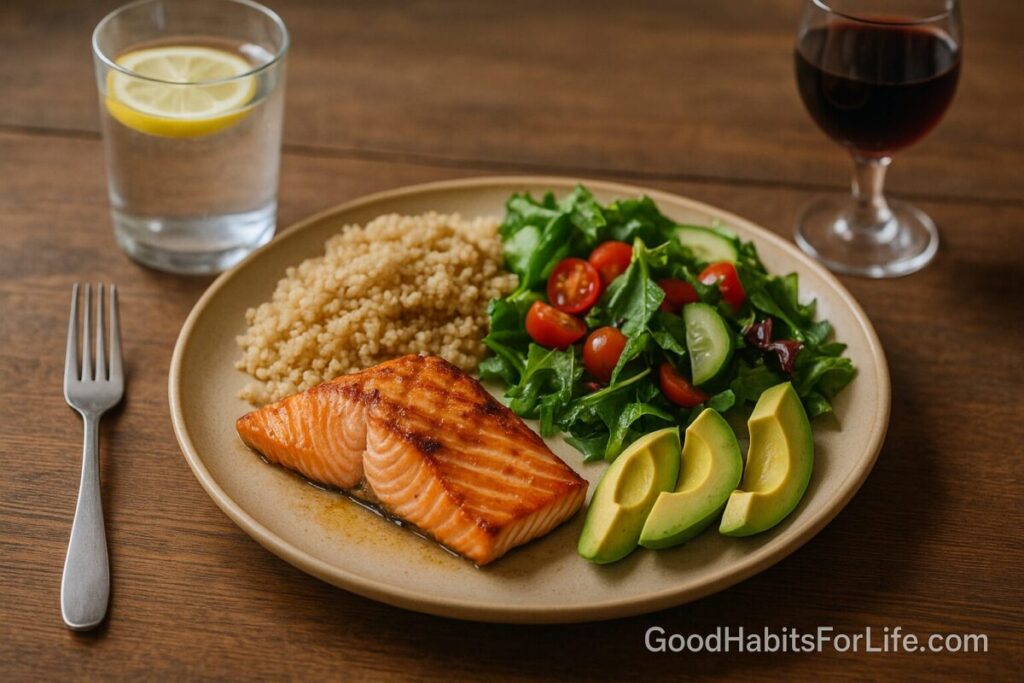
Food First: Eat Before You Drink to Slow the Spike
Food First: Eat Before You Drink to Slow the Spike
Table of Contents
🧭 What & Why: The Case for “Food First”
When you drink on an empty stomach, alcohol moves from your stomach to your small intestine quickly, where absorption is fastest. A substantial meal—especially one with protein, healthy fats, and fiber—slows gastric emptying and blunts how rapidly blood alcohol concentration (BAC) rises. That gentler rise typically means:
-
fewer sudden “rushes,”
-
better judgment and pacing,
-
less next-day fatigue and GI upset,
-
lower likelihood of over-drinking.
Think of food as a speed governor: it doesn’t stop alcohol from working, but it slows the spike so you can stay in control.
How it works (plain English):
-
Protein & fat delay stomach emptying.
-
Fiber & complex carbs release glucose steadily and help you feel fuller, longer.
-
A steadier BAC curve helps you notice (and respect) early cues to pause, hydrate, or stop.
✅ Quick Start: Do This Today
-
Pre-game plate (30–60 min before):
-
Build a quick meal: protein (hand-size) + fat (thumb-size) + fiber-rich carbs (fist-size) + veg.
-
Examples: Paneer + whole-wheat roti + salad; Eggs + avocado toast; Greek yogurt + oats + nuts; Hummus + whole-grain pita + veggies.
-
-
Carry a snack kit: A small box with nuts + cheese sticks + roasted chana or peanut butter sachet + apple.
-
First drink rule: Your first drink arrives with a small plate (e.g., hummus, cheese, edamame) or after you’ve eaten.
-
Alternate & pace: 1 drink/hour max, alternate with water/soda water. Set a phone timer if helpful.
-
End early, ride safely: Decide your stop time and transport before the first drink.
🧠 30-60-90 Habit Plan
Goal: Make “Food First” automatic—even on busy nights.
Days 1–30 (Foundation)
-
Anchor: Tie your pre-drink meal to a cue (e.g., “as I change my clothes, I heat my prepped dal-rice and salad”).
-
Template plate: Save 2–3 go-to combos in your notes.
-
Snack kit: Pack it in your bag every Friday/Saturday.
-
Track: Mark a ✔️ in your calendar when you ate before drinking.
Days 31–60 (Consistency)
-
Upgrade choices: Add omega-3-rich fish/eggs or legumes twice a week.
-
Restaurant rule: When ordering drinks, order food first (protein starter or salad + protein).
-
Hydration cadence: 250–300 ml water between drinks; set a gentle timer.
Days 61–90 (Mastery)
-
Social script: Tell friends your rule—“I eat first so I can pace well.”
-
Contingency plan: If food is delayed, pause drinks and snack from your kit.
-
Review & adjust: Check your notes: fewer spikes? better mornings? Keep what works.
🛠️ What to Eat (and What to Skip)
Best “Food First” options (mix & match):
-
Proteins: eggs, Greek yogurt, paneer, tofu, chicken/fish, lentils, chickpeas, edamame.
-
Fats: avocado, olive oil, nuts, seeds, peanut/almond butter, cheese.
-
Fiber-rich carbs: whole-grain roti, brown/red rice, oats, quinoa, millets, whole-grain breads, fruit.
-
Veg: leafy salads, tomatoes, cucumbers, carrots, peppers—add olive-oil or yogurt dressings.
On-the-go ideas (5-minute fixes):
-
Whole-grain wrap with paneer/chicken + salad.
-
Yogurt cup + banana + trail mix.
-
Hummus box + carrots + crackers.
-
Peanut butter + apple + a few dates.
Better bar bites:
-
Edamame, cheese & olives, grilled skewers, hummus platter, salsa + whole-grain chips, roasted peanuts/chana.
What to limit before & during:
-
Sugary mixers (cola/energy drinks/tonic) → faster glucose swings; pick soda water + citrus.
-
Deep-fried only plates → may be heavy but not balanced. Pair with protein/veg.
-
Very salty snacks → can worsen thirst; hydrate more if you choose them.
📚 Techniques & Frameworks to Stay Steady
PACE Method (simple pacing checklist)
-
Plate first (protein + fat + fiber).
-
Alternate every drink with water.
-
Count ≤ 1 drink/hour (stop earlier if you feel it).
-
End with food & water before heading home.
SAFE Snacks (for long evenings)
-
Stable protein (nuts/cheese/jerky/tofu bites)
-
Add fat (olives, nut butter)
-
Fiber carb (fruit, whole-grain cracker)
-
Every 60–90 minutes if dinner is late
Drink Redesign
-
Choose lower-ABV options (spritzers, shandies, session beers).
-
Ask for half-pours or taller glass with extra soda.
-
Use smaller sips; set your glass down between sips.
Boundaries & Buddy
-
Agree on a maximum beforehand (e.g., “2 drinks max”).
-
Share it with a friend; buddy check every hour.
👥 Audience Variations
Students/young adults:
-
Pre-party: oatmeal + yogurt + nuts or egg bhurji + toast.
-
Set a rideshare home in the app before the first drink.
Professionals (post-work drinks):
-
Keep protein snack in your drawer (roasted chana + nuts).
-
Order food first in rounds—starter with protein before drinks arrive.
Parents/caregivers:
-
Prep a family-friendly pre-drink tray (boiled eggs, cut veggies, hummus, fruit).
-
Keep water bottles filled for everyone; model alternating drinks with water.
Seniors:
-
Prioritize steady meals and medication checks (ask your clinician about interactions).
-
Choose lower-ABV and pace slowly; avoid standing too long if dizzy.
Teens (educational note):
-
Underage drinking is unsafe and illegal in many regions. Teach the food + hydration + delay principles as general health skills for adult life; emphasize no use now.
⚠️ Mistakes & Myths to Avoid
-
“Food cancels alcohol.” False. It slows absorption but doesn’t eliminate effects.
-
“Coffee sobers you.” It may make you feel alert; it doesn’t lower BAC.
-
“Grease lines the stomach.” There’s no “oil shield.” Balance (protein + fat + fiber) is what helps.
-
Skipping meals to ‘save calories’ before drinking often backfires—faster spikes, poorer choices.
-
Chugging water at the end doesn’t fix a spike; steady hydration throughout helps more.
-
Mixing energy drinks can mask intoxication cues—avoid or limit.
💬 Real-Life Examples & Scripts
-
At the bar (to server): “Can I get the grilled chicken skewers first, and I’ll have a spritzer after that arrives?”
-
With friends: “I’ve started eating before I drink so I can keep pace—let’s split a hummus plate.”
-
If drinks arrive but food is delayed: “I’ll hold my drink until the food comes—could I get a soda water meanwhile?”
-
Personal boundary: “I’m capping at two tonight; I’ll switch to soda with lime after.”
🧰 Tools, Apps & Resources (brief)
-
NIAAA “Rethinking Drinking” calculators — Understand standard drinks and patterns. Pro: authoritative. Con: US-centric measures.
-
DrinkControl / AlcoDroid / Sunnyside — Track drinks, set pace alerts. Pro: simple pacing nudges. Con: paid features on some apps.
-
Notes/Reminders app — Save your pre-drink plate and “PACE” checklist; set a 30–60 min pre-event reminder.
-
Restaurants’ nutrition pages — Pre-pick protein-forward starters.
🧾 Key Takeaways
-
Eat 30–60 minutes before drinking; build a protein + fat + fiber plate.
-
Carry a snack kit for delays; order food first when out.
-
Alternate with water and pace ≤1 drink/hour.
-
Food slows the spike—it doesn’t erase alcohol. Keep boundaries and a safe ride plan.
❓ FAQs
1) How long before drinking should I eat?
About 30–60 minutes beforehand works well; top up with small snacks if the evening runs long.
2) What are the best foods to blunt a fast BAC rise?
Meals with protein (eggs, yogurt, paneer, legumes) + healthy fat (nuts, avocado, olive oil) + fiber-rich carbs (whole grains, fruit, veg).
3) Does milk help?
Milk adds protein/fat and can help some people feel steadier, but it’s not special—balanced meals work as well or better.
4) Do greasy foods prevent hangovers?
They don’t prevent them. A balanced plate before and steady hydration during the night are more useful than grease alone.
5) How much water should I aim for?
A simple rule: 250–300 ml water between drinks and a glass before bed.
6) What if I’m fasting (e.g., religious fasts or intermittent fasting)?
Consider alcohol-free days while fasting, or break the fast with a meal first and delay alcohol until after you’ve eaten.
7) Does eating mean I can safely drink more?
No. Food slows absorption; it doesn’t raise your safe limit. Stick to your pre-set boundary.
8) What about low-carb or keto?
You can still use protein + fat + non-starchy veg (e.g., eggs + avocado + salad). Be aware: some people feel alcohol’s effects sooner on very low-carb diets.
9) Are there interactions with medications?
Yes—many medications interact with alcohol. Check with your clinician or pharmacist for your specific meds.
10) Is sugary mixer the main problem?
Sugary mixers can worsen glucose swings and mask pacing. Choose soda water + citrus or low-sugar options.
📚 References
-
World Health Organization — Alcohol fact sheet: who.int
-
U.S. National Institute on Alcohol Abuse and Alcoholism (NIAAA) — Rethinking Drinking: niaaa.nih.gov
-
Centers for Disease Control and Prevention — Alcohol and public health: cdc.gov
-
NHS (UK) — Alcohol units and guidelines: nhs.uk
-
Australian Government — Standard drinks guide: health.gov.au
-
Review on gastric emptying and meal composition: Camilleri M., Clin Gastroenterol Hepatol. Overview articles on factors affecting gastric emptying.
-
Jones A.W., “Food effects on alcohol elimination,” Forensic Sci Int. Review articles discussing absorption and BAC curves.
-
Harvard T.H. Chan School of Public Health — Healthy eating plate (for balanced meal building): hsph.harvard.edu
⚖️ Disclaimer
This article offers general educational information about alcohol and health and is not medical advice; please consult a qualified professional for personal guidance.