
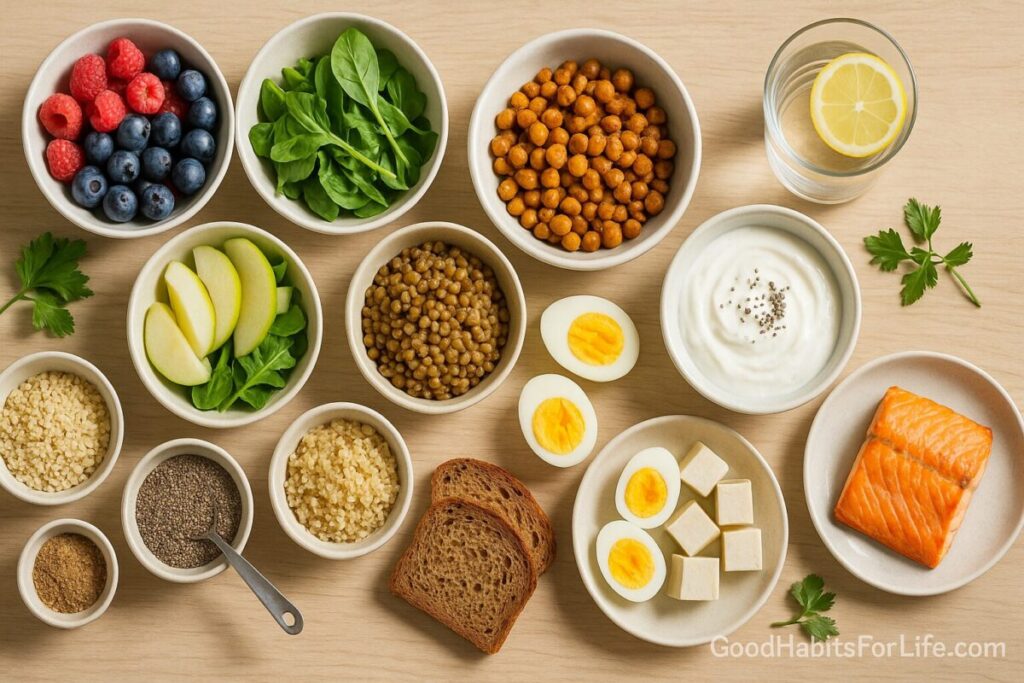
Fiber Every Day: 30g with Simple Swaps: Protein-Forward Plan (2025)
30g Fiber Daily (2025): Simple Swaps + Protein Plan
Table of Contents
🧭 What & Why
What is dietary fiber?
Fiber is the indigestible part of plant foods (soluble and insoluble types). Soluble fiber forms a gel that can help lower LDL cholesterol and support blood-sugar control; insoluble fiber adds bulk and supports regularity. Fermentable fibers feed gut microbes, producing short-chain fatty acids linked to gut and metabolic health.
Why ~30 g per day?
Most adults benefit from ~25–38 g/day depending on energy needs; many countries promote ≈30 g/day as a simple target. Hitting this mark is associated with improved satiety and weight management, healthier cholesterol, steadier post-meal glucose, and reduced risk of heart disease and certain digestive issues.
Protein-forward twist.
Pairing fiber with lean/plant protein (e.g., yogurt, eggs, tofu, lentils, fish, poultry) improves fullness, helps maintain muscle, and stabilizes appetite—key for sustainable habit change.
✅ Quick Start: Do This Today
-
Set a simple daily target: 30 g fiber + 80–120 g protein (adjust to your needs).
-
Make 3 anchors:
-
Breakfast: ≥8–10 g fiber + ≥20–30 g protein
-
Lunch: ≥10–12 g fiber + ≥25–35 g protein
-
Dinner: ≥8–10 g fiber + ≥25–35 g protein
Snacks: add 4–6 g fiber if needed.
-
-
Do one 5-minute swap: White bread → whole-grain seeded bread; crisps → roasted chickpeas; fruit juice → whole fruit.
-
Hydrate: 6–8 glasses water across the day.
-
Go slow: Increase fiber by ~5 g every 3–4 days to minimize gas/bloating.
-
Batch once: Cook a pot of lentils or chickpeas for the week.
🛠️ 7-Day Starter Plan (Protein-Forward)
Approximate fiber values are typical ranges; exact amounts vary by brand/portion.
Day 1 (≈32–35 g fiber)
-
Breakfast: Oat bran porridge (1 cup cooked, ~7 g) + chia (1 tbsp, ~5 g) + blueberries (½ cup, ~2 g). Greek yogurt on the side for protein.
-
Lunch: Lentil-veggie bowl—cooked lentils (¾ cup, ~11 g) + mixed veg (2 cups, ~6 g) + olive oil, lemon, herbs.
-
Snack: Apple (~4 g) with peanut butter.
-
Dinner: Grilled chicken/tofu + quinoa (1 cup cooked, ~5 g) + broccoli (1 cup, ~5 g).
Day 2 (≈30–33 g)
-
Breakfast: High-fiber muesli (serving ~8 g) + milk or soy milk + sliced pear (~5 g).
-
Lunch: Whole-grain wrap (≥6 g) with turkey/tempeh, hummus (2 tbsp, ~2 g), spinach, peppers.
-
Snack: Roasted chickpeas (¼ cup, ~6 g).
-
Dinner: Salmon + sweet potato (1 medium, ~4 g) + green beans (1 cup, ~4 g).
Day 3 (≈31–34 g)
-
Breakfast: Two eggs + whole-grain toast (2 slices, ~6 g) + avocado (½, ~5 g).
-
Lunch: Barley-bean soup (1½ cups, ~10–12 g) + side salad (2–3 g).
-
Snack: Raspberries (1 cup, ~8 g).
-
Dinner: Tofu stir-fry with mixed veg (2 cups, ~6 g) + brown rice (1 cup, ~3.5 g).
Day 4 (≈30–32 g)
-
Breakfast: Smoothie: kefir/yogurt + oats (¼ cup, ~4 g) + flaxseed (1 tbsp, ~3 g) + spinach (~1 g) + banana (~3 g).
-
Lunch: Chickpea salad (¾ cup, ~9 g) + veggies (~4 g) + feta.
-
Snack: Popcorn (3 cups air-popped, ~3.5 g).
-
Dinner: Lean beef/lentil Bolognese (blend ½ lentils into sauce, ~7 g) over whole-grain pasta (1 cup, ~5 g).
Day 5 (≈30–35 g)
-
Breakfast: Overnight oats with psyllium (1 tsp, ~5 g), walnuts (1 tbsp, ~1 g), strawberries (1 cup, ~3 g).
-
Lunch: Black-bean burrito bowl—black beans (¾ cup, ~11 g), brown rice (½ cup, ~1.8 g), salsa, lettuce.
-
Snack: Carrots (1 cup, ~3.5 g) with hummus.
-
Dinner: Baked cod + farro (1 cup, ~6 g) + asparagus (1 cup, ~3 g).
Day 6 (≈30–33 g)
-
Breakfast: High-fiber toast (2 slices, ~6–8 g) + cottage cheese + tomato.
-
Lunch: Pea-protein pasta (2 oz dry; fiber varies, ~5–8 g) with tomato-veg sauce (~3 g) + side salad (~3 g).
-
Snack: Kiwi (2, ~4 g).
-
Dinner: Chickpea-veggie curry (1 cup, ~10 g) + cauliflower “rice” + yogurt raita.
Day 7 (≈30–34 g)
-
Breakfast: Buckwheat pancakes (2) with berries (~6–8 g total).
-
Lunch: Tuna/white-bean salad—cannellini (¾ cup, ~10 g) + arugula (~1 g) + whole-grain crackers (serving, ~3–4 g).
-
Snack: Pear (~5–6 g).
-
Dinner: Tofu/tempeh + soba noodles (1 cup, ~3 g) + edamame (½ cup, ~4 g) + veggies (~4 g).
Shopping list highlights (fiber powerhouses): oat bran, rolled oats, chia/flax, berries, apples/pears, leafy greens, broccoli, carrots, sweet potato, beans/lentils/chickpeas, barley, farro, quinoa, whole-grain bread/wraps/pasta, psyllium husk, popcorn kernels, nuts/seeds.
🧠 30-60-90 Roadmap
-
Days 1–30 (Build):
-
Batch-cook beans/grains weekly; keep two high-fiber snacks ready.
-
Use the “Fiber Scorecard” daily: Breakfast 8–10 g, Lunch 10–12 g, Dinner 8–10 g, Snacks 4–6 g.
-
Track water intake and fiber grams 5 days/week.
-
-
Days 31–60 (Refine):
-
Elevate swaps: white → whole-grain seeded; standard yogurt → high-protein yogurt; milk chocolate → 85% dark with nuts.
-
Add 1 fermented food (kefir/yogurt/sauerkraut) most days.
-
-
Days 61–90 (Automate):
-
Create a rotating 2-week menu; set recurring grocery list.
-
Aim for ≥30 different plant foods/week (diversity helps gut microbes).
-
Review labs/health goals with a clinician if relevant.
-
🛠️ Techniques & Frameworks
The 3-2-1 Plate (Protein-Forward):
-
3 portions veg/fruit, 2 portions fiber-rich carbs (whole grains/legumes), 1 portion lean/plant protein. Add healthy fats (nuts, olive oil).
Swap Matrix (copy-paste):
-
Breakfast: cornflakes → oat bran; white toast → seeded whole-grain; fruit juice → whole fruit.
-
Lunch: white wrap → whole-grain; fries → baked sweet potato; creamy soup → bean/barley soup.
-
Dinner: refined pasta → whole-grain/pea-protein pasta; white rice → barley/farro/quinoa; low-veg plate → ½ plate non-starchy veg.
-
Snacks: crisps → roasted chickpeas; biscuits → apple + peanut butter; candy → dark chocolate + nuts.
Fiber + Protein Pairings (fast wins):
-
Oat bran + whey/soy protein in porridge.
-
Greek yogurt parfait + chia + berries.
-
Lentils + canned tuna or tofu.
-
Whole-grain wrap + hummus + turkey/tempeh + veg.
-
Edamame + fruit.
Track & Nudge:
-
Use a food tracker 2–3 days/week to calibrate fiber.
-
Keep a transparent jar of roasted chickpeas or nuts on the counter; hide low-fiber snacks.
👥 Audience Variations
-
Students: Budget beans (dry or canned), frozen veg, popcorn, peanut butter, bananas, oats. Microwave lentil pouches are fine.
-
Busy professionals: Pre-washed salads, pre-cut veg, high-fiber wraps, frozen mixed veggies, rotisserie chicken or tofu.
-
Parents: Make “build-your-own bowls” (rice/quinoa + beans + veg + protein). Offer fruit first at snacks.
-
Seniors: Increase fiber slowly, sip fluids consistently, choose softer options (oatmeal, stewed apples, cooked veg, soups). Check meds that interact with fiber supplements.
-
Teens: Smoothies with oats/flax, bean quesadillas, fruit-and-yogurt parfaits; focus on performance/energy benefits.
⚠️ Mistakes & Myths to Avoid
-
Jumping from low to high fiber overnight. Ramp gradually to avoid discomfort.
-
Neglecting water. Fiber works best with adequate fluids.
-
Relying only on supplements. Whole foods bring vitamins, minerals, and phytochemicals.
-
Thinking fruit “has too much sugar.” Whole fruit provides fiber and a low glycemic load relative to juices/sodas.
-
Assuming all “multigrain” = high fiber. Read labels: prefer ≥3–5 g fiber per serving and whole grains as the first ingredient.
💬 Real-Life Examples & Scripts
Grocery script:
“Whole-grain first” (bread/wrap/pasta), “1–2 legumes,” “2 high-fiber snacks,” “3 colors of veg,” “2 kinds of fruit,” “one fermented dairy or soy.”
Restaurant script:
“Could I swap fries for a side salad or steamed veg?”
“I’ll take a whole-grain bun if available.”
“Add beans/lentils to the bowl, please.”
Workday snack box:
-
Roasted chickpeas or mixed nuts, high-fiber crackers, apple/pear, small dark-chocolate square.
🔧 Tools, Apps & Resources
-
Cronometer / MyFitnessPal: Track fiber grams quickly.
-
USDA FoodData Central: Verify fiber per food and portion.
-
High-fiber pasta/wraps: Keep a go-to brand you like for taste/texture.
-
Blender & rice cooker/Instant Pot: Speed up smoothies, grains, and beans.
-
Kitchen scale/measuring cups: Helps early accuracy; you won’t need them forever.
📌 Key Takeaways
-
Target ~30 g fiber/day and pair with adequate protein to stay full and energized.
-
Build with breakfast-lunch-dinner anchors and smart swaps.
-
Increase fiber gradually; hydrate.
-
Batch-cook beans and grains; keep two quick high-fiber snacks ready.
-
Track briefly each week to keep the habit on autopilot.
❓ FAQs
1) Is 30 g fiber safe for everyone?
For most healthy adults, yes—if increased gradually with fluids. If you have gastrointestinal conditions or are on certain medications, check with your clinician.
2) Do I need both soluble and insoluble fiber?
Yes. Foods naturally provide a mix; aim for variety: oats, barley, beans (more soluble), plus veg, whole grains, nuts, seeds (more insoluble).
3) What about fiber supplements like psyllium?
They can help close gaps, especially for cholesterol or regularity. Start with small amounts and space from medications; whole foods should still be the base.
4) Can I do this on low-carb or keto?
Emphasize non-starchy veg, nuts/seeds, avocado, chia/flax, and small servings of berries. Legume portions may need adjusting to your carb target.
5) Will more fiber cause gas?
Sometimes initially. Add ~5 g every few days, diversify sources, and consider cooked vs. raw veg. Many people adapt within 1–2 weeks.
6) Are whole-grain breads/pastas always better?
Usually—check labels for whole grain as the first ingredient and ≥3–5 g fiber/serving. Some legume/pea-protein pastas deliver extra fiber and protein.
7) How much fiber do kids need?
Needs vary by age and energy intake. Talk with a pediatric clinician; a simple rule used by many educators is “age + 5–10 g,” but individual guidance is best.
8) Can fruit “spike” blood sugar?
Whole fruit contains fiber and water, leading to a lower glycemic impact than juices. Pair fruit with yogurt, nuts, or cheese for steadier glucose.
9) What are easy travel snacks?
Roasted chickpeas, high-fiber bars (≥5 g), nuts, high-fiber crackers, pears/apples, and single-serve oatmeal cups.
📚 References
-
Harvard T.H. Chan School of Public Health — The Nutrition Source: Fiber: https://www.hsph.harvard.edu/nutritionsource/carbohydrates/fiber/
-
UK Scientific Advisory Committee on Nutrition (SACN) — Carbohydrates and Health (30 g/day recommendation): https://www.gov.uk/government/publications/sacn-carbohydrates-and-health-report
-
EFSA — Dietary Reference Values for carbohydrates and dietary fibre: https://efsa.onlinelibrary.wiley.com/doi/10.2903/j.efsa.2010.1462
-
USDA FoodData Central (nutrient database): https://fdc.nal.usda.gov/
-
American Diabetes Association — Nutrition consensus report (carbohydrate quality, fiber): https://diabetesjournals.org/care/issue/46/Supplement_1
-
American Heart Association — Whole grains and heart health: https://www.heart.org/en/healthy-living/healthy-eating/eat-smart/nutrition-basics/whole-grains
-
NIH/NIDDK — Eating, Diet, & Nutrition for Constipation (fiber & fluids): https://www.niddk.nih.gov/health-information/digestive-diseases/constipation/eating-diet-nutrition
-
World Cancer Research Fund/AICR — Fiber and colorectal cancer risk: https://www.wcrf.org/diet-activity-and-cancer/risk-factors/dietary-fibre/
-
WHO — Healthy diet (carbohydrate quality and fiber context): https://www.who.int/news-room/fact-sheets/detail/healthy-diet
-
Cochrane Review — Soluble fiber for lowering LDL cholesterol (beta-glucan/psyllium evidence overview): https://www.cochranelibrary.com/
⚖️ Disclaimer
This article is educational and not a substitute for personalized medical or nutrition advice—please consult a qualified professional for your specific needs.