
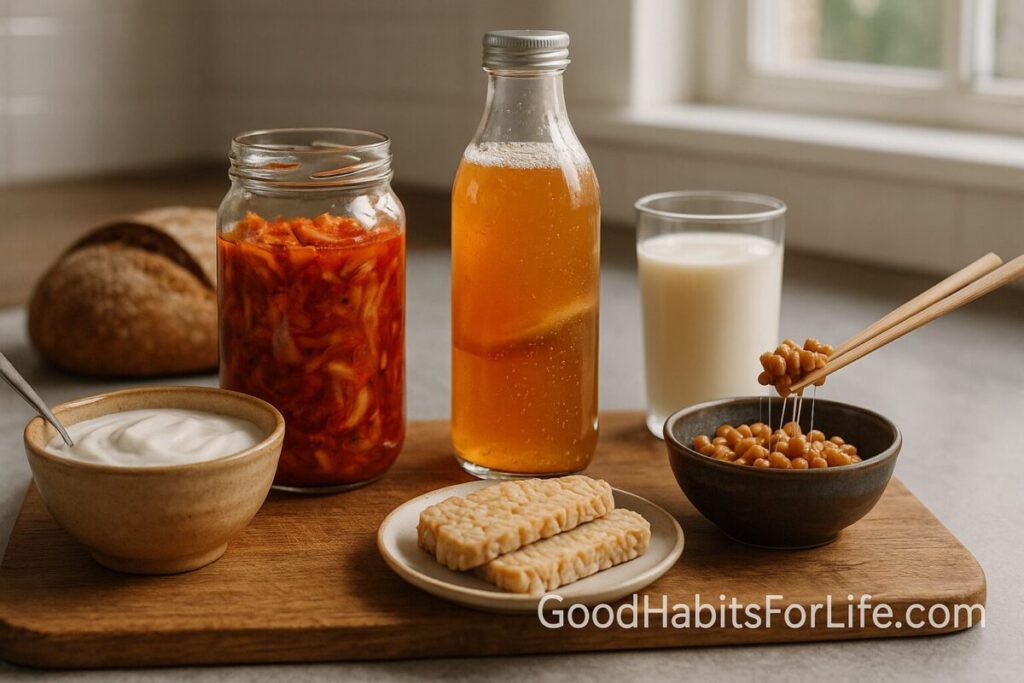
Fermented Foods 101: Curd, Kimchi, Kombucha: Protein-Forward Plan (2025)
Fermented Foods 101: Curd, Kimchi, Kombucha (2025)
Table of Contents
🧭 What Are Fermented Foods & Why They Help
Definition. Fermentation is a controlled process where microorganisms (bacteria/yeasts) transform food components—producing acids, gases, and other metabolites. Common ferments include curd/yogurt, kimchi, kefir, kombucha, tempeh, natto, sourdough, and paneer substitutes are not fermented (paneer is coagulated, not fermented).
Benefits with the strongest evidence
-
Gut diversity & immune tone: In a randomized trial, adults eating multiple servings of fermented foods showed increased microbiome diversity and reduced inflammatory markers compared with a fiber-only diet.
-
Lactose tolerance support: Yogurt with live cultures helps digest lactose for many people.
-
Nutrient availability: Fermentation can increase bioavailability of some vitamins and reduce antinutrients in legumes/soy (e.g., tempeh).
-
Food safety & keeping quality: Lactic-acid fermentation acidifies foods, inhibiting many pathogens when prepared correctly.
Protein-forward angle: Not all ferments are high in protein (kimchi, kombucha are low). The habit is to center meals on higher-protein ferments (Greek yogurt, skyr, kefir, tempeh, natto) and use others as flavorful sides (kimchi) or beverages (kombucha).
At-a-Glance Protein (typical ranges)
| Food (100 g unless noted) | Protein | Notes |
|---|---|---|
| Greek yogurt / Skyr | 9–11 g | Choose plain, live cultures |
| Regular curd/yogurt (dahi) | 3–4 g | Set at home or buy plain |
| Kefir (240 ml cup) | 8–9 g | Drinkable cultured milk |
| Tempeh | 18–20 g | Fermented soy; very satiating |
| Natto | 17–19 g | Fermented soybeans; sticky texture |
| Kimchi (150 g cup) | ~2–3 g | High flavor, low kcal/protein |
| Kombucha (240 ml cup) | ~0 g | Tea-based, trace caffeine/sugar |
(Values vary by brand/recipe; check labels.)
✅ Quick Start: Your First Week
Daily target: 1–2 servings of fermented foods, with at least one high-protein option.
-
Buy these basics (today).
-
Plain Greek yogurt or skyr (tubs), kefir (unsweetened), a jar of kimchi, 2–3 bottles of low-sugar kombucha, tempeh.
-
-
Set a simple rule.
-
“Protein first.” Build breakfast or lunch around yogurt/kefir/tempeh; add fruit/veg and whole grains.
-
-
Start small portions.
-
100–170 g yogurt or ½ cup kimchi or 120–240 ml kombucha. Increase as tolerated.
-
-
Hydrate & rotate.
-
Rotate ferments across the week to expose your gut to diverse microbes.
-
-
Track a cue.
-
Pair fermented food with a fixed cue (e.g., “after morning coffee → kefir glass”).
-
-
Safety.
-
Keep cold (≤4 °C / 40 °F). For home ferments, use clean jars, correct salt/brine, and follow tested recipes.
-
🛠️ 7-Day Protein-Forward Starter Plan
Goal: ~1–2 fermented servings daily, ≥20–30 g protein per meal by pairing ferments with eggs, legumes, fish, or whole-grain carbs.
-
Day 1 (Mon):
Breakfast: Skyr bowl (200 g) + oats + berries + chia.
Lunch: Brown-rice bowl + sautéed tempeh (120 g) + greens + kimchi. -
Day 2 (Tue):
Breakfast: Kefir smoothie (300 ml) + banana + peanut butter.
Dinner: Salmon (120–150 g) + roasted veg + side of kimchi. -
Day 3 (Wed):
Breakfast: Greek yogurt (170 g) + mixed nuts + honey (1 tsp).
Lunch: Whole-grain wrap + eggs (2) + kimchi + spinach. -
Day 4 (Thu):
Snack: Kombucha (200 ml) + handful of almonds.
Dinner: Tempeh stir-fry (150 g) + quinoa + veggies. -
Day 5 (Fri):
Breakfast: Curd (200 g) + sliced mango + pumpkin seeds.
Lunch: Lentil soup + cucumber raita (curd-based). -
Day 6 (Sat):
Brunch: Avocado toast + fried egg + kimchi.
PM: Kefir glass (240 ml). -
Day 7 (Sun):
Breakfast: Overnight oats in yogurt jar (prep Sat).
Dinner: Grilled chicken/tofu + kimchi + brown rice; optional kombucha (150–200 ml).
Checkpoints: energy, digestion, bowel regularity, and satiety. Adjust portions or rotate varieties if bloating occurs.
🧪 Techniques & Safety (Home + Store-bought)
Store-bought picks
-
Look for “live & active cultures.” On yogurt/kefir/kimchi labels.
-
Plain/unsweetened first. Add your own fruit/spice; skip high-sugar versions.
-
Kimchi: Choose brands with cabbage/veg first, sodium ≤600–800 mg per 150 g serving when possible.
-
Kombucha: Aim ≤6–8 g sugars per 240 ml; mind caffeine if sensitive.
Home fermentation essentials
-
Clean gear: Wash jars/crocks; rinse well.
-
Salt & brine for vegetables: Typical 2–3% salt by weight of vegetables. Keep produce submerged to stay anaerobic.
-
Temperature: Ferment veg around 18–22 °C (64–72 °F); then refrigerate.
-
Taste & timing: Tang develops in days to weeks. Refrigeration slows, but doesn’t stop, fermentation.
-
Red flags: Fuzzy/pink/black growth, off smells (putrid), slimy texture—discard.
-
Milk ferments: Use pasteurized milk, clean starter/cultures, and cold chain.
Sensitive groups (pregnant, immunocompromised, infants/young children): prefer reputable store-bought ferments and speak with a clinician if unsure.
🧠 Protein-Forward Pantry: What to Buy
Anchor proteins (fermented):
-
Greek yogurt / Skyr (tubs, plain)
-
Kefir (unsweetened)
-
Tempeh (plain; soy-based)
-
Natto (if available and you enjoy it)
Flavor & fiber boosters (low protein but high payoff):
-
Kimchi, sauerkraut, fermented pickles
-
Miso (fermented soybean paste; salty, use sparingly)
-
Sourdough bread (for variety; not a probiotic source after baking)
Smart pairings to hit protein goals (examples):
-
Yogurt + chia + oats + nuts → 30–35 g protein breakfast
-
Tempeh (150 g) + quinoa + veg + kimchi → 30+ g protein lunch
-
Kefir (300 ml) + whey/casein scoop (optional) + fruit → 25–35 g protein snack
👥 Audience Variations
-
Students: Budget tubs of plain yogurt, bulk oats, frozen fruit; tempeh stir-fries in one pan.
-
Professionals: “Desk kefir” bottle; kimchi jar in the office fridge; yogurt-based lunch bowls.
-
Parents: Curd/yogurt parfait bar; mild kimchi/sauerkraut chopped into fried rice; watch sodium.
-
Seniors: Yogurt/kefir for easy protein and calcium; review sodium in kimchi; consider lower-caffeine kombucha.
-
Teens: Smoothies with kefir + fruit; kimchi grilled-cheese or egg wraps for after-school protein.
⚠️ Mistakes & Myths to Avoid
-
Myth: “All ferments are probiotics.”
Reality: Not every fermented food contains live microbes at consumption (e.g., baked sourdough). Look for live cultures. -
Mistake: Using ferments to “cure” conditions.
Reality: Evidence shows supportive roles (diversity, digestion), not cures. -
Mistake: Ignoring sugar/caffeine in kombucha or sodium in kimchi.
Fix: Read labels; choose lower-sugar kombucha and lower-sodium kimchi. -
Mistake: Overdoing it on day one.
Fix: Start with small portions, build up. -
Mistake: Sloppy home-fermentation hygiene.
Fix: Clean gear, correct brine, submerge vegetables, refrigerate promptly.
💬 Real-Life Scripts & Meal Ideas (Copy-Paste)
-
Breakfast text-to-self: “200 g Greek yogurt + 40 g oats + 1 fruit + 1 tbsp seeds.”
-
Lunch bowl: “Cooked quinoa + 150 g tempeh + big handful greens + ½ cup kimchi.”
-
Snack: “Kefir 300 ml + banana.”
-
Family dinner: “Egg fried rice with chopped kimchi + cucumber raita (curd-based).”
-
When eating out: “Ask: ‘Do you have kimchi/sauerkraut on the side?’ Choose yogurt-based dips.”
🧰 Tools, Apps & Resources
-
Kitchen scale (for 2–3% salt brines).
-
Fermenting jar with airlock or simple mason jars + weights.
-
Fridge thermometers (keep ≤4 °C / 40 °F).
-
Apps: Cronometer / MyFitnessPal (log protein & sodium), FoodNoms (iOS), Yuka (label scanning).
-
Starter cultures: Reputable brands for yogurt/kefir; follow manufacturer instructions.
📌 Key Takeaways
-
Build a daily habit of 1–2 fermented servings; make one a protein-rich ferment.
-
Use kimchi for flavor and veggies; kombucha as an occasional low-sugar beverage.
-
Keep it safe: clean gear, proper salt/brine, cold storage.
-
Track your response and adjust portions slowly.
❓ FAQs
1) How much fermented food should I eat daily?
Start with 1 serving/day (e.g., 170–200 g yogurt, ½ cup kimchi, or 150–240 ml kombucha). Many people enjoy 2 servings/day; increase gradually.
2) Are curd and yogurt the same?
They’re both cultured milk. “Curd/dahi” is commonly set from a prior batch; yogurt typically uses defined starter cultures. Nutrition is similar; Greek/skyr are strained, so higher in protein.
3) Does kombucha contain alcohol or caffeine?
Kombucha is tea-based, so it can contain caffeine and trace alcohol from fermentation. Commercial products keep alcohol low (often <0.5% ABV); check labels.
4) I’m lactose-intolerant—can I try yogurt or kefir?
Many lactose-intolerant people tolerate yogurt with live cultures and kefir better than milk. Introduce slowly and assess your response.
5) Is kimchi too salty to eat often?
Kimchi is usually salty. Balance your day’s sodium, choose lower-sodium brands, and rinse lightly if needed. Pair with potassium-rich foods (greens, beans, fruit).
6) Are homemade ferments safe?
Yes—when done correctly. Use clean equipment, correct salt/brine, and refrigerate. Discard if you see mold, unusual slime, or off smells.
7) Which fermented foods are best for protein?
Greek yogurt/skyr, kefir, tempeh, and natto top the list. Use kimchi and kombucha as complements.
8) Can kids eat fermented foods?
Generally, yes—plain yogurt/curd and small amounts of mild kimchi are common. Avoid unpasteurized/home ferments for infants; consult a pediatrician as needed.
9) Will fermented foods fix IBS or acne?
They can support gut health but are not treatments. Track symptoms and discuss with your clinician.
10) Can I eat fermented foods while taking antibiotics?
Ask your clinician. Some people include yogurt/kefir during or after a course; timing away from the dose is often suggested.
📚 References
-
Wastyk HC, et al. Gut-microbiota-targeted diets modulate human immune status. Cell (2021). https://www.cell.com/cell/fulltext/S0092-8674(21)00754-0
-
FAO/WHO. Guidelines for the Evaluation of Probiotics in Food (2002). https://www.fao.org/3/y6398e/y6398e.pdf
-
Harvard T.H. Chan School of Public Health. Probiotics. https://www.hsph.harvard.edu/nutritionsource/probiotics/
-
NIH NCCIH. Probiotics: What You Need To Know. https://www.nccih.nih.gov/health/probiotics-what-you-need-to-know
-
NIH NCCIH. Kombucha Tea: What You Need To Know. https://www.nccih.nih.gov/health/kombucha-tea
-
USDA FoodData Central. Yogurt, Greek, plain. https://fdc.nal.usda.gov/ (search: “Greek yogurt plain”)
-
USDA FoodData Central. Kimchi. https://fdc.nal.usda.gov/ (search: “kimchi”)
-
National Center for Home Food Preservation. Fermented Vegetables and Pickles. https://nchfp.uga.edu/how/can6a_fermented_pickles.html
-
International Scientific Association for Probiotics and Prebiotics (ISAPP). Fermented Foods and Health. https://isappscience.org/
-
EFSA Journal. Scientific opinion on the maintenance of the list of QPS biological agents… (background on safe starter cultures). https://efsa.onlinelibrary.wiley.com/
Disclaimer
This article is for general nutrition education; it is not medical advice. If you have a medical condition, allergies, or are pregnant/immunocompromised, consult a qualified clinician before making dietary changes.