
Fasting & Drinks: What Breaks a Fast (Practical Guide): Zone 2 + NEAT (2025)
What Breaks a Fast? Fasting Drinks Guide (2025)
Table of Contents
🧭 What does “breaking a fast” mean?
“Breaking a fast” can mean different things depending on your goal:
-
Calorie restriction/weight loss: Any meaningful calories end the fast.
-
Insulin control/metabolic health: Anything that triggers a significant insulin response (sugars, most carbs, protein to a smaller degree).
-
Autophagy/cellular cleanup: Amino acids (e.g., BCAAs, collagen) and energy intake likely blunt autophagy signaling.
-
GI rest: Flavors or acids can stimulate digestive secretions even if calories are low; stricter approaches avoid them during the fasting window.
Use the strictest definition that matches your aim. If your goal is broad weight management and simplicity, “zero-calorie, unsweetened liquids only” is a practical rule.
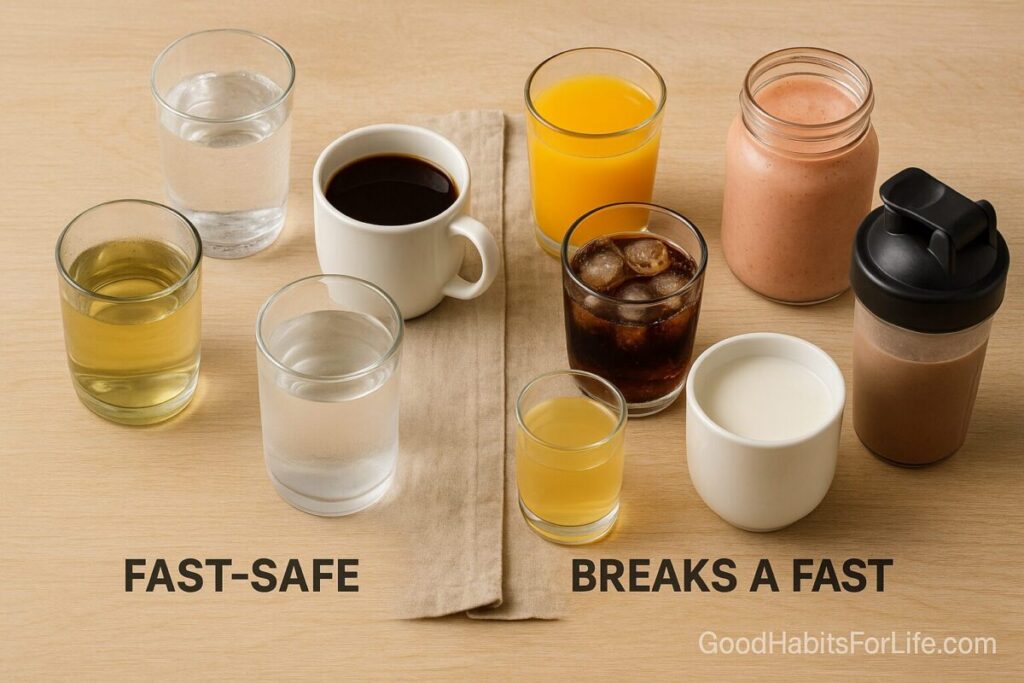
✅ Drinks that usually keep you fasting
-
Water: Still, mineral, or sparkling with nothing added.
-
Black coffee: No milk/cream/sugar; avoid flavored syrups. Limit to 1–3 cups if you’re sensitive to jitters, anxiety, or sleep disruption.
-
Plain tea: Green, black, oolong, white, or unsweetened herbal infusions.
-
Electrolytes with 0 kcal: Sodium/potassium/magnesium powders or tablets without sugar or amino acids. Read the label.
-
Plain salt in water: A pinch can help if you feel light-headed on longer fasts.
Note: A few incidental calories (e.g., 1–2 kcal from brewed tea/coffee) are typically negligible for most weight-management fasts.
⚠️ Drinks that break a fast
-
Anything with sugar or calories: Soft drinks (incl. “natural” sugars), juice, sports drinks, sweetened teas/coffees.
-
Milk, creamers, butter/MCT, bulletproof coffee: Even if insulin rise is modest, the calories end a fast for weight loss.
-
Protein & amino acids: Whey/casein, collagen, bone broth, BCAAs/EAAs—these stimulate mTOR/insulin and end autophagy-oriented fasts.
-
Alcohol: Adds calories, disrupts sleep and appetite regulation, and can dehydrate.
🧠 The gray zone (test or avoid)
-
Non-nutritive sweeteners (NNS): Sucralose, aspartame, acesulfame-K, saccharin, stevia, monk fruit. Evidence on insulin, appetite, and microbiome is mixed. If your goal is clean fasting or appetite control, avoid NNS during the fast; if you use them, test your response (hunger, cravings, CGM/glucose).
-
Lemon in water: A squeeze adds minimal calories (~2–3 kcal) but can stimulate digestion; most strict fasters skip it.
-
Apple cider vinegar (ACV): Near-zero calories when diluted; may reduce meal glucose spikes when taken with food. For strict GI rest, skip during the fast.
-
Vitamins/minerals: Plain electrolyte minerals are fine. Multivitamins or fat-soluble supplements (A, D, E, K) are better with food.
-
Creatine, sodium bicarbonate, plain caffeine pills: Essentially zero calories; usually compatible with fasting, but consider GI tolerance.
🛠️ Quick-start protocol (today)
-
Pick a window: Start 12:12 (12 h fast / 12 h eating) for 1 week → 14:10 → 16:8 if you feel good.
-
Hydrate first: 300–500 mL water on waking; add a pinch of salt if needed.
-
Caffeine timing: Coffee/tea mid-morning; avoid after 14:00–15:00 if sleep suffers.
-
Label-check: During the fast, only water, black coffee, plain tea, 0-kcal electrolytes.
-
Break the fast smartly: Protein (20–30 g) + fiber-rich veg + slow carbs + healthy fats.
-
Evening guardrails: Stop eating 2–3 h before bed; hydrate, herbal tea if desired.
-
Weekly review: Track energy, sleep, workouts, and hunger; adjust the window, caffeine, and electrolytes.
🧩 Zone 2 + NEAT: Smart movement while fasting
Zone 2 = easy, steady aerobic work where conversation is comfortable (≈ 60–70% HRmax, or RPE 3–4/10).
Why pair with fasting?
-
Prioritizes fat oxidation and mitochondrial adaptations without major stress.
-
Easier to sustain daily; supports appetite regulation and glycemic control.
How to do it
-
3–5×/week, 30–45 min brisk walking, easy cycling, light jogging, or rowing.
-
Keep breathing steady; you should be able to talk in full sentences.
-
Hydrate with water; add 0-kcal electrolytes on hot days or longer sessions.
NEAT (Non-Exercise Activity Thermogenesis) = your background movement (steps, standing, fidgeting).
-
Target 8–10k steps/day (or add +2k to your current baseline).
-
Use micro-bursts: 3–5 min walk each hour, stairs, walking calls, light chores.
-
NEAT stacks with Zone 2 to raise daily energy expenditure without driving hunger as much as high-intensity work might.
📅 30-60-90 Day Habit Plan
Days 1–30 (Foundation)
-
Window: 12:12 → 14:10 by week 4.
-
Drinks in fast: water, black coffee/tea, 0-kcal electrolytes.
-
Movement: 20–30 min Zone 2 3×/week + 7–8k steps/day.
-
Break-fast meal template: Protein (20–30 g) + fiber + slow carbs.
Days 31–60 (Build)
-
Window: 16:8 most days; 1–2 flexible days/wk.
-
Movement: 30–45 min Zone 2 4×/week + 8–10k steps/day.
-
Add 2 light resistance sessions (full-body, 20–30 min).
-
Caffeine hygiene: none after mid-afternoon.
Days 61–90 (Personalize)
-
Keep 16:8 or alternate 14:10/16:8 as needed.
-
Experiment: pre-breakfast Zone 2 vs. post-meal; monitor energy/sleep.
-
Tighten beverages: eliminate gray-zone items if cravings spike.
-
Review metrics: weight trend, waist, average steps, sleep, mood.
👥 Audience variations
-
Students/teens: Favor 12:12 or 14:10; protect sleep; avoid late caffeine.
-
Busy professionals: Anchor an eating window that fits meetings; keep unsweetened coffee/tea and electrolyte tabs at your desk.
-
Parents: Sync windows with family meals; plan a protein-rich break-fast to prevent overeating later.
-
Seniors/medications: Review with your clinician if you take drugs that affect glucose/blood pressure. Hydrate generously; favor lower caffeine.
-
Athletes: Use fasting windows on easy/recovery days; for high-intensity or long sessions, fuel before/during per your coach.
⚠️ Mistakes & myths to avoid
-
“Zero sugar” = fasting-safe. Not always—could contain calories or amino acids.
-
BCAAs don’t count. They’re amino acids; they do signal mTOR and can end an autophagy-oriented fast.
-
Bulletproof coffee is fasting. It’s energy-dense; fine as a meal, not a fast.
-
More fasting is always better. Quality sleep, protein adequacy, and resistance training matter just as much.
-
Dehydration: Skipping electrolytes on hot days or long fasts can cause headaches and fatigue.
💬 Real-life examples & scripts
-
Ordering out: “Black Americano, no syrup.” / “I’ll have sparkling water with lime, no sweetener.”
-
At home: Pre-fill a 1-L bottle in the morning; finish by noon.
-
Office: Keep a small tin of unsweetened electrolyte tablets; drop one in water mid-morning.
-
Travel: Carry tea bags; ask for hot water on flights.
🧰 Tools, apps & resources
-
Fasting timers: Zero, Fastic, LIFE—simple windows, streaks. Pros: easy tracking. Cons: can over-fixate on streaks.
-
Nutrition trackers: Cronometer, MyFitnessPal—see hidden beverage calories.
-
Movement: Apple Health/Google Fit for steps; a basic HR-monitor helps stay in Zone 2.
-
Labels: Use a barcode app to confirm 0 kcal and no amino acids.
🔑 Key takeaways
-
Keep it simple: Water, black coffee, plain tea, and 0-kcal electrolytes are fasting-safe for most goals.
-
Your goal defines the rules: For autophagy or GI rest, avoid NNS, acids, and amino acids during the window.
-
Pair with gentle movement: Zone 2 + NEAT boosts fat use and is easy to keep up.
-
Break the fast well: Protein + fiber first; notice cravings.
-
Personalize: Track energy, sleep, and hunger; adjust window, caffeine, and electrolytes.
❓ FAQs
1) Does lemon water break a fast?
A small squeeze adds ~2–3 kcal; many weight-management fasts still allow it, but strict GI-rest or autophagy fasts skip it.
2) Will one teaspoon of milk in tea break my fast?
For strict fasting, yes (it adds calories and protein). For a relaxed 16:8 aimed only at calorie control, it’s minor—but consistency beats perfection.
3) Do diet sodas break a fast?
They’re usually zero calories; for some people NNS can increase cravings. If appetite spikes, keep them out of the fasting window.
4) Are electrolytes okay?
Yes—if they contain no sugar/amino acids. Choose tablets/powders that are truly 0 kcal.
5) What about creatine or pre-workout?
Creatine alone (no sugar) is fine. Many pre-workouts add sweeteners or carbs—read labels.
6) Can I lift weights while fasting?
Light/moderate lifting is fine for many; if performance drops or you feel dizzy, train closer to (or within) your eating window and hydrate.
7) Is coffee harmful for fasting?
Black coffee is compatible; watch for jitters, acid reflux, or poor sleep. Cut off caffeine by mid-afternoon.
8) Does ACV help fasting?
Diluted ACV is very low-calorie. Some use it before meals to blunt glucose spikes; for strict GI rest, avoid it during the fast.
9) Morning vs evening Zone 2?
Pick the time you’ll actually do consistently. Fasted morning works for many; evening sessions should end 2–3 h before bed.
10) How do I know if something is safe?
Check: calories = 0, no protein/amino acids, no sugar, and ideally no sweeteners if you’re strict.
📚 References
-
Harvard T.H. Chan School of Public Health — Intermittent Fasting overview: https://www.hsph.harvard.edu/nutritionsource/healthy-weight/diet-reviews/intermittent-fasting/
-
NEJM Review — de Cabo & Mattson (2019), Effects of Intermittent Fasting on Health, Aging, and Disease: https://www.nejm.org/doi/full/10.1056/NEJMra1905136
-
NIDDK (NIH) — Intermittent Fasting: https://www.niddk.nih.gov/health-information/weight-management/intermittent-fasting
-
Achten & Jeukendrup (2003) — Maximal fat oxidation during exercise: https://pubmed.ncbi.nlm.nih.gov/12716444/
-
Levine (2002) — Non-exercise activity thermogenesis (NEAT): https://pubmed.ncbi.nlm.nih.gov/12468415/
-
AHA Scientific Statement (2023) — Low-calorie sweetened beverages and cardiometabolic health: https://www.ahajournals.org/doi/10.1161/CIR.0000000000001046
-
WHO Guideline — Sugars intake for adults and children: https://www.who.int/publications/i/item/9789241549028
-
ACSM Position Stand — Quantity and Quality of Exercise (cardiorespiratory fitness guidance): https://www.acsm.org/education-resources/position-stands
⚑ Disclaimer
This guide is for general education only and isn’t medical advice. If you have a health condition or take prescription medications (especially for glucose or blood pressure), discuss fasting and exercise with your clinician.