
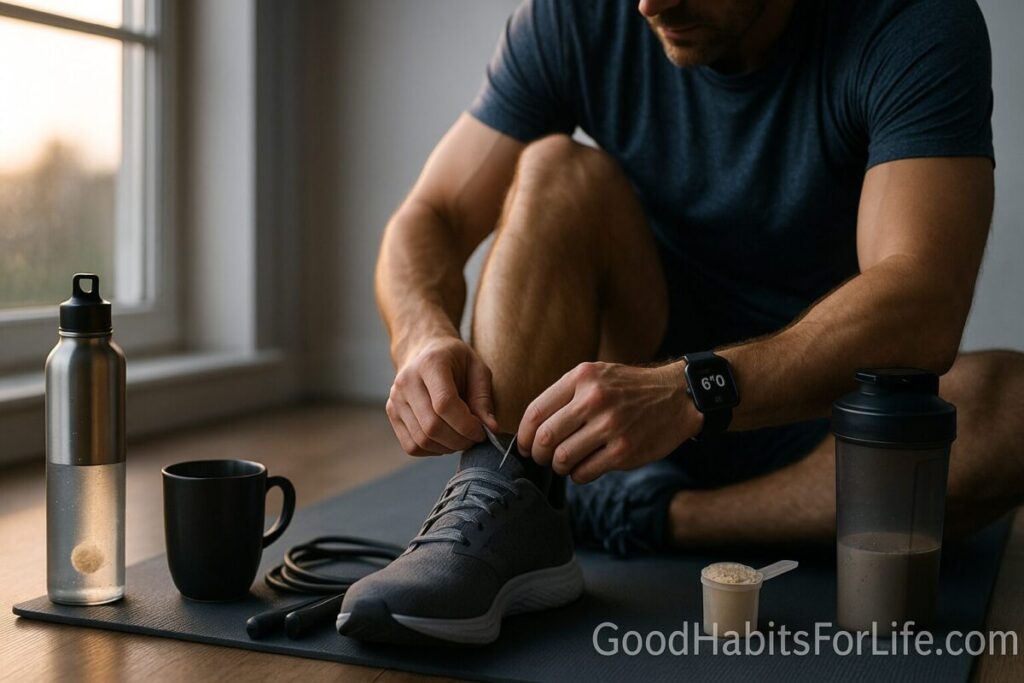
Fasted Morning Workouts: What to Drink (and Skip): Protein-Forward Plan (2025)
Fasted Morning Workouts: Drink & Skip, Protein-First (2025)
Table of Contents
🧭 What “fasted morning workout” means—and why it works
A fasted morning workout is training done after an overnight fast (no calories since the previous evening). Many people like it because it feels convenient, may support adherence for fat-loss phases, and it lets you train before daily demands hit. From a performance perspective, hydration and caffeine can maintain output even without pre-exercise calories, and a protein-first meal straight after supports recovery and muscle maintenance. Authoritative sports-nutrition bodies agree that fluid, electrolyte, caffeine, carbohydrate (as needed), and post-exercise protein are the core levers to manage around training.
✅ Quick Start (do this today)
-
On waking (T-30–45 min):
-
Drink 300–500 ml water.
-
Optional: caffeine 1–3 mg/kg (e.g., 70 kg person = 70–210 mg) via black coffee/espresso/zero-cal pre-workout.
-
-
Pre-session (T-5 min): If it’s hot or you’re a salty sweater, mix sodium 0.5–0.7 g/L into your bottle.
-
During: Sip to thirst. For sessions >60–90 min or high sweat, aim 0.4–0.8 L/hour with sodium as above.
-
Performance without calories: For intense sessions >30 min, try a carbohydrate mouth-rinse (6–10% solution; swish 5–10 s, spit) every 10–15 min.
-
Right after: Protein-first meal: 0.3 g/kg protein (≈20–40 g) within 1–2 h. Add 1.0–1.2 g/kg carbohydrate if you need rapid recovery or have another session soon.
🛠️ What to drink before & during—and what to skip
Before (still fasted)
-
Water: 300–500 ml on waking is an easy win.
-
Black coffee / plain tea / zero-cal pre-workout: Delivers caffeine without breaking the fast. Effective range 1–3 mg/kg; many adults should keep a single dose ≤200 mg and a daily total ≤400 mg. (Pregnant: ≤200 mg/day.)
-
Electrolytes (no calories): For heavy sweaters or heat, add sodium 0.5–0.7 g/L.
During
-
Sessions ≤60 min, low–moderate sweat: Water to thirst is fine.
-
Sessions >60–90 min, hot, or very sweaty:
-
Fluids: 0.4–0.8 L/hour (adjust to your sweat rate).
-
Sodium: 0.5–0.7 g per litre of drink; consider more if you see salt crust on clothing or get muscle cramps.
-
Optional carbs for performance: If strict fasting isn’t required, use 30–60 g/hour carbohydrate for endurance work. If you want to stay fasted, use a carb mouth-rinse (swish & spit).
-
Skip (if you want to remain fasted)
-
Milk, juice, smoothies, sugary sports drinks (calories → not fasted).
-
BCAA/EAA drinks: They contain calories and amino acids trigger metabolic responses; if fasting matters, avoid until after.
-
“Fat coffee” (butter/MCT) or creamers: Calories = breaks the fast.
-
High-dose caffeine (>3–6 mg/kg) unless you know your tolerance.
🍳 Protein-First Post-Workout Plan
Goal: Preserve/ build muscle, start recovery, and rehydrate.
-
Protein target: 0.3 g/kg (≈20–40 g for most), aiming for 2–3 g leucine in the dose (e.g., 25–30 g whey; or eggs/Greek yogurt/soy).
-
Carbohydrate: If you’ll train again today or did long/intense cardio, add 1.0–1.2 g/kg within the first 1–3 h.
-
Fluids + sodium: Rehydrate to replace ~150% of body mass lost in sweat over the next 2–4 h (e.g., if down 0.5 kg, drink ~750 ml), including sodium in drinks/foods.
-
Example plates (≈25–35 g protein):
-
Whey shake (30 g) + banana + oats;
-
3 eggs on whole-grain toast + fruit;
-
Skyr/Greek yogurt (250 g) + honey + berries;
-
Tofu scramble + potatoes + salsa.
-
📅 30-60-90 Day Habit Roadmap
Days 1–30 (Foundation):
-
Fix a wake-water ritual (bottle ready by the sink).
-
Standardize caffeine (same dose/time; test 1, 2, and 3 mg/kg).
-
Log session length, sweat, body-mass change to estimate your sweat rate.
Days 31–60 (Performance):
-
Dial sodium and fluid/hr based on sweat logs.
-
Trial carb mouth-rinse on high-intensity days.
-
Lock post-workout protein (same source, same dose).
Days 61–90 (Personalization):
-
Create hot-day and cool-day drink plans.
-
Introduce periodized carbs on key workouts if fat-loss isn’t your top priority.
-
Review sleep/caffeine cutoff; add decaf on double-session days.
🧠 Techniques & Frameworks
-
“SIP-PERF” checklist before leaving home: Sodium, Intended caffeine, Plain water; PERF = Plan, Electrolytes, Rinse option, Fuel after.
-
Caffeine micro-dosing: Split small amounts (e.g., 50–75 mg) pre and mid-session for long workouts.
-
Carb mouth-rinse protocol: 25–30 ml of 6–10% carb solution, swish 5–10 s, spit; repeat every 10–15 min in high-intensity efforts.
-
Sweat-rate test: Weigh nude pre/post; each 1 kg lost ≈ 1 L sweat. Replace ~150% over next hours with sodium.
👥 Audience Variations
-
Beginners: Start with water + small coffee (≈100 mg). Keep sessions ≤45 min first 2 weeks.
-
Endurance athletes: Consider carbs during (30–60 g/h) on key sessions; fasted runs for fat-adaptation should be brief/easy.
-
Strength trainees: Fasted lifting is okay; emphasize post-workout protein (25–40 g) and overall daily intake (1.6–2.2 g/kg/day).
-
Women (general): Caffeine sensitivity varies; some prefer 1–2 mg/kg. If pregnant or trying to conceive, keep total ≤200 mg/day.
-
Seniors: Hydration cues may be blunted—pre-plan fluids; pair protein with calcium-rich foods (e.g., yogurt) for bone health.
-
Diabetes/medical conditions: Coordinate fasting and caffeine with a clinician.
⚠️ Mistakes & Myths to Avoid
-
Myth: “BCAAs keep you fasted.” → They contain calories; save them for after.
-
Mistake: Over-drinking plain water → hyponatremia risk in long/hot sessions; include sodium.
-
Myth: “More caffeine = more performance.” → Above ~3 mg/kg, side-effects often outweigh benefits.
-
Mistake: Skipping post-workout protein in long fat-loss phases → increases risk of muscle loss.
-
Myth: “Electrolytes are only for marathoners.” → Heavy/salty sweaters benefit even in 45–60 min heat sessions.
💬 Real-Life Examples & Scripts
-
Home routine (45 min strength):
-
06:10 Water 400 ml → 06:20 Espresso (~80 mg) → 06:30 Train → 07:20 30 g whey + toast + fruit.
-
-
Hot-day run (75 min):
-
05:45 Water 500 ml + sodium 0.5 g/L → 05:55 Coffee (~120 mg) → Carry 600–700 ml bottle; sip to thirst → Mouth-rinse every 15 min → 07:10 30 g protein + 70–80 g carbs.
-
-
Cafe order: “Large black coffee and a glass of water, please.” (If long session later: “Add a soda water with a pinch of salt.”)
🧰 Tools, Apps & Resources
-
Kitchen scale / measuring scoop: Consistent protein dosing.
-
Smart bottle or marked bottle: Tracks 0.4–0.8 L/hour target.
-
Caffeine log app / timer: Keeps intake in the 1–3 mg/kg sweet spot; helps set a caffeine cutoff 8–10 h before bedtime.
-
Electrolyte salts or DIY mix: Per litre: 0.5–0.7 g sodium, small squeeze of lemon, non-nutritive sweetener if desired.
📝 Key Takeaways
-
Hydrate on waking, then sip to thirst; increase fluids and sodium 0.5–0.7 g/L for long/hot sessions.
-
Caffeine 1–3 mg/kg is a reliable ergogenic aid for most adults.
-
If strict fasting matters, avoid calories before/during; try carb mouth-rinse for high-intensity efforts.
-
Break the fast with protein first (0.3 g/kg) and add carbs when recovery speed matters.
-
Personalize by sweat rate, climate, and goal (fat-loss vs performance).
❓ FAQs
Does black coffee break a fast?
No meaningful calories, so it’s compatible with most fasting approaches. Watch total caffeine.
Is electrolyte powder okay while fasting?
Yes if zero-calorie; look for sodium 0.5–0.7 g/L for long/hot sessions.
What if I feel light-headed?
End the session, drink, and eat. Fasted training isn’t mandatory; safety first.
Can I build muscle training fasted?
Yes—if total daily protein (1.6–2.2 g/kg/day) is met and you eat protein soon after.
Do artificial sweeteners break a fast?
Zero-cal sweeteners don’t add energy; most people use them without disrupting fasting goals. If unsure, keep pre/during drinks unsweetened.
How do I find my sweat rate?
Weigh before/after a similar workout; 1 kg loss ≈ 1 L. Replace ~150% over the next few hours with sodium.
Is a small banana before training “bad”?
If you need performance more than a strict fast, 15–30 g carbs pre can help—use strategically on key days.
Should I take creatine before a fasted session?
Timing is flexible; creatine works by saturation. Take 3–5 g/day at any convenient time (usually with a meal).
📚 References
-
American College of Sports Medicine, Academy of Nutrition and Dietetics, Dietitians of Canada. Nutrition and Athletic Performance (Position Stand). Med Sci Sports Exerc. 2016. Link
-
Sawka MN, et al. Exercise and Fluid Replacement (ACSM Position Stand). Med Sci Sports Exerc. 2007. Link
-
EFSA Panel on Dietetic Products, Nutrition and Allergies. Scientific Opinion on Caffeine. EFSA Journal. 2015;13(5):4102. Link
-
Jäger R, et al. International Society of Sports Nutrition Position Stand: Protein and Exercise. J Int Soc Sports Nutr. 2017;14:20. Link
-
Grgic J, et al. International Society of Sports Nutrition Position Stand: Caffeine and Exercise Performance. J Int Soc Sports Nutr. 2021. Link
-
Chambers ES, Bridge MW, Jones DA. Carbohydrate sensing in the mouth improves exercise performance. J Physiol. 2009;587(8):1779–1794. Link
-
Kreider RB, et al. International Society of Sports Nutrition Position Stand: Safety and Efficacy of Creatine Supplementation. J Int Soc Sports Nutr. 2017;14:18. Link
Disclaimer: This guide is educational and not a substitute for personalized medical advice; check with your clinician if you have health conditions or are pregnant.