
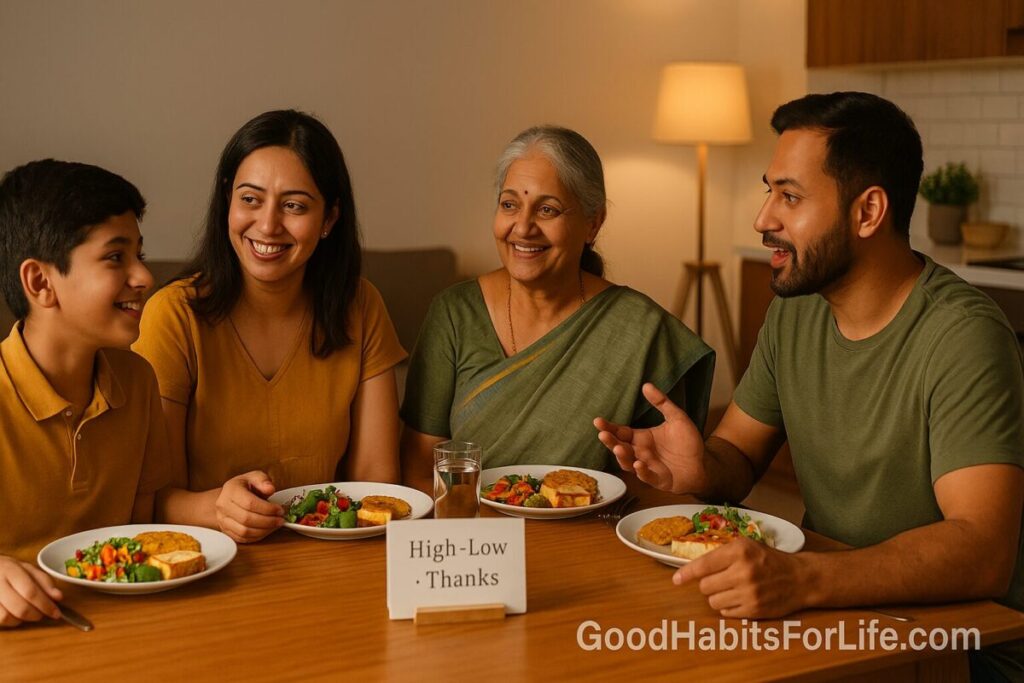
Family Meal Rituals: High Low Thanks: Protein-Forward Plan (2025)
Family Meal Rituals: High–Low–Thanks Protein Plan 2025
Table of Contents
🧭 What & Why
What is “High–Low–Thanks”?
A fast, family-friendly dinner ritual where each person shares:
-
High: one good thing from today
-
Low: one challenge
-
Thanks: one appreciation (person, event, or effort)
Why pair it with a protein-forward plate?
-
A protein-forward plate—½ vegetables/fruits, ¼ lean protein, ¼ whole grains, plus healthy fats—supports satiety, steady energy, and better nutrient density (see Dietary Guidelines for Americans and Harvard’s Healthy Eating Plate in References).
-
Shared family meals are linked to improved dietary quality (more fruits/veg, fewer ultra-processed foods), better psychosocial outcomes, and healthier weights in children and teens.
-
Gratitude practices (“Thanks”) are associated with higher well-being and prosocial behavior; small daily rituals build resilience and connection.
Benefits you’ll notice:
-
Fewer dinner arguments and screen battles (clear flow).
-
Faster, healthier plates with repeatable building blocks.
-
Stronger connection and emotional literacy—especially for kids and teens.
-
Budget control via planned proteins and leftovers.
✅ Quick Start Tonight
-
Set the table ritual: water jug, napkins, and a small bowl for a “talking object” (wooden spoon).
-
Assemble a 10-minute plate (serves 4):
-
Protein: 600–700 g rotisserie chicken or firm tofu (or 6–8 eggs).
-
Vegetables: 600–800 g mixed salad or frozen veg, warmed.
-
Grains: 2 cups (cooked) brown rice or whole-wheat couscous.
-
Healthy fat: olive oil or tahini drizzle; lemon, herbs, salt to taste.
-
-
Run High–Low–Thanks: pass the spoon clockwise; 30–60 seconds per person.
-
End with a 1-minute “tomorrow plan”: one person names tomorrow’s protein and veg.
-
Clean-up sprint: set a 10-minute timer, 1 job per person.
🛠️ 7-Day Protein-Forward Starter Plan
Shopping once (example list):
-
Proteins (choose 3–4): 1.5 kg chicken thighs, 1 kg extra-firm tofu, 8 eggs, 4 cans beans or chickpeas, 600 g paneer or lean mince, 600 g fish.
-
Grains: brown rice, quinoa, whole-wheat pasta, whole-grain tortillas.
-
Vegetables & fruit: salad greens, tomatoes, cucumbers, carrots, broccoli/green beans (frozen works), onions, peppers, citrus, bananas.
-
Flavour kit: garlic/ginger, olive oil, yogurt, soy sauce/tamari, tomato paste, curry paste, salsa, tahini, herbs/spice blend.
Batch-cook once, eat 3–4 times:
-
Base 1: Sheet-pan chicken or tofu (olive oil + spice blend), 1.2 kg.
-
Base 2: Pot of beans/lentils or chickpeas (or canned).
-
Cook 6–8 cups grains (cooked). Store in 2–3 containers.
The week
-
Mon: Chicken/tofu bowls (½ plate veg, ¼ grains, ¼ protein). High–Low–Thanks.
-
Tue: Bean & veg tacos with salsa + yogurt sauce.
-
Wed: Leftover grain salad with chickpeas + lemon-tahini.
-
Thu: Quick eggs or paneer with peppers + whole-grain flatbread.
-
Fri: Fish or tofu stir-fry, garlic-ginger-soy, microwave rice.
-
Sat (Flex): Family favorite, but keep the ritual.
-
Sun (Batch): Refill Bases 1–2; freeze portions.
Portion guide (adults):
-
Protein: 20–35 g per meal (e.g., ~120–150 g cooked chicken/tofu; 1 cup beans).
-
Whole grains: ½–1 cup cooked.
-
Veg: 2 cups mixed (raw/cooked).
-
Water: 250–500 ml at meal.
(Adjust for kids/teens per appetite and pediatric guidance.)
🧠 Techniques & Frameworks
-
The Plate Rule: ½ veg/fruit, ¼ lean protein, ¼ whole grains; add healthy fats.
-
Two-Base Method: always keep 1 cooked protein + 1 legume ready; rotate sauces (Mediterranean, Indian, East Asian, Mexican) for variety without extra work.
-
Ritual Scaffolding: same order nightly—Serve → High → Low → Thanks → Tomorrow Plan. Predictability calms the table.
-
Screen & Seat Map: all phones off; assign seats; one helper rotates weekly.
-
Micro-prep Windows: 15 minutes after school/work is for veg washing and grain cooking; dinner assembly later is <10 minutes.
-
Gratitude Ladder: if “Thanks” feels hard, offer options: “Someone who helped me…”, “Something outside…”, “Something I learned…”.
👨👩👧 Variations by Audience
-
Students: budget proteins (eggs, lentils, canned fish), 1-pot bowls; roommates do High–Low–Thanks weekly.
-
Parents of young kids: keep rounds <30 seconds; let kids pick the veg; use a “praise sandwich” (“Thanks → Low → High”) if moods are wobbly.
-
Teens: add “One win I’m chasing tomorrow”; let them DJ a 3-song dinner playlist (no phones on table).
-
Busy professionals: freeze single-serve proteins; set meeting-free 30-minute dinner block on calendars.
-
Seniors: prioritize softer textures (stews, egg dishes), hydration cues, and social calls if eating solo.
⚠️ Mistakes & Myths to Avoid
-
Myth: “We need 90 minutes to make family dinner matter.”
Truth: 20–35 minutes with a repeatable ritual is enough. -
Mistake: Over-engineering menus.
Fix: Decide protein first; everything else follows. -
Myth: “Kids won’t eat veg.”
Truth: Exposure + choice + dips; let them serve themselves small portions. -
Mistake: Skipping carbs entirely.
Fix: Whole grains support fibre and steady energy; portion, don’t ban. -
Mistake: Forcing gratitude.
Fix: Offer prompts and allow “pass” once per meal.
🗣️ Real-Life Examples & Scripts
Opening the ritual
-
“Let’s pass the spoon—High, Low, Thanks in that order.”
-
“High: I nailed my presentation. Low: traffic jam. Thanks: Mum for prepping veggies.”
If someone dominates
-
“Let’s keep to 30 seconds so everyone gets a turn.”
If a child says ‘nothing’
-
“Want a menu of choices—school, friends, play, or a book?”
Conflict shows up
-
“Note it, park it—after clean-up we’ll spend 5 minutes on solutions.”
Tomorrow plan
-
“Tomorrow’s protein is tofu; can you pick the sauce—peanut, curry, or tomato-garlic?”
📚 Tools, Apps & Resources (quick pros/cons)
-
Paprika / AnyList: recipe clipper + smart grocery lists. Pros: frictionless planning. Cons: paid.
-
Mealime / Forks Over Knives (app): quick healthy recipes. Pros: beginner-friendly. Cons: subscriptions.
-
FamilyWall / Google Calendar: shared dinner slots & helper rotation. Pros: reduces “who’s doing what.” Cons: needs buy-in.
-
Timer app: 10-minute clean-up sprint. Pros: gamifies chores. Cons: can feel strict without praise.
-
The Family Dinner Project (website): games, conversation starters. Pros: age-graded prompts. Cons: more reading.
✅ Key Takeaways
-
Anchor meals with High–Low–Thanks to build gratitude and connection.
-
Use a protein-forward plate for satiety and nutrition.
-
Batch-cook two bases and rotate sauces to slash cook time.
-
Consistency beats perfection—aim for 3–5 shared meals each week.
-
Keep it light, timed, and predictable so kids (and adults) want to return.
❓ FAQs
How many family meals per week make a difference?
Even 3–5 shared dinners weekly are linked to better nutrition and psychosocial outcomes. More is fine; consistency matters most.
What counts as “protein-forward” for vegetarians?
Tofu, tempeh, paneer, eggs, Greek yogurt, lentils, beans, chickpeas, and edamame. Target 20–30 g protein per adult serving.
Is it okay if we eat in 20 minutes?
Yes. A 20–35 minute window is plenty for nutrition and the ritual.
What if someone hates sharing “Lows”?
Allow a “pass” or limit to one sentence. Keep the order predictable and the tone non-judgmental.
How do I keep toddlers at the table?
Serve tiny portions, offer 2 choices (veg or dip), and use a physical talking object to make turns concrete.
Can we do this at breakfast?
Absolutely—swap dinner for a protein-rich breakfast (eggs, yogurt, beans on toast) and run a shorter check-in.
How do we handle food allergies?
Pick safe proteins (e.g., eggs if tolerated, legumes, meats), and keep allergen-free sauces. Consult your clinician for tailored guidance.
What are healthy store-bought shortcuts?
Rotisserie chicken, pre-cut/frozen veg, microwaveable brown rice/quinoa, and plain yogurts for sauces.
How do we measure success?
Track: count of shared meals, mood after dinner, takeout frequency, and whether everyone contributed one “Thanks.”
What if we live apart?
Host virtual High–Low–Thanks on a video call while you both eat; keep it <15 minutes.
📚 References
-
U.S. Departments of Agriculture & Health and Human Services. Dietary Guidelines for Americans, 2020–2025. https://www.dietaryguidelines.gov
-
Harvard T.H. Chan School of Public Health. Healthy Eating Plate & Healthy Eating Pyramid. https://www.hsph.harvard.edu/nutritionsource/healthy-eating-plate/
-
USDA MyPlate. Protein Foods Group. https://www.myplate.gov/eat-healthy/protein-foods
-
American Academy of Pediatrics (HealthyChildren.org). Creating a Family Mealtime Routine. https://www.healthychildren.org
-
The Family Dinner Project (MGH/Harvard). Benefits of Family Dinners. https://thefamilydinnerproject.org
-
American Psychological Association. Gratitude and Well-Being. https://www.apa.org
-
Centers for Disease Control and Prevention. Healthy Eating for a Healthy Weight. https://www.cdc.gov/healthyweight/healthy_eating/index.html
-
MedlinePlus (NIH). Protein in Diet. https://medlineplus.gov/ency/article/002467.htm
-
World Health Organization. Healthy diet. https://www.who.int/news-room/fact-sheets/detail/healthy-diet
Disclaimer: This article is educational and not a substitute for personalized medical or nutrition advice—please consult your healthcare professional for individual guidance.