
Faith & Food: Invite, Ask, Include
Faith & Food: Invite, Ask, Include
Table of Contents
🧭 What this guide covers & why it matters
Food is where friendship becomes community. Thoughtful hosting—especially across faiths and dietary needs—signals respect, reduces social friction, and strengthens bonds. Stronger social connection is associated with improved well-being and even lower mortality risk over time. PLOSHHS.gov
Diets often reflect faith and culture. In India, for example, ~40% of adults identify as vegetarian and about eight-in-ten limit meat in some way; across faiths globally and in the U.S., many people fast at specific times. Planning with curiosity and care matters. Pew Research Center+1
This guide gives you copy-paste scripts, safety basics (allergies & cross-contact), and a simple habit plan to make inclusive meals easy—at home, potlucks, or restaurants.
✅ Quick Start: Do this before your next meal together
-
Invite with care (48–72 hours ahead).
“I’m hosting on Saturday and want to include everyone well. Any dietary needs (allergies, halal/kosher, vegetarian/vegan, celiac, fasting times) I should know?” -
Capture needs in one place.
Make a short note: Name → Need → Details → Severity → Substitutions. -
Plan a menu with default-inclusive anchors.
-
One vegan main (often works for halal/kosher/vegetarian and lactose-free).
-
One gluten-free starch or grain.
-
Clear non-alcoholic drinks.
-
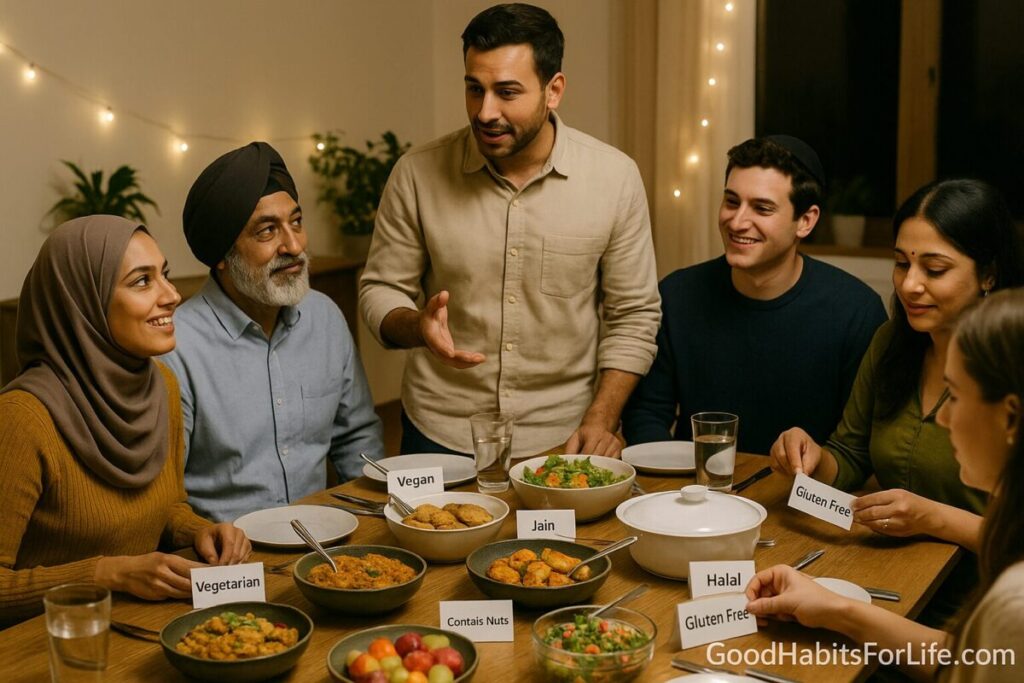
Label components and serve “build-your-own” (bowls, wraps, salads) to fit everyone.
-
-
Prevent allergen cross-contact.
Use separate utensils/boards/pans, or cook allergen-free items first; clean with hot, soapy water; designate an allergen-free prep zone. Restaurants and kitchens that use dedicated equipment and areas reduce risk meaningfully. CDC -
Read labels for the Big 9 allergens (milk, egg, fish, crustacean shellfish, tree nuts, peanuts, wheat, soy, sesame). The FDA requires plain-language disclosure of major allergens; “allergen cross-contact” means unintentional allergen presence—so don’t assume an unlabeled product is safe. U.S. Food and Drug Administration+1
-
Time it right around fasts.
If guests are fasting (e.g., Ramadan), schedule meals after sunset and offer dates/water to break fast. northerncarealliance.nhs.uk
🛠️ Techniques & frameworks you can reuse
A-A-I: Ask → Align → Include
-
Ask needs early (allergies, faith rules, preferences, fasting windows).
-
Align menu and timing to the strictest need (e.g., nut-free prep and labeling).
-
Include with labeling, seating, and conversation that normalizes differences.
The 4 S’s for safer serving (allergies & celiac):
-
Separate prep zones & utensils.
-
Scrub tools/surfaces (hot, soapy water).
-
Swap risky items with safe stand-ins (tahini ↔ sunflower seed butter; wheat wraps ↔ corn tortillas).
-
Signal with clear labels/tents (e.g., “Contains: sesame, dairy”). U.S. Food and Drug Administration
Build-Your-Own Bar (BYOB) formula:
-
Base: rice/quinoa/potatoes/greens (add a gluten-free option).
-
Proteins: legumes + halal/kosher-sourced meat/fish separate.
-
Veg & toppings: keep dairy/egg/nut/sesame in clearly marked bowls with dedicated spoons.
-
Dressings: one vegan, one yogurt-based, one nut-free.
Conversation cue: share why you planned it this way—“I want everyone to feel fully included.”
📅 30-60-90 Hospitality Habit Plan
Days 1–30 (Starter):
-
Create a reusable invite message + a one-page “Guest Needs” tracker.
-
Stock a basic safe-hosting kit: extra cutting boards, color-coded utensils, disposable foil pans, label cards.
-
Practice one inclusive pattern (e.g., weekly build-your-own bowls).
-
Checkpoint: host 1 small meal with at least one accommodated need.
Days 31–60 (Standard):
-
Add a second pattern (e.g., “tea-time tapas” or “soup-salad-grain bar”).
-
Learn one tradition in depth (e.g., kosher basics or halal sourcing).
-
Build a simple “supplier list” (butcher/bakery/brands that match needs).
-
Checkpoint: host two events; zero cross-contact incidents.
Days 61–90 (Stretch):
-
Time an inclusive meal around a fast break or Sabbath end.
-
Rotate potluck with guidance: assign categories (vegan main, gluten-free side, nut-free dessert) with labeling rules.
-
Capture and share 10 proven recipes + shopping links.
-
Checkpoint: guests report feeling “fully seen” and “at ease” in a quick post-event poll.
🧠 Faith & Food 101: the basics
Practices vary by person and tradition. When in doubt, ask respectfully.
Halal (Islam):
-
Meat must be halal-certified (zabihah method); avoid pork and alcohol; check gelatin/shortening/extracts for non-halal sources. Universities and extensions outline supply-chain and slaughter basics. University of Minnesota Extension
-
Practical: buy halal-certified meat; keep halal items separate from alcohol/pork during prep.
Kosher (Judaism):
-
Core ideas include permitted species, humane slaughter/supervision, and separation of meat and dairy with distinct utensils/areas; many campuses run supervised kosher kitchens. MIT Division of Student Life
-
Practical: serve dairy-only or meat-only meals to simplify; use packaged items with kosher symbols when possible.
Vegetarian & Vegan:
-
Appropriately planned vegetarian/vegan diets can be nutritionally adequate for adults and carry long-term health benefits; plan protein, iron, B12, and omega-3 sources. PubMed
Fasting windows:
-
For some guests, meals are skipped or timed (e.g., Ramadan, certain Christian/Jain fasts). Host after dusk for Ramadan and offer gentle break-fast options first. northerncarealliance.nhs.uk
Allergies (the Big 9) & cross-contact:
-
Major allergens: milk, egg, fish, crustacean shellfish, tree nuts, peanuts, wheat, soy, sesame. Label clearly and set up separate prep lines. U.S. Food and Drug Administration
-
Cross-contact is unintentional allergen mixing; prevent it with dedicated tools/areas and thorough cleaning. U.S. Food and Drug AdministrationCDC
Celiac disease & gluten-free:
-
Celiac requires a strict, lifelong gluten-free diet (no wheat, barley, rye; be cautious with oats). Even tiny amounts can matter. Use separate toasters/strainers/utensils. NIDDK
Culture notes & diversity:
-
Large populations identify with vegetarian patterns and food rules; assume diversity in any group and clarify rather than guess. Pew Research Center
👥 Audience variations
Students: portable, label-heavy potlucks; clear allergen cards; halal/kosher stations or packaged certified options; timing around exams/fasts.
Parents: snack stations with color-coded tongs; print a one-page allergen policy for playdates.
Professionals: lunchtime “build-your-own” salads/grain bowls; non-alcoholic beverage defaults at work events.
Seniors: softer textures, lower sodium options; check medication/fasting conflicts.
Teens: let them co-design the menu; gamify label-reading and prep-zone setup.
⚠️ Mistakes & myths to avoid
-
“Everyone can just pick around it.” → No. Cross-contact can trigger reactions; prep separately. CDC
-
“Kosher means a rabbi blessed the food.” → Myth. It’s about ingredients, process, and supervised preparation. Chaplain’s Office
-
“Halal = vegetarian.” → No. Halal includes specific meat sourcing and processing. University of Minnesota Extension
-
“Gluten-free is a preference.” → Not for celiac. It’s medically necessary. NIDDK
-
“Fasts are inconvenient—people can manage.” → Respect timing. Host after fast ends; provide appropriate break-fast items. northerncarealliance.nhs.uk
💬 Real-life scripts & templates
Invite DM/text:
“Hey! I’m hosting dinner on Sat 7 pm and want to plan inclusively. Any dietary needs—halal/kosher/vegetarian/vegan, allergies (Big 9), celiac, or fasting times—I should note?”
Follow-up for details:
“Thanks! For your nut allergy, how strict should I be about cross-contact? I’ll use separate utensils/boards and label everything.”
Restaurant plan:
“We’re a mixed group (halal/kosher/vegan + nut allergy). Can you confirm options and whether the kitchen can avoid cross-contact—separate pans/utensils and clean surfaces?”
Potluck guidance (group message):
“Please bring one dish that’s either vegan, gluten-free, or nut-free. Label ingredients + ‘Contains: ___’. I’ll provide halal protein separately.”
Break-fast (fasting) invite:
“We’ll gather at 6:45 pm, eat at sunset. Dates, water, and light soup ready for those breaking fast.”
🧰 Tools, apps & resources
-
Label & policy sources: FDA Food Allergies hub (labeling, Big 9; cross-contact guidance). Pros: authoritative; Cons: regulatory language. U.S. Food and Drug Administration+1
-
Medical nutrition: NIDDK (celiac basics). Pros: clear clinical guidance; Cons: less on social hosting tips. NIDDK
-
Campus/faith primers: University/chaplaincy guides for halal/kosher basics. Pros: practical; Cons: may be local. Chaplain’s OfficeMIT Division of Student Life
-
Planning templates: Reusable checklists for gear (extra boards/tongs), labels, and seating plans.
-
Community insight: Pew Research snapshots of fasting and dietary norms—useful for cultural context, not for stereotyping. Pew Research Center+1
📌 Key takeaways
-
Ask early, document needs, and align to the strictest requirement.
-
Default to inclusive patterns (vegan base + gluten-free option + clear labels).
-
Prevent cross-contact with separate tools/areas and thorough cleaning. CDC
-
Respect timing around fasts; plan menus around halal/kosher/vegetarian rules. Chaplain’s Office
-
Make it a habit with the 30-60-90 plan; hospitality is a muscle you can train.
-
Social connection from inclusive hosting is good for health and belonging. PLOSHHS.gov
❓ FAQs
1) What’s the simplest inclusive menu for mixed needs?
A build-your-own bowl: gluten-free base (rice/quinoa), vegan main (dal/chickpeas), separate halal/kosher-certified meat or fish, plus clearly labeled toppings/dressings.
2) How do I prevent allergen cross-contact at home?
Cook allergen-free items first; use separate boards/knives/pans; wash with hot, soapy water; dedicate serving spoons; label foods clearly. U.S. Food and Drug Administration
3) Is “gluten-free friendly” good enough for celiac guests?
Not necessarily. Confirm separate prep and no shared fryers/toasters. Even small traces matter for celiac disease. NIDDK
4) Do kosher meals require a rabbi to bless the food?
No. Kosher rules concern ingredients, processes, and supervision; many institutions run supervised kosher kitchens with separate meat/dairy areas. MIT Division of Student LifeChaplain’s Office
5) Can halal guests eat vegetarian/vegan dishes?
Usually yes—if free from alcohol, pork, and cross-contact with non-halal meats. Still ask about details (e.g., gelatin, vanilla extract). University of Minnesota Extension
6) How do I host during fasting periods?
Time the meal after the fast ends and provide gentle break-fast items first (e.g., dates, soup, water). northerncarealliance.nhs.uk
7) Which allergens are most common to label?
The Big 9: milk, egg, fish, crustacean shellfish, tree nuts, peanuts, wheat, soy, sesame. U.S. Food and Drug Administration
8) Why bother with all this effort?
Because inclusion deepens trust—and social connection supports mental and physical health over time. PLOSHHS.gov
📚 References
-
U.S. FDA. Food Allergies (major allergens, labeling). Mar 26, 2025. U.S. Food and Drug Administration
-
U.S. FDA. Food Allergen Labeling Q&A (cross-contact definition). Mar 26, 2025. U.S. Food and Drug Administration
-
CDC. Food Allergies in Schools (overview, safety). Jul 9, 2024. CDC
-
CDC MMWR. Restaurant Food Allergy Practices. 2017. CDC
-
NIDDK. Eating, Diet & Nutrition for Celiac Disease. 2025. NIDDK
-
Academy of Nutrition & Dietetics. Vegetarian Dietary Patterns for Adults (Position Paper). 2025. PubMed
-
NHS (UK). Top tips for staying healthy during Ramadan. northerncarealliance.nhs.uk
-
Pew Research Center. Views of Religion and Food in India. 2021. Pew Research Center
-
Pew Research Center. How common is religious fasting in the U.S.? 2024. Pew Research Center
-
Yale Chaplain’s Office. Religious Eating Guide. Chaplain’s Office
-
U.S. HHS—Surgeon General. Our Epidemic of Loneliness and Isolation. 2023. HHS.gov
-
Holt-Lunstad et al. Social Relationships and Mortality Risk. PLoS Medicine, 2010. PLOS
Disclaimer: This guide is educational and not a substitute for medical or legal advice. For individual health needs (e.g., allergies, celiac), consult a qualified professional.