
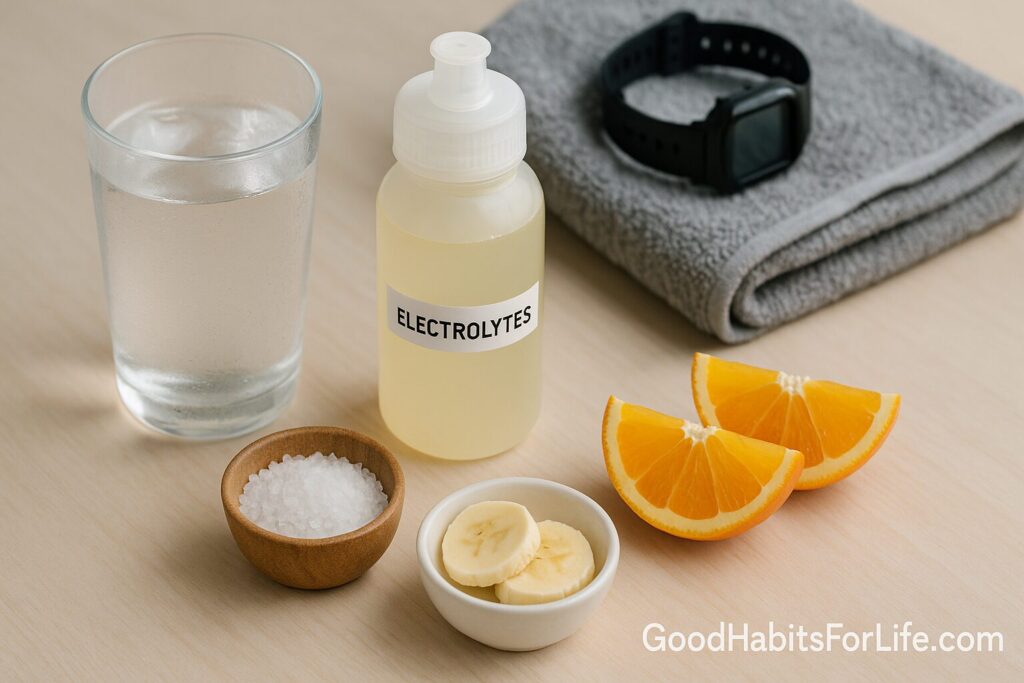
Electrolytes vs Plain Water: When Each Makes Sense
Electrolytes vs Plain Water: When Each Makes Sense
Table of Contents
🧭 What Are Electrolytes—and Why They Matter
Electrolytes are minerals (mainly sodium, potassium, chloride; smaller amounts of magnesium and calcium) that help regulate fluid balance, nerve signaling, and muscle contraction. During sweating you lose water and salts—especially sodium—so your blood volume and performance can dip if you only replace water in high-sweat situations. khsaa.org
✅ When Plain Water Is All You Need
Plain water is ideal for:
-
Normal days at home or work
-
Short or low-intensity activity under ~60 minutes
-
Most indoor training in mild temperatures
-
With meals and snacks (food supplies electrolytes)
Simple rule of thumb: aim for 6–8 cups (about 1.5–2 L) spread through the day and watch urine color—pale yellow is a good cue. Increase intake in heat, during illness, or when more active. nhs.uk
🧠 When Electrolytes Beat Plain Water
Choose an electrolyte drink (or salty foods + water) when any of these apply:
-
Long duration or high intensity: Exercise > ~60–90 minutes, back-to-back sessions, tournaments, or long runs/rides. Adding sodium (about 0.5–0.7 g/L) improves fluid retention, palatability, and reduces hyponatremia risk. khsaa.org
-
Heat/humidity or heavy sweating: Outdoor work or sport in hot conditions raises sweat and salt loss; electrolytes help maintain performance and safety. CDC+1
-
GI illness: For vomiting/diarrhea, use WHO ORS (sodium 75 mmol/L; glucose 75 mmol/L) rather than plain water. WHO AppsMerck Manuals
-
History of muscle cramps linked to sweat loss or “salty sweaters” (salt crust on clothes/skin). Sodium replacement is especially helpful. khsaa.org
-
Hyponatremia risk: During very long events, over-consuming water without sodium can dangerously dilute blood sodium. Electrolytes + “drink to thirst” help mitigate this. PMCCDC
🛠️ Quick Start: Exactly What to Do Today
-
Pre-hydrate: Drink ~500 mL water about 2 hours before long or intense exercise. PubMedResearchGate
-
During: For sessions >60–90 min or in the heat, target 600–1200 mL/hour of fluid containing 0.5–0.7 g sodium per liter (and 4–8% carbohydrate if you need energy). Adjust to thirst and sweat rate. khsaa.org
-
After: Replace ~150% of body mass lost over the next 2–4 hours (e.g., lose 1 kg → drink 1.5 L total), including some sodium to aid retention. (Derived from ACSM practice guidance.) khsaa.org
-
Illness: Use WHO ORS (store-bought packets) and seek medical care if signs of severe dehydration. Merck Manuals
-
Everyday: Use the urine-color check and daily 6–8 cups baseline, more in heat or activity. nhs.uk
🗺️ 30–60–90 Day Hydration Habit Plan
Days 1–30 — Baseline & Cues
-
Track urine color mornings and post-workouts.
-
Log fluids at meals; aim for 1.5–2 L/day baseline. nhs.uk
-
Do one sweat-rate test (see below).
-
Stock ORS packets at home for illness. Merck Manuals
Days 31–60 — Personalize
-
On training days >60–90 min or in heat, use a bottle mixed to ~500–700 mg sodium/L. khsaa.org
-
Practice drinking to thirst within your personal range (typically 600–1200 mL/h for longer sessions). khsaa.org
-
Add a salty snack with water after hard sessions if you prefer food to sports drinks. khsaa.org
Days 61–90 — Lock the Habit
-
Create a written “Hot-Day Plan” (how much to carry, where to refill, what electrolyte you’ll use). CDC
-
For races or summer shifts, rehearse fueling/hydration exactly as on event days to prevent GI surprises. khsaa.org
🧪 Techniques & Frameworks
The S.W.E.A.T. Method (decide water vs electrolytes)
-
S — Sweat rate: Higher loss → prioritize sodium.
-
W — Weather: Hot/humid → electrolytes. CDC
-
E — Effort & duration: >60–90 min or intense → electrolytes. khsaa.org
-
A — Acclimatization: New to heat? Expect more sweat loss. CDC
-
T — Thirst/urine: Use body cues; avoid overdrinking. nhs.ukPMC
Do-It-Once Sweat-Rate Test
-
Empty bladder; weigh yourself nude before exercise.
-
Train 1 hour; track exactly what you drink (mL) and pee (if any).
-
Towel off; weigh again.
-
Sweat rate (L/h) ≈ (pre-weight – post-weight in kg) + (drinks mL – pee mL)/1000.
-
Use that number to guide mL/hour next time; include ~500–700 mg sodium/L for long/hot sessions. khsaa.org
WHO ORS (for GI fluid loss)
Use packets as directed. Composition: Na⁺ 75 mmol/L, glucose 75 mmol/L; total osmolarity 245 mOsm/L—clinically proven for dehydration from diarrhea. WHO AppsMerck Manuals
👥 Audience Variations
-
Kids: In GI illness, ORS is preferred over juice/soda or plain water; seek care if worsening symptoms or signs of severe dehydration. Merck Manuals
-
Athletes: For events >1 h (especially in heat), plan fluids 600–1200 mL/h with 0.5–0.7 g sodium/L; avoid overconsuming plain water to reduce hyponatremia risk. khsaa.orgPMC
-
Outdoor workers: Scheduled hydration, shaded breaks, and electrolyte replacement during prolonged sweating help maintain safety and productivity. CDC
-
Seniors: Thirst cues may be blunted; use routine drinking and monitor urine color; consult clinicians about sodium if you have heart/kidney conditions. nhs.uk
-
Office commuters/indoor exercisers: For typical 30–45 min workouts in climate-controlled spaces, water is sufficient; add electrolytes if you’re a “salty sweater” or stacking sessions. khsaa.org
⚠️ Mistakes & Myths to Avoid
-
“More water is always better.” Overdrinking can cause exercise-associated hyponatremia—dangerous low blood sodium. Use thirst and planned ranges. PMCCDC
-
“Cramps mean I need magnesium.” During endurance/heat, sodium is the primary electrolyte lost in sweat; start there. khsaa.org
-
“Sports drinks are for everyone, all day.” They’re purposeful tools for long/hot activity or illness; day-to-day, water is fine. nhs.ukCDC
-
“Any salty drink is safe.” Very high sodium intakes can raise blood pressure—especially in people with hypertension; keep daily sodium under 2,300 mg (ideally 1,500 mg for many). www.heart.org
🧩 Real-Life Examples & Scripts
-
45-minute morning run (mild weather):
“Carry 300–500 mL water. Sip to thirst. Post-run breakfast covers electrolytes.” nhs.uk -
Long summer run (90–120 min, humid):
“Target ~800–1000 mL/h with ~600 mg sodium/L. Practice this on training days; avoid chugging plain water.” khsaa.orgPMC -
Football tournament / all-day matches:
“Between games, 500–700 mL of an electrolyte drink; small salty snack + water with lunch.” khsaa.org -
Outdoor shift in heat:
“Schedule drink breaks; rotate water and an electrolyte drink during prolonged sweating.” CDC+1 -
GI illness at home:
“Use WHO ORS per packet directions; small frequent sips; seek care for severe signs.” Merck Manuals
🧰 Tools, Apps & Resources
-
ACSM guidance (Exercise & Fluid Replacement) — evidence-based ranges for pre-, during-, and post-exercise hydration and sodium. khsaa.orgPubMed
-
NIOSH Heat Safety guidance — heat-stress prevention for workers; emphasizes planned hydration and electrolytes during prolonged sweating. CDC+1
-
NHS hydration page — practical daily intake cues and urine-color guide. nhs.uk
-
WHO/UNICEF ORS — standardized formula for dehydration due to diarrhea. WHO Apps
📚 Key Takeaways
-
Water handles most day-to-day hydration; use the urine-color cue. nhs.uk
-
In long, hot, or very sweaty conditions, add electrolytes (sodium ~500–700 mg/L) to fluids. khsaa.org
-
Illness with fluid loss → WHO ORS. Merck Manuals
-
Avoid overdrinking plain water during endurance events; hyponatremia is preventable. PMC
-
Keep total daily sodium reasonable (≤2,300 mg; many benefit from 1,500 mg). www.heart.org
❓ FAQs
1) Do I need electrolytes for a 5 km run?
Usually no—water is enough unless it’s very hot/humid, you’re a heavy “salty sweater,” or you’re stacking sessions. nhs.ukkhsaa.org
2) What sodium level should my sports drink have?
Roughly 0.5–0.7 g sodium per liter (≈500–700 mg/L) is widely recommended for exercise >1 hour. khsaa.org
3) How do I know I’m hydrated?
Pale-straw urine and normal thirst are good cues. Adjust up in heat, illness, pregnancy/breastfeeding, or long activity. nhs.uk
4) Can I overdo water?
Yes. Excess water without sodium during long events can cause hyponatremia; drink to thirst and include sodium in long/hot sessions. PMCCDC
5) Is coconut water a good electrolyte drink?
It contains potassium but relatively little sodium, the main electrolyte lost in sweat; fine for casual use, but not ideal for high-sweat endurance. khsaa.org
6) What about blood pressure and sodium?
Most adults should keep sodium ≤2,300 mg/day (many benefit from 1,500 mg). If you have hypertension or kidney/heart disease, get personalized advice. www.heart.org
7) Are sugar-free electrolyte tablets okay?
Yes for hydration; if you also need energy for longer efforts, choose a drink with 4–8% carbohydrate or pair electrolytes with carbs. khsaa.org
8) Is ORS only for children?
No. WHO ORS is effective for adults too; follow packet directions and seek care if symptoms persist or worsen. WHO Apps
References
-
American College of Sports Medicine. Exercise and Fluid Replacement (Position Stand). (Includes sodium 0.5–0.7 g/L; 600–1200 mL/h guidance). khsaa.org
-
Convertino VA et al. ACSM Position Stand (hydration practices incl. 500 mL 2 h pre-exercise). PubMed
-
NHS. Water, drinks and hydration (daily intake and urine-color cue). nhs.uk
-
CDC/NIOSH. Occupational Exposure to Heat and Hot Environments; Heat Stress: Hydration. CDC+1
-
CDC Yellow Book. Heat Illness in Travelers (includes hyponatremia and heat guidance). CDC
-
WHO/UNICEF. Reduced-Osmolarity Oral Rehydration Solution (Na⁺ 75 mmol/L; glucose 75 mmol/L). WHO Apps
-
Merck Manual Professional. Oral Rehydration Therapy (clinical use of reduced-osmolarity ORS). Merck Manuals
-
Klingert M. Exercise-Associated Hyponatremia in Marathon Runners (review). PMC
-
American Heart Association. How Much Sodium Should I Eat Per Day? (≤2300 mg; 1500 mg ideal for many). www.heart.org
Disclaimer: This article is educational and not a substitute for personalized medical advice; consult a healthcare professional for individual guidance, especially if you have heart, kidney, or endocrine conditions.