
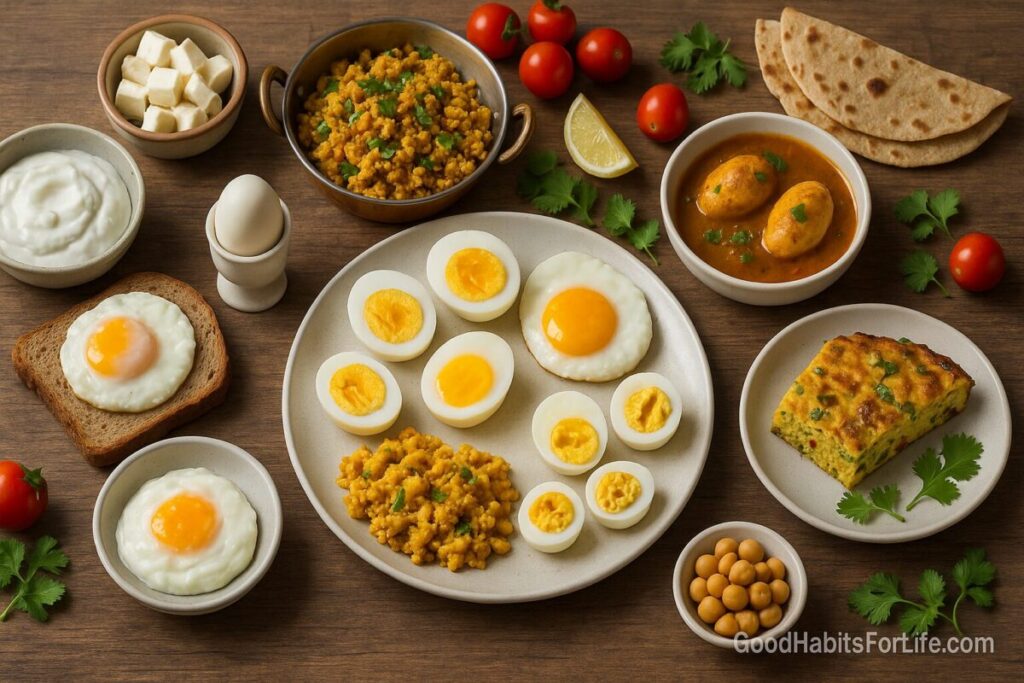
Eggs 10 Ways: From Boil to Bhurji: Protein-Forward Plan (2025)
Eggs 10 Ways: From Boil to Bhurji (Protein-Forward Plan)
Table of Contents
🧭 What & Why
Eggs are a compact, affordable source of complete protein with essential amino acids, B12, and choline. One large egg delivers roughly 6 g protein plus micronutrients that support muscle repair, cognition, and energy metabolism. For a “protein-forward” plate, aim for 20–30 g protein per meal; eggs get you part of the way and combine well with dairy, legumes, tofu, or whole grains to hit the target.
Protein multipliers (per serving, approx.):
-
2 eggs (12 g) + 200 g Greek yogurt (18–20 g) → ~30–32 g
-
2 eggs (12 g) + 100 g paneer/tofu (14–18 g) → ~26–30 g
-
2 eggs (12 g) + 1 cup cooked beans/chickpeas (12–15 g) → ~24–27 g
✅ Quick Start: Do This Today
-
Batch-boil 10 eggs. Cool in ice water; refrigerate (use within 7 days).
-
Make a 3-jar flavor kit: a) dry spice mix (salt, pepper, chilli, turmeric), b) crunchy mix (toasted seeds, crushed peanuts), c) acid/herb mix (lemon juice, chopped coriander/parsley).
-
Choose two weekday methods: e.g., soft-scramble for breakfast, masala omelette for lunch.
-
Set a timer habit: 5–7 minutes in the morning = one egg dish + a protein side (yogurt/beans/toast + nut butter).
-
Track protein: aim for 20–30 g per meal; jot quick totals in your notes app.
🛠️ The 10 Ways (from Boil to Bhurji)
Each method makes 1–2 servings. Times are hands-on; use minimal oil (5 ml/1 tsp) unless noted.
-
Soft-Boiled (6–7 min)
-
Bring water to a rolling boil; lower in eggs; 6–7 min for jammy yolks.
-
Ice bath 2 min, peel.
-
Protein-forward add-ons: whole-grain toast + Greek yogurt; cherry tomatoes + olive oil.
-
Hard-Boiled (10–12 min)
-
Boil 10–12 min; ice bath; peel or store unpeeled.
-
Use: slice onto salads, grain bowls, sandwiches; mash with yogurt + mustard for quick egg salad.
-
Poached (3–4 min)
-
Simmer water with a splash of vinegar; swirl gently; crack egg into the center; cook 3–4 min.
-
Serve with: dal/beans, sautéed spinach, or avocado on whole-grain toast.
-
Classic Soft-Scramble (4–5 min)
-
Low heat, butter/oil, whisked eggs with a pinch of salt; gentle folds until just set and creamy.
-
Boosts: cottage cheese/Greek yogurt stirred in off-heat; herbs on top.
-
Masala Omelette (6–7 min)
-
Beat eggs with onion, tomato, green chilli, turmeric, coriander.
-
Pour into a lightly oiled pan; cook 2–3 min per side.
-
Pair with: whole-grain roti + bowl of curd; or chickpea salad.
-
Bhurji (Indian-style scrambled, 8–10 min)
-
Sauté onion, chilli, ginger-garlic; add tomatoes, turmeric, chilli powder; stir 1–2 min.
-
Add eggs; scramble till soft; finish with coriander + squeeze of lemon.
-
Protein-up: fold in 100 g paneer/tofu or serve with dal.
-
Shakshuka (10–12 min)
-
Simmer spiced tomato-pepper sauce; crack eggs into wells; cover till whites set.
-
Add-ins: chickpeas, feta/cottage cheese; serve with whole-grain flatbread.
-
Egg Fried Rice / Stir-Fry (10 min)
-
Scramble eggs; set aside. Stir-fry mixed veggies; add cold rice or quinoa; return eggs; season with soy/tamari.
-
Protein-plus: edamame, tofu cubes, or shredded chicken (if non-veg).
-
Frittata / Spanish-Style Omelette (15–20 min)
-
Whisk 6–8 eggs with salt/pepper; fold in cooked veg (spinach, peppers), potato, herbs.
-
Cook on stovetop 3–4 min; finish in oven (180 °C/350 °F) 8–10 min.
-
Meal-prep friendly: slice into 6 wedges for the week.
-
Egg Salad (5 min, no-cook if using boiled eggs)
-
Mash 2 hard-boiled eggs with 2 tbsp Greek yogurt, mustard, salt, pepper, herbs.
-
Serve: whole-grain sandwich, lettuce wraps, or on crackers with a side of beans.
Base nutrition per large egg (approx.): ~6 g protein, ~5 g fat, ~0.6 g carbs, ~70–78 kcal.
🧠 7-Day Protein-Forward Habit Plan
Goal: 20–30 g protein per meal, minimal prep, repeatable rhythm.
-
Mon: Soft-scramble (2 eggs) + 200 g Greek yogurt + fruit.
-
Tue: Masala omelette (2 eggs) + 1 roti + ½ cup chana (chickpeas).
-
Wed: Frittata slice (2 eggs) + side salad + seeds (2 tbsp).
-
Thu: Bhurji (2 eggs) + 100 g paneer/tofu + cucumber salad.
-
Fri: Shakshuka (2 eggs) + ½ cup chickpeas + flatbread.
-
Sat: Egg fried rice (2 eggs) + edamame/peas (½ cup).
-
Sun: Egg salad sandwich (2 eggs) + yogurt lassi (200 ml).
Checkpoints:
-
✅ Hit 2–3 egg-meals on busy days.
-
📦 Keep a box of boiled eggs for snacks (1 egg + fruit = better than chips).
-
🧂 Rotate spice kits to avoid flavor fatigue.
🧪 Techniques & Frameworks
Perfect Timing Framework (boiled eggs):
-
Soft-set: 6–7 min → jammy yolk.
-
Hard-set: 10–12 min → firm yolk.
-
Always chill in ice water to stop carryover cooking and for easy peeling.
Pan Control for Scrambles/Omelettes:
-
Low heat + constant movement = creamy curds.
-
Pull from heat just before done; residual heat finishes.
-
For extra protein, whisk in 2 tbsp milk powder or stir in yogurt off-heat.
Protein Ladder (hit 20–30 g):
-
2 eggs (12 g) + one anchor: 200 g Greek yogurt (18–20 g) or 1 cup beans (12–15 g).
-
Or 3 eggs (18 g) + 2 slices whole-grain bread + 2 tbsp peanut butter (~8 g) = ~26 g.
Food Safety:
-
Cook eggs until whites and yolks are set for dishes like scrambles/omelettes; egg casseroles to ~71 °C (160 °F).
-
Refrigerate within 2 hours; keep boiled eggs (unpeeled) up to 7 days.
-
Reheat cooked egg dishes to steaming hot.
👥 Audience Variations
-
Students: Use electric kettle/induction for boiling; keep spice and seed jars; make egg salad wraps between classes.
-
Professionals: Batch frittata on Sunday; keep boiled eggs + yogurt at work for “protein insurance.”
-
Parents: Mini-bhurji in whole-wheat sliders; mash with yogurt for toddler-friendly texture.
-
Seniors: Softer textures (soft-scramble, poach); pair with yogurt/soft legumes; focus on hydration and easy chewing.
-
Teens: Fried-rice/stir-fry bowls; teach knife-safety + 10-minute meal assembly.
⚠️ Mistakes & Myths to Avoid
-
Myth: “Brown eggs are healthier.” → Shell color doesn’t change nutrition.
-
Mistake: Overcooking (green ring, rubbery whites). Use timers + ice bath.
-
Myth: “Eggs are bad for everyone’s heart.” → For most healthy people, eggs can fit into a balanced diet; discuss limits with your clinician if you have diabetes, high LDL-C, or familial hypercholesterolemia.
-
Mistake: Skipping protein partners. Add beans, yogurt, paneer/tofu, or whole grains to hit your protein target.
-
Mistake: Unsafe storage. Refrigerate promptly; don’t keep cooked eggs at room temp.
💬 Real-Life Routines & Scripts
10-Minute Morning Script
-
Pan on low; splash of oil.
-
Whisk 2 eggs + pinch salt/turmeric.
-
Soft-scramble 3–4 min; fold in 2 tbsp yogurt.
-
Plate with toast + fruit. Out the door.
5-Ingredient Bhurji Night
-
Onion, tomato, chilli, turmeric, eggs.
-
Sauté aromatics 3 min; add eggs; scramble 2–3 min; lemon + coriander.
-
Serve with dal or roti.
Desk Lunch Upgrade
-
Boiled eggs + microwaveable quinoa + jarred salsa + beans.
-
Mix, season, and eat—no pan required.
🧰 Tools, Apps & Resources
-
Kitchen: non-stick or well-seasoned pan, saucepan, timer, spatula, mixing bowl, storage boxes.
-
Apps: any timer, meal-planner (e.g., Cronometer/MyFitnessPal for quick protein checks), grocery list app.
-
Pantry boosters: spice mixes, seeds (pumpkin/sesame), lemon/vinegar, yogurt, canned beans, frozen vegetables.
📚 Key Takeaways
-
Eggs are a fast, budget-friendly protein anchor; combine with legumes/dairy/soy to hit 20–30 g per meal.
-
Master 10 techniques—from perfect boils to flavorful bhurji—to keep variety high and prep time low.
-
Batch-cooking + a spice kit + safe storage = effortless weekday wins.
❓ FAQs
1) How many eggs per day is okay?
For most healthy adults, 1–2 eggs can fit into a balanced diet. If you have high LDL-cholesterol, diabetes, or cardiovascular disease risk, seek personalized advice.
2) Are brown eggs more nutritious than white?
No—shell color reflects hen breed, not nutrition.
3) How long do boiled eggs last?
Refrigerated, unpeeled boiled eggs keep up to 7 days. Peel just before eating.
4) Can I meal-prep egg dishes?
Yes: boiled eggs (7 days), frittata slices (3–4 days), bhurji/scramble (1–2 days). Reheat to steaming.
5) What can I pair with eggs to reach 30 g protein?
Greek yogurt, paneer/tofu, beans/chickpeas, edamame, or cottage cheese.
6) I don’t eat dairy—what’s a good combo?
2–3 eggs + 1 cup chickpeas or 150 g tofu = ~26–30 g protein.
7) What’s the safe temperature for egg casseroles/mixtures?
About 71 °C (160 °F); for pan dishes, cook until whites and yolks are set.
8) Do eggs help with satiety/weight management?
High-protein breakfasts (such as eggs) can support fullness; overall diet quality and energy balance still matter.
References
-
USDA FoodData Central. “Egg, whole, cooked & raw—nutrient profiles.” https://fdc.nal.usda.gov/
-
USDA FSIS. “Egg Products and Food Safety / Shell Eggs from Farm to Table.” https://www.fsis.usda.gov/
-
American Heart Association. “Dietary Cholesterol and Cardiovascular Risk—Guidance.” https://www.heart.org/
-
Harvard T.H. Chan School of Public Health. “Eggs and Health.” https://www.hsph.harvard.edu/nutritionsource/eggs/
-
NIH Office of Dietary Supplements. “Choline—Fact Sheet for Health Professionals.” https://ods.od.nih.gov/factsheets/Choline-Consumer/
-
Morton RW, et al. “A systematic review on protein supplementation and resistance training adaptations.” Br J Sports Med (2018). https://bjsm.bmj.com/
-
Areta JL, et al. “Timing and distribution of protein ingestion to maximize muscle protein synthesis.” J Physiol (2013). https://physoc.onlinelibrary.wiley.com/
-
CDC. “Food Safety: Eggs and Egg Products.” https://www.cdc.gov/foodsafety/communication/eggs.html
Disclaimer
This article provides general nutrition information and is not a substitute for personalized medical advice.