
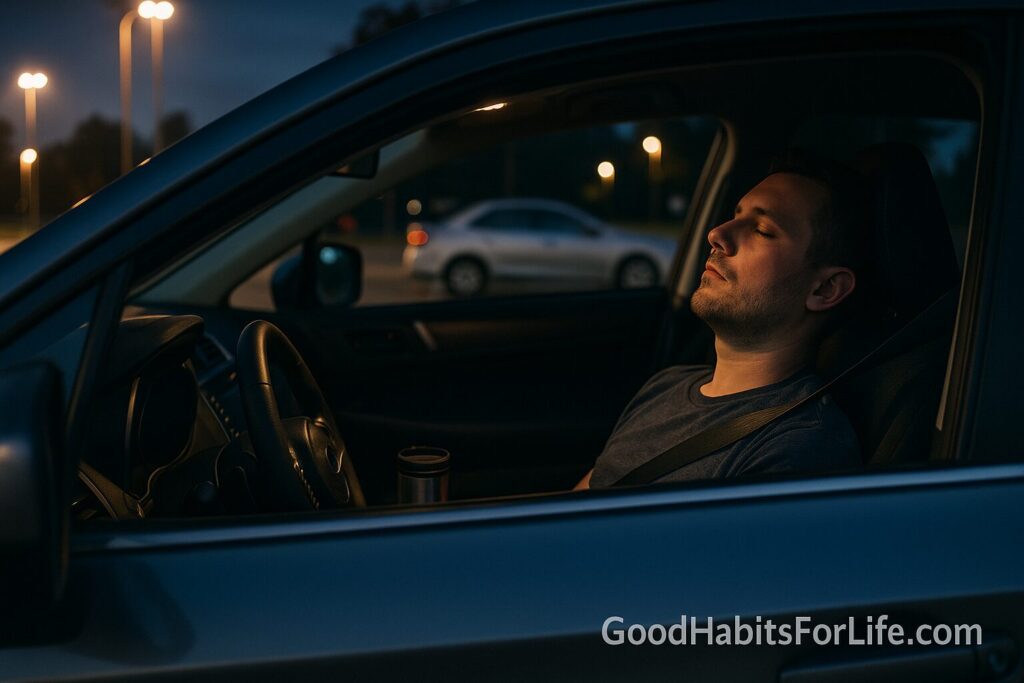
Drowsy Driving: Signs, Stops, Short Naps
Drowsy Driving: Signs, Stops, Short Naps
Table of Contents
🧭 What & Why
Drowsy driving is operating a vehicle while your alertness is reduced by lack of sleep, circadian lows (especially 02:00–06:00 and 13:00–16:00), long time at the wheel, medications, alcohol, or untreated sleep disorders. It slows reaction time, impairs judgment, and can cause microsleeps—brief, uncontrollable lapses in attention lasting 1–10 seconds. At highway speeds, even a 3-second microsleep means you travel over 80 m without control at 100 km/h.
Authorities worldwide (CDC, NHTSA, WHO, AAA Foundation) warn that drowsiness is a major and under-reported crash factor. The safest habit is prevention (adequate sleep, route planning) plus early stop decisions and short, strategic naps when warning signs appear.
⚠️ Spot the Signs—When to Stop
Use this quick self-check. If you tick any 2 (or one severe), pull over safely:
-
Frequent yawning or rubbing eyes
-
Heavy eyelids, difficulty focusing, blurred vision
-
Missing exits, forgetting the last few kilometres
-
Drifting from your lane, hitting rumble strips
-
Variations in speed; trouble keeping a steady gap
-
Head nods or “jerks” (microsleep red flag)
-
Irritability, poor lane discipline, delayed braking
Severe = immediate stop: microsleeps, lane departures, near-misses, or not remembering the last minute of driving.
Medications that increase risk: sedating antihistamines, some cold/flu remedies, certain anxiety or sleep meds. Always check labels for “may cause drowsiness; do not operate machinery.”
✅ Quick Start: Do This Today
-
Sleep bank: Aim for 7–9 hours the night before (most adults).
-
Plan breaks: Schedule a stop every 2 hours or 160–200 km. Put them in your map as waypoints.
-
Avoid circadian danger zones (00:00–06:00; 13:00–16:00) for the longest legs.
-
Caffeine-nap protocol:
-
Consume 150–200 mg caffeine (coffee/tea).
-
Nap 15–20 minutes in a safe, ventilated area.
-
Wake, hydrate, and walk 5 minutes before resuming.
-
-
Buddy system: If two licensed drivers, swap at each stop.
-
Fuel smart: Light snacks (fruit, nuts, yoghurt); avoid heavy, greasy meals.
-
Set alerts: Use a 2-hour break timer on your phone/watch.
🛠️ Techniques & Frameworks That Work
1) The PULL-OVER Rule
-
Perceive signs (checklist above)
-
Understand risk (microsleep = no control)
-
Locate safe spot (rest area, pump, dhaba with parking)
-
Lie back for a short nap (15–20 min)
-
OVER-reliance on tricks (music, AC, windows) is a myth—don’t.
2) Caffeine Nap (Evidence-backed)
-
Drink caffeine → nap immediately → wake before deep sleep starts.
-
Alertness boost typically begins 15–30 minutes after ingestion and can last a couple of hours.
-
Don’t exceed 400 mg/day (lower if pregnant or sensitive).
3) Two-Driver Relay
-
Swap every 2 hours regardless of “feeling fine.”
-
The off-driver does a 5-minute walk + stretch; tracks hydration and next stop.
4) Night-Drive Decision Tree
-
If slept <7 h last night or it’s between 00:00–06:00 → don’t start a long drive.
-
If unavoidable: limit to ≤90 minutes, pre-plan a nap stop, and inform someone of the route & ETA.
5) Alertness Budgeting
-
Treat attention like fuel. Combine: adequate sleep, daylight starts, nutritious snacks, hydration, and regular micro-movement (ankle pumps at red lights, 3 deep breaths every 15 minutes).
6) Pre-Drive Sleep Fit Check (60 seconds)
-
Slept ≥7 h?
-
No sedating meds or alcohol in last 12 h?
-
Start time outside circadian low?
-
Route has stops every 2 h?
If No to any → fix before you go.
🗺️ 7-Day Starter Habit Plan
Goal: Build an automatic “stop early, nap smart” routine for long drives.
-
Day 1–2: Prep & Baseline
-
Log last week’s sleep (bed/wake times).
-
Save rest areas/fuel stations on your commonly used routes.
-
Create a Break Timer shortcut: 2-hour countdown with audible alert.
-
-
Day 3–4: Dry Run
-
Do a 60–90 min practice drive in daytime.
-
At the halfway mark, pull in for a 10-minute walk + water.
-
Test your caffeine-nap setup (seat recline, mask, earplugs).
-
-
Day 5: Night-Time Awareness
-
Read vehicle manual for driver-attention alerts/rumble warnings.
-
Decide a personal “red line”: any two signs = stop.
-
-
Day 6: Route Template
-
For your next real trip, build a map with stops at 2h intervals, plus one “optional nap” stop.
-
-
Day 7: Full Protocol
-
Do a longer daytime drive (≥3 h).
-
Execute: Check → Drive → Stop → Swap/Nap → Walk → Hydrate → Resume.
-
Review: What helped most? Adjust for your real journey.
-
👥 Audience Variations
-
Students/Young Drivers: Higher risk after late-night study or gaming. Make “no long drives after midnight” a hard rule; tell a parent/friend your ETA and share location.
-
Professionals (sales, logistics, IT commutes): Schedule client calls after stops; avoid back-to-back late nights + early starts. Keep healthy road snacks in the car.
-
Parents with Kids: Plan stops at playgrounds/petrol pumps with clean restrooms; align nap time with a caffeine-nap window for the driver.
-
Seniors: Review meds with a clinician (sedatives, antihistamines). Prefer daylight driving; increase stop frequency to every 90 minutes.
-
Shift Workers: Extra caution driving home post-night shift—consider a planned nap at work before leaving or use public transport/ride-share when possible.
🚫 Mistakes & Myths to Avoid
-
“I’ll power through.” Willpower can’t override sleep biology.
-
Opening windows/blasting music helps. Only briefly masks fatigue.
-
Energy drinks = safe alertness. Short boost, potential crash later, often high sugar.
-
Heavy meals before/during driving. Increases sleepiness and slows reaction.
-
Relying solely on driver-assist alerts. Helpful, not foolproof—still need sleep and stops.
-
Stopping on the shoulder to nap. Dangerous. Use rest areas, service roads, secured parking.
💬 Real-Life Scripts & Examples
-
Self-talk trigger: “I missed that exit and my eyes are heavy—I’m stopping now.”
-
Co-driver cue: “You’ve yawned five times in 10 minutes. Let’s pull over at the next stop.”
-
Group rule: “Every 2 hours we stop: toilets, water, 5-minute walk. No debate.”
-
Family text: “Starting at 07:00, breaks at 09:00/11:00, ETA 14:30. Will text at each stop.”
Action Table—What to Do Based on Signs
| Signs noticed | Action in next 10 minutes |
|---|---|
| 1 minor sign (yawn, blink) | Turn on break timer; plan stop within 30 min |
| 2+ signs or rumble strip hit | Exit safely at next opportunity; 15–20 min caffeine-nap |
| Microsleep / lane drift / near-miss | Stop immediately in a safe area; swap drivers or take 20-min nap + reassess trip plan |
📱 Tools, Apps & Resources
-
Maps & Stop Planning: Google Maps/Apple Maps saved pins; offline maps for low-signal stretches.
-
Timers & Routines: Phone/watch countdowns; “Focus/Do Not Disturb” to reduce notifications while driving.
-
Vehicle Features: Lane departure warnings, driver attention monitors—use as backup, not a substitute for rest.
-
Sleep Tracking (optional): Wearables or phone apps to ensure ≥7 h before trip (don’t check while driving).
-
Comfort Kit: Sunshade, eye mask, light blanket, earplugs, water bottle, light snacks.
Pros/Cons Snapshot
-
Planning apps: Easy waypoints; can mislabel rest areas—verify.
-
Driver alerts: Good nudge; false alarms happen—still stop if you feel sleepy.
-
Caffeine/nap: Fast and effective; not a replacement for full sleep.
📌 Key Takeaways
-
Prevent: 7–9 h sleep + daylight starts + planned breaks.
-
Detect: Use the signs checklist; two signs = stop now.
-
Fix (short-term): Caffeine-nap + movement + hydration.
-
Long term: Build a 2-hour stop habit and avoid night starts.
-
Safety first: If you’re drowsy, you’re not fit to drive.
❓FAQs
1) How long should a power nap be while on a road trip?
Aim for 15–20 minutes. Longer naps can lead to sleep inertia (grogginess) unless you can afford a full 90-minute sleep cycle.
2) Does caffeine really help with drowsy driving?
Yes—150–200 mg caffeine followed by a short nap can meaningfully improve alertness for a couple of hours. It’s a temporary aid, not a replacement for sleep.
3) Is rolling down the window or blasting music a good strategy?
No. These may briefly mask fatigue but do not restore alertness. Use them only to reach the next safe stop.
4) I sleep only 5–6 hours—am I safe to drive?
Sleeping less than 7 hours increases crash risk. If you slept <4 hours, risk rises significantly—don’t start a long drive; arrange rest or alternate transport.
5) What time of day is riskiest?
Circadian lows around 02:00–06:00 and a mid-afternoon dip around 13:00–16:00 are high-risk windows.
6) Which medicines should I watch for?
Sedating antihistamines (for colds/allergies) and sleep/anxiety meds can impair driving. Read labels; ask a clinician or pharmacist.
7) Are driver-monitoring cameras/alerts enough?
They help, but cannot replace sleep and breaks. If you feel drowsy, stop—regardless of whether the car warns you.
8) How often should I stop on highways?
Plan a break every 2 hours or 160–200 km, sooner if any signs appear.
9) Can sugary snacks or energy drinks keep me safe?
They may give a short spike followed by a crash. Prefer water, fruit, yoghurt, nuts.
10) What if I must drive at night?
Keep legs short (≤90 min), pre-plan nap stops, travel with a co-driver, and avoid heavy meals.
📚 References
-
Centers for Disease Control and Prevention (CDC). Drowsy Driving: Asleep at the Wheel. https://www.cdc.gov/sleep/features/drowsy-driving.html
-
National Highway Traffic Safety Administration (NHTSA). Drowsy Driving. https://www.nhtsa.gov/risky-driving/drowsy-driving
-
AAA Foundation for Traffic Safety. Acute Sleep Deprivation and Risk of Motor Vehicle Crash Involvement. https://aaafoundation.org/
-
World Health Organization (WHO). Road traffic injuries—key facts. https://www.who.int/news-room/fact-sheets/detail/road-traffic-injuries
-
Harvard Medical School – Division of Sleep Medicine. Drowsy Driving. https://sleep.hms.harvard.edu/
-
Sleep Foundation. What Is a Caffeine Nap? https://www.sleepfoundation.org/
-
National Safety Council (NSC). Fatigue and Safety. https://www.nsc.org/
-
UK NHS. How to Get to Sleep. (for healthy sleep basics) https://www.nhs.uk/live-well/sleep-and-tiredness/
⚖️ Disclaimer
This guide is for general information and road-safety education only and is not medical or legal advice; follow local laws and consult a clinician about sleep or medication concerns.