
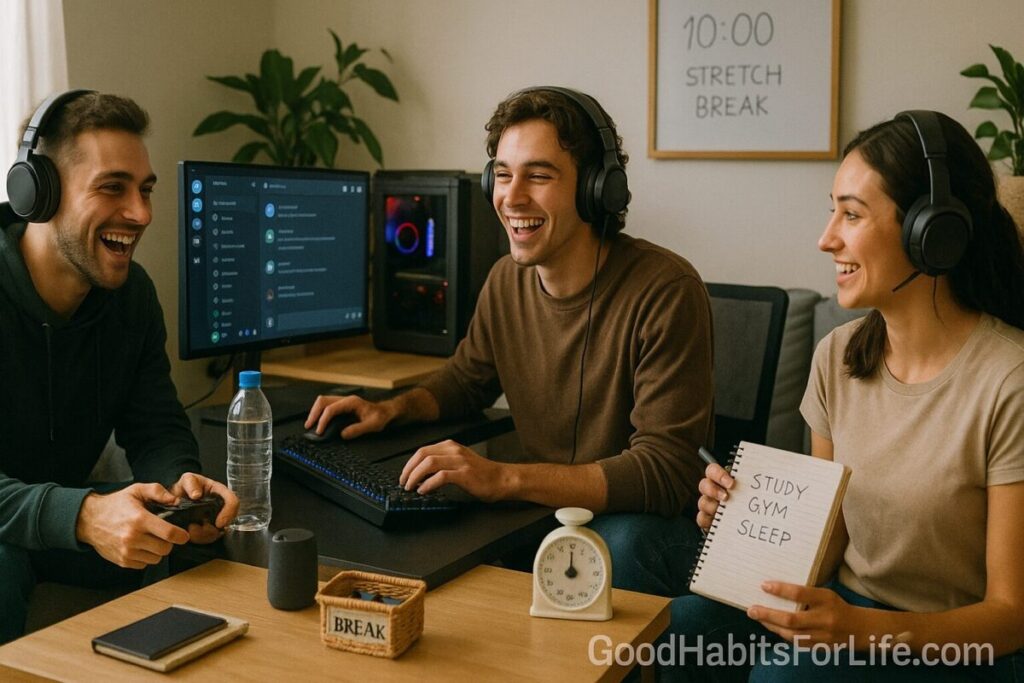
Discord & Gaming Friends: Build Real Bonds: Dopamine Detox (2025)
Discord & Gaming Friends: Build Real Bonds: Dopamine Detox
Table of Contents
🧭 What & Why
The opportunity. Online gaming and Discord are where millions meet, talk, and team up daily. For teens alone, gaming is a major social space: 85% in the U.S. play; nearly half of teen gamers say they’ve made a friend online; and many play to spend time with others. Benefits (problem-solving, collaboration) co-exist with costs (sleep loss, harassment). The goal isn’t to quit—it’s to channel this energy into healthier, deeper friendships. Pew Research Center+1
What counts as a “real bond”? Repeated, positive interactions + disclosure + reliability + shared goals. Research suggests time spent gaming alone doesn’t reliably predict well-being; what matters is why you play and whether you can stop when you want. That’s good news: we can redesign how we use Discord to increase meaning, not just minutes. oii.ox.ac.ukUniversity of Oxford
Watch the downsides. A small subset develop problematic patterns. WHO recognizes “Gaming Disorder” in ICD-11 (impaired control, prioritizing gaming over life roles, ongoing harm, typically ≥12 months). The APA lists Internet Gaming Disorder for further study. Knowing the signs helps you intervene early. World Health OrganizationPsychiatry
✅ Quick Start (Do This Today)
-
Name your intent. Write one line in your server bio or DM pin: “I’m here for chill co-op + weekly build nights. Open to voice after 21:00.”
-
Trim the noise. Mute non-essential channels; set Do Not Disturb during work/sleep; disable @everyone except in Announcements. (Prevents overstimulation and preserves energy for quality moments.) Connected Learning Lab
-
Start a ritual. Spin up a thread: “Friday 22:00 IST – Co-op & Catch-up (90 min).” Repeat weekly. Connected Learning Lab
-
Add depth prompts. In the lobby thread, drop 3 prompts: “Rose/Thorn/Bud 🌹🗡️🌱,” “Wins & WIPs,” “One thing you’re learning.”
-
Go low-stim for 2 hours. Before tonight’s session, do a mini detox: phone in another room, no autoplay, music only. (Evidence suggests short, planned screen reductions can improve mood/focus.) PMCScienceDirect
-
Capture win-win. After the session, DM one teammate: “Enjoyed that strat—want to pair up next week?” Small commitments snowball.
🧠 The Dopamine Detox (Evidence-Aligned)
Reality check. The trendy phrase “dopamine detox” is catchy but misleading—you can’t reset dopamine like a battery. Sensible versions simply reduce high-stimulation cues (endless feeds, alerts) so you can choose better habits. Think structured digital detox, not a neurochemical cleanse. Harvard HealthThe Scientist
What the evidence shows.
-
Reviews and emerging trials suggest planned, time-bound “digital detox” strategies can reduce stress, anxiety, and depressive symptoms for some groups. PMC+1ScienceDirect
-
The issue isn’t games per se—it’s compulsion and context (e.g., sleep disruption, “can’t stop”). University of Oxford
-
A minority experience clinically significant impairment (ICD-11 Gaming Disorder); monitor function, not just hours. World Health Organization
Your plan (4 steps).
-
Audit cues (15 min): list channels, notifications, and apps that spark rabbit holes.
-
Reduce + replace (7 days): mute, unfollow, and replace with low-stim behaviors (walks, prep, reading, focused co-op).
-
Boundaries (ongoing): time-box gaming (e.g., 90-minute sessions), no screens 60 min before sleep, and one tech-free block daily.
-
Check function weekly: sleep, grades/work, relationships, bills, and mood. If declining, escalate limits or seek support.
🛠️ Techniques & Frameworks That Work
1) Ritual > Random
-
Recurring events (Discord Events + threads) beat spontaneous pings. Post a short agenda: Warm-up (10), Match/Build (60), Debrief (20).
-
Rotate simple roles: host, note-taker (post takeaways), vibe-checker (ensure everyone speaks once). Connected Learning Lab
2) Depth Prompts (for voice or text)
-
Rose/Thorn/Bud: one highlight, one challenge, one thing you’re excited about.
-
“One-up” rounds: each person shares one skill they’re practicing this week.
-
2x Praise tokens per session: call out a teammate’s micro-win.
3) The 3-Layer Hangout
-
Layer 1—Play: lobby banter, matchmaking.
-
Layer 2—Build: joint project (map, mod list, creative build, guide).
-
Layer 3—Bond: 10-minute debrief (“What did we learn? What’s next?”)
4) Harassment Safeguards
-
Post clear rules; enforce with mod tools/bots; document incidents. Toxicity is common in some voice chats—normalize muting/reporting and ally pings. ScienceDirectPolygon
5) Well-Being Guards
-
DND windows + scheduled breaks protect sleep and study time. Many teens report sleep harm from late gaming; adults feel it too. Pew Research Center
-
Motives check: Are you queuing because you want to—or feel pressured to? If it’s the latter, pause. University of Oxford
📅 Habit Plan — 30-60-90 Roadmap
Days 1–30: Detox & Design
-
Week 1: Audit cues; mute/leave 20% of channels; set Server Rules + roles; launch one weekly ritual. Connected Learning Lab
-
Week 2: Implement 90-minute session cap; no screens 60 min pre-sleep; 2 low-stim blocks/day (15–30 min). PMC
-
Week 3: Introduce Depth Prompts; start a small project (guide, creative build).
-
Week 4: Check function (sleep, work/school, mood). Adjust limits. If still struggling to stop or function, consider seeking pro support. World Health Organization
Days 31–60: Grow Your Circle
-
Add one new recurring event (e.g., “Build Night” + “Strategy Lab”).
-
Mentor system: pair veterans with new members for 2 sessions.
-
Try a no-voice focus night (low-stim) to see if text-only improves focus.
Days 61–90: Deepen & Diversify
-
Host a cross-server collab (shared playlist, map jam, charity one-shot).
-
Create a Resources channel (mental health, study tips, wellness).
-
Pilot IRL-adjacent: video coffee chat or local meet (safety first). Track how relationships feel compared to Day 1.
🧠 Evidence-Aligned “Dopamine Detox” Protocol (7 days)
-
Day 1 (Plan): Choose two high-stim triggers to remove (e.g., phone on charger in hallway; disable autoplay).
-
Day 2 (Filter): Discord DND 20:30–07:30; server mutes except key channels. Connected Learning Lab
-
Day 3 (Swap): Replace one doom-scroll slot with co-op build (focus task).
-
Day 4 (Sleep): No screens 60 min pre-sleep; short walk or stretch. PMC
-
Day 5 (Focus): 2 × 25-min no-notification blocks before gaming.
-
Day 6 (Social): Host a 90-min intentional session with a debrief.
-
Day 7 (Reflect): Rate mood, focus, and sleep (1–5). Keep what worked.
👥 Audience Variations
-
Students/Teens: Prioritize sleep and grade windows; use study-before-queue rules. Parents/guardians: set shared agreements; co-create a weekly schedule. Pew Research Center
-
Professionals: Block “deep-work” hours and move gaming to deliberate evening slots; keep caffeine late-night in check.
-
Parents/Caregivers: Run family-friendly co-ops at set times; teach kids report/mute and empathy scripts.
-
Seniors/Returners: Favor co-op/creative modes; schedule shorter sessions with video check-ins for connection.
-
Women/LGBTQ+ players: Pre-screen servers, use private channels, and ally pings; zero-tolerance rules for slurs/harassment. Polygon
⚠️ Mistakes & Myths to Avoid
-
Myth: “Dopamine detox resets your brain.”
Reality: It’s a behavioral boundary practice, not a neurochemical cleanse. Harvard HealthThe Scientist -
Myth: “More hours = more harm.”
Reality: Motivation and control predict outcomes more than raw hours. University of Oxford -
Mistake: Letting toxicity slide.
Fix: Clear rules, swift mod action, and safety rituals. ScienceDirect -
Mistake: All-or-nothing breaks.
Fix: Prefer planned, time-boxed detox with replacements; measure function. PMC
💬 Real-Life Examples & Scripts
Invite to Depth:
“Loved your comms last night. Want to co-host a Friday 22:00 IST ‘Build & Debrief’ for 4 weeks?”
Call-In for Harassment:
“Quick reset: our rule is no personal attacks. Let’s keep it game-focused or take 5.” (If repeated, /report, mute, notify mod.)
Boundary Setting:
“I’m off at 23:00 to protect sleep. Next match I’m in is Saturday’s event.”
New-Member On-Ramp:
“Welcome! We run two rituals: Wed Strategy (60) + Fri Build (90). Pick a role this week—host, notes, or vibe-checker.”
🧩 Tools, Apps & Resources (Pros/Cons)
-
Discord Events & Threads — Pros: structure, discoverability, async planning. Cons: needs active moderation. Connected Learning Lab
-
Channel Permissions & Roles — Pros: safer spaces, clearer norms. Cons: setup overhead. Connected Learning Lab
-
Focus Timers (Pomodoro, OS Focus Modes) — Pros: friction to overuse; Cons: can be ignored.
-
Sleep Aids (wind-down, blue-light filters) — Pros: protect sleep; Cons: still need time boundaries.
-
Community Guidelines Templates — Pros: clarity; Cons: only as good as enforcement. Connected Learning Lab
🔑 Key Takeaways
-
Design beats willpower. Structure your Discord so quality time is easy and distractions are hard. Connected Learning Lab
-
Detox = boundaries + swaps. Don’t chase a chemical reset; reduce cues and replace with intentional rituals. Harvard HealthPMC
-
Depth grows from small, repeated wins: rituals, roles, projects, and honest debriefs.
-
Safety isn’t optional: harassment policies + ally action keep communities healthy. ScienceDirect
-
Monitor function: sleep, school/work, relationships. If they slide, tighten limits or get help. World Health Organization
❓ FAQs
1) Does gaming hurt mental health?
Not inherently. Large studies find no general causal link between hours played and poor mental health, but issues arise when play feels compulsive or crowds out life roles. University of Oxford
2) What is a sensible “dopamine detox” for gamers?
A planned, short-term reduction of high-stim cues (notifications, autoplay, doom-scrolling) plus replacement activities (focused co-op, walks, reading). Evidence supports structured digital-detox approaches for some outcomes. PMC+1
3) How do I spot unhealthy gaming?
Look for impaired control, prioritizing gaming over key duties, and continuing despite harm for ~12 months—ICD-11 Gaming Disorder criteria. World Health Organization
4) How can I make Discord friendships deeper?
Create weekly rituals, share roles, use depth prompts, and end with a debrief + next step.
5) What about toxicity in voice chat?
Unfortunately common in some spaces; use clear rules, mute/report, and ally pings. ScienceDirectPolygon
6) Is this safe for teens?
Yes, with sleep-first schedules, set session caps, and co-created rules with parents/guardians. Many teens report social benefits alongside risks; aim for balance. Pew Research Center
7) Can breaks tank my rank?
Short, planned breaks won’t ruin skill; they often improve focus and tilt resistance.
8) I’m shy on voice. Tips?
Start in threads; type first; try push-to-talk; use small group rituals and structured prompts.
9) How long should a detox be?
Start with 7 days, then maintain daily low-stim blocks and weekly rituals you enjoy. ScienceDirect
10) When should I get professional help?
If you can’t cut back, your function is deteriorating (sleep, school/work, relationships), or harassment triggers significant distress. World Health Organization
📚 References
-
Pew Research Center. Teens and Video Games Today (Report & PDF). 2024. Pew Research Center+1
-
World Health Organization. Gaming disorder — ICD-11 definition & Q&A. World Health Organization+1
-
American Psychiatric Association. Internet Gaming in DSM-5 (IGD). Psychiatry
-
Vuorre M., Johannes N., Magnusson K., Przybylski A.K. Time spent playing video games is unlikely to impact well-being. Royal Society Open Science, 2022. (OII project page with publication links). oii.ox.ac.uk
-
Ramadhan R.N. et al. Impacts of digital social media detox for mental health: systematic review. 2024. PMC
-
Alanzi T.M. et al. Examining the Impact of Digital Detox Interventions on Psychological Well-Being. 2024. PMC
-
Brockmeier L.C. et al. Planning a digital detox: randomized study on smartphone use reduction. 2025. ScienceDirect
-
University of California Irvine, Connected Learning Lab. Discord Community: Challenges, Tools & Strategies (Report). 2021. Connected Learning Lab
-
Yunhao H. et al. Systematic review of cyberbullying in adult online games. 2025. ScienceDirect
-
Offenburg University study (summarized). Sexual Harassment in Valorant & Overwatch Voice Chats (2025 coverage). Polygon
Disclaimer: This guide is educational and not a substitute for professional mental-health care; seek qualified help if you’re struggling.