
Cycling Bottles & Hygiene: Clean, Dry, Replace: Protein-Forward Plan (2025)
Cycling Bottle Hygiene: Clean, Dry, Replace (2025)
Table of Contents
🧭 What & Why: Cycling Bottle Hygiene
Cycling bottles are warm, wet, and often sugary after sports drink or shake residues—perfect conditions for bacteria and biofilm. Studies show reusable bottles in routine use can harbor heterotrophic and coliform bacteria, with contamination increasing over time. foodprotection.org Biofilms on wet surfaces protect microbes and make them harder to remove without physical scrubbing. PMC
If you mix protein in your bottle, treat it like perishable food: keep it cold and out of the “danger zone” (4–60 °C / 40–140 °F). fsis.usda.gov
The upshot: consistent cleaning, thorough drying, periodic sanitizing, and timely replacement reduce risk and odors while keeping performance hydration safe.
✅ Quick Start: Do This Today
-
After every ride:
-
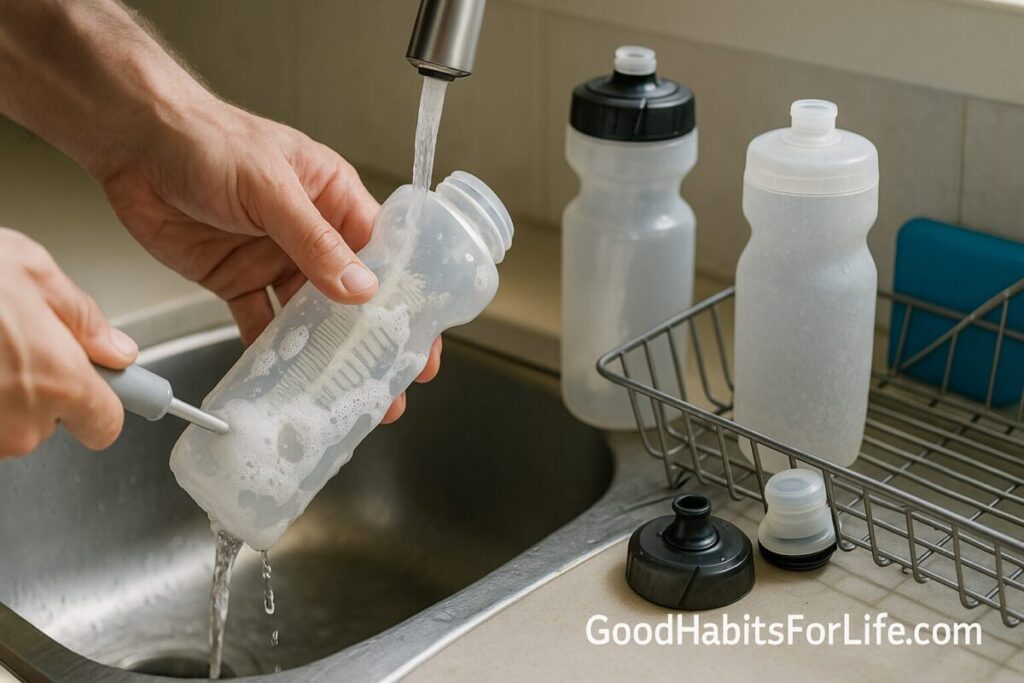
Rinse immediately. Disassemble caps, valves, and straws. Wash with hot water + dish soap; use a bottle + straw brush. Air-dry completely (upside-down on a rack). CDCHome & Garden Information Center
-
-
Once this week:
-
Sanitize with 1 tsp (5 mL) unscented bleach per 1 L water (or 4 tsp per gallon). Fill, shake, contact for 1 minute, then drain and air-dry. CDC
-
-
If dishwasher-safe:
-
Run on a sanitize cycle (top rack). NSF/ANSI 184-certified dishwashers reach temps and performance needed for sanitization. nsf.org
-
-
Protein users:
-
Carry powder dry; mix right after the ride; keep cold; refrigerate within 2 hours. fsis.usda.gov
-
-
Inspect & replace:
-
Retire bottles with cracks, deep scratches, persistent odors/stains, or damaged seals—surfaces that can’t be cleaned effectively harbor microbes. (Food-contact guidance supports replacing worn, hard-to-clean items.) fsis.usda.gov
-
🧱 7-Day Starter → 30-60-90 Habit Plan
Week 1 (7-Day Starter)
-
Day 1: Set up a wash station (bottle brush, straw brush, rack).
-
Day 2: Add a sanitizing bottle (clearly labeled bleach solution recipe). CDC
-
Day 3: Disassemble and clean each bottle + cap + valve.
-
Day 4: Dry audit: ensure bottles dry fully in <12 h (better airflow or rack if slower).
-
Day 5: Protein protocol: switch to “powder-then-mix post-ride”. fsis.usda.gov
-
Day 6: Run dishwasher sanitize cycle for dishwasher-safe gear (or repeat bleach sanitize). nsf.org
-
Day 7: Inspect for wear; retire 1 problem bottle.
30-Day:
-
Standardize: “Wash-every-ride, sanitize-weekly.”
-
Log any bottles with recurring odor—if they fail after deep clean/sanitize, replace.
60-Day:
-
Build a rotation: everyday bottles vs. race-day bottles.
-
Add chlorine test strips if you routinely make large sanitize batches (helps you hit proper ppm). Washington State Department of Health
90-Day:
-
Seal check: gaskets and bite valves wear first—replace parts or retire bottle.
-
Review stock: keep 2–3 reliable bottles per rider; discard worn items consistent with food-contact replacement principles. fsis.usda.gov
🛠️ Techniques & Frameworks (Clean, Dry, Sanitize)
Clean (every ride)
-
Disassemble. Wash all parts with hot water + detergent; physical scrubbing breaks biofilm. Home & Garden Information Center
-
Rinse thoroughly.
Dry (every ride)
-
Air-dry on a rack; keep parts separated; avoid trapping moisture in closed caps. CDC
Sanitize (weekly or after protein/sugary drinks)
-
Bleach method: 1 tsp (5 mL) bleach : 1 L water (5–9% sodium hypochlorite). Contact ~1 minute; drain; air-dry. CDC
-
Alternative CDC mix for surfaces: 1 Tbsp per gallon. Use food-contact-safe practices and air-dry—don’t leave strong residues. CDC
-
Dishwasher sanitize (only if parts are dishwasher-safe): NSF/ANSI 184 cycles achieve a 5-log reduction of bacteria. nsf.org
When extra caution makes sense
-
After illness, long storage, visible mold, or any persistent odor—sanitize twice and re-evaluate. If odor/staining persists, retire.
🥤 Protein-Forward Bottle Use (for riders who shake)
Why special rules?
Protein + warmth = fast microbial growth; treat mixed shakes like perishable food. Keep cold and avoid >2 hours at room temp. fsis.usda.gov
Recovery targets
-
Protein: 20–40 g high-quality protein (≈0.25–0.4 g/kg) soon after training; aim for 2–3 g leucine in the dose. BioMed Central+1PubMed
-
Daily protein for active riders: about 1.2–2.0 g/kg/day depending on training load. PubMedWiley Online Library
-
Carbs for glycogen: pair protein with carbohydrate after long/intense rides.
Practical playbook
-
Best practice: carry powder dry (separate compartment or sachet). Mix right after the ride with cold water/milk; drink promptly. fsis.usda.gov
-
If pre-mixed: keep in an insulated bottle with ice packs and refrigerate within 2 hours. Disassemble, wash, and sanitize that bottle the same day. fsis.usda.govCDC
👥 Audience Variations
-
Students/commuters: stash a mini brush + a small labeled bleach sachet in your kit; rinse and clean at campus/work sinks. CDC
-
Parents/teens: follow infant-item style routines: disassemble small parts; wash and air-dry fully. CDC
-
Amateur racers: dedicate one bottle to carbs/electrolytes, one to water; sanitize both weekly.
-
Seniors: choose simple caps (fewer nooks), larger grips, and dishwasher-safe parts for ease. nsf.org
⚠️ Mistakes & Myths to Avoid
-
“A quick rinse is enough.” Biofilm needs scrubbing/soap to remove. PMC
-
“Protein bottles can sit till I get home.” Perishables shouldn’t exceed 2 hours at room temp. fsis.usda.gov
-
“If it smells fine, it’s clean.” Odor isn’t a reliable indicator of safety. Prioritize routine cleaning/sanitizing. foodprotection.org
-
“Bleach is always too harsh.” Food-contact sanitizing dilutions are safe when used correctly and air-dried. CDC+1
-
“Dishwashers always sanitize.” Only sanitize cycles on appropriate machines deliver validated reductions; check part compatibility. nsf.org
📝 Real-Life Scripts & Checklists
Post-ride script (60 seconds):
Rinse bottle → disassemble cap/valve → hot water + dish soap scrub → rinse → rack upside-down → parts spaced out to dry.
Weekly sanitize script (5 minutes):
Mix 1 tsp bleach + 1 L water → fill bottle + cap parts → shake & soak ~1 min → drain → air-dry.
Replace checklist (monthly):
-
Cracks, chips, or deep scratches inside?
-
Stains or odors that persist after sanitizing?
-
Warped lids, failing gaskets, or leaking valves?
If “yes,” retire the bottle—as with worn cutting boards, hard-to-clean surfaces shouldn’t contact food/drink. fsis.usda.gov
🧰 Tools, Apps & Resources
-
Bottle and straw brushes; drying rack.
-
Unscented household bleach (5–9% sodium hypochlorite); measuring spoon. CDC
-
Chlorine test strips if you prep larger batches. Washington State Department of Health
-
NSF/ANSI 184-certified dishwasher (if your bottles are top-rack safe). nsf.org
-
UV sanitizing stations/caps (helpful adjuncts; still wash first). unc.edu
📌 Key Takeaways
-
Clean after every ride, air-dry fully, sanitize weekly, replace when worn. CDCfsis.usda.gov
-
Treat protein shakes like perishable food; mix fresh, keep cold, drink soon. fsis.usda.gov
-
Target 20–40 g protein post-ride and 1.2–2.0 g/kg/day overall for active riders. BioMed CentralPubMed
❓ FAQs
How often should I wash a cycling bottle?
After every ride. Disassemble parts, scrub with soap and hot water, and air-dry completely. CDCHome & Garden Information Center
What’s the safest home sanitizing mix?
Use 1 tsp (5 mL) unscented bleach per 1 L water (or 4 tsp per gallon). Ensure 5–9% sodium hypochlorite; contact ~1 minute; air-dry. CDC
Can I rely on my dishwasher?
If your bottle/cap is dishwasher-safe and your machine has a sanitize cycle, yes—it achieves a 5-log bacterial reduction. Otherwise, hand-wash and sanitize. nsf.org
How soon should I drink a protein shake from my bottle?
Within 2 hours if not kept cold. Better: carry powder dry, mix right after your ride, and refrigerate promptly. fsis.usda.gov
How do I get rid of stubborn odors?
Deep clean + sanitize. If odors persist after proper sanitizing and drying, retire the bottle (surfaces may be compromised). fsis.usda.gov
When do bottles need replacing?
Replace when you see cracks, deep scratches, recurring stains/odors, leaking seals, or when surfaces are no longer easily cleanable—principles used for food-contact tools. fsis.usda.gov
Is bleach safe in bottles?
Yes—at food-contact sanitizing dilutions and when you air-dry. Avoid scented products; never mix with other cleaners. CDC+1
Do bottles really get contaminated?
Yes. Research on in-use bottles found microbial contamination and biofilm formation, especially without regular cleaning/sanitizing. foodprotection.orgPMC
Stainless vs plastic—what’s better?
Either can be safe when cleaned well. Stainless is more scratch-resistant; plastic may scratch and harbor residues sooner—be vigilant and replace when worn. fsis.usda.gov
Should I boil parts?
Some silicone gaskets tolerate brief boiling, but check manufacturer guidance. If unsure, stick to the CDC bleach-sanitizing method. CDC
📚 References
-
CDC — Safe Water Storage: cleaning & 1 tsp bleach per 1 L sanitizing guidance. CDC
-
CDC — Cleaning & Disinfecting with Bleach: dilution options for household sanitizing. CDC
-
USDA FSIS — “Danger Zone (40–140 °F)” and 2-hour rule for perishables. fsis.usda.gov
-
NSF — Residential Dishwasher (NSF/ANSI 184) sanitization performance. nsf.org
-
Food Protection Trends — Cleanliness of Reusable Water Bottles (contamination & behaviors). foodprotection.org
-
PubMed/PMC — Biofilm science (microbial life on surfaces). PMC
-
PubMed/PMC — Klebsiella isolated from a reusable water bottle (biofilm-forming). PMC
-
CDC — Infant Feeding Items: Clean & Air-Dry (disassemble; applicable practice for bottles/parts). CDC
-
Clemson & MSU Extension — Daily washing & periodic sanitizing recommendations for reusable bottles. Home & Garden Information CenterAgriculture College
-
ACSM/AND/DC Position Paper — Protein needs for athletes (~1.2–2.0 g/kg/day). PubMed
-
ISSN Position Stands — Post-exercise protein 20–40 g (0.25–0.4 g/kg) and leucine target. BioMed Central+1
Disclaimer: This article offers general fitness and food-safety guidance and is not a substitute for personalized medical or nutrition advice—consult a qualified professional for individual needs.