
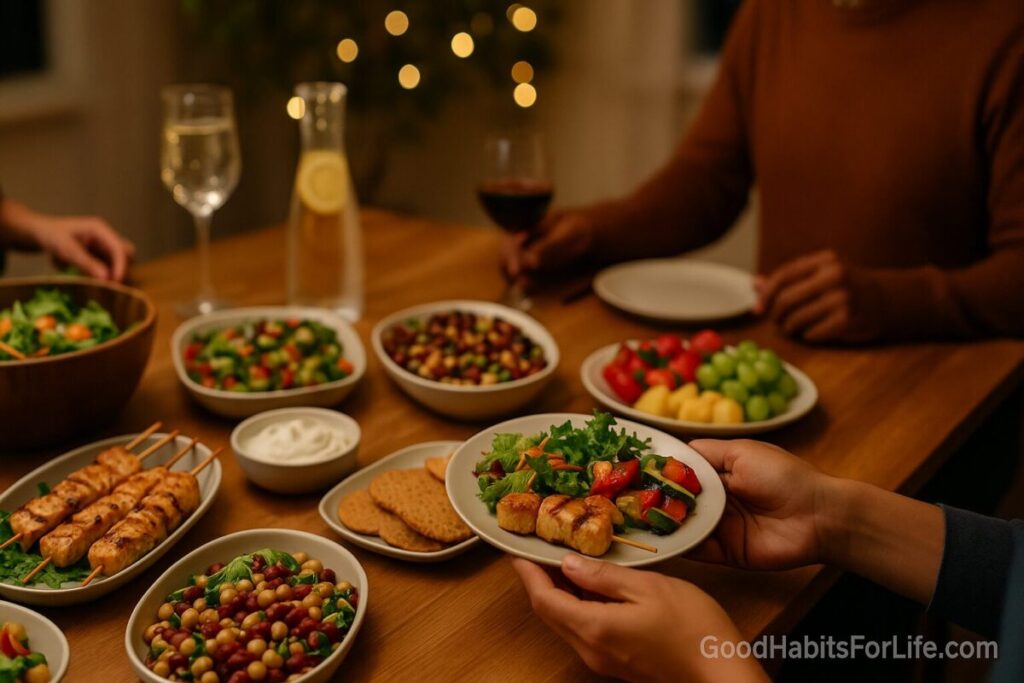
Celebrations Without Overeating: Rituals that Help: Dopamine Detox (2025)
Celebrations Without Overeating: Dopamine Detox (2025)
Table of Contents
🧭 What This Is & Why It Works
Goal: enjoy celebrations without the next-day regret. You’ll combine three evidence-based levers:
-
Reduce cues that spike reward seeking (a practical “dopamine detox”: turn down ultra-stimulating triggers for a few days so your baseline cravings quieten). Research links dopamine pathways to reward learning around food and cues; turning down cue exposure can help control intake. PMC+1
-
Shrink portions & energy density (more veg/lean protein; fewer ultra-processed, high-calorie items). Portion size and energy density independently and additively increase energy intake. ajcn.nutrition.org+1PMC
-
Mindful eating (attention to hunger/fullness, pace, sensations) to reduce mindless grazing. The Nutrition SourcePMC
A fourth reality of parties is alcohol: it often raises food intake within the same occasion—so a simple drink plan matters. Cambridge University Press & AssessmentPMC
Ultra-processed foods (chips, sweets, industrial snacks) are engineered to be hyper-palatable and are linked to overeating in controlled trials. Cell+1
✅ Quick Start (Do This at Your Next Celebration)
-
Pre-commit: text yourself a plan: two small plates, one dessert I really want, 2 drinks max, water between drinks.
-
Arrive not-starving: eat a fiber-rich snack 1–2 hours before (e.g., yogurt + fruit or hummus + carrots).
-
Survey first: walk the buffet once; decide your favorite carb/dessert now to avoid random grazing.
-
Build Plate #1 (½–¼–¼):
-
½ salad/veg
-
¼ lean protein
-
¼ starch you truly want
-
-
Eat mindfully: sit, put phone away, 10–12 slow bites, pause at ~80% comfortable fullness. Harvard Public Health
-
Drink plan: alternate every alcoholic or sweet drink with water/seltzer; cap at 2. Cambridge University Press & Assessment
-
Dessert strategy: one small portion of your favorite. Skip the “meh.”
-
Decline seconds gracefully (see scripts below).
-
Move after: a 10–15-minute walk with a friend.
🧠 7-Day “Dopamine Detox for Parties” Plan
A gentle, practical reset that lowers hyper-stimulation so party food feels less “magnetic.”
Day 1–2: Turn Down Triggers
-
Swap ultra-processed snacks (crisps, candies) for fruit, nuts, yogurt. Keep them out of sight at home/desk. (Cue reduction helps; UPFs drive excess intake.) Cell
-
Replace scrolling while eating with a 5-minute phone-free meal.
Day 3–4: Portion & Pace
-
Use a smaller plate at home; add a veg starter (broth soup/salad) to lower meal energy density. PMC
-
Practice the pause-halfway habit: set fork down at 50% and check fullness.
Day 5: Alcohol Audit
-
If you drink at events, define a 2-drink limit and alternate with water. Practice ordering a no-alcohol option you like. Cambridge University Press & Assessment
Day 6: Party Rehearsal
-
Role-play scripts; pre-decide your dessert and seconds policy (“I’m good—saving room for dancing”).
Day 7: Event Day
-
Pre-party snack, quick buffet survey, ½-plate veg, mindful eating, water between drinks, walk after.
🛠️ Techniques & Frameworks that Help
🍽️ Portion & Energy Density Playbook
-
Veg first course (salad/broth soup) reduces total calories.
-
Lean protein anchor increases fullness.
-
Small plate, deliberate refills only after a 5-minute pause.
Evidence: reducing portion size and energy density independently lowers energy intake; effects are additive. ajcn.nutrition.orgPubMed
🧘 Mindful Eating Micro-Rituals
-
3 breaths before first bite, identify aroma, texture, flavor; chew thoroughly; put utensils down between bites. The Nutrition Source
🚫 Cue Control & Exposure
-
Out of sight: keep treats away from line-of-sight at home/office.
-
Measured exposure: practice being around tempting foods without eating immediately (tea in hand, 5-minute delay); cue reactivity predicts intake, and exposure strategies can help. PMC+1
🥤 Alcohol Boundaries
-
Alternate drinks and set a hard cap; alcohol acutely increases food energy intake on average. Cambridge University Press & Assessment
🍬 Sugar Sense
-
Keep free sugars <10% of energy (ideally <5%); at parties this means choosing a single sweet and savoring it. World Health Organization+1
🧩 Variations by Audience
Students: pre-game with a protein snack; BYO healthy dish to house parties; volunteer to DJ or run games to avoid grazing.
Parents: feed kids early with fruit/veg platters; model “dessert once, not ongoing.”
Professionals (work events): set a calendar block for a pre-event snack; stand away from buffet; keep a glass of sparkling water.
Seniors: prioritize protein at earlier meals; choose lower-alcohol or alcohol-free options to protect sleep/meds. Cambridge University Press & Assessment
Teens: one plate + one treat rule; pair up with a friend to practice scripts.
⚠️ Mistakes & Myths to Avoid
-
“I’ll skip meals to save calories.” Backfires; you arrive ravenous and overeat. CDC
-
“Small plate is just a trick.” Lower portions and energy density reliably cut intake. ajcn.nutrition.org
-
“Mindful eating is woo.” It’s a structured attention practice linked to healthier eating behaviors. PMC
-
“Ultra-processed is just a buzzword.” Controlled trials show UPFs drive higher ad-lib intake. Cell
💬 Real-Life Examples & Scripts
-
Declining seconds: “Everything was delicious—I’m comfortably full and saving room for dessert.”
-
Dessert boundary: “That looks amazing. I’m choosing the cheesecake tonight and skipping the rest.”
-
Alcohol limit: “I’m alternating with water—keeps me fresh for tomorrow.”
-
Host gratitude + boundary: “Thanks for cooking! I’m starting with salad and the roast, then I’m done.”
-
Buffet strategy with a friend: “Let’s build one plate, sit, and chat away from the table.”
📚 Tools, Apps & Resources (quick pros/cons)
-
Start Simple with MyPlate (USDA): simple habit goals; free. Con: US-centric. myplate.gov
-
Phone timer / mindful bell apps: gentle pauses mid-meal; Con: needs phone discipline.
-
Sparkling water & tea “hand anchor”: keeps hands busy; lowers impulse to nibble.
-
Step tracker: schedule a 10–15-minute social walk post-meal.
🔑 Key Takeaways
-
Plan your plate, pace, and drink limit before the first bite.
-
Lower portion size and energy density; fill half the plate with veg/salad. ajcn.nutrition.org
-
Mindful eating micro-rituals reduce autopilot grazing. The Nutrition Source
-
Turn down high-stim cues for a few days (a practical “dopamine detox”) so cravings don’t run the show. PMC
-
Enjoy the celebration—choose one treat you truly love and savor it.
❓ FAQs
1) What is a “dopamine detox,” really?
Not a medical detox—just a short reset that reduces overstimulating cues (hyper-palatable snacks, constant scrolling, alcohol) so your reward system isn’t being pinged all day. That makes mindful, portion-wise eating easier. PMC
2) Will one dessert ruin progress?
No. Choose one favorite, savor it, and balance with veg/protein and movement.
3) Is it better to avoid all ultra-processed food?
Per feasibility, aim to reduce UPFs—controlled trials show they drive higher intake; smaller portions of minimally processed foods are easier to regulate. Cell
4) Do smaller plates actually work?
Smaller portions and lower energy density decrease intake; pairing a veg starter with a small plate works well. ajcn.nutrition.org
5) Does alcohol really make me eat more?
On average, yes within a drinking episode; alternate with water and set a cap. Cambridge University Press & Assessment
6) What if hosts insist I take seconds?
Use appreciative no’s: “It was wonderful—I’m satisfied. Can I take some home?” (Boundary + gratitude.)
7) I’m managing blood sugar—any extra tips?
Keep meal timing regular, include protein and fiber, and don’t skip meals before events. CDC
8) Traveling for celebrations?
Pack nuts/fruit; hydrate; choose one special food per event; walk after meals.
📚 References
-
Harvard T.H. Chan School of Public Health — Mindful Eating. https://nutritionsource.hsph.harvard.edu/mindful-eating/ The Nutrition Source
-
Nelson JB. Mindful Eating: The Art of Presence While You Eat. Curr Opin Endocrinol Diabetes Obes. 2017. https://pmc.ncbi.nlm.nih.gov/articles/PMC5556586/ PMC
-
Hall KD et al. Ultra-Processed Diets Cause Excess Calorie Intake and Weight Gain. Cell Metab. 2019. https://www.cell.com/cell-metabolism/fulltext/S1550-4131%2819%2930248-7 Cell
-
Kral TVE et al. Combined effects of energy density and portion size on intake. Am J Clin Nutr. 2004. https://ajcn.nutrition.org/article/S0002-9165%2822%2903953-3/fulltext ajcn.nutrition.org
-
Rolls BJ et al. Reductions in portion size and energy density… Am J Clin Nutr. 2006. https://pubmed.ncbi.nlm.nih.gov/16400043/ PubMed
-
WHO. Guideline: Sugars intake for adults and children. 2015. https://www.who.int/publications/i/item/9789241549028 World Health Organization
-
Boswell RG & Kober H. Food cue reactivity & craving predict eating/weight. Psychopharmacology. 2016. https://pmc.ncbi.nlm.nih.gov/articles/PMC6042864/ PMC
-
Preuss-van Viersen H et al. Modified cue exposure for adolescents… 2023. https://pmc.ncbi.nlm.nih.gov/articles/PMC10039999/ PMC
-
Kwok A et al. Effect of alcohol consumption on food energy intake: systematic review & meta-analysis. Br J Nutr. 2019. https://www.cambridge.org/core/journals/british-journal-of-nutrition/article/effect-of-alcohol-consumption-on-food-energy-intake-a-systematic-review-and-metaanalysis/2F9AB5C64A86329EB9E817ADAEC3D88C Cambridge University Press & Assessment
-
Harvard T.H. Chan School — How to practice mindful eating. 2023. https://hsph.harvard.edu/news/how-to-practice-mindful-eating/ Harvard Public Health
-
NIDDK — Changing Your Habits for Better Health. 2025. https://www.niddk.nih.gov/health-information/diet-nutrition/changing-habits-better-health NIDDK
-
Marteau TM et al. Policy options to reduce portion sizes… BMJ. 2015. https://www.bmj.com/content/351/bmj.h5863 BMJ
⚖️ Disclaimer
This article offers general nutrition guidance and is not medical advice; if you have health conditions (e.g., diabetes), consult your clinician or dietitian.