
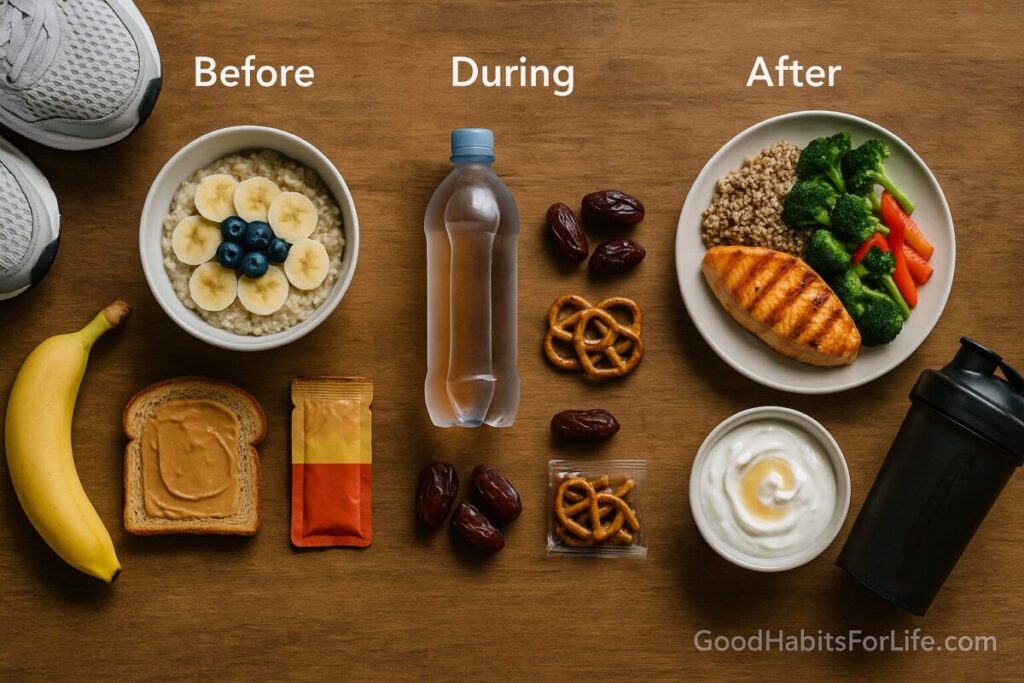
Carb Timing for Energy: Before, During, After: Protein-Forward Plan (2025)
Carb Timing: Before, During & After (Protein-Forward)
Table of Contents
🧭 What Carb Timing Is & Why It Works
Carb timing means matching the amount and type of carbohydrates to the effort: glycogen top-ups before exercise, maintaining blood glucose during longer efforts, and rapid glycogen restoration after. The most widely used guidelines recommend 1–4 g/kg carbs 1–4 hours pre-exercise, 30–60 g/h during most sessions over an hour (and up to ~90 g/h when using mixed sugars for long events), and 1.0–1.2 g/kg/h post-exercise when fast recovery is needed. PubMed+1SpringerLinkPMC
Pairing carbs with high-quality protein (20–40 g, ≈0.25 g/kg, 2–3 g leucine) supports muscle repair and can speed glycogen restoration when carb intake is below the top end. PubMedBioMed Central
For everyday energy (not just workouts), choose mostly low-GI, high-fiber carbs (whole grains, legumes, fruits, veg) and keep free/added sugars <10% of calories. The Nutrition SourceWorld Health Organization
✅ Quick Start: Today’s Fueling Checklist
If you train today (≥60 min):
-
2–3 h Pre: Eat a balanced meal: ~1–2 g/kg carbs + 20–30 g protein + veg + fluids. (Example for 70 kg: 70–140 g carbs.) PubMed
-
15–45 min Pre (optional): Small top-up (15–30 g fast-digesting carbs), sip water.
-
During (per hour):
-
60–90 min total: 30–45 g carbs (e.g., ~500–750 mL of 6–8% sports drink or 1 gel + water).
-
90–150 min: 45–60 g carbs.
-
150 min: 60–90 g carbs using mixed glucose+fructose sources. SpringerLinkPubMed
-
-
After (0–4 h): 1.0–1.2 g/kg carbs/h + 20–40 g protein within the first hour; keep sipping fluids and electrolytes. PMCPubMed
🛠️ 7-Day Protein-Forward Starter Plan
Assumptions: 60–75 min moderate training on Days 2, 4, 6. Adjust portions to body mass.
Daily anchor: 3–4 protein hits (20–40 g each) + fiber-rich carbs at meals; water as baseline.
-
Day 1 (No training):
-
Meals: Oats + yogurt + berries; lentil-veggie bowl + olive oil; tofu/egg stir-fry + brown rice.
-
Habit: Cap free sugars under 10% of calories; swap sweetened drinks for water/coffee/tea. World Health Organization
-
-
Day 2 (Train):
-
Pre (2–3 h): Whole-grain sandwich + turkey + fruit (~1.5 g/kg carbs).
-
During: ~30–45 g carbs/h.
-
Post: Rice + beans + eggs (1.0–1.2 g/kg carbs) + 25 g whey/Greek yogurt.
-
-
Day 3 (Recovery):
-
Focus on whole-grain wraps, legumes, fruits, veg; protein at each meal.
-
-
Day 4 (Train):
-
Pre: Pasta + tomato sauce + chicken.
-
During: 45–60 g carbs/h.
-
Post: Potatoes + fish + salad + 20–40 g protein.
-
-
Day 5 (Skills/Light):
-
Lower carb day from whole foods; keep protein consistent.
-
-
Day 6 (Longer session 90–120 min):
-
Day 7 (Rest):
-
Walk + stretch; fiber-rich carbs, colorful veg, lean proteins.
-
🧠 Techniques & Frameworks
Glycemic Index (GI) basics. Low-GI carbs (≤55) release glucose more steadily; high-GI (≥70) act faster—handy close to or during hard sessions. Use GI as one lens; fiber, whole-grain quality, and total diet still matter. Check the University of Sydney GI database when choosing staples. The Nutrition SourceGlycemic Index
Mixed sugars for higher intakes. To push above ~60 g/h toward ~90 g/h, combine glucose + fructose (“multiple transportable carbs”) to improve absorption and gut comfort. Practice during training. PubMed+1
Protein-forward recovery. Target ~0.25 g/kg (20–40 g) high-quality protein per feeding, with 2–3 g leucine; spread doses every 3–4 h across the day. PubMed
Hydration & electrolytes. For sessions ≥60 min, a 6–8% carb-electrolyte drink can cover fluids, sodium, and part of your carb target. PubMed
Sugar sanity. Keep free/added sugars <10% of energy most days; whole fruit is fine. World Health Organization
👥 Audience Variations
-
Students: Portable pre-class snacks: banana + yogurt; peanut-butter sandwich; milk + oats. During team practice (>60 min): 30–45 g carbs/h.
-
Professionals (desk all day): Time higher-carb meals around workouts; otherwise favor low-GI, high-fiber carbs to avoid mid-afternoon slumps.
-
Parents: Batch-cook carb bases (rice, pasta, potatoes, beans) and pair with ready proteins (eggs, yogurt, rotisserie chicken).
-
Seniors: Emphasize protein at each meal (20–30 g) to protect lean mass; choose easy-to-chew carbs (oats, ripe fruit, soups with barley or lentils).
-
Teens: Fuel growth + sport: never train fasted; use simple carb sources during long practices; keep sugary drinks mostly for sport contexts.
⚠️ Mistakes & Myths to Avoid
-
Fasted hard sessions when performance matters—glycogen limits the effort.
-
Only simple sugars post-workout. You’ll recover faster hitting 1.0–1.2 g/kg carbs/h and 20–40 g protein in that early window. PMCPubMed
-
Ignoring gut training. Practice your during-exercise carb plan to avoid GI distress. PubMed
-
Using GI as the only rule. Food matrix, fiber, and overall pattern are equally important. The Nutrition Source
-
Overdoing added sugars on rest days; keep them under 10% of calories. World Health Organization
💬 Real-Life Scripts & Menus
Pre-workout (2–3 h) script:
“For 70 kg, I’m aiming at ~100 g carbs + 25 g protein: bowl of pasta + tomato sauce + chicken (~90–110 g carbs) and water.”
During (per hour) options:
-
600–750 mL 6–8% sports drink (~36–48 g carbs)
-
1 gel (20–25 g) + water + a few chews (10–15 g)
-
Homemade bottle: 500 mL water + 30 g sugar + pinch of salt + squeeze of lemon (≈30 g)
Post (0–2 h) meals:
-
Rice bowl (100–140 g carbs) + 25–35 g protein (eggs, tofu, fish).
-
Smoothie: milk + banana + oats + whey/soy isolate (80–120 g carbs + 25–35 g protein).
🧰 Tools & Resources
-
University of Sydney GI Database — authoritative GI/GL lookups. Glycemic Index
-
Cronometer — detailed nutrient tracking (web + app).
-
MyFitnessPal — big food database and quick logging.
📌 Key Takeaways
-
Match carb timing to the task: pre top-up, during drip-feed, post restock.
-
Protein-forward recovery (20–40 g) boosts repair; combine with adequate carbs. PubMed
-
Use low-GI, high-fiber carbs away from workouts; deploy faster carbs closer to and during effort. The Nutrition Source
-
Keep added sugars <10% of energy most days. World Health Organization
❓ FAQs
1) Do I need carb timing if I’m trying to lose weight?
Yes—fuel the work, then scale total calories. Time carbs around training; keep daily added sugars low. World Health Organization
2) What if I train early morning?
Have a small snack (15–30 g carbs) or sports drink beforehand; larger breakfast after.
3) Is “fasted cardio” better?
It can improve fat oxidation, but often reduces intensity/quality. Use it for easy days, not key sessions.
4) Do low-carb/keto diets work with carb timing?
Some athletes periodize carbs (lower on easy days, higher before/during/after hard work). Performance in high-intensity efforts typically benefits from carbs.
5) What’s the best “during” carb?
Whatever your gut tolerates: drink, gel, chews, or real food. For >2–3 h, mix glucose + fructose to push intake. PubMed
6) Do I need protein during endurance sessions?
Optional. A small amount may help reduce muscle damage in very long bouts; priority remains carbs + fluids. BioMed Central
7) How soon after training should I eat?
Start within the first hour and keep feeding for 2–4 h if you’ll train again soon. PMC
8) How much water with gels?
Roughly 200–300 mL per gel to keep a ~6–8% solution in the stomach. PubMed
📚 References
-
Academy of Nutrition & Dietetics, Dietitians of Canada, ACSM. Nutrition and Athletic Performance (2016). PubMeddietitians.cajandonline.org
-
Kerksick C.M. et al. ISSN Position Stand: Nutrient Timing (2017). BioMed CentralTaylor & Francis Online
-
Jeukendrup A. Carbohydrate Intake During Exercise (2014) & reviews on multiple transportable carbs. SpringerLinkPubMed+1
-
Murray B., Rosenbloom C. Fundamentals of Glycogen Metabolism (2018). PMC
-
Craven J. et al. Sports Medicine–Open (2021): Post-exercise carb 1.0–1.2 g/kg/h. SpringerOpen
-
Jäger R. et al. ISSN Position Stand: Protein and Exercise (2017). PubMed
-
Harvard T.H. Chan School of Public Health. Carbohydrates & Blood Sugar (GI guide). The Nutrition Source
-
WHO. Healthy Diet & Guideline: Sugars Intake for Adults and Children (limit free sugars <10% energy). World Health OrganizationNCBI
-
University of Sydney. Glycemic Index (GI) Database. Glycemic Index
⚖️ Disclaimer
This article is educational and not a substitute for personalized medical or nutrition advice; consult a qualified professional for individual guidance.