
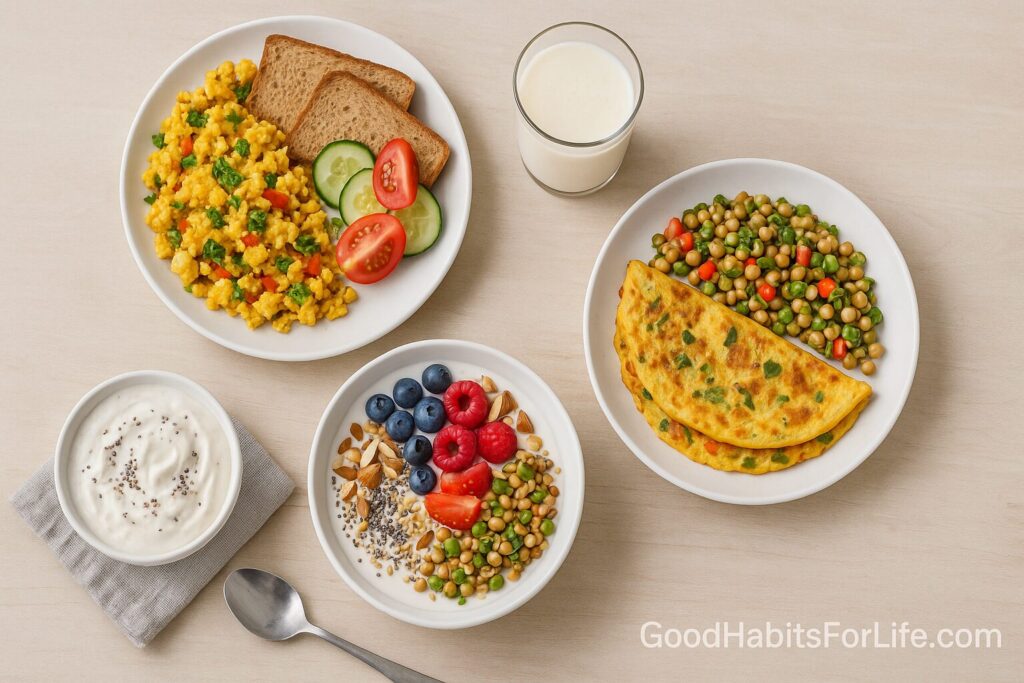
Breakfast Builders: 25g Protein in 10 Minutes: AI workflows (2025)
Breakfast Builders: 25g Protein in 10 Minutes (AI, 2025)
Table of Contents
🧠 What & Why: 25 g Protein at Breakfast
What it is: “Breakfast builders” are plug-and-play meal formulas that deliver ~25–35 g protein with produce and smart carbs in ≤10 minutes.
Why it matters (evidence):
-
Satiety & appetite: Higher-protein breakfasts reduce hunger and snacking later in the day. Randomized studies show improved appetite control versus lower-protein options.
-
Muscle maintenance: Distributing protein across meals (≈0.25–0.4 g/kg/meal) supports muscle protein synthesis; breakfast is often the missing piece.
-
Metabolic steadiness & focus: Protein helps stabilize post-meal glucose, supporting energy and concentration.
-
Practicality: Hitting ~25 g is realistic with common foods (eggs, dairy/curd, paneer, tofu, lentils, whey/plant protein, yogurt).
Rule of thumb: a palm-sized protein + one booster usually lands you at ~25 g.
✅ Quick Start: The 10-Minute Builder
Use this 3-step formula (Base → Booster → Produce):
-
Pick a Base (15–25 g):
-
3 eggs (≈18 g)
-
200 g Greek yogurt/strained curd (≈18–20 g)
-
120–150 g paneer/cottage cheese (≈19–25 g)
-
150–180 g firm tofu (≈17–22 g)
-
1 scoop whey/plant isolate in milk (≈24–30 g total)
-
-
Add a Booster (5–10 g):
-
30 g roasted chana/peanuts (≈6–7 g)
-
250 ml milk (≈8 g)
-
50 g paneer/cheese (≈9–11 g)
-
2 tbsp peanut/almond butter (≈6–7 g)
-
-
Add Produce (1–2 cups):
-
Tomatoes, spinach, onions, peppers, mushrooms; or fruit for smoothies/curd bowls.
-
Add herbs/spices (turmeric, cumin, chili, pepper) + lemon for flavor.
-
5 Fast Builds (≤10 min):
-
Paneer Bhurji Wrap: 120 g paneer scramble + roti; add onions/tomato/capsicum. (~25–28 g)
-
Greek Yogurt Bowl: 200 g Greek yogurt + 15 g nuts + berries/banana + seeds. (~25–27 g)
-
Tofu Scramble Toast: 170 g tofu + onions/spinach on 1–2 slices whole-grain. (~25–28 g)
-
Whey Oats Shake: 1 scoop whey + 250 ml milk + 40 g oats + banana (blend). (~30–35 g)
-
Besan (Chickpea) Chilla + Curd: 70 g besan batter (2 small) + 150 g curd. (~26–30 g)
Tip: Pre-chop a “breakfast veg mix” on Sundays; store 3–4 days.
🧭 7-Day Starter Plan (25 g Every Day)
Shopping once, eating fast. Swap dairy/paneer for tofu/soy yogurt if vegan.
| Day | 10-Minute Breakfast (~25–35 g) | How to Do It Fast |
|---|---|---|
| Mon | Whey Oats Shake (whey + milk + oats + banana) | Keep scoop + oats jar by blender; 60-sec blend. |
| Tue | Paneer Bhurji Wrap | Crumble paneer; 5-min sauté with masala + roti. |
| Wed | Greek Yogurt Power Bowl | Scoop yogurt; add nuts/fruit + 1 tbsp seeds. |
| Thu | Tofu Scramble Toast | Crumble tofu; 6-min sauté; pile onto toast. |
| Fri | Besan Chilla + Curd | Ready batter (night before); 2 quick chillas. |
| Sat | Eggs + Milk + Fruit (3-egg scramble + 250 ml milk) | Non-stick pan; 3–4 min soft scramble. |
| Sun | Overnight Oats + Protein | Prep Sat night: oats + milk + scoop + fruit. |
Batch once/week (30–40 min): roast nuts (portion 15 g packs), chop veg mix, cook a moong/besan batter, press tofu, portion paneer. This cuts weekday breakfast to 5–8 minutes.
🛠️ AI Workflows: Plan, Shop, Prep, Track
1) Pantry-Scan to Recipes (Camera → Ideas)
-
Snap photos of your fridge/pantry.
-
Ask an AI assistant: “From these ingredients, give me 10 breakfasts ≥25 g protein in ≤10 min. Include quantities in grams and prep steps in 3 lines each.”
2) Auto Grocery Lists (Macros → Items)
-
Prompt: “Build a 7-day list for breakfasts ≥25 g protein/day for 2 adults. Prefer Indian staples (paneer/besan/tofu/curd), budget ₹____, show grams and store sections.”
-
Export to your notes app; sort by produce / dairy & eggs / staples / packaged.
3) Swap Engine (Allergies/Preferences)
-
“Replace dairy with soy/yellow-pea options while keeping ≥25 g protein and similar calories.”
4) Macro Tracker & Feedback
-
Use a nutrition app (Cronometer, MyFitnessPal, HealthifyMe).
-
Ask: “Analyze my last 7 breakfasts. Are we averaging ≥25 g protein and ≥2 g leucine? Give 3 swaps to improve fiber and reduce added sugar.”
5) Batch-Cook Scheduler
-
“Create a weekly schedule so Sunday 30 min yields: 2× chilla batter, chopped veg mix, toasted nuts, pressed tofu.”
📚 Techniques & Frameworks (Leucine, Distribution, Plate)
Protein per meal: Aim 0.25–0.4 g/kg body mass per meal (≈20–40 g for most adults).
Leucine trigger: Meals with ~2–3 g leucine optimally stimulate muscle protein synthesis. Practical hits: 3 eggs; 250–300 ml milk + whey; 150–200 g Greek yogurt; 130–170 g paneer; 170–200 g firm tofu (with soy).
Even distribution: Rather than 5 g at breakfast and 60 g at dinner, level out to ~25–35 g per meal.
Breakfast Plate Method (P-P-C):
-
Protein (palm-sized)
-
Produce (1–2 cups)
-
Carb (optional, whole-grain/fruit; ~20–40 g net)
👥 Audience Variations
Students (hostel/dorm): no-cook whey shakes, curd bowls, PB-banana wraps, microwave tofu scramble.
Parents (school rush): pre-rolled paneer wraps; mini yogurt parfaits in jars; chilla batter in squeeze bottle.
Professionals (commute): drinkable shakes; cottage-cheese/fruit boxes; egg muffins (batch).
Seniors: softer textures (curd bowls, tofu/paneer bhurji), add vitamin-D-fortified milk; mind chewing/swallowing comfort.
Vegetarian: paneer/curd/besan/moong/tofu/soymilk; pair cereals + pulses.
Vegan: tofu/tempeh, soy/pea isolate shakes, soy yogurt, besan/moong chillas, nut/seed butters.
Gluten-free: dosa/idli with sambar, chillas, rice porridge + whey/soy isolate, GF toast.
⚠️ Mistakes & Myths to Avoid
-
Under-protein smoothies: fruit + milk alone often <15 g—add whey/soy isolate or tofu/curd.
-
Sugary “breakfast” desserts: granola/cereal bars can spike sugar; read labels.
-
Skipping produce: add at least 1 cup veg/fruit.
-
Relying only on bread: whole-grain is fine, but prioritize the protein first.
-
Myth: “More than 30 g at once is wasted.” Not true—muscle synthesis plateaus, but extra protein still supports other needs and satiety.
🗣️ Real-Life Examples & Scripts
Café order (2-line script):
“One masala omelet (3 eggs) with extra paneer, please, and a side of curd.”
5-minute office breakfast:
-
200 g Greek yogurt + 15 g almonds + 1 small banana (≈27–30 g).
-
OR shake: 1 scoop whey + 250 ml milk + 1 tbsp peanut butter (≈32–35 g).
Emergency kit (desk drawer): shaker, scoop, single-serve whey/pea packets, 30 g nut packs, raisins, oats sachets.
🔧 Tools, Apps & Resources (quick pros/cons)
-
USDA FoodData Central: precise macros; requires lookups; authoritative.
-
Cronometer / MyFitnessPal / HealthifyMe: tracks macros; accuracy depends on entries.
-
Notion/Sheets templates: easy weekly planners; manual data entry.
-
Timer + kitchen scale (1–2 kg): speed + accuracy.
-
AI assistant (planning): fast list/recipe generation; still verify quantities.
✅ Key Takeaways
-
Target ~25–35 g protein at breakfast, daily.
-
Use Base + Booster + Produce to reach 25 g in ≤10 minutes.
-
Batch once/week to make weekdays effortless.
-
AI workflows keep you consistent: plan, shop, swap, track.
-
Adjust for your diet, culture, and budget—principles stay the same.
❓ FAQs
1) Do I need exactly 25 g?
No—it’s a practical target. Most adults do well with ~25–35 g at breakfast.
2) Is whey safe?
For healthy adults, whey is generally safe; choose reputable brands and check for allergies. If lactose-sensitive, consider isolate or plant protein.
3) Can I do this without dairy or eggs?
Yes: tofu/tempeh scrambles, soy/pea shakes, besan/moong chillas, soy yogurt bowls.
4) What if I’m fasting?
If you delay breakfast, still plan your first meal to carry 25–35 g protein to support muscle and satiety.
5) Are “high-protein” cereals worth it?
Many still lack enough protein per serving. Read labels; pair with Greek yogurt or a scoop of isolate to hit 25 g.
6) Will a 25 g breakfast help weight loss?
Higher protein improves fullness and may support calorie control alongside overall diet and activity.
7) How do I hit the leucine “trigger”?
Use complete proteins: dairy/whey/soy/eggs/fish; aim ~2–3 g leucine per meal via typical 25–35 g high-quality protein portions.
8) Are eggs okay if I watch cholesterol?
Most guidelines allow moderate egg intake for healthy people; discuss specifics with your clinician if you have lipid issues.
9) Can kids use these ideas?
Yes, but adjust portions to age and needs; focus on whole foods. Consult a pediatric professional for tailored advice.
10) What are the quickest no-cook options?
Whey/pea isolate shakes, curd/yogurt bowls, ready-to-drink high-protein milks, cottage cheese + fruit.
📚 References
-
Harvard T.H. Chan School of Public Health — Protein: the Nutrition Source. https://www.hsph.harvard.edu/nutritionsource/what-should-you-eat/protein/
-
International Society of Sports Nutrition (ISSN) Position Stand: Protein and Exercise (2017/2018 updates). https://jissn.biomedcentral.com/articles/10.1186/s12970-017-0177-8
-
Areta JL et al. Timing and distribution of protein ingestion for muscle protein synthesis. J Physiol (2013). https://physoc.onlinelibrary.wiley.com/doi/full/10.1113/jphysiol.2012.244897
-
Leidy HJ et al. Breakfast protein and appetite control. Am J Clin Nutr (2013). https://academic.oup.com/ajcn/article/97/4/677/4571519
-
Moore DR et al. Protein dose and muscle protein synthesis. J Physiol (2009). https://physoc.onlinelibrary.wiley.com/doi/full/10.1113/jphysiol.2009.177014
-
EFSA (2012). Dietary Reference Values for Protein (0.83 g/kg/d). https://efsa.onlinelibrary.wiley.com/doi/10.2903/j.efsa.2012.2557
-
WHO/FAO/UNU Expert Consultation. Protein and Amino Acid Requirements in Human Nutrition. https://www.who.int/publications/i/item/WHO-TRS-935
-
USDA FoodData Central (food composition). https://fdc.nal.usda.gov/
-
Jakubowicz D et al. High-energy breakfast vs dinner and glycemic control. Obesity (2015). https://onlinelibrary.wiley.com/doi/10.1002/oby.20926
-
Norton LE, Layman DK. Leucine and protein synthesis. J Nutr (2006). https://academic.oup.com/jn/article/136/1/155/4746710
Disclaimer: This article is educational and not a substitute for personalized medical or nutrition advice; consult your healthcare professional for individual guidance.