
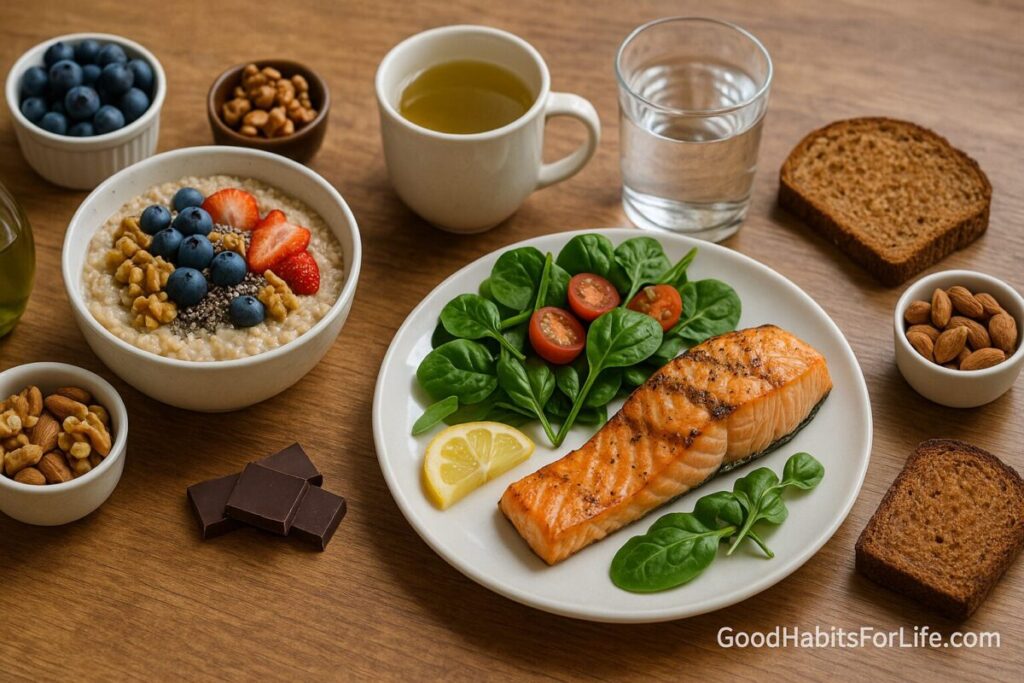
Brain Foods: Myths, Facts & Easy AddIns
Brain Foods: Myths, Facts & Easy Add-Ins
Table of Contents
🧭 What “Brain Foods” Really Mean
“Brain food” isn’t one miracle ingredient. It’s a pattern: mostly plants, regular fish, olive oil, whole grains, and minimal ultra-processed foods. Diets modeled on Mediterranean/MIND patterns are linked with healthier brain aging and fewer Alzheimer’s-related changes. National Institute on Aging+1
Think of two time horizons:
-
Now (attention/energy): stable blood sugar, adequate fluids, smart caffeine.
-
Long term (protection): fiber-rich plants, omega-3s from fish, polyphenols (berries/cocoa), and key micronutrients (folate, B12, choline).
✅ Quick Start: Eat for Focus Today
Do these before your next work or study block:
-
Balanced plate (hand-size guide): palm of protein (eggs, yogurt, tofu, fish), fist of whole grains, two fists of veg/fruit.
-
Add-ins: a handful (~30 g/1 oz) of nuts or seeds; drizzle 1–2 tsp olive oil.
-
Pre-session sip: 300–500 ml water; keep a bottle nearby to sip steadily. PMC
-
Caffeine timing: 60–90 min after waking; keep total daily under ~400 mg (adults). U.S. Food and Drug Administration
-
Smart snack: berries + Greek yogurt or hummus + carrots to avoid a sugar crash.
🛠️ 30-60-90 Habit Plan
Days 1–30 (Foundation)
-
Stock list: oats, brown rice, whole-grain bread; olive oil; mixed nuts; berries (fresh/frozen); leafy greens; eggs; beans/lentils; canned tuna/salmon/sardines; dark cocoa powder.
-
Aim for 5 plant servings/day (2 veg, 2 fruit, 1 legumes) and fish 1×/week.
-
One “focus bowl” per day (ideas below).
Days 31–60 (Build)
-
Move to fish 2×/week (85–115 g/3–4 oz portions). Choose lower-mercury varieties. U.S. Food and Drug Administration
-
Add a daily berry or leafy-greens habit (1 cup berries or 2 cups salad leaves). National Institute on Aging
-
Track caffeine; finish last dose ≥8 h before bed.
Days 61–90 (Protect & Personalize)
-
Lock in a Mediterranean/MIND-style week (menu template below). National Institute on Aging
-
Add a “brain check” to weekly review: sleep ≥7 h, movement, hydration, meal prep.
-
Discuss labs with a clinician if you’re at risk for B12 or iron deficiency (vegetarian/vegan, GI issues, pregnancy). Office of Dietary Supplements+1
🧠 Evidence-Backed Foods & Easy Add-Ins
1) Oily Fish (DHA/EPA)
-
Why: DHA is a structural fat in the brain; fish intake is tied to better overall brain and heart health. Evidence for supplements in healthy adults is mixed; whole-food fish is still advised. Office of Dietary Supplements
-
How much: 1–2 servings/week.
-
Add-ins: canned salmon on whole-grain toast; sardines with tomatoes and olives.
Pregnancy/children: follow low-mercury fish guidance and serving sizes. U.S. Food and Drug AdministrationUS EPA
2) Berries & Colorful Produce (Flavonoids)
-
Why: Higher flavonoid intake is associated with slower self-reported cognitive decline; berries are easy, low-glycemic sources. PMCHarvard Health
-
How much: 1 cup/day (fresh or frozen).
-
Add-ins: berry-oat smoothie; mixed berries over yogurt.
3) Leafy Greens & Crucifers
-
Why: MIND diet highlights greens (spinach, kale) tied to fewer Alzheimer’s-related brain changes. National Institute on Aging
-
Add-ins: 2 cups salad leaves at lunch; stir chopped spinach into eggs or dal.
4) Whole Grains & Legumes
-
Why: Slow-release carbs + fiber stabilize energy for focus; support gut–brain axis.
-
Add-ins: swap in oats/brown rice; add ½–1 cup beans or lentils to bowls and soups.
5) Nuts & Seeds
-
Why: Provide unsaturated fats, vitamin E, magnesium, and polyphenols; mixed evidence on direct cognitive effects, but strong cardiometabolic benefits that support brain health. Frontiers
-
Add-ins: 30 g (1 oz) walnuts/almonds; sprinkle ground flax or chia on breakfast.
6) Eggs (Choline)
-
Why: Choline makes acetylcholine, a neurotransmitter involved in memory and attention; eggs are a top source. Office of Dietary Supplements
-
Add-ins: 2–3 eggs/week if you eat eggs; tofu scramble + soy/legumes for plant-forward days.
7) Olive Oil
-
Why: Core fat in Mediterranean patterns; replacing butter with olive oil improves overall cardiometabolic profile linked to brain health. National Institute on Aging
-
Add-ins: 1–2 tsp to finish soups, veg, or grains.
8) Cocoa (Dark & Unsweetened)
-
Why: Cocoa flavanols may support cerebral blood flow and aspects of memory/executive function, though trials vary. PMCPubMed
-
Add-ins: 1–2 tsp unsweetened cocoa in yogurt/oats; keep added sugar low.
9) B12 & Iron (Deficiency Watch-outs)
-
Why: Low B12 or iron can impair cognition and energy; check status if at risk (vegans, malabsorption, heavy menses, pregnancy). Office of Dietary Supplements+1
-
Add-ins: fortified foods, dairy/eggs, legumes + vitamin-C foods (for iron absorption); consider clinician-guided supplementation if deficient.
⚡ Caffeine & Smart Hydration
Caffeine
-
What it does: temporarily improves alertness and reaction time.
-
How much: For most adults, keep under ~400 mg/day (≈2–4 cups brewed coffee), accounting for tea, energy drinks, caffeine pills, and chocolate. U.S. Food and Drug Administration
-
Timing: Avoid within 8 h of bedtime; try a “coffee nap” (espresso + 20-min nap) for a short boost.
Hydration
-
Why it matters: Reduced hydration status is linked to poorer cognitive function over time; even mild dehydration can hurt attention and executive function. PMCPubMed
-
How to do it: steady sipping; water first, then tea/coffee/milk as desired; aim for pale-yellow urine; add a pinch of salt + citrus in hot climates/sweaty days.
👥 Audience Variations
Students:
-
“Pre-class pack”: water bottle + nuts + fruit.
-
Breakfast before exams: oats + yogurt + berries + a little honey; coffee or tea 1–2 h pre-test.
Professionals:
-
Meeting-day lunch: grain bowl (brown rice or millets) + beans + greens + olive oil.
-
Keep “focus snacks”: roasted chickpeas, apple + peanut butter.
Parents & Busy Caregivers:
-
Batch-cook beans and whole grains; freeze berries and veg.
-
Family fish night: baked salmon/tuna patties with whole-grain rolls.
Seniors:
-
Prioritize protein at breakfast; get B12 checked if appetite is low or on metformin/PPIs. Office of Dietary Supplements
-
Hydrate with soups, herbal teas, and fruit-rich water.
Teens:
-
Limit energy drinks; choose milk/yogurt smoothies + banana + cocoa instead. U.S. Food and Drug Administration
⚠️ Myths & Mistakes to Avoid
-
“One food makes you smarter.” Overall pattern matters more than any single item. National Institute on Aging
-
“Supplements beat food.” Unless you’re correcting a deficiency, pills rarely outperform whole foods (e.g., ginkgo shows no dementia-prevention benefit). NCCIH
-
“More caffeine = more focus.” After a point, jitters and sleep loss backfire; respect the ~400 mg/day guide. U.S. Food and Drug Administration
-
Ignoring fish safety. Choose low-mercury options, especially for pregnancy/children. U.S. Food and Drug Administration
-
Dehydration drift. Waiting for thirst can be too late during long work/study sessions. PMC
📚 Real-Life Examples & Scripts
5 “Focus Bowls” (copy-paste into your week):
-
Mediterranean Tuna Bowl: brown rice (1 cup), tuna (100 g), cherry tomatoes, cucumbers, olives, parsley, olive oil + lemon.
-
Berry–Yogurt Power: Greek yogurt (200 g), mixed berries (1 cup), oats (¼ cup), ground flax (1 tbsp), cocoa (1 tsp).
-
Greens & Beans Lunch: quinoa (¾ cup), sautéed spinach, roasted chickpeas (½ cup), tahini-lemon drizzle.
-
Eggs & Veg Scramble: 2 eggs + mushrooms, peppers, spinach; whole-grain toast with olive oil.
-
Sardine Toast: whole-grain bread, mashed sardines with mustard + capers, arugula.
Grocery Script (weekly):
“Two whole grains, two beans, two leafy greens, two fruits (berries + seasonal), one nut/seed, one fish (fresh or canned), olive oil.”
Caffeine Audit (once):
List all sources (coffee/tea/sodas/energy drinks/chocolate/meds). Convert to mg; cap at ≤400 mg/day; move last dose earlier. U.S. Food and Drug Administration
🧰 Tools & Resources
-
Cronometer or MyFitnessPal — track fiber, omega-3, and added sugar; scan barcodes.
-
FDA/EPA Fish Advice Chart — pick low-mercury fish for the family. U.S. Food and Drug Administration
-
Meal-prep timer + reminder app — block 90 min weekly to batch-cook grains/beans.
-
Water-reminder app or simple hourly phone buzz — promote steady sipping (not chugging).
🏁 Key Takeaways
-
Build a pattern, not a magic list: plants, fish, olive oil, whole grains, nuts, beans. National Institute on Aging
-
Use easy add-ins daily (berries, greens, nuts/seeds, olive oil, beans, canned fish).
-
Keep caffeine moderate and hydration steady for day-to-day focus. U.S. Food and Drug AdministrationPMC
-
Screen for (and correct) B12/iron deficiency if you have risk factors. Office of Dietary Supplements+1
❓ FAQs
1) What’s the single best brain food?
There isn’t one. Patterns like the MIND/Mediterranean diet show the most consistent links to healthier brain aging. National Institute on Aging
2) Do I need omega-3 capsules?
If you eat fish 1–2×/week, probably not. Evidence for omega-3 supplements in preventing cognitive decline is mixed; discuss with your clinician if you avoid fish. Office of Dietary Supplements
3) Is coffee good or bad for the brain?
Moderate caffeine can improve alertness and reaction time. Keep it under ~400 mg/day (adults), earlier in the day, and avoid heavy energy drinks. U.S. Food and Drug Administration
4) Are energy drinks OK for teens?
Better to limit/avoid; total daily caffeine should be far below adult limits and timing matters for sleep and mood. U.S. Food and Drug Administration
5) Do berries really help memory?
Higher flavonoid intake (berries, citrus, dark greens) is associated with slower cognitive decline in population studies. Use them as part of a balanced pattern. PMC
6) Is dark chocolate a brain booster?
Cocoa flavanols may support blood flow and some cognitive domains; effects vary by dose and study. Choose dark/unsweetened options to limit sugar. PMC
7) Should I take ginkgo for memory?
Large trials show no clear benefit for preventing dementia or cognitive decline. NCCIH
8) How much water should I drink?
Needs vary. Use the pale-yellow urine rule and sip steadily; dehydration can impair thinking and long-term hydration status matters. PMC
9) I’m vegetarian. How do I cover brain-related nutrients?
Emphasize legumes, soy, nuts/seeds, whole grains, greens, berries, fortified foods; check B12 status and consider a supplement if intake is low. Office of Dietary Supplements
10) I’m pregnant. What’s safe?
Choose low-mercury fish (e.g., salmon, sardines), limit caffeine, and confirm prenatal supplements with your clinician. U.S. Food and Drug Administration
📚 References
-
National Institute on Aging. What Do We Know About Diet and Prevention of Alzheimer’s Disease? https://www.nia.nih.gov/health/alzheimers-and-dementia/what-do-we-know-about-diet-and-prevention-alzheimers-disease National Institute on Aging
-
National Institute on Aging. MIND and Mediterranean diets linked to fewer signs of Alzheimer’s brain pathology. https://www.nia.nih.gov/news/mind-and-mediterranean-diets-linked-fewer-signs-alzheimers-brain-pathology National Institute on Aging
-
NIH Office of Dietary Supplements. Omega-3 Fatty Acids — Health Professional Fact Sheet. https://ods.od.nih.gov/factsheets/Omega3FattyAcids-HealthProfessional/ Office of Dietary Supplements
-
U.S. FDA. Advice About Eating Fish. https://www.fda.gov/food/consumers/advice-about-eating-fish U.S. Food and Drug Administration
-
U.S. FDA. Spilling the Beans: How Much Caffeine Is Too Much? https://www.fda.gov/consumers/consumer-updates/spilling-beans-how-much-caffeine-too-much U.S. Food and Drug Administration
-
NCCIH. Ginkgo: Usefulness and Safety. https://www.nccih.nih.gov/health/ginkgo NCCIH
-
Yeh TS, et al. Long-term Dietary Flavonoid Intake and Subjective Cognitive Decline. Am J Clin Nutr. 2021. https://pmc.ncbi.nlm.nih.gov/articles/PMC8448553/ PMC
-
Nishi SK, et al. Water intake, hydration status and 2-year changes in cognitive function. Nutrients. 2023. https://pmc.ncbi.nlm.nih.gov/articles/PMC9993798/ PMC
-
Katz B, et al. Hydration and executive function — systematic review. Nutr Rev. 2021. https://pubmed.ncbi.nlm.nih.gov/33547031/ PubMed
-
NIH Office of Dietary Supplements. Choline — Health Professional Fact Sheet. https://ods.od.nih.gov/factsheets/Choline-HealthProfessional/ Office of Dietary Supplements
-
NIH Office of Dietary Supplements. Vitamin B12 — Health Professional Fact Sheet. https://ods.od.nih.gov/factsheets/VitaminB12-HealthProfessional/ Office of Dietary Supplements
⚖️ Disclaimer
This article provides general nutrition information for educational purposes and is not a substitute for personalized medical advice; talk to a qualified clinician or dietitian about your specific needs.