
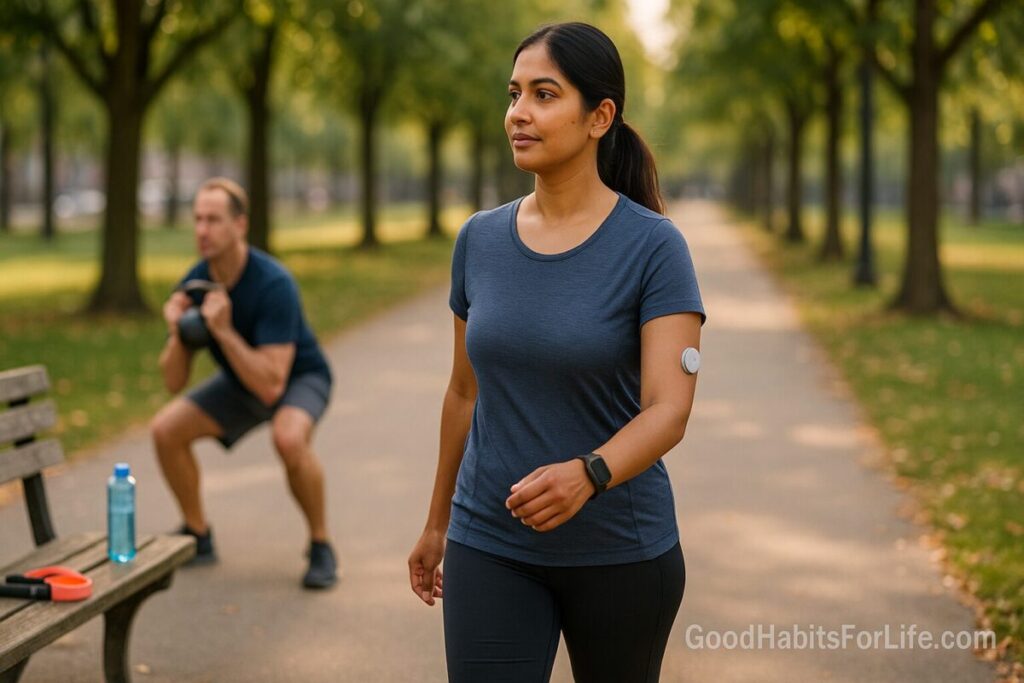
Blood SugarFriendly Workouts (2025)
Blood SugarFriendly Workouts (2025)
Table of Contents
🧭 What “Blood Sugar-Friendly Workouts” Means (and Why)
Definition. Blood sugar-friendly workouts are exercise sessions (aerobic and/or resistance) planned to lower post-meal glucose, improve insulin sensitivity, and reduce A1C—while minimizing hypoglycemia risk. Aerobic activity increases muscle glucose uptake during and after exercise; resistance training builds muscle that acts like a glucose “sink.” These effects compound over weeks. Evidence shows structured exercise improves A1C and cardiometabolic risk in type 2 diabetes and helps glycemic management in type 1 with appropriate safety steps. ADA Standards of Care; ACSM/ADA statement; JAMA meta-analysis (see full links in References).
Core benefits
-
Lower A1C (≈0.5–0.7%) with regular aerobic/resistance training.
-
Post-meal control: short walks right after eating reduce glucose excursions.
-
Insulin sensitivity: improved for up to 24–48 hours after moderate-vigorous activity.
-
Weight & lipid profile: supports fat loss and better triglycerides/HDL.
-
Cardiovascular health & mood: meets WHO/CDC activity goals linked to lower CVD risk.
Safety snapshot (general)
-
Many adults can aim for 150–300 min/week of moderate aerobic activity plus 2–3 days/week of resistance training. [WHO 2020; CDC]
-
If you use insulin or sulfonylureas, monitor for lows, especially with longer or higher-intensity sessions. Carry 15–20 g fast carbs. [NIDDK/ADA]
-
If glucose is very high (>13.9 mmol/L / >250 mg/dL) and you’re unwell or have ketones, defer vigorous exercise and follow your care plan. [ADA]
✅ Quick Start: Do This Today
-
Pick one meal today (lunch or dinner).
-
Walk 12–15 minutes immediately after eating at a pace that makes talking slightly challenging (≈5–6/10 effort).
-
Check your glucose (meter or CGM) before the meal and 1 hour after the walk. Notice the difference versus non-walking days.
-
Strength micro-set: Later today, do 2 rounds of:
-
Bodyweight squats × 10
-
Wall/counter push-ups × 8–12
-
Seated or standing rows (resistance band) × 12
Rest 45–60 s between moves (total ≈8 minutes).
-
Simple pre-exercise checks (until you learn your patterns):
-
If <5.0 mmol/L (90 mg/dL) and you’re at risk of hypos: take 10–15 g carbohydrate and recheck.
-
If >13.9 mmol/L (250 mg/dL) and you feel unwell or have ketones: postpone vigorous work; follow your plan/seek advice.
-
Hydrate; wear proper footwear; log what you did and how glucose responded.
🛠️ 30-60-90 Day Habit Plan
Days 1–30: Build the Base
Goal: Consistency & post-meal control
-
Aerobic: 5 days/week of 20–30 min brisk walking, cycling, or swimming (can be split into two 10–15 min blocks).
-
Post-meal walks: Aim for 10–15 min after your largest 1–2 meals daily.
-
Strength: 2 days/week, full-body (8–10 exercises, 1–2 sets of 8–12 reps).
-
Tracking: Log minutes, RPE (effort 1–10), and glucose pre/post twice a week.
-
Checkpoint (Day 30): You’re hitting ≥120 min/week and 2 strength days.
Days 31–60: Turn the Dial
Goal: Volume & muscle stimulus
-
Aerobic: 150–210 min/week moderate OR 75–105 min/week vigorous.
-
Intervals (1–2×/week): 5 × (1 min hard + 2 min easy) on a bike or walk-jog (skip if hypos are frequent).
-
Strength: 3 days/week, 2–3 sets per move; progress load when you can do >12 reps easily.
-
NEAT: Add steps (e.g., +1,500/day), standing breaks every 30–60 min.
-
Checkpoint (Day 60): You’ve increased either minutes or intensity by ~20–30%.
Days 61–90: Lock It In
Goal: Personalization & resilience
-
Mix: 3 aerobic days (one interval, two steady) + 2–3 strength days.
-
Glucose-guided fuel: If you trend low with morning workouts, take 10–20 g carbs pre-session or adjust timing (per care team).
-
Skill day: Try a new modality (e.g., rowing, dance, Pilates) to reduce boredom.
-
Checkpoint (Day 90): Habit feels automatic; review logs for best times/types.
🧠 Techniques & Frameworks That Work
1) Post-Meal “Glucose Walks”
-
10–15 minutes right after eating reduce postprandial spikes; three 15-min bouts can be as effective as one 45-min session for glucose that day.
-
Use RPE 5–6/10; add light hills if you stay well within your safe range.
2) Aerobic Zones
-
Moderate (can talk, not sing): ~64–76% max HR.
-
Vigorous (few words): ~77–95% max HR.
-
If new to vigorous work or if you experience frequent lows, stick to moderate until stable.
3) Interval Training (Optional)
-
Time-efficient; may improve A1C vs. continuous training for some adults.
-
Start with 5 × 1-min hard / 2-min easy; always test how your glucose responds.
4) Resistance Training Essentials
-
2–3 sessions/week, non-consecutive days.
-
Hit major patterns: squat, hinge, push, pull, lunge, core.
-
8–12 reps × 2–3 sets; progress when you can exceed the rep range.
-
Finish with 5–10 minutes of easy cardio to cool down.
5) Exercise “Snacks” for Sedentary Days
-
Every 30–60 minutes: stand and perform 1–2 minutes of marching in place, calf raises, chair squats, or band rows. Brief breaks lower post-meal glucose compared with prolonged sitting.
6) CGM-Guided Training (if you have one)
-
Mark sessions in the app; look for next-day improvements and tailor meal timing/fuel.
-
Tag hypos, note intensity, and adjust with your clinician if they’re recurring.
👥 Variations by Audience & Condition
-
Prediabetes / Type 2 (not on hypo-causing meds): Emphasize volume & strength. Post-meal walks + 150–300 min/week moderate cardio + 2–3 strength days.
-
Type 1 / Anyone using insulin or sulfonylureas: Higher hypo risk. Prefer moderate steady work; consider reducing pre-exercise bolus, adding 10–20 g carbs, and checking more often. Keep glucagon/fast carbs handy. Coordinate with your team.
-
Seniors / Joint pain: Prioritize low-impact (cycling, elliptical, pool), balance work, and lighter loads more frequently. Foot care matters—inspect daily.
-
Pregnancy (with diabetes): Seek clearance. Choose walking, prenatal strength, swimming; avoid contact/high-fall risk sports.
-
Beginners with obesity: Start with short, frequent walks (5–10 min) and chair/ band strength; progress gradually.
⚠️ Mistakes & Myths to Avoid
-
“Cardio only”—skipping strength limits insulin sensitivity gains.
-
Fasted high-intensity sessions when you’re prone to hypos.
-
Ignoring feet & footwear—blisters/ulcers derail consistency.
-
Huge jumps in volume (double-updays) that spike injury risk.
-
Spot-reduction beliefs—you can’t “burn sugar” from one area; aim for whole-body fitness.
🗓️ Real-Life Routines & Copy-Paste Scripts
Two 30-Minute Templates
A) Walk + Strength (home)
-
12 min brisk walk
-
Circuit × 2: chair squats 12, wall push-ups 10, band row 12, glute bridge 12
-
6 min easy walk cool-down
B) Bike Intervals (gym) + Mobility
-
Warm-up 6 min
-
6 rounds: 1 min hard / 2 min easy
-
Mobility 6–8 min (hips, calves, thoracic spine)
“Ask-Your-Clinician” Script
“I’m starting a blood sugar-friendly plan: post-meal walks + 2–3 weekly strength sessions. I use [insulin/sulfonylurea/none]. Do I need to adjust doses or add a pre-workout snack for days with intervals or longer sessions?”
Self-Talk for Consistency
-
“Ten minutes after meals beats zero.”
-
“Strength is my glucose ally.”
-
“Tomorrow’s numbers start with today’s walk.”
🧰 Tools, Apps & Gear
-
CGMs & meters: Helpful for pattern-spotting; alarms reduce hypo anxiety (pros: feedback; cons: cost/alerts fatigue).
-
Free apps: Google Fit, Apple Health, Strava—track minutes, HR, and streaks.
-
Resistance bands & adjustable dumbbells: Low cost, scalable.
-
Footwear: Cushioned, wide-toe options reduce hotspots; replace every 500–800 km (300–500 miles).
-
Timers: Any interval timer for 1-min “exercise snacks.”
📌 Key Takeaways
-
Pair aerobic + resistance for the biggest A1C and insulin sensitivity gains.
-
Walk 10–15 min after meals to tame spikes.
-
Build to 150–300 min/week moderate cardio with 2–3 strength days.
-
Monitor glucose around workouts—especially with insulin/sulfonylureas.
-
Use the 30-60-90 plan to make it automatic.
❓ FAQs
1) Is walking enough to improve blood sugar?
Yes—especially post-meal walks. Add strength training for even better A1C and body-composition results.
2) What time of day is best to exercise for glucose?
Whenever you’ll stick with it. Post-meal sessions often give the most immediate glucose benefit.
3) Do I need intervals (HIIT)?
No, but intervals can be time-efficient. If you get frequent lows or are new to training, build a base with moderate steady work first.
4) How soon will I see changes in A1C?
A1C reflects ~3 months. Many people see post-meal improvements immediately and A1C drops over 8–12 weeks.
5) What if I’m sore after strength training?
Mild soreness is normal. Keep moving lightly, sleep well, and progress loads gradually.
6) Can I exercise with high blood sugar?
If you’re >13.9 mmol/L (>250 mg/dL) and unwell or have ketones, skip vigorous activity and follow your care plan. When in doubt, moderate walking is often safer—ask your clinician.
7) Should I eat before workouts?
If you use insulin/sulfonylureas or trend low, consider 10–20 g carbs before or during longer sessions; otherwise, many can train after a normal meal.
8) How many strength exercises do I need?
Aim for 8–10 total-body moves, 2–3 sets of 8–12 reps, 2–3×/week.
📚 References
-
American Diabetes Association. Standards of Medical Care in Diabetes (Lifestyle & Physical Activity sections). ADA.
-
Colberg SR, et al. Exercise and Type 2 Diabetes (ADA position statement). Diabetes Care. ADA Position Statement.
-
Umpierre D, et al. Physical Activity Advice and Structured Exercise on A1C. JAMA 2011. JAMA.
-
DiPietro L, et al. Three 15-min Postmeal Walks Reduce Glycemia. Diabetes Care 2013. Diabetes Care.
-
Jelleyman C, et al. HIIT Improves Glycemic Control. Obesity Reviews 2015. Wiley.
-
World Health Organization. 2020 Guidelines on Physical Activity and Sedentary Behaviour. WHO.
-
Centers for Disease Control and Prevention. How Much Physical Activity Do Adults Need? CDC.
-
National Institute of Diabetes and Digestive and Kidney Diseases. Low Blood Glucose (Hypoglycemia). NIDDK.
-
National Health Service (UK). Hypoglycaemia guidance. NHS.
-
Dempsey PC, et al. Interrupting Sitting to Improve Postprandial Glucose. Diabetologia 2016. Springer.
-
American College of Sports Medicine. ACSM Guidelines & Diabetes Resources. ACSM.
Disclaimer: This guide is educational and does not replace personalized medical advice; consult your healthcare professional before changing your exercise or medication plan.