
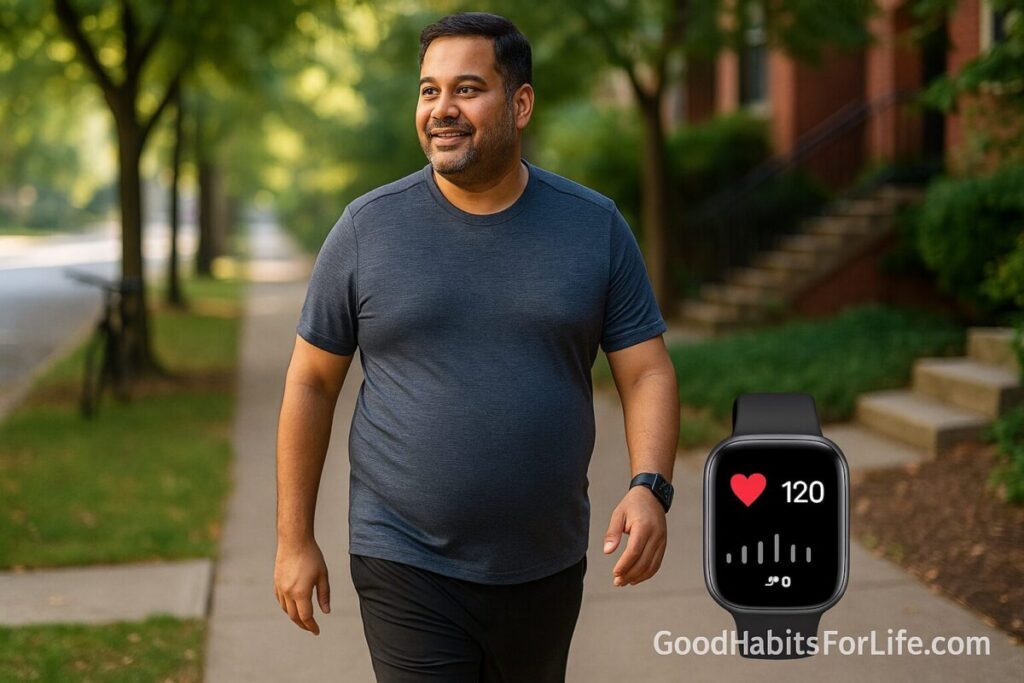
Belly Fat & BP: The Metabolic Duo: Zone 2 + NEAT (2025)
Belly Fat & BP: Zone 2 + NEAT (2025)
Table of Contents
🧭 What Is the “Metabolic Duo” & Why It Works
The Metabolic Duo combines:
-
Zone 2 cardio: steady, easy-moderate aerobic work where you can talk in full sentences (≈60–70% of estimated HRmax), typically below your first lactate/ventilatory threshold. Human Kinetics JournalsPMC
-
NEAT (Non-Exercise Activity Thermogenesis): all the movement you do outside structured workouts—walking, stairs, chores, fidgeting. It meaningfully elevates daily energy burn and supports weight regulation. PubMed+1Mayo Clinic Proceedings
Why men’s belly fat matters: Visceral adipose tissue around the organs drives hypertension via inflammatory, hormonal, and autonomic pathways. Reducing visceral fat improves cardiometabolic risk. PMC+1
Exercise → BP: Consistent aerobic training reduces systolic/diastolic BP by about 5–7 mmHg, a clinically meaningful drop comparable to a first medication for some people with mild hypertension. PMC
Guideline anchor: Adults should accumulate 150–300 min/wk of moderate-intensity activity (or 75–150 min vigorous), plus strength training ≥2 days/wk. PMC
✅ Quick Start: Do This Today
-
10-minute Zone 2 sampler: Walk briskly (you can chat) for 10 minutes after lunch. Note average heart rate if you track it. Human Kinetics Journals
-
Stand-up rule: Every 30–45 min, stand and move 2–3 minutes (hall laps, stairs, calf raises). Reduces sitting-related BP elevations. PMC
-
Step bump: Add +3,000 steps to your normal day (e.g., ~25-30 min more walking). Pilot trials show BP benefits in older hypertensive adults. PMC
-
Measure baseline:
-
Home BP: 2 readings, morning & evening, for 3 days (seated, back/feet supported, arm at heart level). Log the averages. AHAjournals
-
Waist (at navel) + Height → aim for waist/height < 0.5 over time. BMJ Open
-
🛠️ 30-60-90 Day Habit Plan
Weeks 1–4 (30 Days): Build the Base
-
Zone 2: 4×/wk × 30 min (walk, cycle, row). Use talk test; if tracking, keep ~60–70% HRmax. Human Kinetics Journals
-
NEAT: Minimum 7,000 steps/day; insert 2–3 min light movement each 30–45 min of sitting. AHAjournalsPMC
-
Strength: 2 short full-body sessions (push/pull/legs/core). PMC
-
Checkpoints: BP weekly; waist and WHtR end of week 4. AHAjournalsBMJ Open
Weeks 5–8 (60 Days): Progress & Consistency
-
Zone 2: 5×/wk × 35–45 min (or 3× longer + 2× 20–25 min).
-
NEAT: Target 8,000–10,000+ steps/day or +3,000 vs baseline on 5 days/wk. AHAjournalsPMC
-
Sitting breaks: Add a walking meeting or post-meal stroll daily. PMC
-
Checkpoint: Expect ~3–6 mmHg BP improvement from the start if adherence is strong. PMC
Weeks 9–12 (90 Days): Optimize & Personalize
-
Zone 2: Maintain 200–300 min/wk. Add 1 session with a few short surges (20–30 s) only if BP is controlled and recovery is easy; keep most work Zone 2. PMC
-
NEAT: Lock in a daily pattern (stairs, evening family walk, active commute).
-
Strength: Keep 2 days/wk.
-
Checkpoint: Reassess WHtR (<0.5), waist, and 3-day BP average; adjust volume to maintain progress. BMJ Open
🧠 Techniques & Frameworks
Zone 2—3 Ways to Hit It
-
Talk test: You can speak in full sentences; breathing deeper but steady. Human Kinetics Journals
-
Heart rate: ~60–70% HRmax (rough estimate HRmax ≈ 220−age). Keep easy enough to hold for 30–45 min. Human Kinetics Journals
-
Perceived effort (RPE): ~2–3/10—“easy-moderate.” PMC
NEAT—Stack Movement Into Your Day
-
“Micro-Moves” ladder: park far → stairs → stand-up timer → walking calls → evening stroll. NEAT changes help weight control and cardio-metabolic health. PubMedMayo Clinic Proceedings
Break Up Sitting
-
Evidence from randomized trials in older adults shows lower systolic BP when sedentary time is reduced and replaced with light movement/standing. Use 2–3 min “movement snacks” each 30–45 min. PMC
📏 Measuring Progress (BP + Belly)
Home BP protocol (best practice):
-
Sit 5 minutes; back and feet supported; cuff on bare upper arm at heart level; don’t talk; take two readings 1 minute apart; record the average. Use a validated, upper-arm device. AHAjournals
Know the categories: Normal <120/<80; Elevated 120–129/<80; Stage 1: 130–139 or 80–89; Stage 2: ≥140 or ≥90. (Work with your clinician.) www.heart.org
Belly metrics:
-
Waist circumference (at navel). Traditional high-risk thresholds: ≥102 cm (40 in) men; ≥88 cm (35 in) women (ethnicity-specific cut-points may be lower). PMC
-
Waist-to-height ratio (WHtR): keep <0.5 for lower risk—simple and predictive across populations. BMJ Open
👥 Audience Variations
-
Professionals with desk jobs: Prioritize movement snacks + walking calls + post-meal 10-min walks (doubles as Zone 2). PMC
-
Beginners/low fitness: Start with 10–15 min Zone 2, add 5 min each week until 30–45 min continuous feels easy. PMC
-
Seniors: Same Zone 2 target; add balance/strength 2–3×/wk; sit-breaks particularly helpful for BP. PMC+1
-
Higher BMI/abdominal obesity: Track WHtR and waist; emphasize NEAT and prolonged, comfortable Zone 2 to enhance fat oxidation and insulin sensitivity. BMJ OpenPMC
⚠️ Mistakes & Myths to Avoid
-
Myth: “Only HIIT burns belly fat.”
Reality: Moderate, sustained aerobic training and daily movement reduce BP and support fat loss; HIIT is optional once BP is controlled. PMC -
Mistake: Ignoring sitting time because you “worked out.”
Even with workouts, long uninterrupted sitting can blunt BP and metabolic benefits. Break it up. PMC -
Mistake: Training too hard to stay in Zone 2.
If you can’t talk comfortably, back off—fatigue spikes, adherence drops, and you leave the intended zone. Human Kinetics Journals -
Myth: “Waist isn’t important if BMI is fine.”
Central fat strongly predicts risk; WHtR <0.5 is a simple target. BMJ Open
🧩 Real-Life Scripts
-
Commute upgrade: “I’ll park 8–10 minutes away and walk in (to and from) for +2,000 steps.”
-
Work block: “Every 40 minutes my timer pops; I stand, fill water, and take the stairs—2 minutes, then back.” PMC
-
Family rhythm: “Post-dinner 12-minute stroll—kids on scooters, I keep a chatty pace (Zone 2).” Human Kinetics Journals
-
Weekend long easy: “45–60 min Zone 2 walk + two short hill surges at the end if I feel great.”
🧰 Tools, Apps & Resources
-
Validated upper-arm BP monitor (check listings from AHA/AMA or national hypertension societies); follow standardized home protocol. AHAjournals
-
Step tracker or pedometer to surface your baseline and monitor +3,000-step days. (Aim for 7,000–10,000+, adjusted to you.) AHAjournals
-
Calendar nudges every 40 minutes for sit-breaks; smartwatches often include “stand/move” prompts. PMC
-
Simple strength kit: adjustable dumbbells/resistance bands for 2×/wk full-body sessions aligned with WHO guidance. PMC
🧾 Key Takeaways
-
Zone 2 + NEAT is a sustainable combo that improves blood pressure and trims harmful belly fat. AHAjournalsPMCPubMed
-
Anchor your week on 150–300 min Zone 2 and frequent movement breaks; add strength 2×/wk. PMC
-
Track home BP and WHtR (<0.5); expect steady, not overnight, change. AHAjournalsBMJ Open
-
Small daily choices—+3,000 steps, stairs, post-meal walks—compound into meaningful BP and waist improvements. PMC
❓ FAQs
1) What exactly is Zone 2 for me?
Use the talk test: you can speak in full sentences. With HR tracking, aim for ~60–70% HRmax (rough). Start conservative and adjust by feel. Human Kinetics Journals
2) How long until BP improves?
Many see modest drops within 4–8 weeks of consistent aerobic training and more movement; meta-analyses show ~5–7 mmHg on average. PMC
3) I can only walk—does that count?
Yes. Brisk walking in Zone 2 is ideal and strongly associated with lower CVD risk; step count increases help. AHAjournals
4) Do I still need strength training?
Yes—add 2 days/wk for additional BP and metabolic benefits and to preserve muscle as fat decreases. PMC
5) Is waist-to-height ratio really better than BMI?
For belly-fat risk screening, WHtR <0.5 is a simple, predictive target across groups; use it with waist and BMI. BMJ Open
6) How often should I check BP at home?
When starting, take morning & evening readings for 3 days to establish a baseline, then weekly trend checks (or as advised by your clinician). Follow standardized positioning. AHAjournals
7) Can I do HIIT instead?
HIIT can be effective, but keep most work Zone 2 until BP is well-controlled. The base comes first. PMC
8) What if I sit a lot for work?
Use movement snacks (2–3 min) every 30–45 min; randomized trials show BP benefits from reducing sitting time. PMC
📚 References
-
World Health Organization. 2020 Guidelines on Physical Activity and Sedentary Behaviour. Adults: 150–300 min/wk moderate intensity + strength. PMC
-
Barone Gibbs B, et al. Physical Activity as First-Line Treatment for Hypertension (AHA Scientific Statement). Hypertension. 2021. AHAjournals
-
Ghadieh AS, et al. Evidence for Exercise Training in Hypertension—~5–7 mmHg reduction with aerobic exercise. Journal of Saudi Heart Association. 2015. PMC
-
Sitko S, et al. What Is “Zone 2 Training”? Expert consensus: just below first lactate/ventilatory threshold. Int J Sports Physiol Perform. 2025. Human Kinetics Journals
-
Stöggl TL, Sperlich B. Training Intensity Distribution & Zones—conceptual basis for HR/RPE zoning. Front Physiol. 2015. PMC
-
Levine JA. NEAT—Non-Exercise Activity Thermogenesis: foundational definitions and role in weight regulation. Proc Nutr Soc; & Am J Clin Nutr. PubMed+1
-
Villablanca PA, et al. NEAT in Obesity Management—cardiometabolic benefits and adherence. Mayo Clin Proc. 2015. Mayo Clinic Proceedings
-
Rosenberg DE, et al. Sitting Time Reduction Lowers Systolic BP (I-STAND RCT). JAMA Netw Open. 2024. PMC
-
Paluch AE, et al. Steps/Day and Cardiovascular Outcomes—dose-response evidence. Circulation. 2023. AHAjournals
-
Zhang F, et al. Visceral Fat Score & Hypertension Risk—positive association. Nutr Metab Cardiovasc Dis. 2024. PMC
-
Ashwell M, et al. Waist-to-Height Ratio (<0.5) as Early Risk Screen. BMJ Open. 2016. BMJ Open
-
Shimbo D, et al. Self-Measured BP at Home: Best Practices (AHA/AMA Statement). Circulation. 2020. AHAjournals
-
AHA. Understanding BP Readings—current category thresholds. 2017 guideline summary. www.heart.org
Disclaimer: This article is educational and not a substitute for personalized medical advice. Consult your clinician before changing exercise or BP management.