
Batch Cooking for One or Two: RightSize Recipes: AI workflows (2025)
Batch Cooking for One or Two: Right-Size Recipes 2025
Table of Contents
🧭 What It Is & Why It Works
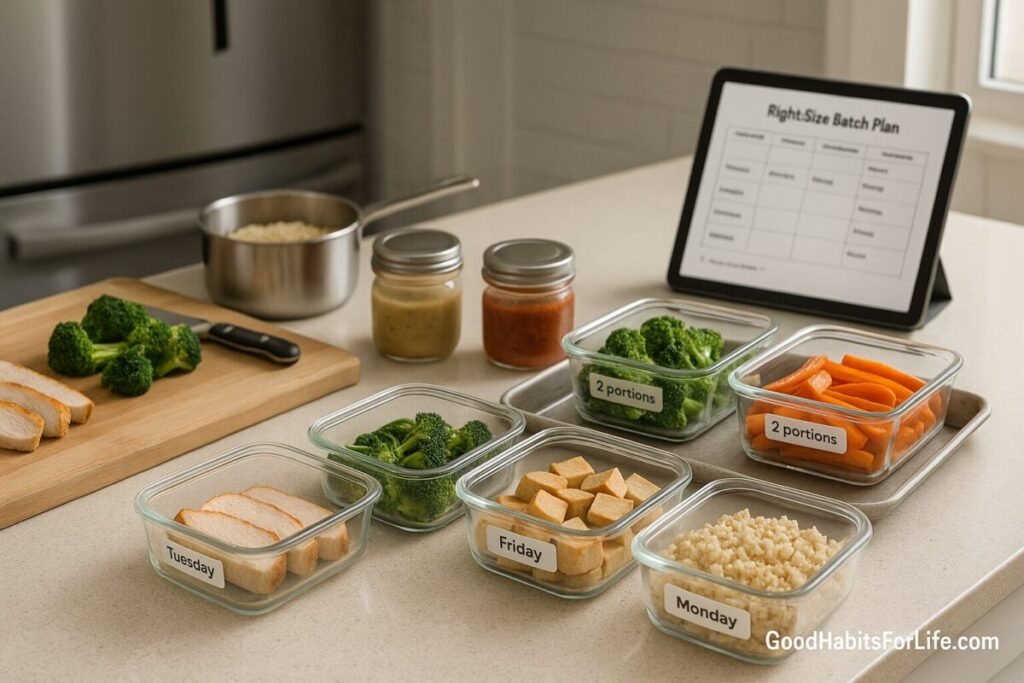
Right-size batch cooking means preparing small, intentional batches (2–6 servings) that fit a one- or two-person household without crowding your fridge/freezer or repeating the same meal all week. It blends:
-
Smart scaling (make 2–6 portions, not 10),
-
Modular components (protein + grain + veg + sauce),
-
Quick cooling and safe storage, and
-
AI-assisted planning to cut decisions and waste.
Benefits (evidence-aligned):
-
Nutrition & control: Cooking at home is linked to improved diet quality and lower sodium/sugar intake compared with frequent take-away.
-
Cost & waste: Planning + batch prep reduces impulse buys and food waste.
-
Time back: 1–2 focused sessions per week cuts total cook time by ~30–50%.
-
Consistency: Fewer choices → easier habit formation.
✅ Quick Start (Do This Today)
-
Choose one base + two flavor paths.
Example: 500 g cooked chickpeas → half becomes chana masala; half becomes lemon-herb salad bowls. -
Plan 2–3 dinners you’ll gladly repeat.
Target 4–6 total portions across the week. -
Shop short.
Write a 15-item list max: 1 protein, 1 whole grain, 2–3 veg, 2 sauces, aromatics, eggs/yogurt/fruit. -
Cook in 60–90 minutes.
-
Grain in pot/rice cooker.
-
Roast a tray of seasonal veg (e.g., 600–800 g).
-
Prepare protein (beans, tofu, eggs, chicken, paneer, lentils, fish).
-
-
Portion immediately.
Into shallow containers (≤5 cm depth) for fast cooling; label date & servings. -
Eat/Feeze rhythm.
Fridge for 3–4 days, freeze the rest 2–3 months. -
Set a reminder for a mid-week 20-minute top-up (salad greens, fruit).
🛠️ Right-Size Techniques & Frameworks
1) The 2× Base + Flavor Swaps Method
Make a neutral base (beans, shredded chicken, tofu, lentils) and split it to avoid boredom.
| Base (about) | Yields | Flavor Path A | Flavor Path B |
|---|---|---|---|
| 500 g chickpeas (cooked) | 4–5 portions | Tomato-onion “chana” with garam masala | Lemon-herb bowls with cucumber, olives, yogurt |
| 400 g firm tofu | 3–4 | Teriyaki stir-fry with broccoli | Peanut-lime tofu with cabbage slaw |
| 500 g chicken thighs (boneless) | 4 | Smoky paprika tray bake | Coconut-ginger curry |
| 500 g lentils (cooked) | 4–5 | Dal tadka | Lentil-veg shepherd’s pie topping |
Tip: Keep 2 sauces on hand (store-bought or homemade) to transform the same base in minutes.
2) Micro-Batch Scaling (2–6 Servings)
Use this quick scale formula:
New ingredient amount = (Original amount ÷ original servings) × target servings.
Round to the nearest practical unit (e.g., ⅓ onion → ½ onion).
3) Portioning & Plate-Build
Balanced bowl template (per person):
-
1 cupped-hand grain (120–150 g cooked)
-
1 palm protein (90–120 g cooked, plant or animal)
-
2 fists veg (250–350 g)
-
1 thumb healthy fat (1–2 tsp oil, nuts, seeds, avocado)
4) Freezer-Smart Packaging
-
Use 1–2 serving containers. Remove excess air.
-
Label: Dish – servings – date – “reheat from thaw” or “from frozen”.
5) 10-Minute Recombination Grid
Keep a modular pantry: canned tomatoes, coconut milk, tahini/peanut butter, soy sauce, vinegar, chili paste, spice mixes, yogurt.
Combine base + sauce + veg for a new meal in 10 minutes.
📅 7-Day Starter Plan (One or Two People)
Goal: ~8–10 portions total. Cook once on Sun, quick top-up on Wed.
Sunday Prep (90 minutes):
-
Cook 300 g dry brown rice (≈ 900 g cooked/6 cups).
-
Roast 800 g mixed veg (carrot, cauliflower, capsicum) with 2 tbsp oil, salt/pepper.
-
Prepare 500 g chickpeas (cooked) or 400 g tofu.
-
Mix 2 sauces:
-
A) Quick tomato-garam masala (onion, garlic, tomato, spice mix)
-
B) Lemon-herb yogurt (Greek yogurt, lemon zest, dill/parsley)
-
Meals:
-
Mon–Tue: Chickpea tomato bowls (rice + roasted veg + Sauce A).
-
Wed lunch: Lemon-herb tofu/chickpea bowls (rice + fresh cucumber + Sauce B).
-
Wed top-up (20 min): Boil eggs, wash lettuce, cut fruit.
-
Thu–Fri: Mix-and-match leftovers; freeze any extra by Thu night.
Snack ideas: Fruit + yogurt; hummus + veg sticks; boiled eggs; roasted chana.
🍽️ Real-Life Examples & Scripts
Copy-Paste AI Prompt (Right-Size Any Recipe)
“Scale this recipe to 2 servings with metric units. Keep per-serve protein ≥25 g, sodium ≤600 mg if possible. Suggest swaps for vegetarian and dairy-free. Output a shopping list grouped by aisle and a 30-minute prep plan.”
Shopping List (for the 7-Day Plan)
-
Produce: Onion (2), garlic (1 head), lemon (2), cucumber (2), mixed roast veg (800 g), fresh herbs.
-
Protein: Chickpeas (500 g cooked or 2 cans) or firm tofu (400 g), eggs (6).
-
Grains: Brown rice (300 g dry).
-
Dairy/Alt: Greek yogurt (300 g) or dairy-free yogurt.
-
Pantry: Oil, salt, pepper, garam masala, chili, canned tomatoes (400 g), vinegar.
30-Minute After-Work Dinner Script
-
Reheat rice (microwave 2–3 min per 200 g).
-
Sauté 150 g tofu/chickpeas with 2 tbsp sauce (4–5 min).
-
Add 200 g roast veg to pan (2–3 min).
-
Serve with yogurt drizzle and lemon wedge.
👥 Audience Variations
-
Students: Use shelf-stable proteins (lentils, canned beans, eggs). Opt for microwave rice pouches when time/space is tight.
-
Professionals: Batch lunch bowls (3–4 boxes) on Sun; add 1 fresh topping daily (herbs, seeds).
-
Parents of a toddler: Cook low-salt bases; offer sauces on the side.
-
Seniors: Prioritize protein (≥25–30 g/meal). Freeze in single-serve packs with large-print labels.
-
Vegetarian/Vegan: Rotate legumes (lentils, chana, rajma), tofu/tempeh, paneer (if lacto-veg). Add B12-fortified foods if needed.
⚠️ Mistakes & Myths to Avoid
-
Myth: “Batch cooking means eating the same thing all week.”
Fix: Use 2× base + flavor swaps; freeze half. -
Mistake: Cooling huge pots in the fridge.
Fix: Portion into shallow containers; cool and refrigerate within 2 hours. -
Mistake: Freezing lettuce/cucumber.
Fix: Freeze cooked components; add fresh greens same day. -
Myth: “Freezer meals last forever.”
Fix: Best quality 2–3 months; label dates. -
Mistake: Scaling spices linearly.
Fix: For small batches, start at 80–90% of scaled spice amounts; taste and adjust.
📦 Storage, Safety & Reheating Guide
Fridge & Freezer Timelines (Quality-Focused)
| Item | Fridge | Freezer |
|---|---|---|
| Cooked grains (rice, quinoa) | 3–4 days | 1–2 months |
| Cooked legumes (chickpeas, lentils) | 3–4 days | 2–3 months |
| Cooked poultry/meat | 3–4 days | 2–3 months |
| Cooked veg | 3–4 days | 2–3 months |
| Soups/stews/curries | 3–4 days | 2–3 months |
Cooling & Reheating
-
Cool quickly: From hot to fridge within 2 hours; use shallow containers (≤5 cm).
-
Reheat thoroughly: To ≥74 °C (165 °F) for soups/stews/meat dishes.
-
Rice safety: Refrigerate promptly; reheat piping hot only once.
-
Defrosting: Best in fridge overnight; microwave on defrost if needed and consume immediately.
🧰 Tools, Apps & AI Workflows
Minimal Kit
-
2 medium pots, 1 sheet pan, lidded skillet
-
6–10 BPA-free containers (1–2 serving size; shallow)
-
Rice cooker or instant pot (optional)
-
Kitchen scale (for precise right-sizing)
-
Permanent marker + freezer labels
Helpful Apps
-
Meal planning & lists: AnyList, Google Keep, Notion template, TickTick
-
Nutrition glance: Cronometer or food-label checks if you track macros
-
Timers & food safety reminders: Phone timers; calendar nudges to freeze by Day 3
AI Workflows (Simple & Powerful)
-
One-click meal plan:
-
Prompt an AI: “Create a 7-day dinner plan for two people, 4 cook nights, 8–10 total portions, 30-minute recipes, include metric units, and a consolidated shopping list.”
-
Copy to Notes/Notion; add checkboxes.
-
-
Right-size any recipe:
-
Paste the recipe; ask to scale to 2–3 servings, retain ≥25 g protein/serve, and output a step timing table.
-
-
Sunday prep board:
-
Ask AI to produce a Gantt-style sequence (what to start/overlap).
-
Example output: 0:00 start rice; 0:05 chop veg; 0:15 veg in oven; 0:20 start curry base; 0:45 portion; 1:05 label/freeze.
-
-
Waste reducer:
-
Prompt: “I have 1 cucumber, ½ cabbage, 200 g rice, 1 can chickpeas. Suggest two 10-minute dinners for one person with quantities in grams.”
-
🔑 Key Takeaways
-
Plan 4–6 right-sized portions per cook session; freeze half for variety.
-
Use 2× base + flavor swaps to avoid repetition.
-
Portion shallow & label; cool within 2 hours; reheat to ≥74 °C (165 °F).
-
Let AI handle scaling, lists, and timelines so you can cook more and think less.
-
Keep a mid-week top-up habit (greens, fruit, eggs) for freshness.
❓FAQs
1) How many portions should I cook if I live alone?
Start with 4 portions: eat 2 this week, freeze 2. If you’re consistently finishing everything, increase to 6.
2) What are the best proteins for freezing in small portions?
Cooked beans/lentils, chicken thighs, minced meat, tofu, paneer, and fish curries freeze well. Delicate grilled fish fillets are best eaten fresh.
3) Can I reheat rice safely?
Yes—cool quickly, refrigerate promptly, and reheat piping hot. Don’t keep at room temp and avoid multiple reheats.
4) How do I keep variety without cooking more?
Batch a neutral base and change sauces/toppings (e.g., tomato-spice vs. lemon-herb). Add fresh greens or a different crunch (nuts/seeds).
5) Is a microwave necessary for batch cooking?
No, but it’s convenient. Stovetop reheating works: add a splash of water, cover, and steam-reheat on low.
6) How do I right-size spices for tiny batches?
Scale amounts mathematically, then start with 80–90% of the result and adjust to taste.
7) What container sizes work best for one or two?
Single-serve 350–500 ml for mains; 150–250 ml for sauces/sides; shallow to cool faster.
8) How long can I keep cooked meals in the fridge?
Aim for 3–4 days for best quality, then freeze.
9) What if I have only 30 minutes total for meal prep?
Use microwave rice, pre-cut veg, canned beans, and a jarred sauce. You can still assemble 3–4 portions in half an hour.
10) How do I scale baking (muffins, snack bars) for two people?
Most batters halve well. Use smaller pans, check doneness earlier, and weigh ingredients for accuracy.
📚 References
-
U.S. Department of Agriculture (USDA) Food Safety & Inspection Service. Leftovers and Food Safety (guidance on 2-hour rule, reheating to 74 °C/165 °F).
-
U.S. Food & Drug Administration (FDA). Food Safety for Your Home Kitchen (cooling, refrigeration, cross-contamination basics).
-
Centers for Disease Control and Prevention (CDC). Foodborne Germs and Illnesses (general safety context).
-
NHS (UK). How to store food and leftovers safely (domestic fridge/freezer guidance).
-
Harvard T.H. Chan School of Public Health. Healthy Eating Plate (balanced meal proportions).
-
Academy of Nutrition and Dietetics (EatRight). Meal Planning Tips for Busy People (planning benefits and waste reduction).
-
FAO/WHO. Guidelines for the Safe Preparation, Storage and Handling of Ready-to-Eat Foods (general principles).
-
American Heart Association. Eating Smart at Home (sodium reduction and home-cooking advantages).
Disclaimer
This article is for general nutrition and food-safety guidance only and is not a substitute for personalized medical or dietary advice.