
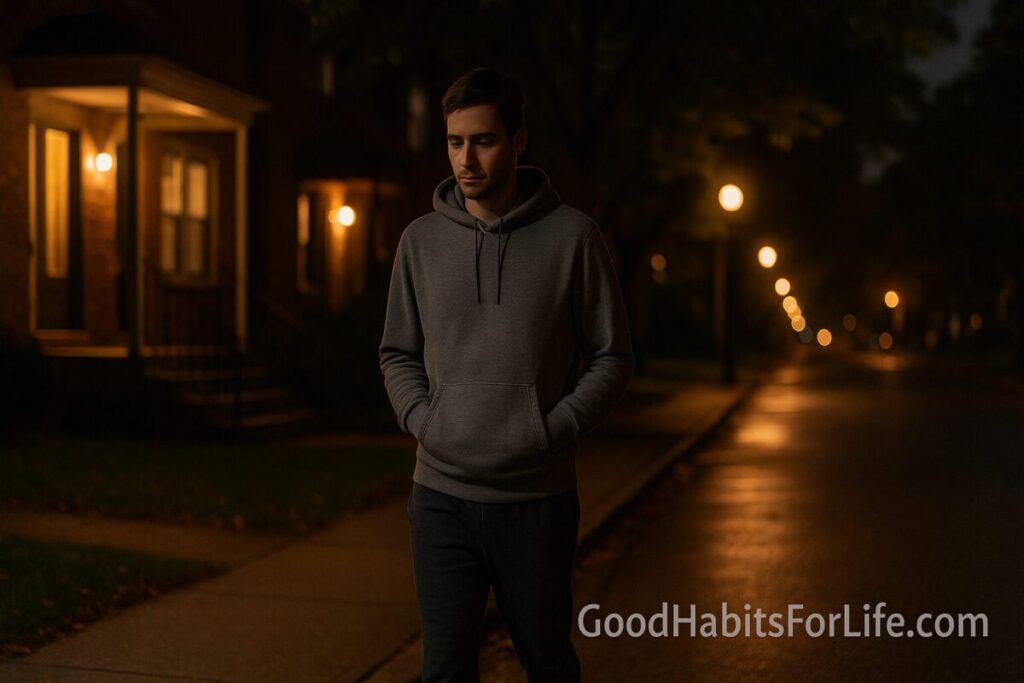
Anger & Sleep: Cooling Down Without Retreat: Zone 2 + NEAT (2025)
Anger & Sleep: Cool Down Without Retreat (Zone 2 + NEAT)
Table of Contents
🧭 What “Cool Down Without Retreat” Means
“Cooling down without retreat” is a time-limited pause with movement to lower arousal—then a committed return to the conversation. It avoids two extremes: venting (which can raise arousal) and stonewalling (which damages trust). A quick NEAT walk (non-exercise movement like strolling, stairs, light chores) defuses heat without abandoning the issue. PubMed
Why movement? A large meta-analysis finds arousal-decreasing strategies work best for anger (breathing, mindfulness, time-outs); “blowing off steam” with intense activity isn’t reliably helpful. A light, easy walk fits the effective, low-arousal bucket. PubMed
🧠 Why Anger & Sleep Spiral Together
-
Sleep loss heightens anger. A randomized trial showed that restricting sleep for just two nights amplified angry feelings and reduced our ability to adapt to irritations. NCBI
-
Sleep need: Adults should target 7+ hours nightly for health and mood stability. AASM
-
Movement improves sleep. Even moderate regular activity helps people sleep better the same day and over time. CDCPMC
Bottom line: Protect sleep to protect your fuse. Use movement to steady both.
✅ Quick Start: Do-This-Today Plan
In the moment (when tempers rise):
-
Name & pause: “I’m heated. I’m taking a 10-minute cool-down and I will be back at 6:20.” (Set timer.)
-
Move lightly (NEAT): Walk outside or up/down a hallway—easy pace where you can talk in full sentences. Add diaphragmatic breathing (inhale through nose 4–5 sec, exhale gently 5–6 sec). nhs.uk
-
Return & resume: Re-enter with a bridge line: “Thanks for the pause—ready to focus on one problem.” (See scripts below.)
Daily baseline:
-
Zone 2 cardio 25–30 min 3×/week (lightly breathy, can converse; ~60–70% HRmax). Cleveland Clinic
-
NEAT target: Add 1,500–3,000 extra steps/day via micro-walks, stairs, standing tasks. PubMed
-
Sleep anchors: Fixed wake-time, wind-down, and light-out to reach 7+ hours. AASM
🛠️ 30-60-90 Habit Roadmap (Zone 2 + NEAT + Sleep)
Days 1–30 (Stabilize)
-
Zone 2: 3×/week × 25 min (walk, cycle, easy jog). Talk-test comfortable. Cleveland Clinic
-
NEAT: +1,500 steps/day (post-meal 10-min strolls). PubMed
-
Sleep: Set wake-time; protect 7–8 h opportunity. Track with a simple log. AASM
-
Anger skills: Practice STOPP once/day on small annoyances. hey.nhs.uk
Days 31–60 (Build)
-
Zone 2: 4×/week × 30–35 min.
-
NEAT: +2,500 steps/day (walk-and-talk calls; stairs). PubMed
-
Sleep: Add a wind-down (screens off, dim lights, light stretch/breathing 10 min). Hopkins Medicine
-
Anger skills: One 10-minute cool-down walk in any heated exchange; return with a timeboxed agenda.
Days 61–90 (Maintain)
-
Zone 2: 5×/week × 35–45 min or 150–300 min/week total (WHO guideline). PMC
-
NEAT: Auto-pilot habits (park farther, stairs first, 5-min resets each hour). PubMed
-
Sleep: Tweak caffeine/alcohol timing; keep ≥4 h gap between hard workouts and bedtime if they disturb your sleep. Nature
-
Anger skills: Add a brief repair ritual after conflicts (appreciation + next-step plan).
🧪 Techniques & Frameworks (Practical & Evidence-Aligned)
🫁 Diaphragmatic Breathing (2–5 minutes)
-
In through nose to belly (4–5 s) → slow, longer exhale (5–6 s).
-
Use during NEAT cool-down to lower arousal quickly. nhs.uk
🧩 STOPP (CBT micro-tool)
Stop → Take a breath → Observe → Pull back → Proceed. Use it before you respond. hey.nhs.uk
👣 NEAT Menu (low-arousal movement)
-
10-min stroll, easy stair laps, light chores, walking the hallway. (Think movement, not workout.) PubMed
🚲 Zone 2 Basics
-
Intensity you can speak in phrases; ~60–70% of max heart rate for many adults. Benefits: sustainable, calming rhythm, supports aerobic capacity and better sleep via regular activity. Cleveland ClinicCDC
💬 Real-Life Scripts (Copy-Paste)
-
Time-out with return: “I’m flooded. I’ll take a 10-minute walk and be back at 6:20. Let’s each note one key point to start with.” (Set timer.)
-
Re-entry bridge: “Thanks for the pause. Let’s tackle just one issue and find one next step.”
-
Boundary if partner escalates: “I’m staying committed to this talk. I need the 10 minutes to be constructive; I’ll be right back at :20.”
👥 Audience Variations
-
Professionals: Book walking 1:1s and post-meeting cool-down laps; schedule Zone 2 before late-day meetings to buffer reactivity. CDC
-
Parents: Use a family pause cue (“time-in walk”) and re-group plan with kids. Keep cool-downs visible and short (5–10 min). nhsborders.scot.nhs.uk
-
Students/Teens: Short NEAT bursts between study blocks; keep phones out of the bedroom to hit 7+ hours. AASM
-
Older Adults: Align with WHO minutes; include balance/strength twice weekly; choose low-impact Zone 2 (brisk walk, cycling). PMC
⚠️ Mistakes & Myths to Avoid
-
Myth: “Venting workouts fix anger.” A 154-study meta-analysis shows arousal-decreasing strategies beat venting or high-arousal activity for anger reduction. Use light movement + breathing in the moment. PubMed
-
Mistake: Going hard late at night. High-strain evening exercise can delay sleep for some; finish intense sessions ≥4 hours before bed. Nature
-
Myth: “Just sleep on it” always helps. If you go to bed still aroused, sleep may be poor; take a brief cool-down first, then rest—return to resolve. NCBI
🧰 Tools, Apps & Resources
-
Heart-rate & steps: Apple Health/Watch, Google Fit, Garmin, Polar → track Zone 2 and NEAT. (Use “talk test” if you don’t track.) Cleveland Clinic
-
Breathing/Mindfulness: Box-breathing timer, Headspace/Calm; any app supporting longer exhales. nhs.uk
-
Sleep basics: AASM sleep duration guidance; simple paper sleep log or phone note. AASM
🔑 Key Takeaways
-
Protect sleep (7+ h) to shorten your fuse and steady mood. AASM
-
In the moment, use a 10-minute NEAT walk + breathing and return—no stonewalling. cci.health.wa.gov.au
-
Build buffering capacity with Zone 2 most days and NEAT all day. Cleveland ClinicPubMed
-
Time hard workouts wisely to avoid disrupting sleep. Nature
❓ FAQs
1) What exactly is Zone 2?
A light-to-moderate cardio intensity (~60–70% HRmax) where you can still converse; it’s sustainable and calming. Cleveland Clinic
2) How do I find my Zone 2 without a tracker?
Use the talk test: you can speak in full phrases but feel lightly breathy. If you can’t talk comfortably, you’re too high.
3) How many minutes per week should I aim for?
Target 150–300 minutes of moderate activity weekly (e.g., Zone 2), plus 2+ days of strength, per WHO. PMC
4) Does evening exercise ruin sleep?
It depends. High-strain sessions close to bedtime can delay sleep; finishing ≥4 hours before bed is safer for many. Nature
5) Is a quick walk really enough to cool down?
Yes—light movement plus slow breathing reduces arousal and pairs well with a time-limited “time-out.” PubMednhs.uk
6) Why not “blow off steam” with a hard run when angry?
Arousal-increasing activities (like vigorous exercise) don’t reliably reduce anger and can backfire during a conflict. Save intense work for another time. PubMed
7) What’s NEAT again?
Non-Exercise Activity Thermogenesis: everyday movement (walking, chores, stairs) that meaningfully lifts daily energy burn and keeps you from sitting in stress. PubMed
8) How is sleep tied to anger?
A randomized trial shows sleep restriction causally amplifies anger; protect your sleep window nightly. NCBI
9) I can’t leave the room—what then?
Use STOPP silently, slow your breath, uncross arms, and ask for 2 minutes to jot key points—then proceed. hey.nhs.uk
10) What if my partner refuses a time-out?
State your plan and return time (“Back at :20”), set a timer, and follow through. The visible return builds trust over time.
📚 References
-
Watson NF, et al. Recommended Amount of Sleep for a Healthy Adult (AASM/SRS consensus). AASM
-
Krizan Z, Hisler G. Sleepy Anger: Restricted Sleep Amplifies Angry Feelings. J Exp Psychol Gen. NCBI
-
Benefits of Physical Activity (CDC): activity helps you feel and sleep better. CDC
-
Bull FC, et al. WHO 2020 Guidelines on Physical Activity: 150–300 min moderate weekly. PMC
-
Cleveland Clinic. Exercise Heart-Rate Zones Explained (Zone 2 overview & talk test). Cleveland Clinic
-
Levine JA. Non-Exercise Activity Thermogenesis (NEAT)—definition and scope. PubMed
-
Johns Hopkins Medicine. Exercising for Better Sleep (mechanisms & benefits). Hopkins Medicine
-
Leota J, et al. Evening Exercise, Strain & Sleep—finish hard sessions ≥4 h before bed. Nature
-
Kjærvik SL, Bushman BJ. Meta-Analysis: Anger Management Activities & Arousal. Clin Psychol Rev. PubMed
-
NHS. Breathing Exercises for Stress (belly breathing how-to). nhs.uk
-
NHS. STOPP step-by-step worksheet. hey.nhs.uk
Disclaimer: This article is for general information and does not replace personal medical or mental-health advice; consult a qualified professional for individual care.