
AlgorithmProof Your Social Life: Curate & Create: Dopamine Detox (2025)
Dopamine Detox (2025): Algorithm-Proof Your Social Life
Table of Contents
🧭 What “Dopamine Detox” Really Means
“Dopamine detox” is a popular phrase, but taken literally it’s misleading: you cannot and should not “fast from dopamine.” Dopamine is a core neurotransmitter for motivation, learning, and movement. The real, useful goal is to reduce compulsive, high-stimulation loops (endless feeds, autoplay, notifications) and rebuild healthier habits of attention, creation, and connection. Harvard HealthNational Institute on Drug AbusePMC
Why it helps:
-
Less compulsive checking: Big, frequent dopamine surges teach your brain to seek more of the same; reducing triggers weakens that loop. National Institute on Drug Abuse
-
Better mood and focus: When reward cues don’t constantly hijack attention, it’s easier to invest in deep work and real relationships. (Addiction research shows reward circuits interact with motivation and executive control—habits matter.) PNAS
-
Healthier social life: Social platforms can benefit connection, but heavy, algorithm-driven use—especially for youth—carries risks (sleep problems, anxiety, body-image concerns). The fix isn’t panic; it’s evidence-based guardrails. APAHHS.gov
Algorithm-Proofing = Curate & Create
-
Curate: Replace “infinite feeds” with follow-only lists, RSS, newsletters, and small circles.
-
Create: Schedule short, regular creation blocks (write, post, invite, organize) so platforms serve your goals—not the other way around.
✅ Quick Start: Do This Today (30–45 minutes)
1) Kill the hooks (10 min)
-
Turn off push notifications for social apps. Keep only direct messages from close ties.
-
Switch your phone to grayscale and move social apps off the first home screen to reduce reflex taps.
-
Disable autoplay and “Up Next” on video platforms; turn off “personalized recommendations” where possible.
2) Curate your inputs (15 min)
-
Unfollow/mute algorithmic sources (suggested pages, For You/Explore) and keep follow-only lists of real friends, mentors, and projects.
-
Subscribe to RSS or email for long-form creators you value; add a weekly digest time.
-
Add a “Close Friends/Lists” view for people you truly want to keep up with.
3) Create before you consume (5 min today)
-
Set a 20-minute block to create something: draft a thoughtful post, invite two friends for coffee, or plan a small gathering.
4) Move key ties off-platform (5–10 min)
-
Grab phone numbers/emails for 3 close people. Start a recurring IRL/voice/video cadence.
Evidence backdrop: research-based advisories emphasize bounded use, adult co-navigation for youth, and protecting sleep, privacy, and offline bonds. APAHHS.gov
🛠️ 30-60-90 Roadmap: Curate & Create
Goal: Replace compulsive scrolling with deliberate connection and creation—while keeping the benefits of digital tools.
Days 1–30: Stabilize & Simplify
-
Screen hygiene: Notifications off for social; daily usage caps (e.g., 30–45 min total).
-
Environment: Social apps on page 2+, grayscale; desktop uses browser profiles with extensions blocking feeds.
-
Curate: Build 3 lists: (1) real friends/family, (2) learning mentors, (3) collaborators. No generic feeds.
-
Create habit: 20-minute Create-First block after lunch (calendar-pinned).
-
Connection reps: 3 check-ins per week (voice/IRL if possible).
-
Sleep protection: No phones in bed; charger outside bedroom.
Checkpoint (Day 30): Screen time down ≥30%; 4+ creation sessions/week; at least 2 IRL/voice touchpoints/week.
Days 31–60: Build Social Muscles
-
Deepen lists: Add 10 high-signal accounts; prune 30 low-value follows.
-
Weekly “share to help”: Post one value-adding piece (tip, template, invite).
-
IRL cadence: Host or attend 2 small group activities (walk, co-work, potluck).
-
Skill practice: One conversation skill per week (active listening, reflection, short invites).
-
Boundaries: One phone-free block daily (90 minutes) for deep work/creative play.
Checkpoint (Day 60): Feeds mostly list-based; weekly creation streak; 2+ recurring social touchpoints on calendar.
Days 61–90: Sustain & Scale
-
Theme your weeks: e.g., Week A “Learn,” Week B “Create,” Week C “Connect,” Week D “Ship.”
-
Mentor circle: Quarterly 4-person “insight circle” (60 min; rotate facilitation).
-
Healthy friction: Keep blockers (extensions/timers) and capped sessions; schedule “free scroll” only on weekends.
-
Give back: Monthly volunteer or peer support hour; host a quarterly mini-event.
Checkpoint (Day 90): You control platform use; friendships feel more personal and less performative.
🧠 Techniques & Frameworks That Work
-
Dopamine-aware design: Reduce high-frequency reward cues (badges, autoplay, infinite scroll) and add delayed, meaningful rewards (shipping a post, hosting a dinner). This mirrors how reward learning and habit loops work. National Institute on Drug AbusePNAS
-
Friction where you consume; flow where you create: Password-lock distracting apps; one-tap access to notes, camera, and drafting tools.
-
Habit stacking: “After lunch → 20-min Create-First block.”
-
Time-boxing: 25/5 Pomodoro for writing or DM replies; 2 cycles = done.
-
Boundaries by design: Phone dock outside bedroom; work devices with separate profiles.
-
Move from feeds to lists/RSS: Lists reduce algorithmic drift and keep relationships intentional.
-
Offline anchors: Weekly walk-and-talk, hobby nights, faith/club meetings—protect these like meetings.
-
Youth guardrails: Adult co-navigation, privacy settings, content filters, sleep protection (no devices overnight). APAHHS.gov
👥 Audience Variations
Students
-
Use campus clubs and study circles to turn weak ties into strong ones.
-
Cap late-night scrolling; protect sleep for memory and mood. Follow advisory guidance for healthy use. APA
Professionals
-
Split personal and work platforms; batch DM/Slack checks 3×/day.
-
Replace “thought leadership scrolling” with RSS/newsletters and a weekly share of your own notes.
Parents & Caregivers
-
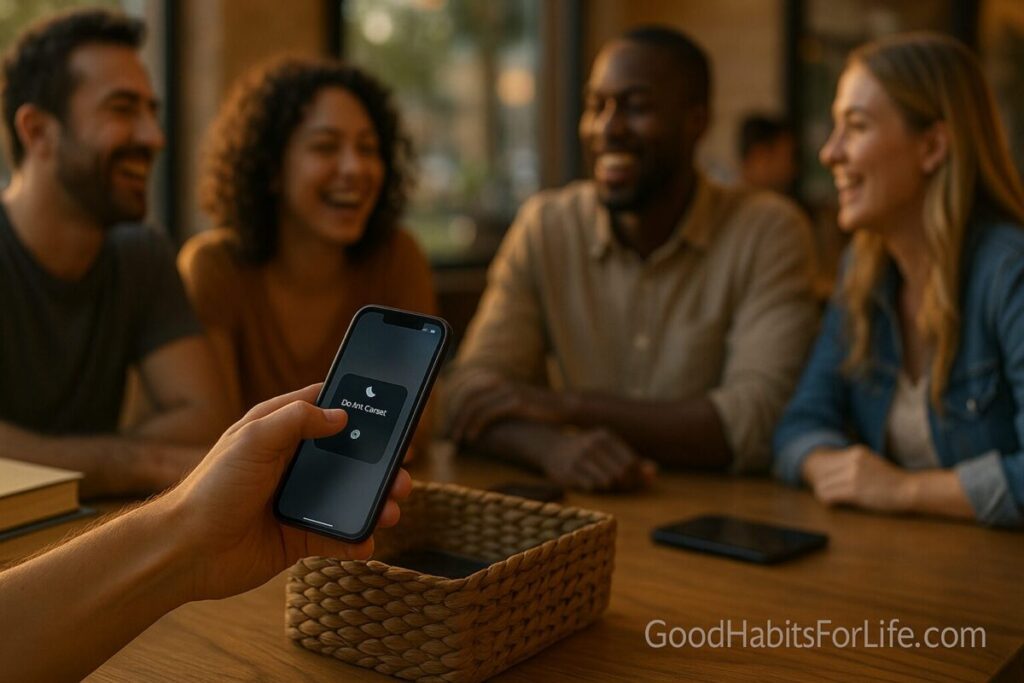
Co-create a family media plan (bedroom phone-free, mealtime device basket).
-
Teach kids to curate follows and recognize algorithmic “pull.” Follow evidence-based guidance. APA
Seniors
-
Prioritize small, recurring groups (walking clubs, classes); set up simplified home screens with larger text and quick-dial.
Teens
-
Use private accounts, hide like counts, block harmful content, and schedule offline time (sports, arts, volunteering). Follow current advisories and ensure guardian co-navigation. HHS.gov
⚠️ Mistakes & Myths to Avoid
-
Myth: “You can reset dopamine by quitting pleasure for a weekend.”
Reality: Dopamine is essential; the point is to reduce high-stimulation cues and rebuild habits, not eliminate dopamine. Harvard Health -
Myth: “Dopamine equals pleasure.”
Reality: It’s heavily involved in motivation and learning, not just pleasure; multiple circuits shape behavior. PMCPNAS -
Mistake: Going cold turkey with no replacement activities.
Fix: Plan creation blocks and social rituals so freed time becomes meaningful. -
Mistake: Keeping notifications “just in case.”
Fix: Allow only person-to-person alerts; batch the rest. -
Myth: “All social media is harmful.”
Reality: There are benefits when use is bounded and relationships are prioritized; risks rise with heavy, algorithm-driven exposure—especially for adolescents. APAHHS.gov
💬 Real-Life Examples & Copy-Paste Scripts
Move a friendship off-platform
“Hey! I’m trimming my feeds to focus on real friendships. Can we move to WhatsApp/Signal and do a quick monthly catch-up?”
Weekend micro-gathering invite
“Short walk + chai on Sunday 5:30–6:15? Low-key, would love to catch up.”
Gentle boundary for group chats
“I’m on lighter notifications these days—if you need me, DM or call. I’ll catch up tonight.”
Positive posting prompt
“This week I learned __. Here’s the 3-step how-to if you’re trying it too…”
Opt-out of doomscrolling topics
“Taking a break from hot-takes. I’m focusing on local community updates and friends’ news—DM me if I miss something important.”
🧰 Tools, Apps & Resources (Pros/Cons)
System Settings
-
iOS Screen Time / Android Digital Wellbeing — Native app limits and downtime; free and simple, but easy to override.
Feed & Autoplay Blockers (desktop/mobile)
-
Unhook / DF Tube (YouTube), News Feed Eradicator (FB), LeechBlock / 1Focus / Focus To-Do — Remove recommendations and set timers; requires setup and discipline.
Attention Aids
-
Forest / one sec / Opal / Freedom / RescueTime — Create friction or track use; some are paid.
Curation Alternatives
-
RSS readers (Inoreader, Feedly, NetNewsWire) — Follow creators without algorithmic drift; initial setup time.
-
Read-later (Pocket, Instapaper) — Save and batch reading; avoid “save but never read” by scheduling a weekly “inbox zero” for articles.
Creation & Connection
-
Obsidian / Notion / Apple Notes — Fast capture and drafting; pick one to reduce switching.
-
Calendars & group apps (Google Calendar, Meetup) — Protect recurring IRL touchpoints.
Public-health and professional advisories stress: protect sleep, privacy, and offline time; co-navigate with youth; seek help if use causes distress. APAHHS.gov
📚 Key Takeaways
-
You can’t “detox dopamine,” but you can detox behaviors that train compulsive checking. Harvard Health
-
Curate & Create beats quitting: replace feeds with lists/RSS and schedule creation/connection reps.
-
A 30-60-90 plan makes gains stick—keep friction on consumption, flow on creation.
-
Youth need evidence-based guardrails and adult co-navigation. APA
-
Meaningful friendships grow when you move ties off-platform and show up regularly.
❓ FAQs
Is a dopamine detox real?
The catchy phrase is widely misunderstood. You’re not removing dopamine; you’re reducing high-stimulation loops and rebuilding healthier reward patterns. Harvard Health
How long should I step back from algorithmic feeds?
Try 30 days to stabilize, then keep a feed-minimal approach long-term (lists, RSS, scheduled checks).
Won’t I miss important updates?
Keep DMs and close-friend lists; batch everything else daily. Most platforms let you favorite people so you still see what matters.
What if I need social media for work?
Use separate profiles, schedule posting windows, and batch engagement. Build a private creator workflow (draft → post → log off).
Does grayscale really help?
It reduces salience and reflex tapping for many people. Pair it with notification cuts and timers for best results.
How do I help my teen?
Co-create rules, protect sleep (no devices overnight), review privacy settings, and encourage offline activities. Follow current professional advisories. APAHHS.gov
Is social media always bad for friendships?
No. It can enlarge weak ties and enable plans. The risk is when algorithmic pulls replace direct, reciprocal contact—hence the “curate & create” approach. APA
What metrics show I’m improving?
Reduced screen time, more scheduled creation, weekly IRL/voice touchpoints, and better sleep/mood are good signs.
References
-
Harvard Health Publishing — “Dopamine fasting: Misunderstanding science spawns a maladaptive fad.” Harvard Health
-
NIDA (NIH) — Drugs, Brains, and Behavior: The Science of Addiction (dopamine and learning). National Institute on Drug Abuse
-
Volkow & Morales — “The Neuroscience of Drug Reward and Addiction,” Physiol Rev / PMC review. PMC
-
APA Health Advisory on Social Media Use in Adolescence (2023). APA
-
U.S. Surgeon General — Advisory on Social Media and Youth Mental Health (2025). HHS.gov
-
Pew Research Center — Americans’ Social Media Use (2024) & Teens Fact Sheet (2025). Pew Research Center+1
-
WHO Europe — Teens, screens and mental health (2024). World Health Organization
-
Royal College of Psychiatrists — Guidance on young people’s digital media use. www.rcpsych.ac.uk
-
Fei YY — “Maladaptive or misunderstood? Dopamine fasting as a self-help trend,” Lifestyle Medicine (2022). Wiley Online Library
Disclaimer: This article is educational and not a substitute for professional medical or mental-health advice; seek qualified help if technology use causes distress.