
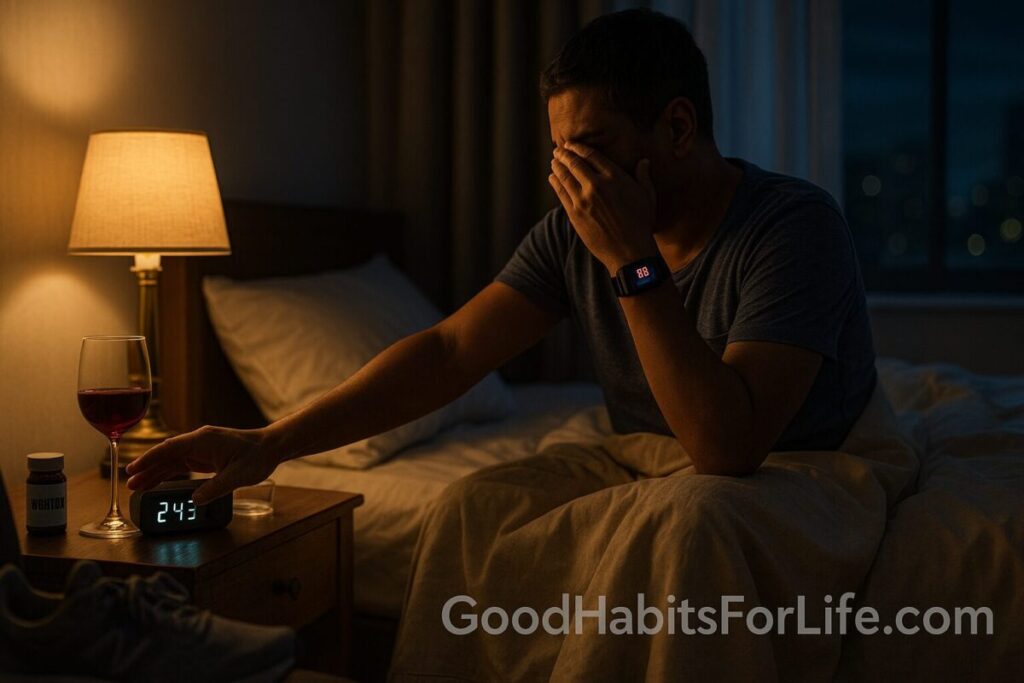
Alcohol & Sleep: Why Nightcaps Can Backfire: Zone 2 + NEAT (2025)
Alcohol & Sleep: Nightcaps Backfire + Zone 2 & NEAT (2025)
Table of Contents
🧭 What actually happens when you drink before bed
Alcohol is a central nervous system depressant. It can make you feel sleepy and shorten sleep latency (the time it takes to fall asleep). But as it’s metabolized, it fragments the second half of the night, reduces REM sleep, can lighten deep sleep, increases awakenings, suppresses breathing stability, raises heart rate, and alters core body temperature regulation. The result: you may sleep long but wake unrefreshed—with lower cognitive performance, mood, and exercise readiness the next day.
Key effects (typical patterns):
-
Faster sleep onset in the first sleep cycle.
-
Reduced REM early in the night; rebound REM with vivid dreams or awakenings later.
-
More bathroom trips (diuretic effect) and snoring/apnea risk (airway relaxation).
-
Elevated heart rate and lower heart rate variability (stress carryover).
-
Next-day sleepiness, poorer focus, and disrupted appetite regulation.
🧠 How alcohol disrupts sleep architecture (REM, slow wave, body clock)
-
REM Suppression → Rebound: Alcohol delays and reduces REM early; as blood alcohol levels drop, REM rebounds—often with frequent awakenings and lighter sleep.
-
Slow-Wave Sleep (SWS) Changes: Low–moderate doses may appear to deepen early sleep but overall sleep quality drops due to fragmentation later.
-
Circadian Effects: Evening alcohol can shift body temperature rhythms and influence melatonin timing, undermining a consistent body clock.
-
Breathing Instability: Airway muscle relaxation increases snoring and can worsen obstructive sleep apnea risk—especially in the second half of the night.
-
Dose Matters: Even 1–2 standard drinks can measurably impair sleep architecture in sensitive people; more drinks dramatically increase disruption.
Standard drink (guidance varies by country): ~14 g ethanol (US) ≈ 350 ml beer (5%), 150 ml wine (12%), or 44 ml spirits (40%). Many countries use ~10 g as one “unit.”
✅ Quick Start: What to do tonight (if you plan to drink or already did)
If you plan to drink:
-
Cut-off time: Finish alcohol 3–4 hours before bed.
-
Cap it low: Fewer drinks = better sleep. Space drinks with water.
-
Pair with food: Protein + fiber slows absorption and blunts spikes.
-
Hydrate: 500–750 ml water across the evening; add electrolytes if hot.
-
Wind-down without booze: Shower, dim lights, light reading, breathwork (4-7-8) or a 10-min stretch.
If you already drank:
-
Delay bedtime by ~30–60 min if safe; hydrate; keep the room cool and dark.
-
Side-sleeping may help snoring. Avoid additional sedatives.
-
Next morning: Zone 2 (easy cardio) for 30–40 min, NEAT walk breaks all day, and consistent bedtime the following night.
🛠️ 30-60-90 Habit Plan: Zone 2 + NEAT for better sleep and metabolism
Goal: Reduce alcohol-related sleep disruption while building a cardio-metabolic base that protects your sleep.
Days 1–30 (“Stabilize”)
-
Alcohol rules:
-
Max 2 evenings/week with alcohol; finish ≥3–4 h before bed.
-
No back-to-back late nights. Keep a simple drink log.
-
-
Zone 2: 4 days/week, 30–45 min each (conversational pace; see guide below).
-
NEAT: Daily 7,000–10,000 steps or 10×5-min movement snacks (every hour).
-
Sleep anchors: Fixed wake time (±15 min), morning light exposure (5–10 min), and a wind-down routine.
Days 31–60 (“Build”)
-
Alcohol: 1–2 evenings/week, earlier cut-off; add alcohol-free swaps (sparkling water + bitters).
-
Zone 2: 5 days/week, 35–50 min; optional one short tempo finish (5–8 min) if well-rested.
-
NEAT: 8,000–11,000 steps; desk breaks every 45–60 min.
-
Recovery: 1 yoga/mobility session; 90-min weekly nature walk.
Days 61–90 (“Optimize”)
-
Alcohol: Choose one social night/week or a 3:1 AF week cadence.
-
Zone 2: 5–6 days/week, 40–60 min; optional one Zone 3 day (10–20 min moderate-hard) if sleep is solid.
-
NEAT: 9,000–12,000 steps; 2 light chores (gardening, cleaning) as built-in movement.
-
Metrics: Track sleep efficiency, resting HR/HRV, and daytime alertness; adjust alcohol accordingly.
🚴 Techniques & Frameworks: How to do Zone 2 and build NEAT
Zone 2—simple, science-aligned
-
Feel test: You can hold a conversation, nose-breathing most of the time. RPE ~3–4/10.
-
Heart-rate ballpark: Often ~60–70% of HRmax (varies by fitness). If uncertain, keep it “easy and steady.”
-
Why it helps sleep: Improves autonomic balance, glucose control, and mood; regular moderate aerobic work is associated with better sleep quality and latency.
-
What to do: Brisk walk, easy cycling, light jog, elliptical, or swim for 30–60 min most days.
NEAT—movement that isn’t “exercise”
-
Definition: Non-Exercise Activity Thermogenesis—all the energy you expend outside formal workouts (standing, walking, chores, fidgeting).
-
Targets:
-
Steps: 7k–10k+ daily.
-
Movement snacks: 2–5 min every hour (calf raises, hallway walks, stairs).
-
Chores: Make bed, dishes, laundry folding, sweeping, gardening.
-
-
Why it helps: Counters alcohol’s sedating effect, supports glucose/insulin dynamics, and reduces long sitting—key for metabolic and sleep health.
👥 Audience variations
-
Students/teens: Prefer alcohol-free social rituals (boba/coffee walks, late-afternoon sports). Use study-break walks every 45–60 min.
-
Professionals: Place social drinks right after work, not late dinner. Schedule walking 1:1s; use a standing desk + timer.
-
Parents: Choose early family dinners, swap nightcaps for herbal teas; stroller walks after meals = NEAT + bonding.
-
Seniors: Prioritize earlier cut-off, lower doses (med interactions). Zone 2 via brisk walking or cycling; balance/mobility work 2–3×/week.
⚠️ Mistakes & myths to avoid
-
“I fall asleep faster, so alcohol helps sleep.” The second half of sleep is the problem—more awakenings and less REM.
-
“Weekends don’t matter.” Social jet lag + binge drinking wrecks Monday–Tuesday sleep.
-
“I can out-exercise bad sleep.” Training quality and recovery collapse when sleep is fragmented.
-
“Just one glass is always fine.” Sensitivity varies; even small amounts can impair sleep for some.
-
Over-reliance on sedatives. Combining alcohol with sleep meds is unsafe; speak to your clinician.
💬 Real-life examples & scripts
-
At dinner (early): “I’m stopping by 8pm—I sleep better if I finish earlier.”
-
At the bar: “I’ll start with a sparkling water + lime, then decide.”
-
Hosting at home: Offer alcohol-free beers/mocks first; set a 10pm lights-down cue.
-
Morning after: “I’m doing a 40-min easy cycle and walking calls all day to reset.”
🧰 Tools, apps & resources
-
Wearables (HR/HRV/sleep): Oura, Garmin, Apple Watch—track resting HR, sleep efficiency, and time in bed.
-
AF drink finders: Untappd tags for NA beers; local grocery listings.
-
Timers: Phone/Watch stand-up reminders every 45–60 min.
-
Habit tracking: Simple spreadsheet or apps (TickTick, Streaks).
-
Wind-down aids: Blue-light reduction, white-noise apps, 4-7-8 breathing.
📌 Key takeaways
-
Nightcaps reduce REM and fragment the second half of sleep.
-
3–4 h alcohol cut-off + hydration makes a noticeable difference.
-
Zone 2 most days + NEAT all day restores autonomic balance and sleep depth.
-
Track wake time, steps, and easy cardio minutes—watch sleep quality improve within 2–4 weeks.
-
Keep it flexible: fewer drinks, earlier timing, more movement.
❓ FAQs
1) Does one drink really hurt sleep?
It depends, but many people show measurable changes in heart rate and REM even after 1–2 drinks, especially if taken close to bedtime.
2) What’s the ideal alcohol cut-off before bed?
Aim for 3–4 hours. This allows most metabolism to occur before your deepest sleep cycles.
3) Is red wine better for sleep than beer or spirits?
Not for sleep architecture. Dose and timing matter far more than beverage type.
4) How does Zone 2 help my sleep if I still drink socially?
Regular moderate-intensity cardio improves parasympathetic tone, mood, and glucose control—factors linked to better sleep quality and latency.
5) What is NEAT and how much do I need?
NEAT is non-exercise movement—walking, chores, fidgeting. Target 7k–10k steps/day plus frequent micro-bouts of movement.
6) Do alcohol-free beers or mocktails help?
Yes—social ritual without ethanol. Still watch sugar late at night; keep servings earlier.
7) I snore more when I drink. Why?
Alcohol relaxes airway muscles, increasing snoring and sleep-disordered breathing, especially in the latter half of the night.
8) If I slept badly after drinking, should I skip my workout?
Keep it easy Zone 2 and add NEAT. Avoid high-intensity if you’re visibly sleep-deprived or dehydrated.
9) Will electrolytes or magnesium “fix” alcohol sleep?
Hydration and electrolytes help recovery, but they don’t prevent REM suppression or fragmentation from alcohol.
10) How long until I notice improvements if I cut back and add Zone 2 + NEAT?
Many notice changes within 1–2 weeks; consistent gains accrue over 4–8 weeks.
📚 References
-
Thakkar MM, Sharma R, Sahota P. Alcohol Disrupts Sleep Homeostasis. Alcohol Research: Current Reviews (2015). NCBI/PMC
-
Ebrahim IO, Shapiro CM, Williams AJ, Fenwick PB. Alcohol and the sleeping brain. Alcoholism: Clinical & Experimental Research (2013). PubMed
-
American Academy of Sleep Medicine. Alcohol and Sleep. SleepEducation.org. Link
-
National Institute on Alcohol Abuse and Alcoholism (NIAAA). Alcohol & Sleep (fact sheet/overview). Link
-
Kredlow MA, Capozzoli MC, Hearon BA, et al. The effects of physical activity on sleep: a meta-analytic review. Sleep Medicine Reviews (2015). PubMed
-
Centers for Disease Control and Prevention (CDC). How much physical activity do adults need? Link
-
Levine JA. Non-exercise activity thermogenesis (NEAT). Proceedings of the Nutrition Society (2004). PubMed
-
World Health Organization (WHO). Alcohol fact sheet / health effects. Link
Disclaimer: This article is for general education and is not a substitute for personalized medical advice; speak with your clinician about alcohol use, sleep problems, or medication interactions.