
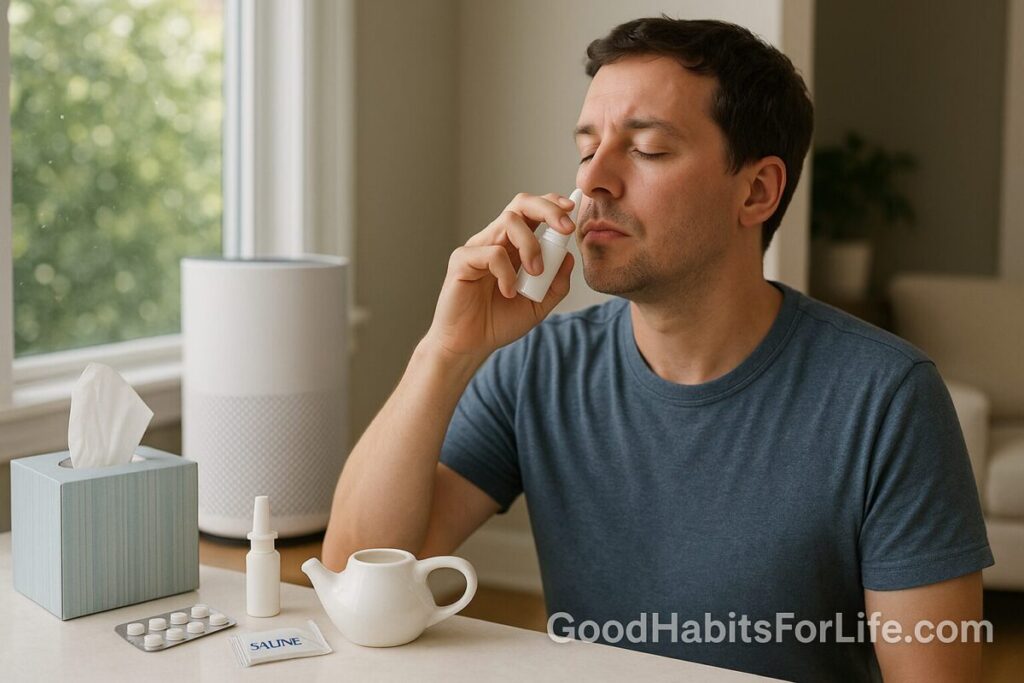
Allergy Season 2025: Filters, Rinses, Routines
Allergy Season 2025: Filters, Rinses & Routines
Table of Contents
🧭 What Counts as “Allergy Season” & Why It Hits Hard
Allergic rhinitis happens when your immune system overreacts to airborne allergens like tree, grass, or weed pollen, plus indoor triggers (dust mites, pets, molds). Peak months vary by region—often spring for trees, late spring/early summer for grasses, and late summer/autumn for ragweed.
What works best (evidence-based):
-
Intranasal corticosteroid sprays are first-line for moderate–severe symptoms.
-
Second-generation oral antihistamines help sneezing/itching with less drowsiness.
-
Saline nasal irrigation reduces congestion and improves symptom control.
-
Allergen avoidance + indoor air quality steps reduce exposure and flare-ups.
-
Allergen immunotherapy (shots or tablets) can reduce long-term disease burden for eligible patients.
✅ Quick Start: What to Do Today
-
Check today’s pollen/air quality. If high, keep windows closed, especially mornings.
-
Run a HEPA purifier in the bedroom; set fan to continuous/auto.
-
Swap HVAC filter to MERV 11–13 (or manufacturer-allowed max).
-
Rinse your nose this evening with isotonic saline using sterile water (boiled & cooled, distilled, or filtered 0.2 μm).
-
Start/continue meds you tolerate:
-
Nasal steroid daily; correct technique (chin down, aim toward ear).
-
Non-drowsy antihistamine if needed (e.g., cetirizine, loratadine, fexofenadine).
-
-
Shower and change clothes after outdoor time; keep pets off the bed.
-
Prepare a “pollen kit” (spray, tissues, eye drops, mask) in your bag/car.
-
Yardwork hack: wear a well-fitting mask; mow after rain when counts dip.
🛠️ Techniques & Tools that Actually Help
Air Filtration & Ventilation
-
HEPA room purifiers. Choose units with an AHAM-verified CADR appropriate for your room size (aim for ~4–5 air changes/hour). As a rough check:
-
ACH ≈ (CADR × 60) / room volume.
-
-
Central HVAC. Use MERV 11–13 filters (or highest your system allows) and replace every 1–3 months in season.
-
Avoid ozone-generating “air cleaners.” Prefer mechanical HEPA filtration.
Nasal Irrigation (Neti Pot/Squeeze Bottle)
-
Water safety: Use distilled, sterile, or previously boiled (then cooled) water.
-
Saline: Isotonic (0.9%) is gentle; hypertonic (e.g., 2–3%) can reduce swelling but may sting.
-
Frequency: 1–2× daily in peak season; then taper.
-
Hygiene: Wash and air-dry device after each use; replace bottles periodically.
Medication Basics (OTC options; follow labels)
-
Intranasal corticosteroids (e.g., fluticasone, mometasone): best overall control; full effect builds over several days.
-
Oral antihistamines (cetirizine, loratadine, fexofenadine): help sneeze/itch; less on congestion.
-
Intranasal antihistamines (azelastine): fast relief; can be combined with steroids.
-
Decongestant nasal sprays (oxymetazoline): short-term only (≤3 days) to avoid rebound.
-
Allergen eye drops (antihistamine/mast-cell stabilizer) for itchy, watery eyes.
-
Discuss leukotriene modifiers or prescription combos with your clinician if control is poor.
Exposure-Cutting Habits
-
Laundry & showers at day’s end.
-
Sunglasses/hat outdoors.
-
Dry clothes indoors in season (avoid pollen deposition).
-
Car tips: recirculate A/C; ensure cabin air filter is current.
📅 30-60-90 Day Habit Plan
Days 0–30: Build Your Base
-
Start daily nasal steroid + evening saline rinse.
-
Install HEPA purifier (bedroom), set reminder to change filters.
-
Upgrade HVAC filter to MERV 11–13.
-
Track pollen counts + symptoms (1–5 scale) in a simple log.
Checkpoint: Symptoms ≤2/5 most days? If not, add non-drowsy antihistamine or discuss nasal antihistamine combo.
Days 31–60: Optimize
-
Add second HEPA for living area if needed.
-
Standardize mask use for yardwork and house cleaning.
-
Audit home: seal gaps, fix leaks (mold), wash bedding ≥60 °C weekly.
Checkpoint: Night wakings, school/work impacts, or frequent flare-ups? Book an allergy evaluation.
Days 61–90: Long-Term Control
-
Consider allergen immunotherapy candidacy.
-
Create an “allergy season playbook” (start meds 2–4 weeks before your usual peak).
-
Set calendar reminders for filter changes and pre-season prep next year.
🧠 Variations: Students, Parents, Professionals, Seniors, Teens
-
Students/Teens: Keep spare meds in backpack (school nurse policy permitting). Avoid outdoor P.E. during peak morning pollen.
-
Parents: Rinse kids’ noses with age-appropriate devices; child-safe dosing only. Wash soft toys weekly.
-
Professionals: Desk purifier if allowed; plan commutes around peak counts; keep lubricating eye drops at work.
-
Seniors: Review meds for sedation/anticholinergic effects; safe irrigation technique to avoid aspiration. Monitor blood pressure if using decongestants.
⚠️ Mistakes & Myths to Avoid
-
Using tap water straight in neti pots (infection risk).
-
Overusing decongestant sprays → rebound congestion.
-
Waiting until symptoms explode to start nasal steroids—start before peak.
-
Relying on humidifiers (can worsen dust mites/mold if >50% RH).
-
“Local honey cures allergies.” No good evidence for pollen allergy control.
-
Ignoring indoor allergens (dust mites/pets) during “outdoor” season.
🗣️ Real-Life Scripts (Copy-Paste)
Doctor Visit:
“Over the last 4 weeks, I’ve had sneezing/itchy eyes daily and congestion 4/7 days. I’m using fluticasone once daily and rinsing nightly. I still wake twice a week. What can we add or adjust? Am I a candidate for immunotherapy?”
School Note:
“[Student] has seasonal allergic rhinitis. On high-pollen days, please allow indoor P.E. alternatives and access to water/eye drops.”
Work:
“I manage allergic rhinitis and use a purifier at my desk. Could we seat me away from open windows and schedule outdoor events later in the day?”
Travel:
“I have pollen allergies. Can housekeeping avoid feather bedding and run the room A/C before arrival? I’ll bring a compact HEPA unit.”
🧩 Tools, Apps & Resources
-
Pollen & AQI trackers: national weather services, reputable air-quality apps, and local environmental agencies.
-
HEPA purifiers: look for AHAM Verifide label and replacement filter availability.
-
Nasal irrigation kits: squeeze bottles with pre-mixed saline packets; ensure clear cleaning instructions.
-
Symptom trackers: any notes app or spreadsheet works—log exposure, meds, and results.
Pros/Cons snapshot
-
HEPA purifiers: strong for indoor exposure ↓; need filter changes, noise.
-
Nasal steroids: best overall control; require daily use, gradual onset.
-
Saline rinses: immediate comfort; must use sterile water, device hygiene.
-
Masks outdoors: clear benefit during chores; comfort varies with heat/humidity.
📌 Key Takeaways
-
Start early, treat daily, rinse safely, and filter the air you breathe.
-
Combine avoidance + meds + rinses; escalate to immunotherapy if control is poor.
-
Build a repeatable seasonal routine and calendar it for 2026.
❓ FAQs
When should I start my nasal steroid for allergy season?
Begin 2–4 weeks before your usual pollen peak and continue daily through the season.
How often can I use saline rinses?
Typically 1–2× daily in peak season; more during flares is usually fine if you use sterile water and proper technique.
Do masks really help with pollen?
Yes—well-fitting masks reduce inhalation of larger particles like pollen, especially during yardwork or sweeping.
HEPA vs. ionizers—what’s better?
For allergies, HEPA filtration has the strongest evidence and avoids ozone by-products some ionizers emit.
Should I open windows to “air out” the house?
During high-pollen days, keep windows closed; ventilate via mechanical systems with good filtration.
Is immunotherapy worth it?
For confirmed allergies with ongoing symptoms despite optimal management, immunotherapy can reduce symptoms and medication use over time.
Are first-generation antihistamines okay?
They work but can cause sedation/anticholinergic effects. Prefer second-generation options unless directed otherwise.
Any special tips for pet + pollen seasons overlapping?
Vacuum with a HEPA machine, wash pet bedding weekly, and keep pets out of the bedroom during peak months.
📚 References
-
ARIA (Allergic Rhinitis and its Impact on Asthma) guideline update. Allergy. 2020 and updates. https://www.whiar.org
-
American Academy of Allergy, Asthma & Immunology (AAAAI). Allergic Rhinitis: Diagnosis & Management. https://www.aaaai.org
-
American College of Allergy, Asthma & Immunology (ACAAI). Pollen Allergy & Seasonal Allergic Rhinitis. https://acaai.org/allergies/allergic-conditions/hay-fever-rhinitis
-
Cochrane Review: Saline irrigation for allergic rhinitis (latest update). https://www.cochranelibrary.com
-
U.S. FDA. “Is Rinsing Your Sinuses Safe?” Neti pot/irrigation safety guidance. https://www.fda.gov/consumers/consumer-updates/rinsing-your-sinuses-safe
-
U.S. EPA. Guide to Air Cleaners in the Home (HEPA, CADR, ozone cautions). https://www.epa.gov/indoor-air-quality-iaq/guide-air-cleaners-home
-
CDC. Allergies & Pollen information; allergy management basics. https://www.cdc.gov/asthma/allergies.html
-
NICE Clinical Knowledge Summary: Allergic Rhinitis—Management. https://cks.nice.org.uk/topics/rhinitis-allergic
-
AHAM. CADR & Room Size guidance (AHAM Verifide). https://www.ahamdir.com
Disclaimer: This guide is for general information and is not a substitute for personalized medical advice; consult your clinician for diagnosis and treatment.