
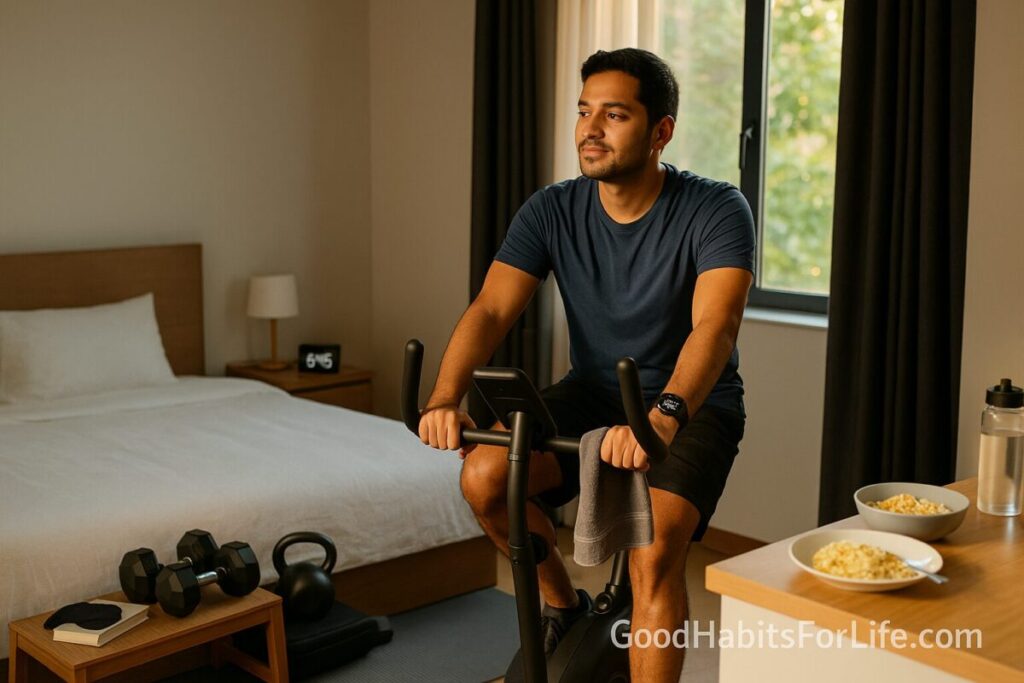
Testosterone & Habits: Sleep, Stress, Strength: Zone 2 + NEAT (2025)
Testosterone & Habits: Sleep, Stress, Strength + Z2+NEAT
Table of Contents
🧭 What This Guide Covers & Why It Matters
Testosterone (T) is regulated by the hypothalamic–pituitary–gonadal (HPG) axis and follows a daily rhythm (highest in the morning). When men report low energy, libido, depressed mood, or loss of muscle, habits that support sleep, body composition, and stress often move the needle before anything else. Clinical guidelines define low total testosterone as <300 ng/dL (10.4 nmol/L)—confirmed on two morning tests plus symptoms—and advise careful evaluation before treatment. AUA
Lifestyle remains first-line: adequate sleep, regular resistance and aerobic activity, and reducing visceral adiposity correlate with healthier T profiles. If lifestyle isn’t enough and true hypogonadism is diagnosed, therapy is considered under specialist care (see FAQs). Oxford Academic
✅ Quick Start: Do This Today (30–40 minutes total)
1) Protect tonight’s sleep
-
Set a fixed wake time and build back 7–9 hours. Dim screens 60 minutes pre-bed; avoid alcohol late. JCSM+1
2) Lift something heavy (fast win)
-
30 minutes: 5 compound moves (e.g., squat, hinge, push, pull, carry), 2–3 sets × 6–12 reps, leaving 1–2 reps in reserve. Repeat 2–3×/week. PubMed
3) Accumulate easy cardio volume + NEAT
-
20–40 minutes Zone 2 (easy conversation pace) or split walks; aim for 150–300 min/week total aerobic activity. Add stairs, walking meetings, and standing breaks. PMC
4) Stress dial-down (5–10 minutes)
-
Box breathing, brief walk outside, or guided relaxation to blunt chronic cortisol. PMC
🛠️ 30-60-90 Day Habit Plan
Days 0–30 (Foundation)
-
Sleep: 7+ hours nightly; consistent wake time ±30 min. JCSM
-
Strength: 2 days/week full-body; learn technique; progressive overload starts when form is solid. PubMed
-
Cardio: 120–150 min/week at easy–moderate effort; add short brisk walks after meals. PMC
-
NEAT: Hit a personal daily movement baseline (e.g., average steps) and add +1–2k/day via habit cues. NCBI
-
Stress: Daily 5–10 min relaxation practice.
Days 31–60 (Progress)
-
Strength: 3 days/week; add weight or reps weekly (micro-progressions). tourniquets.org
-
Cardio: Build toward 200–300 min/week; 80–90% easy, optional 10–20% higher intensity. PMC
-
NEAT: Engineer extra movement—park far, walking calls, standing desk. NCBI
-
Nutrition: Nudge protein and fiber; align calories to weight goal (see notes).
Days 61–90 (Refine & Checkpoints)
-
Body composition checkpoint. Reducing central adiposity often improves T; even modest weight loss helps in men with overweight/obesity. PubMed+1
-
Sleep regularity audit (same wake/bed, minimal weekend drift). JCSM
-
Energy, mood, libido, training logs—track trends.
🛌 Sleep & Circadian Habits (High Impact)
-
Adults should sleep 7+ hours; chronic short sleep is linked with adverse outcomes. In a controlled study, one week at 5 h/night lowered daytime T by ~10–15% in healthy young men. JCSM+1
-
Consistency beats catch-up. Anchor wake time, keep a regular schedule, and create a cool, dark, quiet room. Avoid alcohol near bedtime; it fragments sleep. JCSM+1
-
For shift workers: use light/dark control, regularized anchor sleep, and naps as needed. CDC
Checklist
-
Fixed wake time, 7–9 h opportunity
-
60-min digital sunset; caffeine cut 6 h pre-bed
-
Cool, dark, quiet sleep cave; morning outdoor light NHLBI, NIH
🏋️ Strength, 🫀 Zone 2 & 🚶♂️ NEAT
Strength training
-
2–3 sessions/week across major muscle groups improves strength and body composition (key for metabolic health and T-related symptoms). Acute T “spikes” happen, but chronic resting T changes are small to negligible in eugonadal men—so train for the outcomes (muscle, strength, fat loss), not for a lab value. PubMed+1
Zone 2 (easy–moderate aerobic)
-
Accumulate 150–300 min/week of moderate aerobic work (conversation pace). Zone 2 is a useful way to build volume; current evidence doesn’t show it’s uniquely superior to slightly higher intensities for mitochondrial adaptations—volume and consistency matter most. PMC+1
NEAT (non-exercise activity thermogenesis)
-
All movement outside formal exercise—walking, chores, stairs—adds up and varies hugely between people. Higher NEAT is linked to lower adiposity and cardiometabolic risk. Build it deliberately throughout your day. NCBI+1
🧠 Stress & Recovery
Chronic psychological or physiological stress elevates glucocorticoids (e.g., cortisol). Sustained elevations can suppress GnRH/LH signaling along the HPG axis, which can lower testosterone production—another reason to protect recovery. Use brief daily practices (breathing, walks, mindfulness) and set training volumes you can actually recover from. PMC
🍽️ Nutrition Notes (Brief, Practical)
-
Body-fat reduction (if overweight) often raises T over time; lifestyle and, where appropriate, medical support for weight loss can help. PubMed+1
-
Protein with every meal supports strength work and satiety.
-
Alcohol: Heavy or chronic intake can depress T; avoid near bedtime for sleep quality. Wiley Online Library+1
-
Supplements: Address only documented deficiencies (e.g., zinc, vitamin D) with clinician guidance; many “T boosters” are adulterated or unproven. Office of Dietary Supplements+2PMC+2
👥 Audience Variations
-
Students/Professionals: Batch NEAT (walking meetings, Pomodoro walks). Two 30-min lifts mid-week + one weekend session.
-
Parents: Home dumbbells/kettlebells; stroller walks; family Zone 2 bike rides.
-
Seniors (fit to train): Emphasize power (fast intent with safe loads), balance, and recovery days; discuss medications and comorbidities with your clinician. AHA Journals
-
Teens/Young adults: Focus on technique, sleep regularity, and consistent meals; avoid supplement shortcuts. JCSM
⚠️ Mistakes & Myths to Avoid
-
Chasing a lab number. Train and live for performance, sleep, and body comp; resting T may barely move. PubMed
-
Overdoing HIIT while under-recovering. Volume of easy–moderate work plus strength wins for most. PMC
-
Late-night alcohol “for sleep.” It fragments sleep and undercuts hormonal health. CDC Blogs
-
“T booster” pills. Many are adulterated; skip. U.S. Food and Drug Administration
-
Testing at the wrong time. Test morning, twice, before decisions. AUA
🧪 Real-Life Examples & Scripts
A. Two-Day Strength Split (45 min, repeat weekly)
-
Day 1: Squat, Bench/Push-up, Row, Farmer Carry (2–3×6–10)
-
Day 2: Hinge (deadlift or RDL), Overhead Press, Pull-ups/Assisted, Carry (2–3×6–10)
-
Add 1–2 reps or +2.5–5 kg each week if sets feel ≤8/10 effort. tourniquets.org
B. Zone 2 + NEAT Script
-
Mon–Fri: 25–35 min brisk walk after lunch; Sat: 60–90 min bike at talk pace; Sun: family hike. Micro-NEAT: stairs, 5-min movement every hour, walking calls. PMC+1
C. Sleep Reset Script (7 days)
-
Fix wake time (e.g., 06:30), lights down 21:30, in bed 22:30, caffeine cut 14:00, alcohol cut 3–4 h pre-bed. JCSM+1
D. Stress-Brake Script (3×/day)
-
2 minutes: inhale 4s, hold 1s, exhale 6s ×6 cycles; 10-minute evening walk. PMC
📚 Tools, Apps & Resources
-
Tracking: Apple Health/Google Fit (steps, sleep duration), any simple logbook.
-
Strength: Free beginner templates (full-body 2–3×/wk); choose loads allowing 1–2 reps in reserve. tourniquets.org
-
Cardio: Any HR monitor; use “talk test” for Zone 2. PMC
-
Sleep: Blue-light filters, blackout curtains, earplugs/white noise.
-
Medical: If symptoms persist after 8–12 weeks of consistent habits, discuss testing with a clinician: two morning total-T tests and work-up for causes (obesity, sleep apnea, meds). AUA
🔑 Key Takeaways
-
Sleep regularity and body-fat reduction (if needed) are heavy hitters for testosterone health. JCSM+1
-
Strength + aerobic volume + NEAT improve the metrics you care about—energy, muscle, mood—regardless of small changes in resting T. PubMed+1
-
Manage chronic stress to protect the HPG axis. PMC
-
Test correctly before treatment; avoid over-the-counter “boosters.” AUA+1
❓ FAQs
1) What’s the “right” way to test testosterone?
Morning (typically 7–10 a.m.), two separate days, with symptoms considered. Some labs prefer fasting. Your clinician may add free T and SHBG if needed. AUA
2) How long until habits move the needle?
Sleep and stress improvements help within 1–2 weeks; body-composition changes typically 4–12+ weeks. Weight loss in men with obesity is consistently associated with higher T. PubMed
3) Will lifting or Zone 2 raise my resting T?
Acute spikes occur, but chronic resting T usually changes little in eugonadal men. Train for strength, fitness, and fat loss—the outcomes that matter. PubMed
4) Is Zone 2 special?
It’s a useful easy–moderate intensity for building aerobic volume you can recover from. Evidence does not show it’s uniquely superior to all other intensities for mitochondrial health. PubMed
5) What about stress?
Chronic cortisol can suppress GnRH/LH signaling, impairing T production; small daily recovery practices help. PMC
6) Do supplements boost T?
Treat deficiencies only (e.g., zinc if confirmed). Avoid “boosters”—many are adulterated or unsupported by evidence. Office of Dietary Supplements+2PMC+2
7) When is TRT appropriate?
For men with confirmed hypogonadism and symptoms after evaluation of causes. As of 2025: age-related low T alone remains outside FDA-approved indications; labels emphasize proper use and note BP effects. Discuss risks/benefits with a specialist. U.S. Food and Drug Administration
8) Do GLP-1 weight-loss medications affect T?
Emerging 2025 data link greater weight loss with improved T in obese men; correlation doesn’t prove causation. Prioritize lifestyle and see your clinician for options. Reuters
References
-
American Urological Association. Testosterone Deficiency Guideline. 2018. AUA
-
Endocrine Society. Testosterone Therapy in Men With Hypogonadism (Clinical Practice Guideline). 2018. Oxford Academic
-
American Academy of Sleep Medicine & Sleep Research Society. Adults should sleep 7+ hours (Consensus). 2015. JCSM
-
Leproult R, Van Cauter E. Effect of 1 Week of Sleep Restriction on Testosterone in Young Men. JAMA, 2011. PubMed
-
WHO. 2020 Guidelines on Physical Activity and Sedentary Behaviour. PMC
-
Fui MNT et al. Lowered testosterone in male obesity. Asian J Androl, 2014. PMC
-
Corona G et al. Body weight loss reverses obesity-associated hypogonadism (meta-analysis). Eur J Endocrinol, 2013. PubMed
-
Okobi OE et al. Impact of Weight Loss on Testosterone Levels: Review. 2024. PMC
-
ACSM Position Stand. Progression Models in Resistance Training for Healthy Adults. 2009. PubMed
-
Storoschuk KL et al. Much Ado About Zone 2 (narrative review). 2025. PubMed
-
Endotext. Endocrine Changes in Obesity (NEAT, OSA, MOSH context). 2022. NCBI
-
FDA. Labeling changes for testosterone products; proper indications. 2025. U.S. Food and Drug Administration
-
FDA. Tainted Body-Building Products & Hidden Ingredients (adulterated “boosters”). 2025. U.S. Food and Drug Administration
Disclaimer: This guide is for general education and does not replace personalized medical advice; consult a qualified clinician for diagnosis and treatment decisions.