
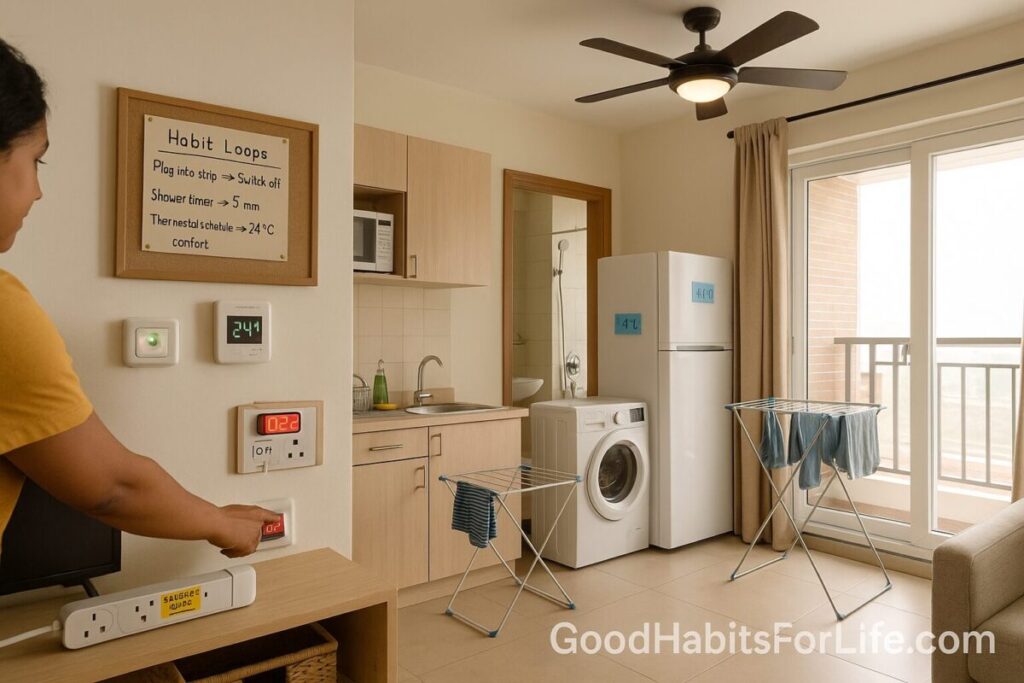
Utility Bills: Save with Simple Habit Loops: No-Spend Challenge (2025)
Cut Utility Bills with Simple Habit Loops (No-Spend)
Table of Contents
🧭 What & Why
Goal: Shrink monthly utilities (electricity, water/hot water, heating/cooling, internet) using habit loops—small behaviors you repeat automatically. This isn’t extreme deprivation; it’s no-spend on non-essential usage + low-cost tweaks that lock in savings.
Why it works
-
Electricity: LEDs and smarter thermostat schedules can trim usage materially; “phantom/standby” loads may add ~5–10% to home electricity. The Department of Energy’s Energy.gov+1standby.lbl.gov
-
Water & hot water: WaterSense fixtures cap flows (e.g., showerheads ≤ 7.6 L/min [2.0 gpm]) and faucet aerators ≤ 5.7 L/min [1.5 gpm]—less water, less heating. US EPA+1
-
Food safety + fridge efficiency: Keep refrigerators at ≤4 °C (≤40 °F) and freezers at −18 °C (0 °F); organize and avoid overcooling. U.S. Food and Drug AdministrationThe Department of Energy’s Energy.gov
✅ Quick Start (10-Minute Setup)
-
Pick your KPI
-
Electricity: kWh/day (meter or app).
-
Water: L/day or m³/month.
-
Heating/Cooling: thermostat hours or setpoint drift.
-
Internet: ₹/$ per Mbps.
-
-
Kill 3 easy wastes now
-
Flip off a standby strip for TV/console/router extras. The Department of Energy’s Energy.gov
-
Thermostat schedule: set back 4–6 °C (7–10 °F) while asleep/away. The Department of Energy’s Energy.gov
-
Shower timer: 5–7 minutes; commit today. (Pair with WaterSense head.) US EPA
-
-
Track & reward
-
Screenshot your meters/bills weekly.
-
Reward: move “savings” to your Emergency Fund category.
-
🛠️ 30-60-90 Day No-Spend Challenge Roadmap
Days 1–30 — Quick Wins & Measurement
-
LED sweep: Replace high-use bulbs (kitchen, living, desk). LEDs use up to 90% less energy and last up to 25× longer. The Department of Energy’s Energy.gov
-
Standby purge: Put TV/console/chargers on a switchable power strip. The Department of Energy’s Energy.gov
-
Thermostat basics: Program setbacks for sleep/away (daily). Target 26 °C (78 °F) cooling, 20 °C (68 °F) heating while home. The Department of Energy’s Energy.gov
-
Shower & faucet flows: Install ≤7.6 L/min showerhead; ≤5.7 L/min aerator. US EPA+1
-
Fridge/freezer: Set 3–4 °C (37–40 °F) / −18 °C (0 °F); clean coils; avoid door-hovering. U.S. Food and Drug AdministrationThe Department of Energy’s Energy.gov
-
Laundry: Wash cold when possible; modern washers cut ~25% energy / ~30–35% water if ENERGY STAR. Air-dry more. The Department of Energy’s Energy.gov
Checkpoint: Compare weekly kWh/L vs. baseline; note top two wins.
Days 31–60 — Low-Cost Upgrades
-
More LEDs (dim/3-way fixtures). The Department of Energy’s Energy.gov
-
Extra aerators (kitchen: 5.7–6.8 L/min). US EPA
-
Water heater setpoint: 49 °C (120 °F) for most homes to reduce heat loss; note exceptions (immunocompromised). The Department of Energy’s Energy.gov
-
Smart plugs for work-from-home rigs; create auto-off rules. (Use daily schedule + occupancy).
-
Behavioral anchors: pair “last light off” with flipping the power strip (habit stacking).
Checkpoint: Bill reduction trend? Re-target toughest room/appliance.
Days 61–90 — Optimize & Lock-In
-
Fine-tune thermostat: seasonal presets; tighten setpoints on hottest/coldest days. The Department of Energy’s Energy.gov
-
Appliance discipline: Keep fridge 3–4 °C, freezer −18 °C; reorganize to reduce open doors. The Department of Energy’s Energy.gov
-
WaterSense toilet (when replacing): 4.8 L/flush (1.28 gpf); dual-flush if feasible. US EPA
-
Plan review: Negotiate internet/mobile plan; remove paid add-ons you don’t use.
Final: Automate: thermostat, smart-plug schedules, quarterly “home energy audit” calendar block.
🧠 Techniques & Frameworks (Habit Loops that Stick)
Habit loop = Cue → Routine → Reward (evidence-based). Use it to make savings automatic. Annual Reviews
-
Cue: Evening phone alarm “Power-Down Sweep.”
-
Routine: Flip strip off, close laptop, lights out.
-
Reward: Track streak; move ₹/$ saved into an “Energy Wins” pot.
Habit formation timeline: median ~66 days to automaticity; expect 18–254 days depending on complexity—so start small and be patient. Wiley Online Library
Stacking & friction: Attach a new saving habit to an existing one (e.g., “after brushing teeth → start shower timer”). Add friction to waste (e.g., put the game console on a switched strip across the room). ScienceDirect
🛠️ Playbooks by Utility
🔌 Electricity
-
LEDs first (highest-use rooms). The Department of Energy’s Energy.gov
-
Standby/vampire power: TVs, set-top boxes, consoles, printers, chargers. Use strips or smart plugs; schedule off at night. standby.lbl.govThe Department of Energy’s Energy.gov
-
Thermostat schedules: Program 7–10 °F (4–6 °C) setbacks for 8 hours while asleep/away; savings up to ~10%/yr on HVAC. The Department of Energy’s Energy.gov
-
Laundry smart: Cold cycles; full loads; air-dry when possible; ENERGY STAR models save energy/water. The Department of Energy’s Energy.gov
-
Fridge discipline: 3–4 °C; don’t overcool; avoid long door-open times; maintain seals. The Department of Energy’s Energy.gov
🚿 Water & Hot Water
-
Showerheads ≤7.6 L/min (2.0 gpm) (WaterSense). US EPA
-
Faucet aerators ≤5.7 L/min (1.5 gpm) in baths; 5.7–6.8 L/min in kitchens. US EPA+1
-
Shorter showers: Use a physical 5–7-minute timer.
-
Water heater setpoint: 49 °C (120 °F) for most; consider higher only for specific health risks/dishwashers without booster heaters. The Department of Energy’s Energy.gov
🌡️ Heating & Cooling
-
Setpoints: 26 °C cooling / 20 °C heating when home; more lenient when away. Automate with schedules. The Department of Energy’s Energy.gov
-
Seals & filters: Clean/replace air filters; check door/window seals to reduce runtime.
🌐 Internet/Mobile
-
Plan audit: Are you overpaying for speed/data you don’t use? Drop to the tier that meets peak use + 20% headroom.
-
Router schedule: Nightly Wi-Fi off timer for non-essential SSIDs; some routers support eco-modes.
👥 Audience Variations
-
Students: Shared housing = big standby waste. Assign a weekly “power strip captain.”
-
Parents: Put a shower timer where kids can see it; make it a game (beat the buzzer).
-
Professionals (WFH): Smart-plug your desk cluster; lunch cue = “work rig off.”
-
Seniors: Favor auto schedules over manual switches; verify fridge/freezer temps with a simple thermometer. U.S. Food and Drug Administration
-
Renters: Focus on portable interventions (LEDs, strips, aerators, timers); keep old fixtures to reinstall later.
⚠️ Mistakes & Myths to Avoid
-
Myth: “Thermostat setbacks don’t save; the system ‘works harder’ later.”
Fact: Proper setbacks can save up to ~10% annually. The Department of Energy’s Energy.gov -
Mistake: Overcooling fridges below 3 °C (35 °F)—costs more without benefit; aim 3–4 °C. The Department of Energy’s Energy.gov
-
Mistake: Ignoring standby drains—small per device, big in aggregate (~5–10%). standby.lbl.gov
-
Myth: Long hot cycles are needed for effective laundry every time.
Fact: Modern detergents clean well in cold; save energy + fabric life. The Department of Energy’s Energy.gov
🗣️ Real-Life Examples & Copy-Paste Scripts
-
Family “Power-Down Sweep” (60 seconds, nightly)
“Alexa/Google, start 1-minute timer.” → Kids: TV/console strip OFF. Adult: desk strip OFF, chargers UNPLUGGED. Reward: add ₹/$50 to “Weekend Treat” jar weekly. -
Shower Timer Nudge
“When I turn on the shower (cue), I start the 5-minute sand timer (routine). If I beat it, I tick the ‘Shower Star’ box (reward).” -
Thermostat Anchor
“At 10 pm (cue), set thermostat to night setback (routine) → mark streak on wall calendar (reward).” -
Roommate Standby Pact
“We plug TV/console + router extras into one switchable strip; whoever leaves last flips it. Savings go to pizza night.”
🧰 Tools, Apps & Resources
-
Smart plugs / power strips: Scheduling + consumption estimates; best for TVs/consoles/PC rigs.
-
LED bulbs: Prioritize highest-hour fixtures first; choose warm (2700–3000 K) or neutral (3500–4000 K) to match spaces. The Department of Energy’s Energy.gov
-
Thermostat with scheduling: Program setbacks; lock in “home/away/sleep” presets. The Department of Energy’s Energy.gov
-
WaterSense showerheads & aerators: Easy installs; immediate hot-water savings. US EPA+1
-
Meters & monitors: Basic plug-in meters for appliances; fridge/freezer thermometers to verify ≤4 °C / −18 °C. U.S. Food and Drug Administration
-
Habit trackers: Paper calendars, phone Reminders, or any app that supports streaks—tie to your cues.
Pros/cons (quick):
-
Smart plugs: +Automation; −Needs Wi-Fi discipline.
-
LEDs: +Big savings/longevity; −Upfront cost (declining). The Department of Energy’s Energy.gov
-
WaterSense fixtures: +Fast install; −Flow feel varies by model—test one first. US EPA
📚 Key Takeaways
-
Focus on habit loops that run on autopilot; don’t rely on willpower. Annual Reviews
-
Start with LEDs, standby control, thermostat schedules, and WaterSense fixtures. The Department of Energy’s Energy.gov+1standby.lbl.govUS EPA
-
Track one KPI per utility and run a 30-60-90 no-spend challenge to lock in gains.
-
Keep fridges/freezers at 3–4 °C / −18 °C for safety and efficiency. U.S. Food and Drug Administration
❓ FAQs
1) How much can I save by just tackling standby power?
Typical homes waste ~5–10% on standby. A couple of strips and routines can reclaim much of it. standby.lbl.gov
2) Are LED bulbs worth replacing before old ones die?
Prioritize the most-used fixtures; LEDs cut usage up to 90% and last far longer—payback is typically quick in high-hour locations. The Department of Energy’s Energy.gov
3) What’s the safest, efficient water-heater setting?
49 °C (120 °F) suits most homes; specific health contexts or dishwashers without booster heaters may warrant higher. The Department of Energy’s Energy.gov
4) Do short, cooler showers really cut energy?
Yes—less water + lower hot-water demand. Use ≤7.6 L/min showerheads for immediate impact. US EPA
5) Ideal fridge/freezer settings?
Refrigerator ≤4 °C (≤40 °F); freezer −18 °C (0 °F). Verify with a thermometer. U.S. Food and Drug Administration
6) How long until these habits feel automatic?
On average ~66 days, but range varies; keep cues and rewards consistent. Wiley Online Library
7) Is washing in cold as effective?
With modern detergents and cycles, yes in many cases—plus ENERGY STAR washers save energy and water. The Department of Energy’s Energy.gov
References
-
U.S. Department of Energy — Programmable Thermostats. The Department of Energy’s Energy.gov
-
Lawrence Berkeley National Laboratory — Standby Power: Home. standby.lbl.gov
-
U.S. Department of Energy — Lighting Choices / LEDs. The Department of Energy’s Energy.gov
-
EPA WaterSense — Showerheads (≤2.0 gpm / 7.6 L/min). US EPA
-
EPA WaterSense — Bathroom Faucets & Aerators (≤1.5 gpm / 5.7 L/min). US EPA
-
U.S. FDA — Are You Storing Food Safely? (≤4 °C fridge / −18 °C freezer). U.S. Food and Drug Administration
-
U.S. DOE — Refrigerator/Freezer Use & Temperature Tips. The Department of Energy’s Energy.gov
-
U.S. DOE — Laundry (ENERGY STAR washers: ~25% energy, ~35% water savings). The Department of Energy’s Energy.gov
-
U.S. DOE — Lower Water Heating Temperature (120 °F/49 °C). The Department of Energy’s Energy.gov
-
Annual Review of Psychology — Psychology of Habit (Wood & Rünger, 2016). Annual Reviews
-
European Journal of Social Psychology — Habit Formation (Median ~66 days) (Lally et al., 2010). Wiley Online Library
Disclaimer
This guide offers general money-saving and household efficiency information; it is not financial, medical, or legal advice.