
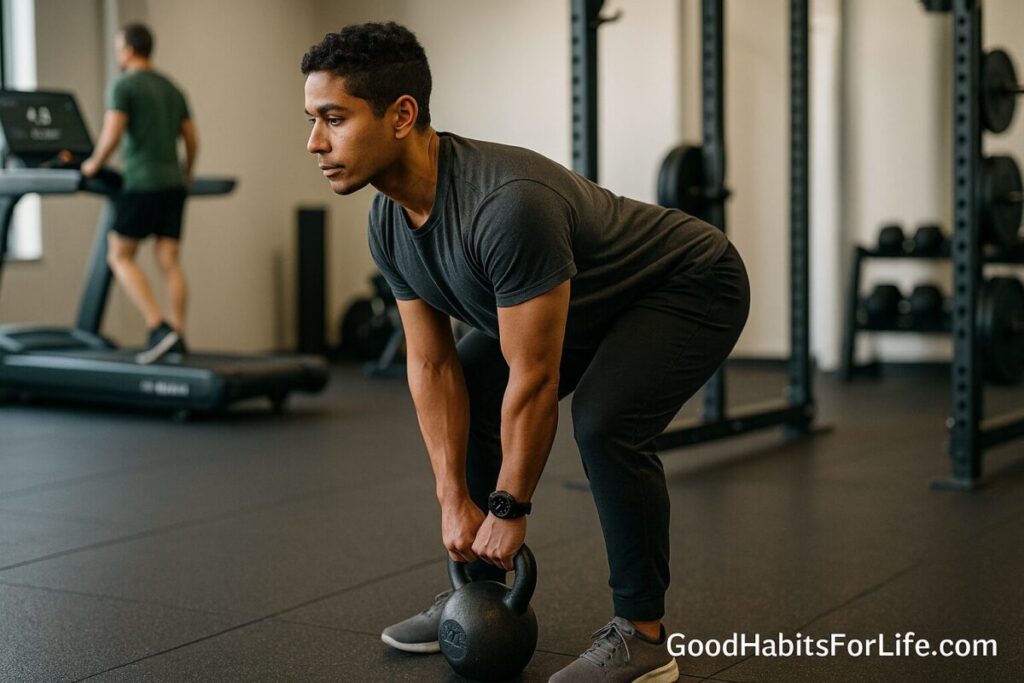
Glute Strength Essentials: Hip Hinge Mastery: Zone 2 + NEAT (2025)
Glute Strength Essentials: Hip Hinge, Zone 2 & NEAT (2025)
Table of Contents
🧭 What & Why
What is the hip hinge?
A fundamental lower-body pattern where the torso inclines as the hips travel back while the spine stays neutral (think: “door hinge” at the hips). Hinge-dominant lifts (Romanian deadlift, conventional deadlift, kettlebell swing, good morning, and hip thrust/bridge family) heavily train the gluteus maximus and hamstrings while sparing the knees.
Why glute strength matters
-
Drives sprinting, jumping, lifting, hill climbing, and posture.
-
Supports the lumbar spine and pelvis during daily tasks (picking up kids, groceries).
-
Adds lean mass for higher resting energy expenditure and metabolic health.
Research links progressive resistance training to strength, hypertrophy, function, and health across ages, when volume and intensity are sensibly progressed and technique is sound. Zone 2 aerobic work improves mitochondrial function and recovery capacity, and NEAT—all movement outside formal exercise—can account for large day-to-day calorie differences.
Three-part system
-
Master the hinge for strong, well-shaped glutes.
-
Add Zone 2 (conversational cardio) 3–5×/week for recovery and endurance.
-
Elevate NEAT (steps, standing, light movement) all day to compound results.
✅ Quick Start: Do-This-Today Setup
-
3 Hinge Technique Checks (5 minutes):
-
Broomstick drill: One stick touches head–mid-back–tailbone; keep all three points as you push hips back.
-
Wall tap: Stand ~20–30 cm (8–12 in) from a wall. Hinge to tap glutes to wall without rounding.
-
Brace & breathe: Inhale 360° into belly/sides/back, brace (like a gentle cough), keep ribs stacked over pelvis.
-
-
Micro-session (20 minutes):
-
A1) Romanian Deadlift 3×8 @ RIR 2–3 (stop 2–3 reps before failure).
-
A2) Hip Thrust or Glute Bridge 3×10 @ RIR 1–2; 2-sec squeeze on top.
-
B) Side Plank 2×20–30 s/side (glute med support).
Rest 60–90 s between sets.
-
-
Zone 2 Today (15–30 minutes):
-
Brisk walk, easy cycle, or incline treadmill at talk-test pace (you can speak in sentences). Target 60–70% HRmax (~180 – age is a rough cap).
-
-
NEAT Boost (all day):
-
Set a timer: every 50 minutes stand/walk 2–5 minutes.
-
Aim 7–10k steps today (start where you are and add +1k/week).
-
🧠 30-60-90 Habit Plan
Days 1–30: Skill & Consistency
-
Hinge pattern 3×/week (Mon/Wed/Fri):
-
RDL 3×8, Hip Thrust 3×10, Back Extension 2×12 (controlled).
-
Intensity: RIR 2–3; slow 2–3 s lowering.
-
-
Zone 2: 20–30 min, 3–4×/week.
-
NEAT: Track baseline steps 1 week; increase avg by +1k/day.
-
Mobility/Prep (5–7 min/session): hip flexor stretch, 90/90 hip flow, ankle rocks.
Checkpoint (Day 30):
-
Video your RDL from side: shins ~vertical, bar tracks close to legs, spine neutral.
-
Can you complete 3×8 @ a load you’d rate 7/10 effort? Good.
Days 31–60: Volume & Hypertrophy
-
Weekly glute volume to 10–16 hard sets across hinges/hip thrusts. Example:
-
Day A: RDL 4×6–8; Hip Thrust 4×8–10; Cable Abduction 3×12–15.
-
Day B: Deadlift (or Trap Bar) 3×5–6; Back Extension 3×10–12; Step-up 3×8/leg.
-
-
Progressive overload: add +2.5–5 kg (+5–10 lb) or +1–2 reps when you hit top of the rep range with RIR 1–2.
-
Zone 2: 25–40 min, 4×/week.
-
NEAT: Lock 8–12k steps/day; add standing tasks (calls, email).
Checkpoint (Day 60):
-
Hip thrust or RDL loads up ~5–10% vs Day 30.
-
Waist/hip posture feels easier; daily energy up.
Days 61–90: Strength & Conditioning Integration
-
Weekly split (example):
-
Mon (Heavy Hinge): Deadlift 5×3–5, Hip Thrust 4×6–8, Side Plank 3×30 s.
-
Wed (Zone 2 + Accessories): 35–45 min Z2; single-leg RDL 3×8/leg; Copenhagen plank 2×20 s.
-
Fri (Power/Capacity): Kettlebell Swing 8×20 s on/60 s off; Back Extension 3×12; Sled Push 6×20 m.
-
-
NEAT: Keep 8–12k steps, add micro-sets (10 bodyweight hinges or 15 glute bridges) after long sits.
-
Deload: If joints feel cranky, reduce volume 30–40% for 1 week.
Checkpoint (Day 90):
-
Strong, confident hinge under load; HR lower at same Z2 pace; steps are automatic.
🛠️ Techniques & Frameworks
Hinge Cues that Work
-
“Hips back, long spine.” Keep chest proud, ribs stacked, eyes ~2–3 m ahead.
-
“Bar drags the thighs.” In RDL/deadlift, keep bar close to legs.
-
“Crack a walnut.” Finish by squeezing glutes, not hyperextending low back.
-
Foot pressure: mid-foot + heel; big toe stays grounded.
-
Tempo: 2–3 s down, brief pause, drive up.
Exercise Menu (progress from easy → hard)
-
Bodyweight hip hinge → Dowel RDL → Kettlebell RDL → Barbell RDL.
-
Glute bridge → Hip thrust (barbell or banded).
-
Back extension (45° or GHD) with neutral neck.
-
Trap-bar deadlift (user-friendly) → Conventional deadlift.
-
Kettlebell swing (applied hinge power; learn after RDL skill).
Weekly Volume & Intensity
-
Glute growth: 10–20 hard sets/week across 2–3 sessions.
-
Rep zones: Primarily 6–12 reps (strength-hypertrophy bridge), occasional 12–15 for accessories.
-
Effort target: RIR 1–3 (stop 1–3 reps short of failure) for most sets; go to RIR 0 sparingly.
-
Progression knobs: load ↑, reps ↑, sets ↑, tempo slower (eccentric), shorter rest (hypertrophy focus).
Zone 2 Framework
-
Pace: Conversational; breathing elevated but controlled.
-
Heart rate: Roughly 60–70% HRmax; many find 120–140 bpm (varies by age/fitness).
-
Modes: Walking (incline), cycling, rowing, easy jog, rucking.
-
Frequency: 3–5×/week, 20–45 min.
-
Benefits: Aerobic base, improved lactate clearance/mitochondria, better recovery between heavy sets.
NEAT Playbook (stack with life)
-
Walk the margins: Start + finish day with 10-minute walks.
-
Work rhythm: 50/10 rule (50 min work, 10 min move).
-
Errands: Park farther, stairs > lift, carry groceries as “farmer’s walks.”
-
Home habits: Brush teeth while split-stance, cook standing, TV floor sits with hip switches.
-
Targets: Sustain 8–12k steps/day (personalize to context).
👥 Audience Variations
-
Students: Use campus commutes as Z2; backpack ruck 1–5 kg; 2×/week 20-minute hinge circuits in dorm gym.
-
Professionals (desk-bound): Under-desk pedaler for Z2; calendar “movement blocks”; micro-hinges after long calls.
-
Parents: Stroller walks for Z2; floor play becomes mobility; hip thrust with dumbbell while baby naps.
-
Seniors: Prioritize trap-bar deadlift, hip bridge, and sit-to-stand; Z2 as brisk walks; emphasize balance (tandem stance).
-
Teens (with coach/guardian): Skill-first; light RDLs, swings with coaching; avoid max deadlifts until technique solid.
⚠️ Mistakes & Myths to Avoid
-
Rounding or hyperextending the spine. Neutral is king.
-
Knees forward squat-pattern when you meant to hinge. Think hips back first.
-
Only squatting for glutes. Squats are great, but hinges + hip thrusts target glutes differently.
-
Skipping Z2 because it’s “easy.” That’s the point—base building and recovery.
-
Relying only on HIIT. Without an aerobic base, progress and recovery stall.
-
Ignoring NEAT. Steps and posture habits multiply results.
-
Chasing PRs weekly. Build reps and quality before heavy singles.
🗣️ Real-Life Examples & Scripts
Warm-up (5–7 min) Script
-
“1 minute marching + arm swings → 10 hip hinges with dowel → 30 s hip flexor stretch/side → 10 glute bridges → 10 band pull-aparts.”
RDL Self-Talk
-
“Hips back. Shins quiet. Bar close. Brace. Exhale and squeeze glutes at the top.”
Desk Break (2-minute)
-
“Stand → 10 hinges → 10 calf raises → 10 bridges on chair edge → 30-second walk.”
After-Dinner 10
-
“10-minute walk at chat pace → stairs if available → light mobility before bed.”
🧰 Tools, Apps & Resources
-
Heart-rate strap or watch: Accurate Z2 tracking; simple recovery trends.
-
Step counter: Phone or wearable to lock NEAT habits.
-
Timer apps: EMOM/interval timers for swings or rest periods.
-
Bands & a single kettlebell (12–24 kg / 26–53 lb): Affordable home hinge kit.
-
Sled or weighted backpack: Low-skill conditioning and glute finisher.
Pros: low cost, objective feedback, portable. Cons: HR estimates vary by device; don’t chase numbers at form’s expense.
📚 Key Takeaways
-
Pattern first, load second. Hinge mechanics protect the back and load the glutes.
-
Volume matters: 10–20 hard sets/week + progressive overload grows glutes.
-
Zone 2 builds the engine that powers training and life.
-
NEAT is the quiet multiplier—move more, all day.
-
Make it a habit: Stack small, repeatable actions for 90 days.
❓ FAQs
1) How often should I train glutes?
2–3 focused sessions per week work well for most. Spread your 10–20 hard sets/week across those days.
2) Can I do Zone 2 on lifting days?
Yes. Do Z2 after lifting or as a separate session. Keep it truly easy.
3) Do I need to barbell deadlift?
No. You can build strong glutes with RDLs, hip thrusts, back extensions, kettlebell swings, and trap-bar pulls.
4) How do I know I’m in Zone 2 without a monitor?
Use the talk test: you can speak in full sentences, breathing is elevated but controlled.
5) What if my low back gets tight?
Reduce load/range, re-check hinge cues, strengthen abs/obliques (side planks, dead bug), and consider a deload week.
6) Is walking enough for NEAT?
It’s a great base. Add posture resets, stair choices, carries, and micro-sets after long sits.
7) Best rep range for glutes?
A mix works. Most sets in 6–12 reps; higher reps for accessories. Effort (RIR 1–3) and total weekly volume drive results.
8) Do I need HIIT?
Optional. Without a solid Z2 base, HIIT often feels harder than it helps. Add sparingly once Z2 is consistent.
9) When will I see results?
Expect noticeable changes in 6–12 weeks with consistent training, nutrition, and sleep.
10) Can I combine this with running or cycling plans?
Yes—place heavy hinges away from your hardest endurance days; keep Z2 mostly on easy or cross-training days.
References
-
World Health Organization. Guidelines on Physical Activity and Sedentary Behaviour (2020). https://www.who.int/publications/i/item/9789240015128
-
American College of Sports Medicine. Progression Models in Resistance Training for Healthy Adults. Med Sci Sports Exerc. 2009. https://doi.org/10.1249/MSS.0b013e3181915670
-
Schoenfeld BJ. The mechanisms of muscle hypertrophy and their application to resistance training. J Strength Cond Res. 2010. https://pubmed.ncbi.nlm.nih.gov/20847704/
-
Schoenfeld BJ, et al. Resistance Training Volume Enhances Muscle Hypertrophy (meta-analysis). Sports Med. 2017/2019 updates. https://link.springer.com/article/10.1007/s40279-016-0588-1
-
San-Millán I, Brooks GA. Reexamining lactate: role in metabolism, training, and disease. Sports Med. 2018. https://pubmed.ncbi.nlm.nih.gov/29288347/
-
Seiler S. What is best practice for long-term development of endurance performance? Scand J Med Sci Sports. 2010 (polarized/Z2 emphasis). https://pubmed.ncbi.nlm.nih.gov/21029199/
-
Levine JA. Non-exercise activity thermogenesis (NEAT). Proc Nutr Soc. 2004/2005. https://pubmed.ncbi.nlm.nih.gov/15877925/
-
Sherrington C, et al. Exercise to prevent falls in older adults (systematic review). Br J Sports Med. 2019. https://bjsm.bmj.com/content/53/13/905
Disclaimer
This guide provides general fitness information and is not a substitute for personalized medical advice. Consult a qualified professional before starting or changing your exercise program.