
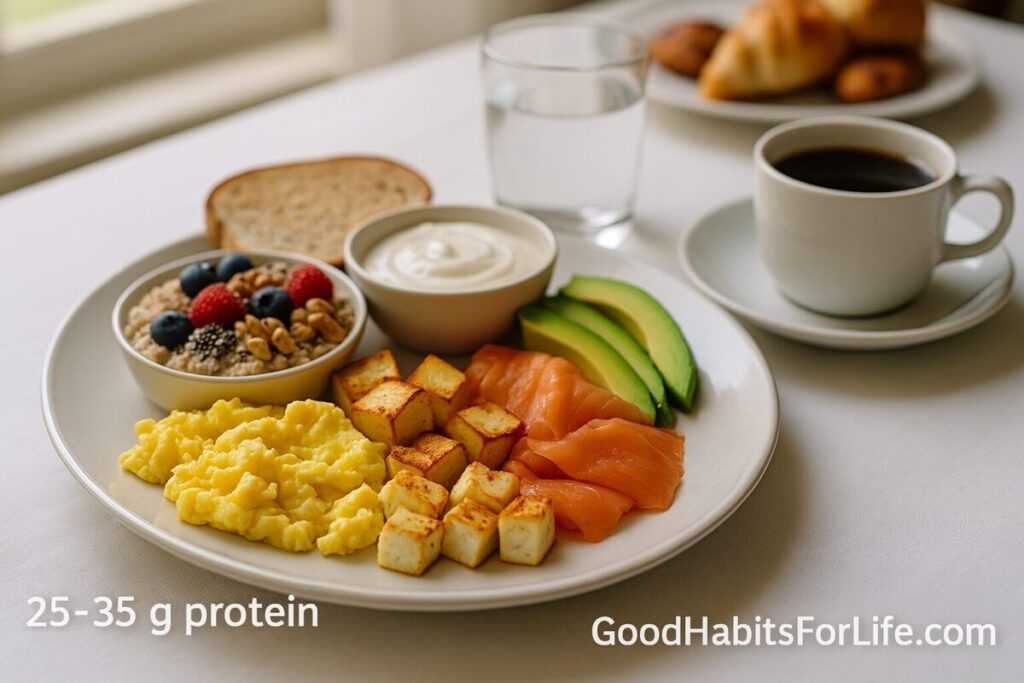
Hotel Breakfast Plate: Build One That Keeps You Full: Dopamine Detox (2025)
Hotel Breakfast Plate: Dopamine Detox & Stay Full (2025)
Table of Contents
🧭 What this guide covers & why it works
Hotel breakfasts can be a willpower trap: a wall of pastries, juices, and fried foods that spike blood sugar, trigger reward pathways, and leave you hungry again. A smarter plate uses three levers—protein, fiber, and healthy fats—to blunt glucose swings and increase satiety.
-
Protein helps you feel full and maintain muscle mass. Reviews link higher-protein breakfasts to better satiety and weight management.
-
Fiber (especially viscous, from oats, legumes, fruit) slows digestion and steadies energy.
-
Lower-GI / minimally processed foods prevent rapid spikes and crashes.
-
Limiting ultra-processed items (sweet pastries, sugary cereals, juices) reduces “hyper-palatable” hits that drive overeating.
About “dopamine detox”: there’s no medical protocol for “detoxing” dopamine. Here, we’re aiming for a low-stimulation breakfast—fewer super-sweet, super-salty, ultra-processed options—so your reward system isn’t constantly pinged, and focus/energy feel more even through the morning.
Targets (easy to remember):
-
Protein: 25–35 g
-
Fiber: 8–12 g
-
Added sugar: as low as practical (ideally <10 g at breakfast)
-
Healthy fats: ~1–2 thumbs (10–20 g)
-
Fluids: 300–500 ml water/tea/coffee (unsweetened)
✅ Quick Start: Plate-building in 90 seconds
-
Walk once, decide once. Scan the whole buffet before grabbing anything.
-
Anchor protein (choose 1–2): eggs (2–3), Greek yogurt (~170–200 g), paneer/tofu, smoked fish, cottage cheese.
-
Add fiber-rich carb (choose 1): oats, whole-grain toast, idli with sambar, fruit bowl, beans.
-
Pile plants: tomatoes, cucumbers, sautéed veg, spinach, mushrooms, berries.
-
Add healthy fat: nuts/seeds (~2 Tbsp), olive oil drizzle, peanut butter on toast, avocado if available.
-
Beverage: water first; coffee/tea unsweetened; if juice tempted, pour a 60–120 ml tasting, not a full glass.
-
Exit plan: Plate once. Sit away from the buffet. Close with fruit/tea, not pastry seconds.
Fast combo examples
-
3 eggs + sautéed veg + whole-grain toast + 2 Tbsp nuts
-
Greek yogurt + oats + berries + chia seeds
-
Paneer/tofu bhurji + sambar + fruit bowl
-
Smoked salmon + cottage cheese + tomato/cucumber + rye bread
🧠 The P-F-F Formula (Protein-Fiber-Fat)
Protein (25–35 g)
-
Eggs (2–3) ≈ 12–18 g
-
Greek yogurt (200 g) ≈ 18–22 g
-
Paneer/tofu (100–120 g) ≈ 12–20 g
-
Cottage cheese (200 g) ≈ 22–26 g
-
Smoked fish (80–100 g) ≈ 16–20 g
Pro tip: When choices are limited, double the protein (e.g., 3 eggs) and add fruit/veg for fiber.
Fiber (8–12 g)
-
Oats (40–50 g dry) + chia (1 Tbsp) + berries (½ cup) ≈ 10–12 g
-
Beans (¾ cup) ≈ 8–10 g
-
Fruit bowl (apple/pear/berries) ≈ 4–8 g
Pro tip: If only white bread/rice is available, buffer with veg + protein and keep portions palm-sized.
Healthy fats (10–20 g)
-
Nuts/seeds (2 Tbsp) ≈ 10–14 g
-
Peanut/almond butter (1 Tbsp) ≈ 8–9 g
-
Olive oil drizzle (1 Tbsp) ≈ 14 g
Pro tip: Fats slow digestion; add a thumb (your thumb size) to steady energy without overdoing calories.
🛠️ 7-Day Travel Habit Plan
Goal: Consistent, filling breakfasts that keep cravings low during conferences, holidays, or work trips.
Day 1–2 — Recon & Baseline
-
Walk the buffet; identify your go-to protein and fiber carb.
-
Use the P-F-F formula once per day.
-
Log roughly (notes app): protein source + carb + fat + beverage.
Day 3–4 — Refine
-
Hit 25–35 g protein reliably (add an extra egg/yogurt if needed).
-
Keep juice/pastry to a tasting (60–120 ml or a 2–3 bite rule).
-
Plate once; sit far from the buffet line.
Day 5–6 — Automate
-
Decide on two default combos you can repeat.
-
Add a 10–15 min morning walk post-meal for extra glucose control (or take stairs).
Day 7 — Review & Pack-out
-
Note what worked, snap a photo of best plate.
-
Make a packing list for future trips: collapsible bowl/spoon, zip bag of nuts/chia, small peanut butter sachets.
🧭 Buffet-Type Playbooks
Continental Buffet
Common items: eggs, cereals, pastries, toast, yogurt, cold cuts, cheese, fruit.
Winning plates:
-
Eggs (3) + whole-grain toast + tomatoes/cucumber + nuts.
-
Greek yogurt + oats + berries + chia.
Swaps: Croissant → whole-grain toast; juice glass → 60 ml tasting; sweet cereal → muesli/oats.
Indian Hotel Buffet
Common items: idli/dosa, sambar, poha/upma, paratha, chole/rajma, eggs, paneer, yogurt/curd, fruit.
Winning plates:
-
Paneer/tofu bhurji + idli (2) + sambar + fruit.
-
Eggs (3) + chole (½ cup) + kachumber salad.
Swaps: Paratha with butter → plain roti/2 idli + sambar; sweet lassi → plain chaas/curd.
Asian (East/Southeast) Buffet
Common items: congee, steamed buns, noodles, eggs, tofu, fish, veg, fruit.
Winning plates:
-
Tofu/egg + congee (small bowl) + greens/fermented veg + fruit.
-
Omelet + grilled fish + rice (½ cup) + veg.
Swaps: Fried noodles → plain rice (½ cup) + extra veg/protein; sweet buns → fruit.
Mediterranean-leaning Buffet
Common items: eggs, olives, tomatoes, cucumbers, feta, smoked fish, hummus, whole-grain breads, fruit, yogurt.
Winning plates:
-
Smoked salmon + cottage/Greek yogurt + rye bread + veg.
-
Eggs + hummus + veg plate + fruit.
Swaps: Pastry plate → rye + olive oil; sweet yogurt → plain yogurt + fruit.
🧩 Audience Variations
Students / Conference goers: Front-load protein; take a banana + nut sachet for mid-session snack—avoids pastry trays.
Parents with kids: Make a shared fruit + yogurt “bar” at the table; set a “two-treat bites” rule for pastries.
Professionals on tight mornings: If buffet is crowded, grab Greek yogurt + fruit + nuts—2 minutes, meets P-F-F.
Seniors: Favor softer proteins (yogurt, paneer, eggs), add berries/oats for fiber; sip water first for hydration.
Vegetarian/Vegan: Double tofu/paneer/beans; use chia, nuts, and oats to hit fiber and fat targets.
⚠️ Mistakes & Myths to Avoid
-
Myth: “Fruit is sugar; avoid it.”
Reality: Whole fruit provides fiber and water; much gentler than juice/pastries. -
Mistake: Grazing the buffet (multiple returns). Plate once to avoid mindless extras.
-
Mistake: Sugar-bomb drinks (large juices, sweet coffee syrups). Keep to tastes or choose water/tea.
-
Myth: “Skipping breakfast is always better.”
Reality: It’s context-dependent. If you eat breakfast, build it to be filling and balanced; if you don’t, still prioritize protein/fiber at the first meal. -
Mistake: “All fats are equal.”
Reality: Prefer nuts, seeds, olive oil; go easy on butter/cream.
💬 Real-Life Scripts & Examples
At the egg station:
“Hi! Could I get 3 eggs with extra spinach and mushrooms, no cheese? Thanks!”
For yogurt bars:
“Is there plain/unsweetened yogurt? Great—can I get a bowl with oats and berries?”
For breads/pastries:
“I’ll take one slice of whole-grain/rye, toasted—no butter.”
If juice is tempting:
“Could I have a small tasting—like half a ladle—to try the flavor?”
If only white carbs are available:
“I’ll do more eggs/beans and extra veg; I’ll keep the bread to one slice.”
Four complete plate examples (≈ macros):
-
3 eggs + sautéed veg + rye toast + 2 Tbsp nuts (≈ 32 g protein, 10 g fiber with veg + nuts)
-
Greek yogurt 200 g + 40 g oats + berries + 1 Tbsp chia (≈ 25–28 g protein, 12 g fiber)
-
Paneer bhurji 120 g + 2 idli + sambar + fruit (≈ 30 g protein, 10 g fiber)
-
Smoked salmon 90 g + cottage cheese 200 g + tomatoes/cukes + toast (≈ 40 g protein, 6–8 g fiber)
📚 Tools & Resources
-
Food logging (optional): Cronometer or MyFitnessPal—quickly check protein/fiber.
-
Travel add-ons: Mini peanut-butter packs, chia seeds, zip-bag of nuts, collapsible spoon.
-
Reference lookups: University of Sydney Glycemic Index database; Harvard Nutrition Source (protein, fats, fiber).
-
Hydration cue: Keep a 500 ml bottle at breakfast; finish by checkout.
✅ Key Takeaways
-
Build around P-F-F: 25–35 g protein, 8–12 g fiber, 10–20 g healthy fats.
-
Minimize ultra-processed hits (pastries, sugary cereals/juices) for steadier energy.
-
Decide once: walk the buffet, plate once, sit away from the line.
-
Keep two default combos you can execute anywhere.
-
A “dopamine detox” here = lower stimulation, not deprivation—simple, filling, repeatable.
❓ FAQs
1) What if the buffet is mostly pastries and white bread?
Double the protein (3 eggs or extra yogurt), add whatever fruit/veg exists, and keep carbs palm-sized. If possible, add nuts or peanut butter.
2) Is juice really that bad?
Whole fruit beats juice for fiber and satiety. If you love juice, limit to 60–120 ml and pair with protein.
3) How much protein do I actually need at breakfast?
Aim 25–35 g to boost fullness. If you’re smaller or not hungry, hit the lower end and add fiber.
4) Can I do oatmeal as my main?
Yes—fortify it: stir in Greek yogurt or milk, add chia/flax, and top with berries/nuts.
5) I’m vegetarian—what’s the easiest high-protein plate?
Greek yogurt + oats + berries + chia, or paneer/tofu + beans + fruit.
6) Is coffee okay?
Yes. Keep it unsweetened or lightly sweetened; consider milk/yogurt for extra protein rather than syrups.
7) What about intermittent fasting while traveling?
If you feel better skipping breakfast, that’s fine—apply the same P-F-F principles to your first meal.
8) Do I need supplements at breakfast?
Generally no. Focus on whole foods; add a thumb of healthy fat and plants for micronutrients.
9) How do I keep cravings low through the morning?
Hit protein + fiber at breakfast, hydrate, and consider a 10–15 min walk afterward.
10) Should I weigh or count calories?
Optional. A simple visual rule—protein palm, fiber carb palm, plants half-plate, fat thumb—is usually enough.
References
-
NIH Research Matters. Ultra-processed diets cause overeating and weight gain (Hall et al., 2019). https://www.nih.gov/news-events/nih-research-matters/ultra-processed-diets-cause-overeating-weight-gain
-
Harvard T.H. Chan School of Public Health — The Nutrition Source. Protein. https://www.hsph.harvard.edu/nutritionsource/what-should-you-eat/protein/
-
Harvard T.H. Chan School of Public Health — The Nutrition Source. Fiber. https://www.hsph.harvard.edu/nutritionsource/carbohydrates/fiber/
-
University of Sydney. Glycemic Index database & resources. https://glycemicindex.com/
-
World Health Organization. Healthy diet (free sugars & salt guidance, overview). https://www.who.int/news-room/fact-sheets/detail/healthy-diet
-
Harvard T.H. Chan School of Public Health — The Nutrition Source. Fats and cholesterol. https://www.hsph.harvard.edu/nutritionsource/what-should-you-eat/fats-and-cholesterol/
-
Leidy HJ. The role of protein in weight loss and maintenance. (Review). American Journal of Clinical Nutrition. https://academic.oup.com/ajcn
-
Slavin JL. Fiber and prebiotics: mechanisms and health benefits. Nutrients. https://www.mdpi.com/2072-6643/5/4/1417
-
Harvard Health Publishing. Dopamine fasting: the newest fad in Silicon Valley. https://www.health.harvard.edu/blog/dopamine-fasting-the-newest-fad-in-tech-2019112618416
-
American Heart Association. Added sugars. https://www.heart.org/en/healthy-living/healthy-eating/eat-smart/sugar/added-sugars
Disclaimer: This guide is educational and not a substitute for personalized medical or nutrition advice.