
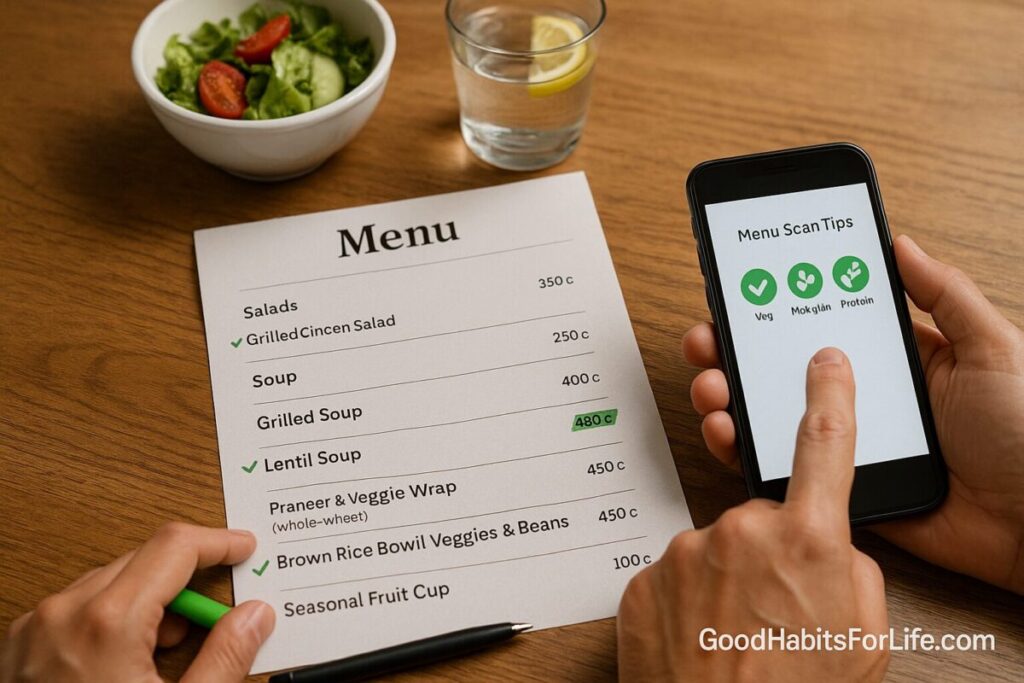
Menu Scanning 2025: Find the Wins Fast
Menu Scanning 2025: Find the Wins Fast
Table of Contents
🧭 What Is “Menu Scanning” & Why It Works
Menu scanning is a fast, research-aligned way to read any menu and pick a satisfying, healthier option without overthinking. It leans on three big evidence pillars:
-
Healthy patterns beat single “superfoods.” Emphasize whole foods, veggies, fruit, whole grains, lean proteins, and healthy fats—across life stages. Dietary Guidelines
-
Energy density matters. Choosing water- and fiber-rich foods (soups, veg, fruit, beans) lets you eat satisfying volumes for fewer calories. PubMed+1
-
Simple front-of-menu cues help. Calorie/menu labeling nudges modestly toward lower-calorie choices—use it as a tie-breaker, not a rule. Cochrane
Two practical guardrails keep choices on track:
-
Added sugars: keep under 10% of daily calories (≈200 kcal on a 2,000 kcal day). Prefer unsweetened drinks and sauces. CDC
-
Sodium: keep toward ≤2,300 mg/day (ideal 1,500 mg/day for most adults)—watch sauces, soups, cured meats, and combos. www.heart.org
Harvard’s Healthy Eating Plate is a simple plate-building visual to apply anywhere: half vegetables/fruit, a quarter whole grains, a quarter protein, plus healthy oils and water/tea/coffee (unsweetened). The Nutrition Source
✅ Quick Start: The 90-Second Scan
-
Skim for cooking method (10s): prioritize grilled, baked, roasted, steamed, tandoori, stir-fried (light oil); de-prioritize fried, battered, creamy, smothered.
-
Spot the protein (20s): choose fish, poultry, eggs, tofu/tempeh, beans, dal, paneer (grilled), lean meats. Protein helps satiety; balanced meals tend to keep you full longer. PMC
-
Load the veg (10s): add/upgrade to double veg or side salad; swap fries/rice for veg or baked potato + salsa. Lower energy density, higher fiber. PubMed
-
Check sauces/sides (20s): ask for sauces/dressings on the side; pick tomato-, herb-, yogurt-, or spice-based over cream/cheese/butter sauces; choose whole-grain sides when available. The Nutrition Source
-
Scan the numbers (20s): if calories/sodium are listed, use them to break ties; consider half portions or shareable plates when portions look large. U.S. Food and Drug AdministrationCochrane
-
Drink choice (10s): water, sparkling water, unsweetened tea/coffee; skip refills of sugary beverages. CDC
🛠️ 7-Day Starter Plan (make it automatic)
Goal: Turn the scan into muscle memory.
-
Day 1 – Prime your rules: write the 3 filters on your phone notes: Protein • Veg • Sauce/Sodium.
-
Day 2 – Breakfast out: pick eggs/Greek yogurt/idli + sambar/oat bowl; add fruit; coffee/tea unsweetened.
-
Day 3 – Fast casual lunch: protein bowl or plate, double veg, whole-grain carb (brown rice/quinoa/roti).
-
Day 4 – Social dinner: choose grilled/tandoori/roasted; ask for sauce on side; swap fries for veg.
-
Day 5 – Travel day: at airports/hubs, choose yogurt + nuts, veg sandwich on whole grain, or sushi + edamame; water only.
-
Day 6 – Try a new cuisine: apply the Smart Swaps (below) to one new place.
-
Day 7 – Review: Which swap delivered the biggest “full + light” feeling? Keep that as your default.
🧠 Techniques & Frameworks that Work
1) The Plate Formula (Harvard)
-
½ plate: vegetables/salad/soup
-
¼ plate: lean protein (fish/chicken/tofu/beans)
-
¼ plate: whole-grain or starchy veg (brown rice, millet, roti, potatoes)
-
+ small amount of healthy fat (olive/canola/groundnut oil; nuts/seeds). The Nutrition Source
2) Energy Density Ladder
-
Best volume per calorie: broth-based soups, salads, steamed/stir-fried veg, fruit
-
Middle: beans, lentils, potatoes, whole grains
-
Watch: fried foods, creamy dishes, pastries
(Choose from the top two rungs first.) PubMed
3) Protein-First Anchor
Build meals around ~20–35 g protein by sight:
-
1 palm lean meat/fish or tofu/tempeh block, or 1 cup beans/lentils + yogurt. Higher-protein meals often increase satiety. PMC
4) Sodium-Savvy Ordering
-
Choose grilled/tandoori/roasted items; request no added salt during cooking; sauces on side; pick herb/spice rubs over soy/cream gravies. Keep day’s total toward ≤2,300 mg (ideal 1,500 mg). www.heart.org
5) Label Tie-Breakers
When numbers are listed, use them to compare similar dishes; calorie labels help modestly—use as a nudge, not the only rule. Cochrane
🍱 Smart Swaps for Popular Cuisines
Indian: tandoori chicken/fish, paneer tikka (grilled), dal + roti (whole-wheat), veg subzis; swap creamy gravies for tomato/onion-based; raita over cream sauces.
Chinese/SE Asian: steamed dumplings, stir-fries with “light oil,” steamed rice (small) or brown rice; ask “less sauce”; choose clear soups.
Italian: grilled fish/chicken, tomato-based pastas, minestrone; add side salad; ask half-portion pasta + veg.
Middle Eastern: chicken shawarma (no mayo), hummus + tabbouleh + salad plate; skip extra pita/refills.
American diner: grilled mains + double veg; baked potato + salsa/yogurt; avoid bottomless sodas. CDC
👥 Audience Variations
-
Students/Teens: budget combos → choose protein + veg sides, water; keep sugary drinks “weekend-only.” CDC
-
Professionals (work lunches): pick bowls/plates where you can double veg; keep dressings on side; calendar a 2-minute pre-order scan.
-
Parents: share mains; order 2 veg sides automatically; milk/yogurt or water for kids.
-
Seniors: prioritize protein + fiber for fullness; watch sodium in soups/sauces; ask for low-salt prep. www.heart.org
-
Frequent travelers: default airport meal = yogurt + nuts/fruit, sushi + edamame, or protein bowl; bring a bottle for water refills.
⚠️ Mistakes & Myths to Avoid
-
Myth: “Salads are always lighter.” Heavy dressings, cheese, bacon, croutons can out-calorie mains—ask for dressing on side and add lean protein.
-
Myth: “Grain bowls are always healthy.” Without veg/protein balance, they can be dense—half veg, quarter grain. The Nutrition Source
-
Mistake: Ignoring sauces. They drive sodium/sugar; request on the side and taste before adding. www.heart.orgCDC
-
Mistake: Chasing only calories. Labels help a little, but overall pattern and satisfaction matter more. Cochrane
🗣️ Real-Life Scripts (copy-paste)
-
“Could I have the grilled chicken with extra vegetables and sauce on the side, please?”
-
“Can you do that stir-fry with light oil and less soy sauce?”
-
“I’ll take the tomato-based pasta, half portion, plus a side salad.”
-
“Skip the fries—swap for steamed veg. Thanks!”
-
“Water for me, please.”
📱 Tools, Apps & Resources (quick picks)
-
Restaurant nutrition finders / chains’ websites: check sodium/calorie differences to learn “your” best default. (Menu labeling pages explain what must be shown.) U.S. Food and Drug Administration
-
Note app shortcut: save your personal go-to orders per cuisine.
-
Wearable/health app: log how you feel 2–3 h after meals (energy, hunger) to refine choices.
Pros: free, fast, habit-friendly. Cons: some small eateries lack published numbers—lean on the Plate Formula and sodium/sauce rules.
📌 Key Takeaways
-
Start with protein + veg, then add a modest whole-grain/starch and healthy fats. The Nutrition Source
-
Watch sodium and added sugars (sauces, soups, drinks) for the biggest wins. www.heart.orgCDC
-
Use calorie labels as tie-breakers; prioritize fullness and satisfaction from lower-energy-dense foods. CochranePubMed
-
Make it automatic with the 7-Day Starter; save “default orders” you love.
❓ FAQs
1) Are “grilled” foods always better than “fried”?
Typically yes—grilling avoids batter and deep oil, usually lowering energy density and sodium; still ask for light oil and sauce on side. PubMed
2) What’s a quick protein target at restaurants?
Aim for a palm-sized portion of lean protein (~20–35 g per meal) to help fullness; pair with veg and whole grains. PMC
3) If calories are posted, should I always pick the lowest?
Not necessarily. Use numbers to compare similar dishes; then weigh protein, veg, sodium, and satisfaction. Cochrane
4) Is soup a good starter?
Broth-based soups are usually low energy-density and can curb hunger before the main—skip creamy, salty versions. PubMed
5) How do I keep sodium in check when eating out often?
Choose grilled/steamed items, request less salt, keep sauces on side, and balance the rest of the day with very low-sodium foods. Target ≤2,300 mg/day (ideal 1,500 mg). www.heart.org
6) What’s the single biggest sugar mistake in restaurants?
Sugary drinks and refills. Choose water or unsweetened tea/coffee instead. CDC
7) Does “whole grain” actually make a difference when I’m eating out?
Yes—whole grains add fiber and volume; pair with veg/protein for a steadier, more filling meal. The Nutrition Source
8) Are menu labels standardized?
In many regions, chains must show calories; details vary. Use posted numbers and official labeling info as a simple guide. U.S. Food and Drug Administration
📚 References
-
U.S. Departments of Health and Human Services and Agriculture. Dietary Guidelines for Americans, 2020–2025. https://www.dietaryguidelines.gov (PDF). Dietary Guidelines
-
World Health Organization. Healthy Diet – Fact Sheet. https://www.who.int/news-room/fact-sheets/detail/healthy-diet. World Health Organization
-
Harvard T.H. Chan School of Public Health. Healthy Eating Plate. https://nutritionsource.hsph.harvard.edu/healthy-eating-plate/. The Nutrition Source
-
American Heart Association. How Much Sodium Should I Eat Per Day? https://www.heart.org/en/healthy-living/healthy-eating/eat-smart/sodium/how-much-sodium-should-i-eat-per-day. www.heart.org
-
U.S. FDA. Menu and Vending Machine Labeling. https://www.fda.gov/food/nutrition-food-labeling-and-critical-foods/menu-and-vending-machine-labeling. U.S. Food and Drug Administration
-
Cochrane. Calorie labelling leads to modest reductions in selection and consumption. https://www.cochrane.org/about-us/news/calorie-labelling-leads-modest-reductions-selection-and-consumption. Cochrane
-
CDC. Get the Facts: Added Sugars. https://www.cdc.gov/nutrition/php/data-research/added-sugars.html. CDC
-
Rolls BJ. Dietary energy density: guidance for healthy food choices. Am J Clin Nutr. (review). https://pubmed.ncbi.nlm.nih.gov/29151813/. PubMed
⚖️ Disclaimer
This article offers general nutrition guidance and is not a substitute for personalized medical advice. If you have specific health conditions or dietary needs, consult a qualified healthcare professional.