
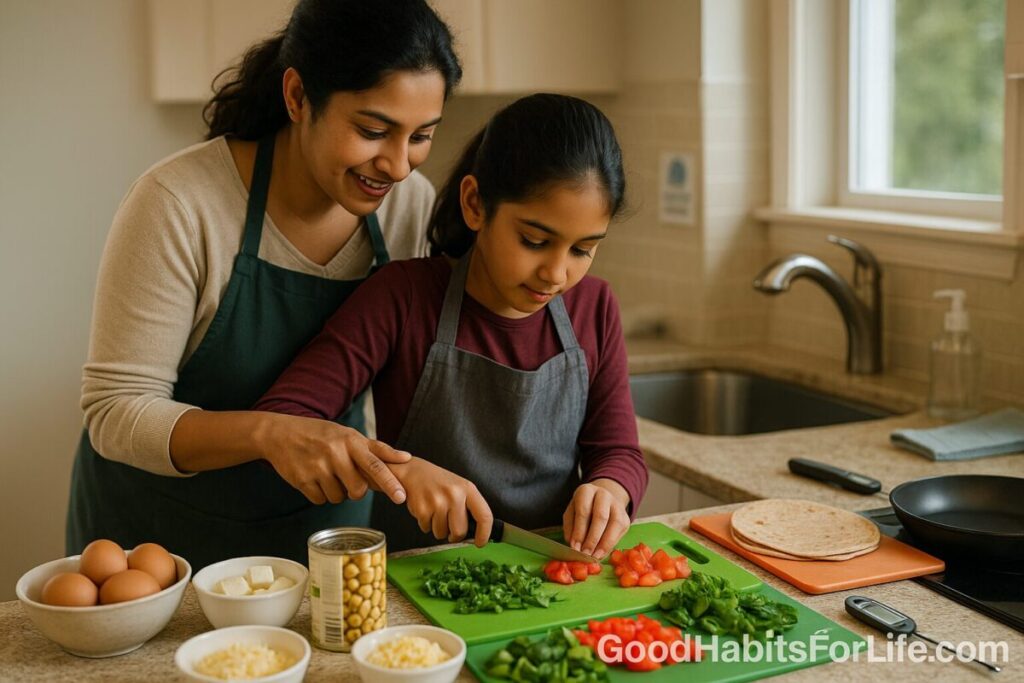
Teach Kids to Cook: Safety, Skills & Simple Recipes: Protein-Forward Plan (2025)
Teach Kids to Cook: Safety, Skills & Protein Recipes (2025)
Table of Contents
🧭 What & Why
Definition. “Teaching kids to cook” means giving children age-appropriate, supervised practice with food prep, heat, knives, hygiene, and simple recipes—so they can help plan and cook balanced meals.
Benefits (evidence-aligned).
-
Nutrition: Kids who help cook are more likely to taste and eat new foods, especially vegetables and protein foods. (See AAP guidance and MyPlate resources in References.)
-
Safety literacy: Early habits—handwashing, avoiding cross-contamination, and cooking to safe internal temperatures—prevent foodborne illness.
-
Life skills & confidence: Measuring, following steps, and timing build executive function and math skills.
-
Family connection: Shared tasks reduce mealtime stress and build autonomy.
Protein-forward approach. Protein helps growth, satiety, and stable energy. A balanced plate for kids typically includes protein foods (e.g., eggs, beans, paneer/tofu, fish, chicken), whole grains, vegetables, fruit, and dairy/alternatives (see MyPlate/Harvard refs).
🛡️ Kitchen Safety Essentials
Hygiene basics
-
Wash hands with soap and water for 20 seconds before cooking and after raw meat/eggs, bathroom, pets, or sneezing. Dry with a clean towel. (CDC)
-
Clean counters, boards, and tools; sanitize after raw meat/fish.
-
Use separate cutting boards for raw meats vs. ready-to-eat foods.
Heat & sharp tools
-
Pan handles turned inward; pot lids opened away from face.
-
“No-run zone” around the stove/oven.
-
Teach the claw grip and pinch grip for knives; cut away from fingers; slow is pro.
Safe internal temperatures (USDA FSIS)
| Food | Minimum Internal Temp |
|---|---|
| Poultry (chicken, turkey) | 74 °C (165 °F) |
| Ground meats (beef, pork, turkey) | 71 °C (160 °F) |
| Whole cuts beef, pork, lamb (rest 3 min) | 63 °C (145 °F) |
| Fish | 63 °C (145 °F) |
| Leftovers/reheat | 74 °C (165 °F) |
Use a digital thermometer; insert into the thickest part.
Allergy awareness
-
Read labels; prevent cross-contact; wash hands and tools between allergens.
🧰 Age-Based Skills Ladder (guide, adjust to your child)
Ages 2–3 (with hands-on help)
-
Wash produce; tear lettuce; sprinkle toppings.
-
Dump pre-measured ingredients; stir thick batters with a helper hand on the bowl.
Ages 4–5
-
Measure dry/wet ingredients; crack eggs into a small bowl; spread with a butter knife.
-
Cut soft items with a child-safe knife (banana, paneer cubes, soft tofu, mushrooms).
Ages 6–7
-
Use peeler and grater; read simple recipe lines; set timers.
-
Stove on low with adult right beside them (scrambled eggs, sautéing).
Ages 8–9
-
Cook grains (rice/quinoa) with rice cooker; use can opener; pan-sear with supervision.
-
Pan-to-plate transfer safely; basic knife work on firm veg (cucumber, zucchini).
Ages 10–12
-
Follow full recipes; oven use with mitts; brown ground meat; roast veg/chicken.
-
Use food thermometer; plan mise en place.
Teens
-
Plan full meals incl. safe thawing, marinating, and storage; cook independently; budget shopping.
(Sources: AAP HealthyChildren, Academy of Nutrition and Dietetics.)
🥣 Quick Start: Teach a Skill Today (15–30 min)
Objective: One skill + one protein recipe.
-
Micro-lesson (5 min): Demonstrate handwash → claw grip → how to check doneness.
-
Practice (10–15 min):
-
Skill pick: crack eggs, drain and rinse chickpeas, crumble paneer, mash beans, use a peeler.
-
-
Cook (10 min): Make one of these:
-
Egg Power Scramble: 2 eggs + pinch salt + 1 tsp oil + chopped veg. Low heat, gentle folds.
-
Chickpea Crunch Wrap: Warm chapati/tortilla, spread yogurt, add chickpeas, cucumber, and cheese.
-
Paneer Peas Quick Fry: Paneer cubes + peas + turmeric + salt; sauté 5–6 min.
-
Debrief (2 min): “What went well? What’s one thing to try next time?”
🍳 7-Day Protein-Forward Starter Plan (kid-helpful tasks noted)
Notes: Portions vary by age and appetite. Serve with fruit/veg and water. Use vegetarian swaps as needed.
Day 1 – Eggs & Veg
-
Breakfast: Veg omelet (kids: crack eggs, whisk, tear spinach).
-
Dinner: Chicken/Tofu stir-fry with rice (kids: wash rice, snap beans; teen: pan-fry safely).
Day 2 – Beans Two Ways
-
Lunch: Bean & cheese quesadilla/roti roll (kids: sprinkle fillings, fold).
-
Dinner: Chana masala + brown rice (kids: measure spices, rinse chickpeas).
Day 3 – Yogurt & Fish
-
Breakfast: Greek yogurt bowl with nuts/banana (kids: assemble).
-
Dinner: Baked fish with lemon and carrots (kids: lay lemon slices; check 63 °C/145 °F).
Day 4 – Lentils & Eggs
-
Lunch: Dal + chapati (kids: rinse lentils, stir).
-
Dinner: Shakshuka (eggs in tomato-pepper sauce) (kids: crack eggs into cups).
Day 5 – Paneer/Tofu Night
-
Lunch: Paneer tikka wraps or tofu lettuce cups (kids: mix yogurt marinade).
-
Dinner: Peanut-sesame noodles + edamame (kids: shell edamame; allergy-aware swaps: tahini/sunflower seed butter).
Day 6 – Chicken/Bean Bowls
-
Lunch: Chicken rice bowl or black-bean bowl with corn, salsa (kids: assemble bowls).
-
Dinner: Egg fried rice with peas (kids: scramble eggs; practice spatula control).
Day 7 – Family Cook-Along
-
Project dinner: Homemade mini pizzas on whole-grain bases with paneer/chicken/beans + veg (kids: grate cheese, top pizzas; teens: manage oven with mitts).
-
Dessert skill: Fruit yogurt pops (kids: stir and pour).
Shopping staples (protein): eggs, Greek yogurt/curd, milk, paneer or tofu, chickpeas/lentils/beans, peanut/seed butter, chicken breasts/thighs, fish fillets, canned tuna/salmon, nuts/seeds.
🛠️ Techniques & Frameworks That Work
The “Skill → Recipe → Repeat” Loop
-
Pick one skill (e.g., chop a cucumber).
-
Use it immediately in a simple recipe.
-
Repeat through the week until automatic; then add a new skill.
Mise en place for kids
-
Bowls for “done” ingredients; visual checklists; picture-based steps.
Protein-forward building blocks
-
Eggs: scrambles, omelets, egg muffins.
-
Legumes: chana masala, bean tacos, hummus sandwiches.
-
Dairy/alternatives: yogurt parfaits, paneer stir-fry, tofu scramble.
-
Fish/chicken: baked fish packets; sheet-pan chicken + veg.
Balanced plate cue (MyPlate)
-
Half plate veg/fruit, quarter grains (prefer whole), quarter protein, plus dairy/alternative.
Food safety “4 Cs”
-
Clean, Chill, Cook, Cross-contamination (avoid). Post them on the fridge.
👨👩👧 Variations by Age & Family Needs
-
Toddlers (2–3): No heat or knives; focus on washing, sprinkling, and tasting new foods.
-
Early primary (4–7): Blunt/child knives; peelers and graters with guards; stovetop on low with hand-over-hand guidance.
-
Tweens (8–12): Progress to full recipes; introduce thermometer; batch-cook rice, roast veg.
-
Teens: Meal planning, shopping lists, budgeting, safe thawing, and leftovers management.
-
Vegetarian: Emphasize dal, rajma/chole, tofu/paneer, eggs if used; pair with vitamin C-rich veg for iron absorption.
-
Allergy families: Keep a dedicated allergen-free board and tools; teach label reading and handwashing between tasks.
⚠️ Mistakes & Myths to Avoid
-
Myth: “Kids will slow me down.”
Better: Invest 10–20 extra minutes now; speed and independence arrive quickly with repetition. -
Mistake: Skipping thermometers.
Fix: Quick probe checks remove guesswork and stress. -
Myth: “Sugar is the reward.”
Better: Praise the process; let the meal be the reward. -
Mistake: Starting with complex recipes.
Fix: Teach a single technique (e.g., sautéing) and build from there. -
Mistake: Correcting mid-task with criticism.
Fix: Coach with curiosity (see scripts).
💬 Real-Life Examples & Coaching Scripts
Knife grip cue: “Thumb and index pinch the blade, other fingers wrap the handle—now make a claw with the other hand. Slow and steady.”
Heat safety: “Pan handles to the side; say ‘Behind!’ before passing.”
Hygiene reminder: “Soap, water, bubbles—count to 20 like this song.”
Picky eater moment: “You don’t have to eat it all. Be the scientist: one smell, one lick, one tiny bite.”
Confidence builder: “You set the timer and checked 74 °C—chef move!”
🧪 Tools, Apps & Resources (pros/cons)
-
Digital food thermometer — Fast safety checks; small learning curve.
-
Child-safe knives & gloves — Improve confidence; still need close supervision.
-
Rice cooker/Instant Pot — Set-and-forget grains/proteins; teach steam safety.
-
Paprika / AnyList (apps) — Organize recipes & grocery lists; paid features for syncing.
-
SideChef / Tasty / Yummly — Step-by-step visuals; ad-heavy at times.
-
Timer (phone/smart speaker) — Prevents burning and teaches pacing.
📌 Key Takeaways
-
Start with safety and a single technique; repeat until fluent.
-
Use an age-based ladder to assign doable, proud-making tasks.
-
Keep meals protein-forward for growth and satisfaction.
-
Check doneness with temperatures, not guesswork.
-
Build momentum with the 7-Day Starter Plan and celebrate every small win.
❓ FAQs
1) What’s the best age to start?
As early as 2–3 for simple, no-heat tasks. Progress gradually with close supervision.
2) How much protein do kids need?
Needs vary by age and size; a practical rule is to include a protein source at each meal (eggs, dairy/alternatives, legumes, fish/chicken). See MyPlate/Harvard references and consult a clinician for specific needs.
3) Are raw eggs safe for kids?
Avoid raw/undercooked eggs; cook until set. Use pasteurized eggs for recipes that would otherwise be raw.
4) How do I handle picky eaters?
Let kids help cook; offer tiny tastes without pressure; repeat exposures; pair new foods with familiar favorites.
5) What if we’re vegetarian?
Center legumes (dal, beans), tofu, paneer, yogurt, nuts/seeds as appropriate; combine with whole grains and veg.
6) How do I keep counters safe after raw chicken?
Wash with hot soapy water, then sanitize. Use separate boards and wash hands before touching other foods.
7) What temperatures should I memorize?
74 °C for poultry/leftovers; 71 °C for ground meats; 63 °C for whole cuts and fish.
8) What’s a fast protein breakfast kids can make?
Egg scramble, yogurt parfait, peanut/seed-butter toast with banana; add a fruit or veg side.
9) How do I teach knife skills without fear?
Start with soft foods and child-safe knives; teach claw grip; slow practice; upgrade tools as skill grows.
10) How do I keep cooking fun on busy weekdays?
Use 3-step recipes, rice cooker/Instant Pot, and prepped proteins (boiled eggs, cooked beans). Keep portions of frozen veg for last-minute meals.
📚 References
-
Centers for Disease Control and Prevention. Handwashing: Clean Hands Save Lives. https://www.cdc.gov/handwashing/
-
USDA Food Safety & Inspection Service. Safe Minimum Internal Temperatures. https://www.fsis.usda.gov/
-
USDA MyPlate. Kids in the Kitchen & Protein Foods Group. https://www.myplate.gov/
-
American Academy of Pediatrics (HealthyChildren.org). Cooking with Kids & Kitchen Safety. https://www.healthychildren.org/
-
Harvard T.H. Chan School of Public Health. The Nutrition Source: Protein. https://www.hsph.harvard.edu/nutritionsource/
-
Academy of Nutrition and Dietetics. Cooking with Kids Resources. https://www.eatright.org/
-
U.S. Food & Drug Administration. Food Safety for Parents and Kids. https://www.fda.gov/food/
-
NHS. Food hygiene at home. https://www.nhs.uk/live-well/eat-well/food-safety-and-hygiene/
Disclaimer
This article provides general information for education only and is not a substitute for personalized medical or nutrition advice; consult your pediatrician or a registered dietitian for individual guidance.